


Prensa hidráulica Hand Safety is essential for preventing hand injuries, crushing accidents, and finger amputations during industrial pressing operations. Hydraulic presses generate substantial force, and even a brief moment of contact with the die area can result in severe injuries. Operators may face risks when positioning materials, loading workpieces, removing finished parts, or performing machine adjustments. In this guide, I’ll explain how to improve hand safety when operating a hydraulic press, including machine guarding, safe material handling, operator training, and preventive maintenance practices.
Why Is Hand Safety Important When Operating a Prensa hidráulica?
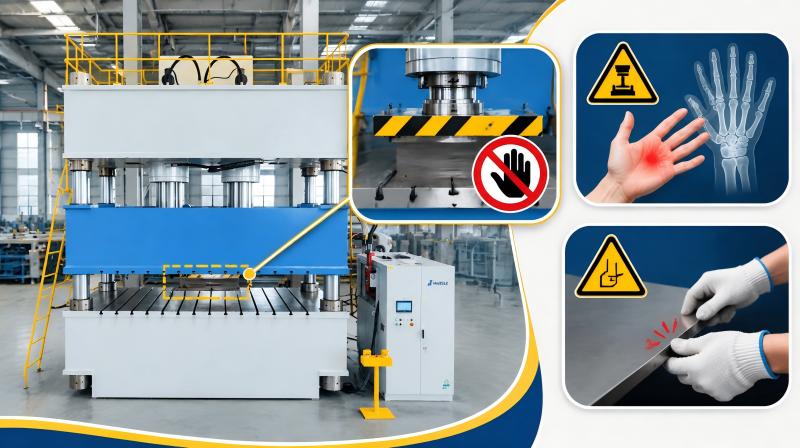
Preventing Hand and Finger Crushing Injuries
The working area between the upper and lower dies is one of the most dangerous parts of a hydraulic press. During the pressing cycle, the moving ram generates significant force that can crush hands or fingers if they enter the danger zone.
Operators must keep their hands away from the pressing area whenever the machine is capable of movement. Proper guarding and approved workpiece handling methods are essential for preventing accidental contact.
Reducing Injuries During Material Handling
Positioning small workpieces, removing finished products, and handling sharp metal edges can expose operators to additional hand injuries.
Using suitable feeding tools, material supports, and handling equipment helps reduce direct hand contact with hazardous areas.
How to Improve Hydraulic Press Hand Safety
Step 1: Install Appropriate Machine Guards and Safety Devices
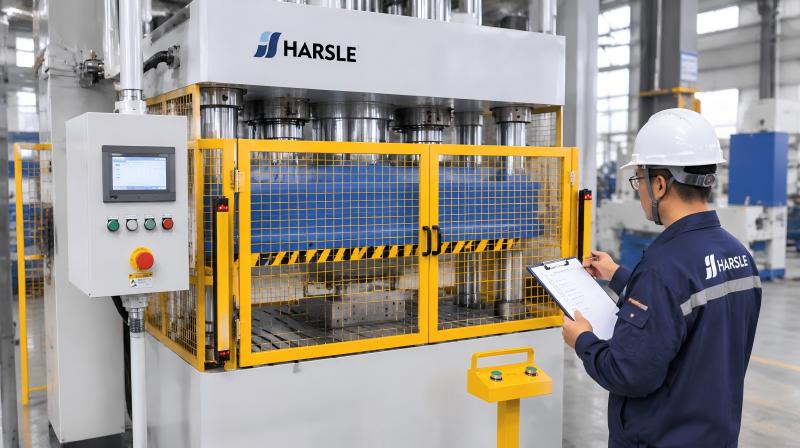
Machine guarding is the first line of defense against hand injuries.
I recommend checking that the hydraulic press is equipped with suitable protective devices for its specific application.
Important safety devices include:
- Fixed Guards: Prevent direct access to dangerous moving components and the pressing area.
- Interlocked Guards: Stop hazardous machine movement when protected access points are opened.
- Cortinas de luz: Detect personnel entering protected areas and initiate the appropriate safety response.
- Two-Hand Control Systems: Require simultaneous operation of two separate controls to initiate a press cycle, where this is the designed and approved safeguarding method.
- Emergency Stop Buttons: Allow operators to stop the machine when an emergency occurs.
All safety devices must be correctly installed, tested, and maintained. Never bypass protective systems to speed up production.
Step 2: Use Safe Workpiece Feeding and Removal Tools
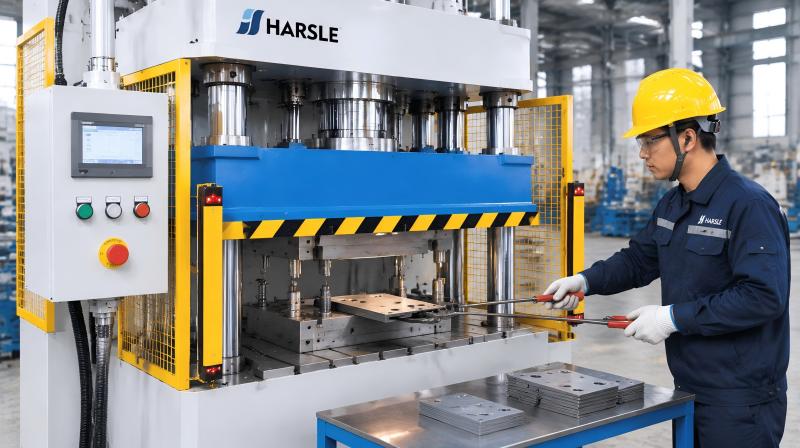
Operators should avoid placing their hands inside the die area when positioning or removing workpieces.
Depending on the pressing application, suitable tools may include:
- Mechanical feeding devices.
- Material positioning fixtures.
- Dedicated loading and unloading tools.
- Automatic feeding and handling systems.
- Suitable workpiece support tables.
For small components, use properly designed fixtures to maintain a safe distance between hands and the pressing area.
Never attempt to retrieve a jammed workpiece while the machine is energized or capable of unexpected movement.
Step 3: Establish Safe Operating Procedures
Clear operating procedures help ensure that operators follow consistent safety practices.
Before starting production, confirm that the correct tooling is installed, the workpiece is properly positioned, and all required safety devices are functioning.
During operation, operators should:
- Keep hands outside the hazardous pressing area.
- Use approved feeding and positioning tools.
- Confirm that the workpiece is stable before initiating the cycle.
- Never reach between the dies during machine movement.
- Stop the machine immediately if abnormal movement or unexpected operation occurs.
If material becomes stuck, stop the machine and follow the approved isolation and recovery procedure before attempting to remove it.
Step 4: Provide Comprehensive Operator Safety Training
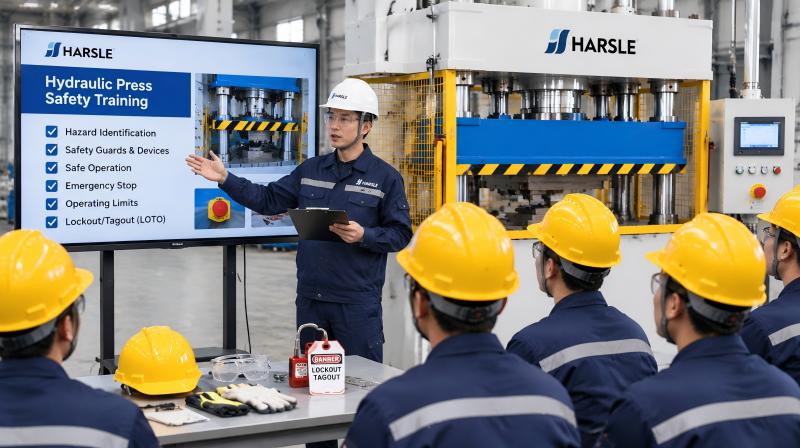
Proper training helps operators understand hydraulic press hazards and recognize unsafe working conditions.
Training should cover:
- Identification of crushing and pinch-point hazards.
- Correct use of machine guards and safety devices.
- Safe workpiece feeding and removal procedures.
- Emergency stop locations and emergency response procedures.
- Machine operating limits and approved working methods.
- Lockout/tagout procedures for cleaning and maintenance.
Operators should understand that gloves, tools, and other PPE cannot replace machine guarding or safe operating procedures.
Step 5: Perform Regular Safety Inspections and Maintenance
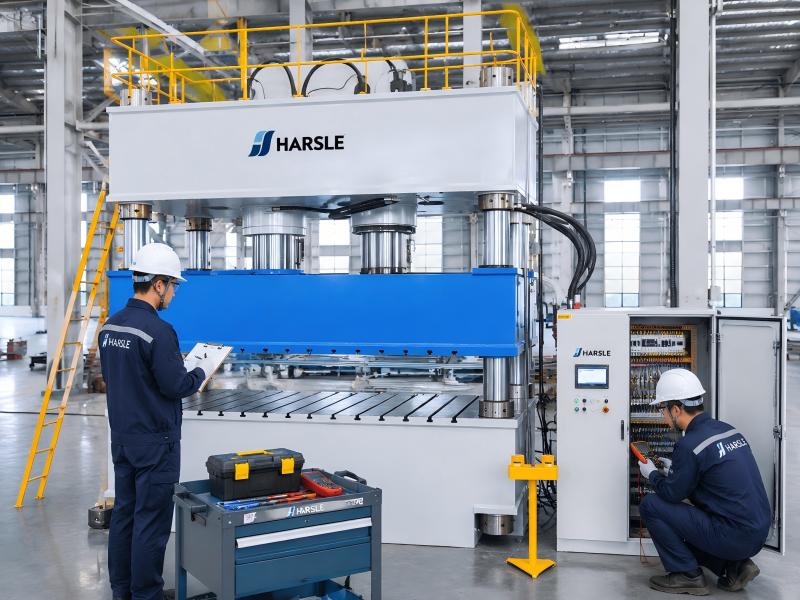
Damaged safety devices can expose operators to unexpected hazards.
Before each shift, inspect the machine’s guards, emergency stops, interlocks, and other protective equipment.
During scheduled maintenance, qualified personnel should examine hydraulic cylinders, control circuits, sensors, and mechanical components.
If a safety device fails or the machine behaves unexpectedly, stop operation and report the problem. Do not resume production until the fault has been corrected and the required safety functions have been verified.
Common Hydraulic Press Hand Safety Mistakes to Avoid
- Placing hands between dies: Never manually position or retrieve workpieces inside the hazardous pressing area during operation.
- Bypassing safety devices: Never disable interlocks, light curtains, or two-hand controls.
- Using unsuitable tools: Improvised feeding tools may create additional hazards or fail to maintain a safe distance.
- Ignoring damaged guards: Cracked guards, loose fasteners, and faulty sensors require immediate attention.
- Removing jammed materials without isolation: Always follow approved shutdown and energy-isolation procedures.
- Relying only on PPE: Protective gloves cannot prevent crushing injuries caused by hydraulic press force.
- Allowing untrained operators: Only properly trained and authorized personnel should operate the machine.
Perguntas frequentes
What Is the Most Common Hand Safety Risk on a Hydraulic Press?
The most serious risk is hand or finger crushing between the upper and lower dies. Improper material positioning and reaching into the pressing area can lead to severe injuries.
Can Operators Wear Gloves When Using a Hydraulic Press?
Suitable gloves may be necessary when handling sharp or rough materials. However, gloves must be selected according to the task and must not introduce entanglement risks around moving components. They should never be considered protection against crushing hazards.
How Can Small Workpieces Be Safely Positioned?
Use dedicated fixtures, mechanical feeding tools, or approved positioning devices. Never place fingers between the dies to adjust a workpiece during a hazardous machine cycle.
Conclusão
Improving hydraulic press hand safety requires effective machine guarding, suitable feeding tools, standardized operating procedures, comprehensive operator training, and regular safety inspections.
I recommend treating hand protection as a fundamental part of hydraulic press operation rather than relying on PPE alone. By combining engineering safeguards with proper training and preventive maintenance, manufacturers can significantly reduce hand injuries and create a safer production environment.


