


Prensa hidráulica Unexpected Startup is a serious industrial safety hazard that can cause crushing injuries, equipment damage, and unexpected machine movement during operation, cleaning, or maintenance. A hydraulic press may restart unexpectedly due to electrical control faults, automatic operating modes, stored hydraulic pressure, or improper maintenance procedures. In this guide, I’ll explain how to prevent unexpected hydraulic press startup through effective energy isolation, lockout/tagout procedures, safety device inspections, and operator training. These preventive measures help protect maintenance personnel and ensure safer production operations.
Why Does Unexpected Prensa hidráulica Startup Occur?
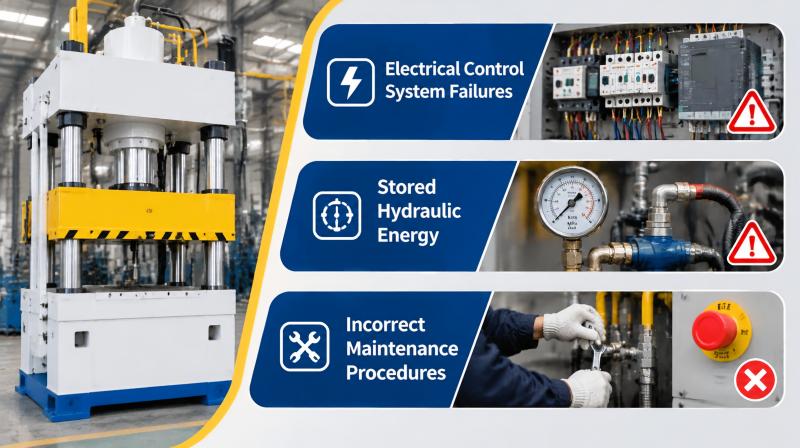
Electrical Control System Failures
Faulty relays, damaged wiring, malfunctioning contactors, or PLC control errors may cause unexpected machine activation. Incorrect electrical connections or unauthorized modifications can also interfere with normal startup controls.
Stored Hydraulic Energy
Even after the hydraulic pump has been switched off, residual pressure may remain inside cylinders, hoses, and hydraulic circuits. This stored energy can cause the ram or other moving components to move unexpectedly if the system is not properly isolated and depressurized.
Incorrect Maintenance Procedures
Unexpected startup can occur when workers perform maintenance without disconnecting the power supply or isolating all energy sources. Relying only on the emergency stop button is not sufficient protection during maintenance.
How to Prevent Hydraulic Press Unexpected Startup
Step 1: Implement Lockout/Tagout (LOTO) Procedures
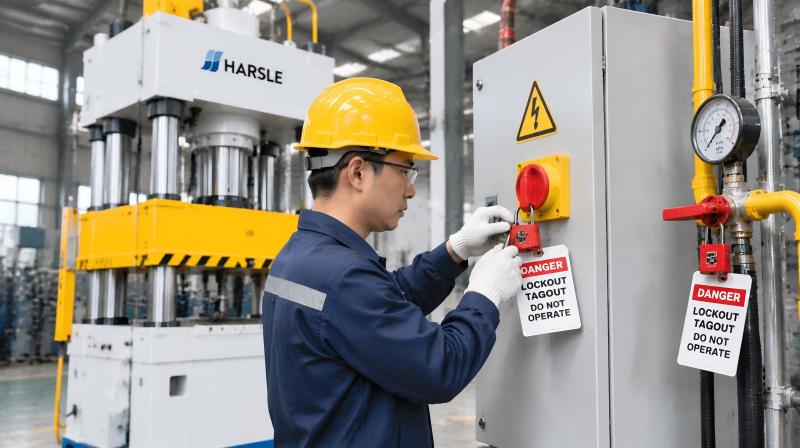
Lockout/tagout is one of the most important methods for preventing unexpected hydraulic press startup during maintenance and servicing.
Before beginning maintenance:
- Notify affected employees that the machine will be shut down.
- Stop the hydraulic press using the normal shutdown procedure.
- Disconnect and isolate the main electrical power supply.
- Apply personal locks and warning tags to the designated isolation points.
- Isolate other energy sources, including hydraulic and pneumatic supplies where applicable.
- Release or safely control stored energy according to the manufacturer’s instructions.
- Verify that the machine cannot start before beginning work.
Each authorized worker should apply their own lock according to the facility’s LOTO procedure. Never remove another person’s lock without following the established exceptional removal procedure.
Step 2: Release Residual Hydraulic Pressure
Turning off the hydraulic pump does not necessarily eliminate all stored hydraulic energy.
Before servicing the system, follow the manufacturer’s approved pressure-release procedure.
Check the following components:
- Hydraulic cylinders: Ensure trapped pressure is safely released.
- Hydraulic hoses: Check for residual pressure and visible damage.
- Pressure accumulators: Isolate and discharge stored energy according to the manufacturer’s instructions.
- Pressure gauges: Confirm that the relevant circuits have reached the specified safe pressure.
- Moving ram: Secure the ram using approved mechanical blocking devices when required.
Never rely solely on a pressure gauge or control display to confirm that all hazardous energy has been eliminated. Qualified personnel must verify the safe condition before accessing hazardous areas.
Step 3: Inspect Electrical and Control Safety Devices
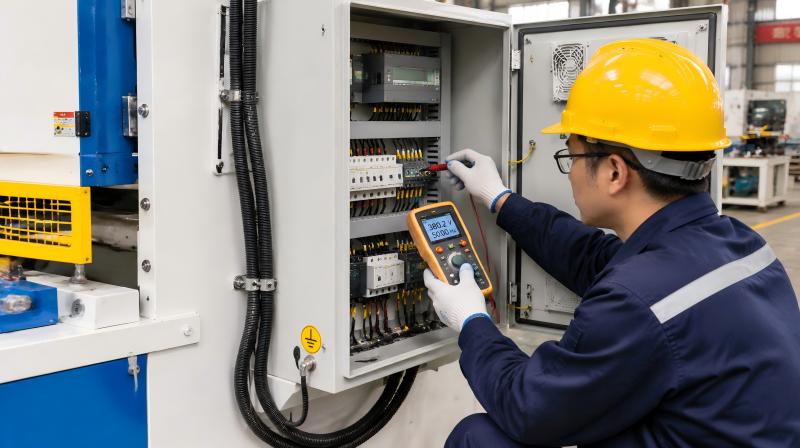
Regularly inspect electrical components and control systems to reduce the risk of unintended activation.
Important inspection points include:
- Main power switches and circuit breakers.
- Electrical contactors and control relays.
- PLC input and output modules.
- Emergency stop buttons.
- Safety interlocks and protective switches.
- Foot pedal controls and automatic operating modes.
Check for damaged wiring, loose connections, abnormal indicator signals, and unexpected control responses.
Any electrical troubleshooting or modification of safety circuits must be performed by qualified electricians. Never bypass safety interlocks to maintain production.
Step 4: Prevent Automatic and Remote Startup
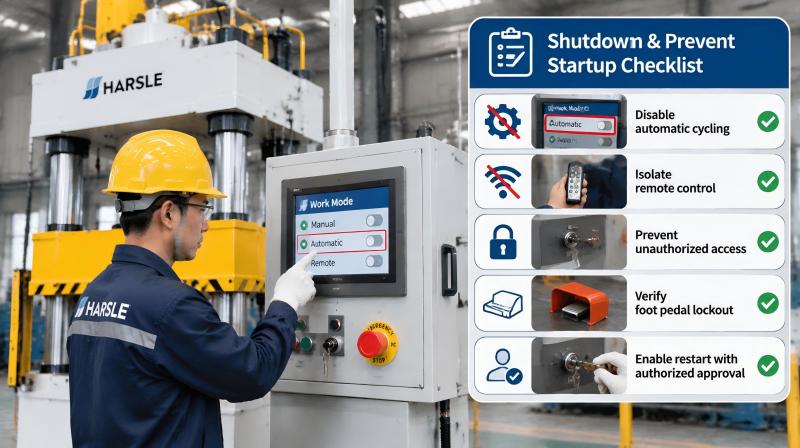
Modern hydraulic presses may support automatic cycles, programmable controllers, and remote control functions.
Before maintenance or inspection, make sure automatic operation cannot restart the machine unexpectedly.
I recommend checking the following:
- Disable automatic cycling according to the approved shutdown procedure.
- Isolate remote-control commands where applicable.
- Prevent unauthorized access to the control panel.
- Verify that foot pedal activation cannot initiate movement.
- Confirm that restart commands require the appropriate operator authorization.
The machine should only return to automatic operation after maintenance is completed, personnel are clear, protective devices are restored, and authorized personnel approve the restart.
Step 5: Train Operators and Maintenance Personnel
Proper training helps employees understand unexpected startup hazards and follow the correct safety procedures.
Training should cover:
- Hydraulic press shutdown procedures.
- Lockout/tagout requirements.
- Identification of electrical and hydraulic energy sources.
- Recognition of residual hydraulic pressure.
- Safe mechanical blocking of moving components.
- Emergency stop locations and functions.
- Communication procedures during maintenance.
Operators should understand that an emergency stop is not an energy-isolation device and must never replace a complete LOTO procedure.
Common Mistakes to Avoid When Preventing Unexpected Startup
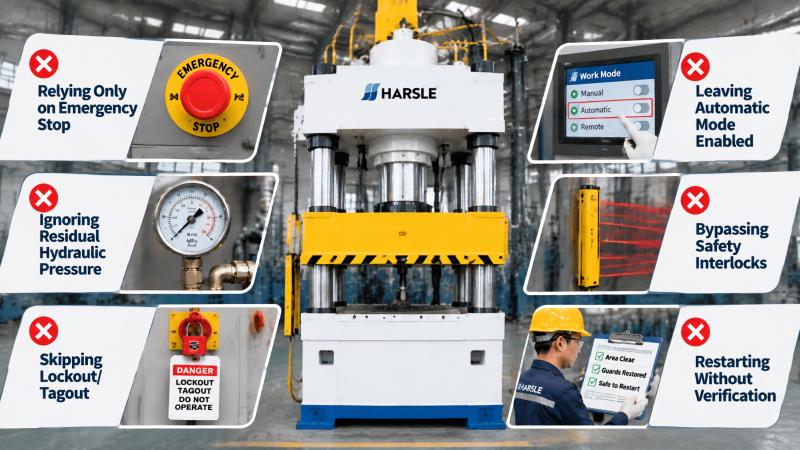
- Relying only on the emergency stop: An E-stop does not guarantee complete energy isolation.
- Ignoring residual hydraulic pressure: Stored energy may cause unexpected cylinder movement.
- Skipping lockout/tagout: Maintenance must not begin without proper energy isolation.
- Leaving automatic mode enabled: Unintended commands may initiate machine movement.
- Bypassing safety interlocks: Disabling protective devices creates additional hazards.
- Restarting without verification: Always confirm that personnel are clear and protective systems are restored before restarting.
Perguntas frequentes
Can a Hydraulic Press Start Unexpectedly After Power Is Switched Off?
Yes. Stored hydraulic energy, incorrect isolation, or other connected energy sources may still create hazards even after electrical power is disconnected. Follow the complete energy-isolation procedure.
Is an Emergency Stop Button Enough to Prevent Unexpected Startup?
No. An emergency stop is designed to stop machine operation during an emergency. It does not provide the complete isolation required for maintenance or servicing.
Why Is Lockout/Tagout Important for Hydraulic Press Maintenance?
LOTO prevents unauthorized or accidental re-energization while employees are working on equipment. It also helps ensure that hazardous energy sources are isolated and verified before maintenance begins.
Conclusão
Preventing unexpected hydraulic press startup requires effective energy isolation, proper lockout/tagout procedures, hydraulic pressure management, reliable safety devices, and comprehensive employee training.
I recommend making energy isolation and verification mandatory before every maintenance activity involving hazardous machine components. These practices help reduce crushing hazards, protect maintenance personnel, and improve overall equipment safety.


