


In modern sheet metal fabrication, horizontal V-grooving machines play a critical role in preparing materials for precision bending. Unlike vertical systems, horizontal machines support the sheet in a stable horizontal position, which provides better alignment for long panels and batch processing.
At the core of this equipment lies horizontal V-grooving machine programming, a structured process that determines groove depth, spacing, cutting sequence, and production cycles. Understanding how this programming works is essential for achieving consistent bending angles, preventing tool collision, and ensuring long-term machining stability.
This guide focuses primarily on programming demonstrations and logic explanations, while also briefly covering applications, system advantages, and maintenance considerations.
Applications of Horizontal V Grooving Machines
Horizontal V-grooving machines are widely used in industries where precise bending lines and clean folding edges are required. Common application fields include:
- Elevator panel manufacturing
- Stainless steel decorative sheet processing
- Architectural façade panels
- Cabinet and enclosure fabrication
- Metal furniture production
- Aluminum composite panel preparation
In these industries, consistent groove depth and spacing are crucial, which makes accurate horizontal V grooving machine programming a key production factor.
Advantages of Horizontal Type Systems
Compared with vertical grooving systems, horizontal machines offer several operational benefits:
- Stable sheet support during long panel machining
- Reduced material deformation during cutting
- Better repeatability for batch production
- Easier integration with automated material handling systems
Because of these structural characteristics, horizontal V-grooving machine programming must be executed with precise parameter logic to fully utilize these mechanical advantages.
Core Section: Horizontal V Grooving Machine Programming Demonstration
The most important part of machine operation lies in the correct parameter setup and programming structure. Improper data input may result in incorrect groove geometry, inconsistent bending performance, or even mechanical interference.
Step 1: Machine Initialization
Before starting horizontal V-grooving machine programming, the machine must return to its reference state.
After powering on:
- Press the ALL HOME button
- Ensure all axes return to the zero position
- Confirm that coordinate values are reset
Returning to home ensures that subsequent positioning calculations are based on accurate reference coordinates, which directly affects groove placement precision.
Step 2: Understanding Programming Parameters
The programming interface of a horizontal system typically requires the following inputs:
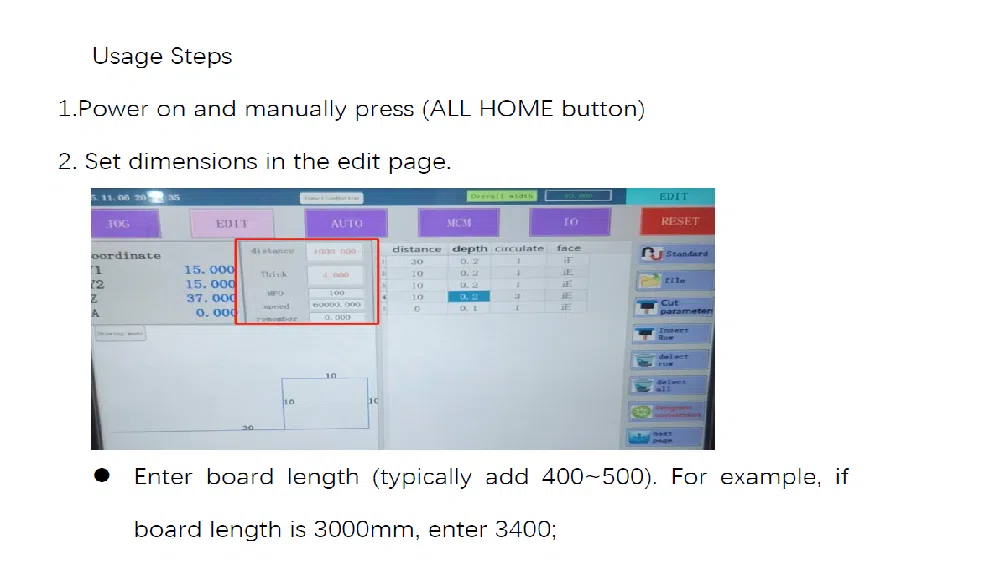
- Board length
- Board thickness
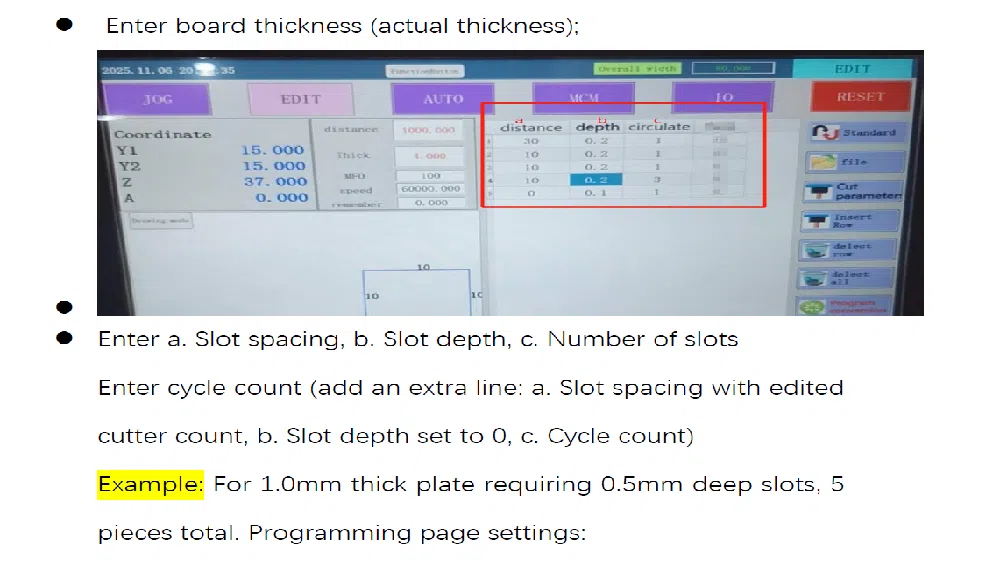
- Slot spacing (Distance)
- Groove depth (Depth)
- Cutting passes (Circulate)
Each parameter plays a specific role in machining accuracy and bending outcome.
Board Length Input Logic
Operators should input the actual board length and typically add an additional 400–500 mm.
For example, if the sheet length is 3000 mm, the system input should be approximately 3400 mm.
This extra travel distance ensures safe cutter movement and avoids collision during positioning. In horizontal V-grooving machine programming, insufficient travel allowance may cause mechanical limitations or positioning errors.
Board Thickness Input
The system requires the actual measured thickness, not the nominal specification.
Because groove depth calculation is directly related to material thickness, inaccurate thickness input may lead to:
- Overcutting
- Under-grooving
- Inconsistent bending angles
For precise horizontal V-grooving machine programming, accurate thickness measurement is fundamental.
Slot Spacing (Distance)
Slot spacing determines the position of each groove relative to the sheet edge. Incorrect spacing affects final part dimensions and bending geometry.
Spacing must be calculated based on the finished product design and bending allowance.
Groove Depth (Depth)
Groove depth directly influences bending performance.
- A shallow groove preserves structural strength but requires greater bending force.
- A deeper groove reduces bending force but may weaken material integrity.
During horizontal V-grooving machine programming, groove depth should be gradually increased using multiple cutting passes rather than reaching full depth in a single pass.
Cutting Passes (Circulate)
Layered cutting improves machining stability. Instead of removing material in one deep cut, multiple passes distribute the tool load evenly, reducing vibration and improving surface finish.
This approach enhances consistency and prolongs tool life.
Batch Production Programming Logic
For batch processing, horizontal V-grooving machine programming includes an additional logic structure.
An extra programming line should be inserted:
- Slot spacing equal to total programmed passes
- Groove depth set to 0
- Cycle count entered in the circulate column
This configuration allows the system to repeat the groove pattern automatically without modifying depth parameters.
Such logic is essential in production environments where repeatability and efficiency are critical.
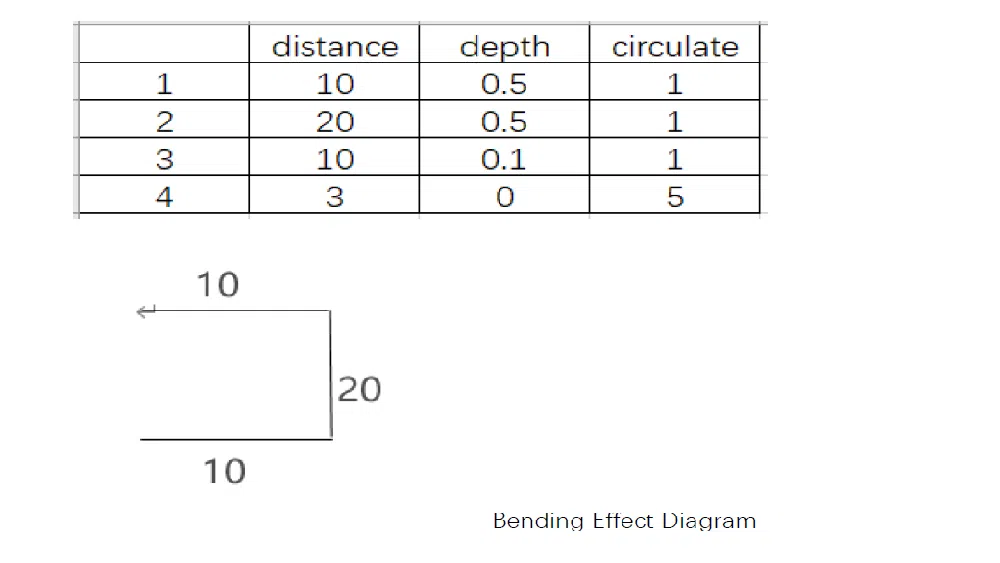
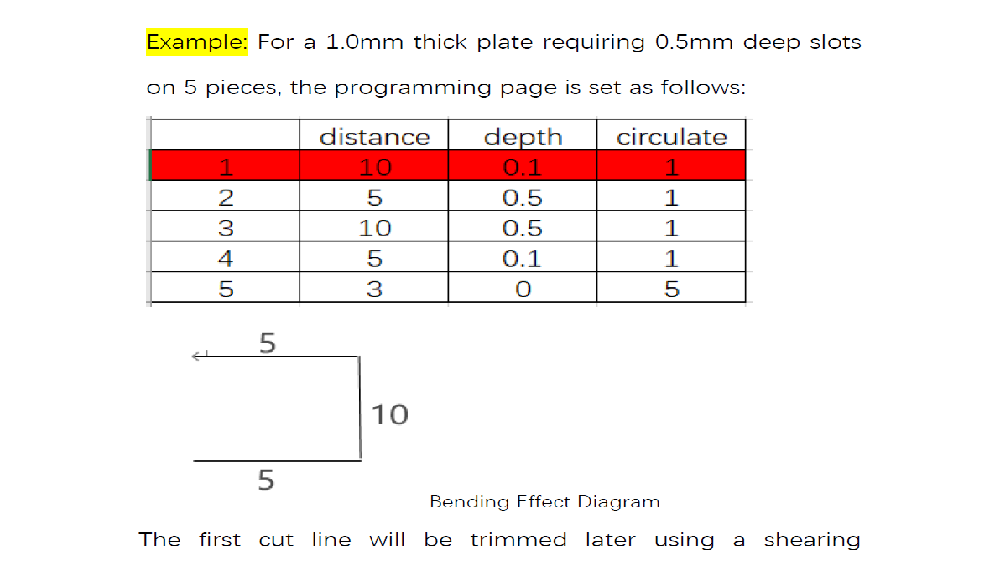
Programming Example: 1.0 mm Sheet
Case conditions:
- Material thickness: 1.0 mm
- Required groove depth: 0.5 mm
- Production quantity: 5 pieces
The programming table should include progressive cutting passes until the total depth reaches 0.5 mm, followed by a cycle line for repetition.
Safety Clearance Rule
The first cut must exceed the minimum clearance value of 8 mm.
This clearance prevents collision between the cutter and the presser foot. The first groove line is typically removed later using a shearing machine.
Ignoring this safety rule during horizontal V-grooving machine programming may result in mechanical damage.
Operation Procedure After Programming
Once horizontal V grooving machine programming is completed and verified:
- Convert the program to machining mode
- Start the oil pump
- Load the material
- Secure the sheet using the side clamp
- Activate positioning
- Confirm presser foot engagement
- Start machining
Always perform a test cut before full production to verify groove depth accuracy.
Common Programming Errors
Even experienced operators may encounter issues if parameter logic is overlooked. Typical mistakes include:
- Forgetting to add extra board length
- Entering nominal thickness instead of measured thickness
- Setting the first cut below the safety clearance
- Skipping cycle programming line
- Attempting full-depth cutting in a single pass
Avoiding these errors ensures stable horizontal V-grooving machine programming and reduces production downtime.
Basic Maintenance Considerations
While programming accuracy is crucial, long-term machining stability also depends on routine maintenance:
- Inspect cutting tools regularly for wear
- Maintain proper guide rail lubrication
- Check the hydraulic oil level and pressure stability
- Verify presser foot clearance
- Backup programming parameters periodically
Well-maintained equipment ensures consistent results from horizontal V-grooving machine programming over extended production cycles.
Conclusion
Horizontal V-grooving machine programming is a structured technical process that defines groove geometry, machining stability, and downstream bending performance. By understanding parameter logic, applying layered cutting principles, and respecting safety clearance rules, operators can achieve consistent results and safe operation.
When combined with proper machine maintenance and controlled production conditions, accurate horizontal V-grooving machine programming becomes the foundation of high-quality sheet metal fabrication.


