


Hydraulic shearing machine safety operating procedures and guidelines are essential protocols designed to prevent mechanical, hydraulic, and electrical accidents during metal fabrication. These procedures apply to trained operators, maintenance technicians, and floor supervisors working with HARSLE swing beam or guillotine shears. By adhering to these verified safeguards, facilities can mitigate risks such as finger amputation, high-pressure fluid injection, and material kickback while ensuring the longevity of the equipment.
Scope, Responsibilities, and Training Prerequisites
The operation of a hydraulic shearing machine involves significant forces, often exceeding several hundred tons of pressure. Consequently, the scope of these guidelines covers the entire lifecycle of a production shift, from initial power-on to final shutdown and maintenance handovers. It is a fundamental requirement that only personnel who have completed a formal certification program and read the specific HARSLE model manual are permitted to operate the machinery.
Operator Responsibilities
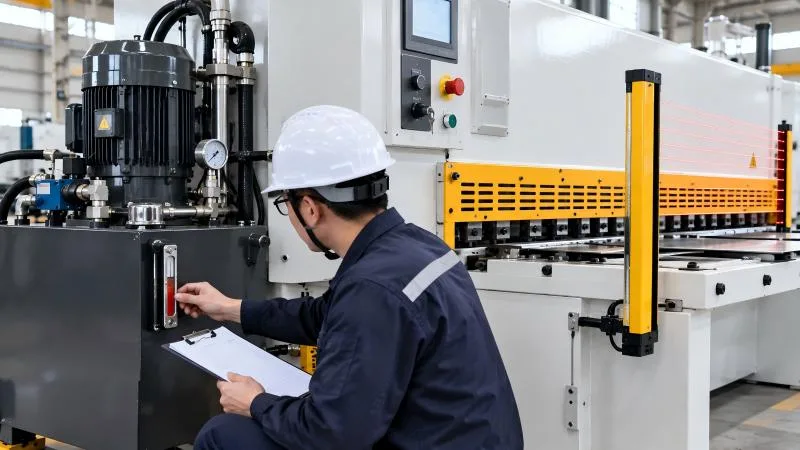
Operators are responsible for the daily inspection of the machine and the immediate reporting of any anomalies. This includes monitoring the hydraulic oil level, checking the sharpness of the blades, and ensuring that all physical guards are securely in place. An operator must never attempt to bypass a safety interlock or operate the machine if the light curtains are non-functional. The primary duty is to maintain a clear “danger zone” and ensure that no part of the body enters the shearing area while the pump is active.
Supervisor and Employer Responsibilities
Management must provide a safe working environment by scheduling regular professional inspections and providing the necessary Personal Protective Equipment (PPE). Employers are also responsible for ensuring that the machine’s capacity—specifically the maximum material thickness and tensile strength—is clearly posted. Overloading a hydraulic shear is not only a maintenance risk but a severe safety hazard that can lead to catastrophic structural failure.
Training Prerequisites
- Technical Competency: Understanding the difference between swing beam and guillotine shearing actions.
- Control Proficiency: Mastery of the CNC or NC controller, including backgauge positioning and stroke adjustment.
- Safety Awareness: Recognition of all emergency stop (E-stop) locations and the Lockout/Tagout (LOTO) procedure.
- Material Knowledge: Ability to calculate the correct blade gap based on material type (e.g., mild steel vs. stainless steel).
Hazard and Control Measure Table
Identifying hazards is the first step in establishing a safe workshop. The following table outlines the primary risks associated with hydraulic shearing and the corresponding control measures required to maintain a safe environment.
| Hazard Type | Source of Risk | Control Measure / Safeguard |
|---|---|---|
| Mechanical Shearing | Moving upper blade and hold-down cylinders. | Fixed finger guards, light curtains, and two-hand controls (if applicable). |
| Hydraulic Failure | High-pressure hose bursts or seal leaks. | Regular hose inspections and shielded hydraulic lines. |
| Material Kickback | Improperly clamped workpieces or dull blades. | Ensure hold-down pressure is calibrated; maintain blade sharpness. |
| Electrical Shock | Exposed wiring or ungrounded control cabinets. | Quarterly electrical audits and strictly closed cabinet doors. |
| Ergonomic Strain | Handling large, heavy metal sheets. | Use of ball-transfer tables and mechanical lifting aids. |
Pre-Operation Safety Checklist
Before initiating any shearing cycle, the operator must perform a comprehensive walk-around inspection. This checklist ensures that the machine is in a state of readiness and that no hidden faults pose a threat to the operator or the equipment.
1. Visual and Structural Inspection
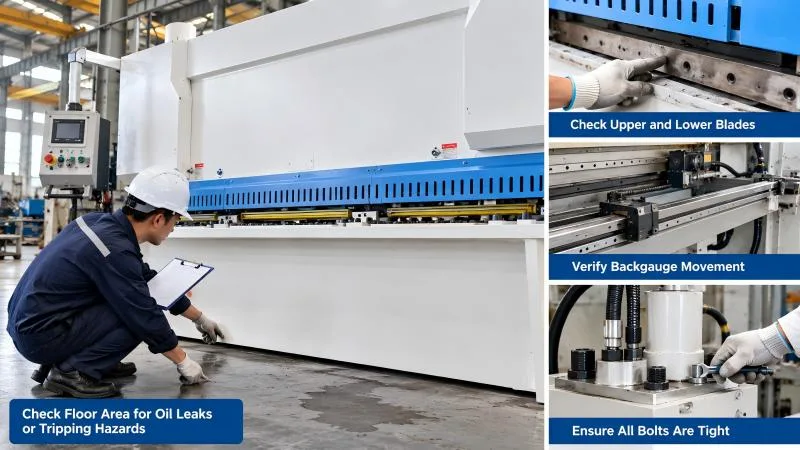
- Check the floor area around the machine for oil leaks or tripping hazards.
- Inspect the upper and lower blades for chips, cracks, or excessive wear.
- Verify that the backgauge moves smoothly and is not obstructed by debris.
- Ensure all bolts on the hold-down cylinders and blade carrier are tight.
2. Hydraulic and Pneumatic Systems
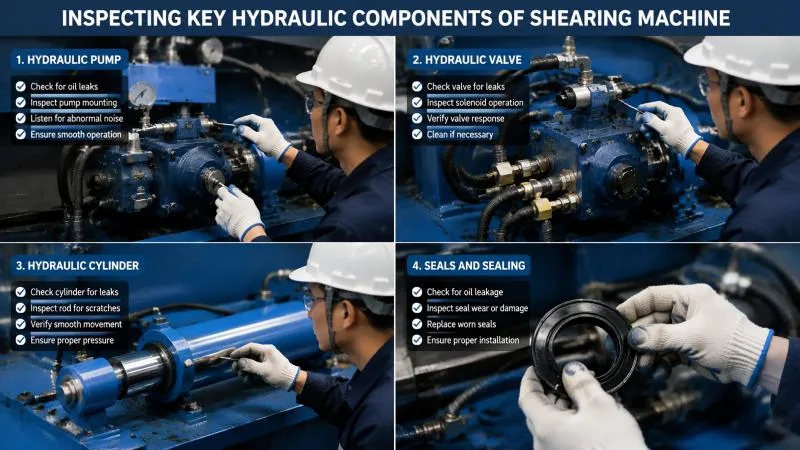
- Check the hydraulic oil sight glass; the oil should be clear and at the required level (typically ISO 46 or 68 depending on the climate).
- Inspect hoses for signs of bulging, abrasion, or moisture.
- If the machine uses a pneumatic return system (common in guillotine shears), verify the nitrogen pressure is within the manufacturer’s specified range.
3. Safety Device Verification
- Test the Emergency Stop buttons to ensure they cut power to the main motor immediately.
- Verify the functionality of the light curtains by breaking the beam and confirming the machine stops.
- Check that the rear safety fence is closed and the interlock is engaged.
Safe Operation Boundaries and Stop Conditions
Operating a hydraulic shearing machine requires strict adherence to spatial and mechanical boundaries. The “Danger Zone” is defined as any area within the reach of the blade, the hold-down cylinders, or the path of the backgauge. Following the Hydraulic Shearing Machine Safety Operating Procedures Guidelines means never entering these zones while the machine is powered.
Material Handling and Positioning
When feeding material into the shear, operators must use the shadow line or laser guide to align the cut. Hands should remain at a minimum distance of 100mm (4 inches) from the finger guard at all times. For small workpieces, specialized feeding tools should be used to keep fingers away from the clamping zone. Never attempt to shear multiple pieces of varying thicknesses simultaneously, as this can cause the thinner piece to fly out or damage the blade gap setting.
Blade Gap and Rake Angle Adjustments
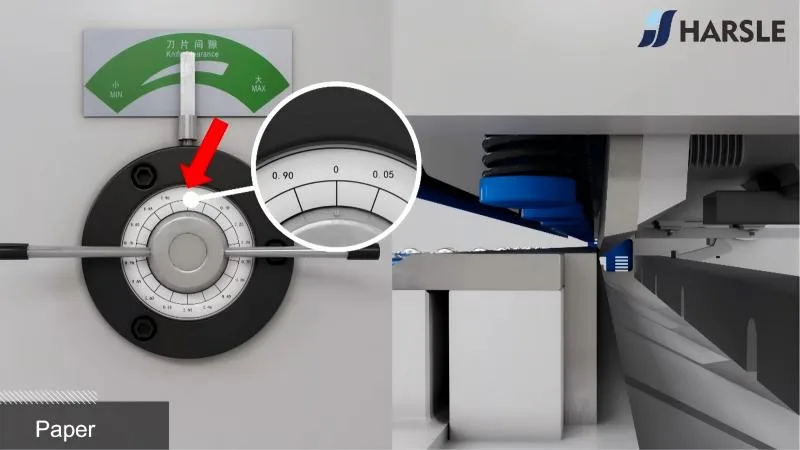
The blade gap must be adjusted according to the material thickness. A gap that is too tight will cause excessive friction and blade wear, while a gap that is too wide will result in a “burred” edge and increased risk of the material being pulled into the gap. On machines with adjustable rake angles, the angle should be kept as low as possible to minimize workpiece distortion, but high enough to handle the material’s tensile strength without stalling the motor.
Mandatory Stop Conditions
The operator must immediately cease operations and press the E-stop if any of the following conditions occur:
- Unusual noises, such as grinding, high-pitched squealing, or heavy thumping.
- Visible smoke or the smell of burning electrical components.
- A sudden drop in hydraulic pressure or sluggish movement of the ram.
- The material becomes jammed between the blades.
- Any safety guard or light curtain becomes misaligned or non-functional.
Emergency Response and Qualified-Personnel Escalation
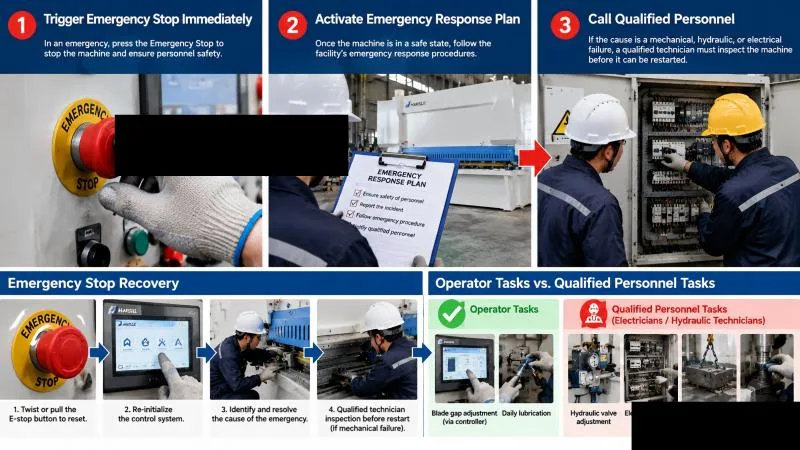
In the event of an emergency, the priority is the safety of personnel. If an accident occurs, the Emergency Stop must be triggered immediately. Once the machine is in a safe state, the facility’s emergency response plan should be activated.
Emergency Stop Recovery
After an E-stop has been pressed, the machine cannot simply be restarted. The operator must first identify and resolve the cause of the emergency. The E-stop button must be twisted or pulled to reset, and the control system must be re-initialized. If the E-stop was triggered by a mechanical failure, a qualified technician must inspect the unit before production resumes.
Distinguishing Operator Tasks from Qualified Personnel Tasks
It is critical to distinguish between routine operation and technical maintenance. Operators are generally permitted to perform blade gap adjustments (via the controller) and daily lubrication. However, the following tasks are strictly reserved for qualified personnel (electricians or hydraulic technicians):
- Hydraulic Valve Adjustment: Adjusting the main relief valve or pressure valves requires specialized gauges and knowledge of the system’s maximum PSI.
- Electrical Cabinet Access: Any work involving the PLC, contactors, or high-voltage wiring.
- Blade Rotation/Sharpening: Removing and reinstalling heavy shear blades requires specific lifting equipment and torque specifications.
- Internal Seal Replacement: Repairing leaks within the main cylinders or hold-downs.
FAQs
What PPE is required for operating a hydraulic shearing machine?
Operators must wear ANSI-rated safety glasses to protect against flying metal chips, steel-toed boots to protect against falling offcuts, and cut-resistant gloves. However, gloves should be chosen carefully; they must provide grip and protection but should not be so loose that they risk being caught in moving parts. Hearing protection is also recommended during prolonged operation.
How often should the hydraulic oil be changed for safety?
While safety is primarily about immediate operation, degraded oil can cause valve sticking and unpredictable machine behavior. Generally, hydraulic oil should be filtered or changed every 2,000 to 4,000 operating hours, or annually. Always check the oil for a milky appearance (water contamination) or a dark, burnt smell, which indicates overheating.
Can I shear hardened steel on a standard hydraulic shear?
Most hydraulic shears are rated for mild steel (tensile strength approx. 450 N/mm²). Shearing hardened steel or alloys with higher tensile strength requires significant de-rating of the machine’s capacity. For example, a machine rated for 10mm mild steel may only be able to safely shear 5mm or 6mm stainless steel. Consult the HARSLE capacity chart before attempting to cut non-standard materials.
Safety Review Checklist and Model-Manual References
To maintain a high standard of safety, use the following review checklist at the end of every week. This ensures that the Hydraulic Shearing Machine Safety Operating Procedures Guidelines are being followed consistently across all shifts.
- Guard Integrity: Are all fixed guards in place and showing no signs of tampering?
- LOTO Compliance: Are lockout devices available and being used during all maintenance tasks?
- Documentation: Is the machine logbook updated with any minor issues or adjustments made during the week?
- Blade Condition: Is the cut quality consistent, or is there evidence of blade dulling that requires more force?
- Instruction Clarity: Are the safety signs and capacity charts on the machine legible and clean?
For specific technical specifications, wiring diagrams, or hydraulic circuit maps, always refer to the original manual provided with your HARSLE machine. If the manual is missing, contact the manufacturer with your machine’s serial number to obtain a replacement. Never rely on generic settings for critical safety components like pressure relief valves or electrical fuse ratings.
By following these structured safety operating procedures, metal fabrication facilities can ensure a productive environment that prioritizes the well-being of every team member. Regular training and a culture of safety are the most effective tools against industrial accidents.


