


When operating a metal cutting workshop, one of the most common maintenance challenges I encounter is corrosion on machine components. Shearing Machine Rust Prevention is essential for maintaining cutting accuracy, extending equipment lifespan, and avoiding unexpected downtime. Rust can affect blades, frames, hydraulic components, and moving parts, reducing machine performance over time. In this article, I’ll explain the main causes of rust on shearing machines and share practical prevention methods that help operators protect their equipment and maintain reliable cutting performance.
Understanding Rust Formation on Shearing Machine Components
Why Shearing Machines Are Vulnerable to Rust
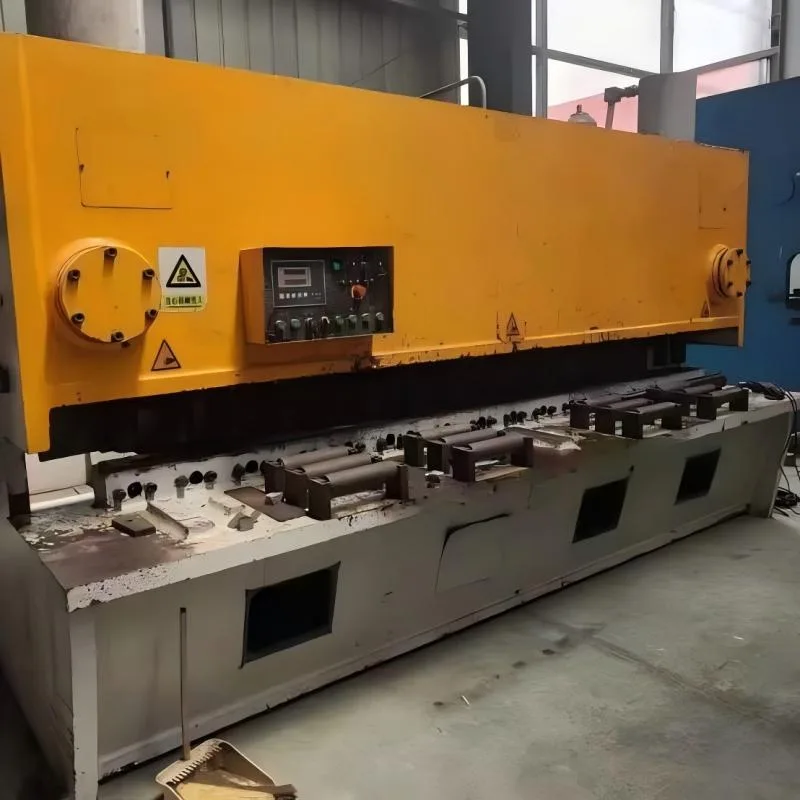
Shearing machines are commonly used in environments where they are exposed to metal dust, moisture, humidity, and frequent material handling. These conditions create a high risk of oxidation, especially on unprotected steel surfaces.
Components such as blades, worktables, guides, and hydraulic parts can gradually develop rust if they are not properly maintained. Even small areas of corrosion can affect cutting precision and increase wear on critical components.
How Rust Affects Shearing Machine Performance
Rust is not only a surface problem. Corrosion can reduce blade sharpness, increase friction, and damage mechanical surfaces. On hydraulic shearing machines, rust particles may also contaminate hydraulic oil and affect valves or seals.
By applying proper Shearing Machine Rust Prevention methods, operators can reduce repair costs, improve machine reliability, and maintain consistent cutting quality.
Main Causes of Shearing Machine Rust
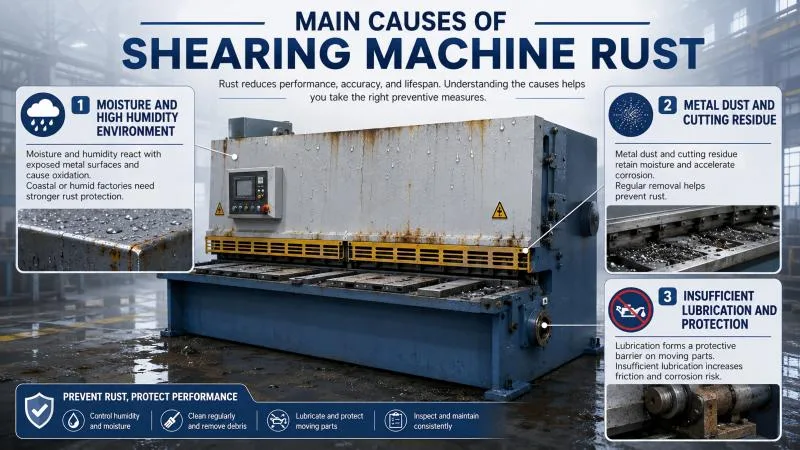
Moisture and High Humidity Environment
Moisture is the primary cause of rust formation. When water or humidity remains on exposed metal surfaces, it reacts with iron and creates oxidation.
Factories located in coastal areas or regions with high humidity require stronger rust protection measures, including regular cleaning and protective coatings.
Metal Dust and Cutting Residue
During sheet metal cutting, small metal particles can accumulate on machine surfaces. These particles can retain moisture and accelerate corrosion.
Regular removal of dust and debris helps prevent rust from developing on blades, guide rails, and machine frames.
Insufficient Lubrication and Protection
Lubrication creates a protective barrier between metal surfaces and the environment. Without proper lubrication, moving components experience increased friction and become more vulnerable to corrosion.
Operators should follow manufacturer recommendations for lubrication intervals and use suitable anti-rust oils or protective grease.
Effective Shearing Machine Rust Prevention Methods
Clean Machine Components Regularly
I always recommend keeping the machine clean after daily operations. Remove metal chips, dust, and cutting residue from blades, tables, and moving areas.
A clean working environment reduces moisture retention and prevents contaminants from accelerating rust formation.
Apply Anti-Corrosion Coatings
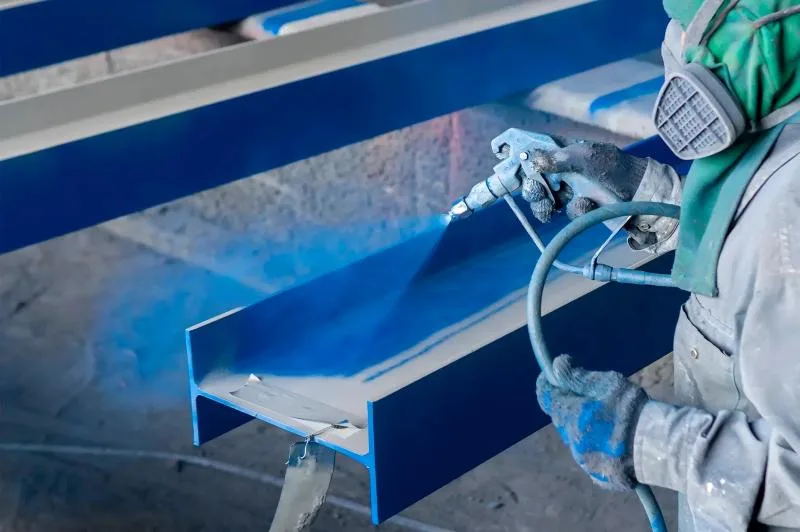
Applying protective coatings is one of the most effective ways to prevent oxidation. Anti-rust sprays, protective oils, and corrosion-resistant coatings create a barrier between metal surfaces and external moisture.
Focus especially on exposed components such as:
- Cutting blades
- Guide rails
- Worktables
- Machine frames
- Fasteners
Maintain Proper Lubrication
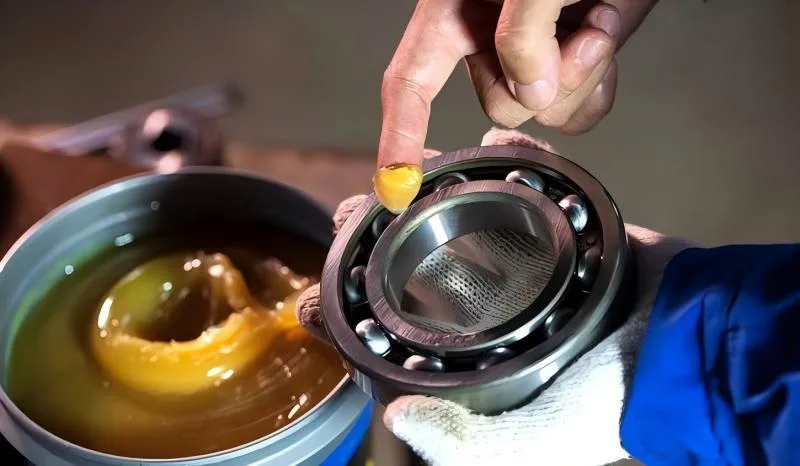
Regular lubrication is an important part of long-term machine protection. Proper lubricants reduce friction while preventing moisture from contacting metal surfaces.
For hydraulic shearing machines, maintaining clean hydraulic oil also helps protect internal components from corrosion-related damage.
Control the Workshop Environment
Environmental control plays an important role in Shearing Machine Rust Prevention. Keep the production area dry, improve ventilation, and avoid direct exposure to water sources.
For machines that are not used for long periods, consider covering exposed surfaces and applying additional protective oil.
Inspect Components Regularly
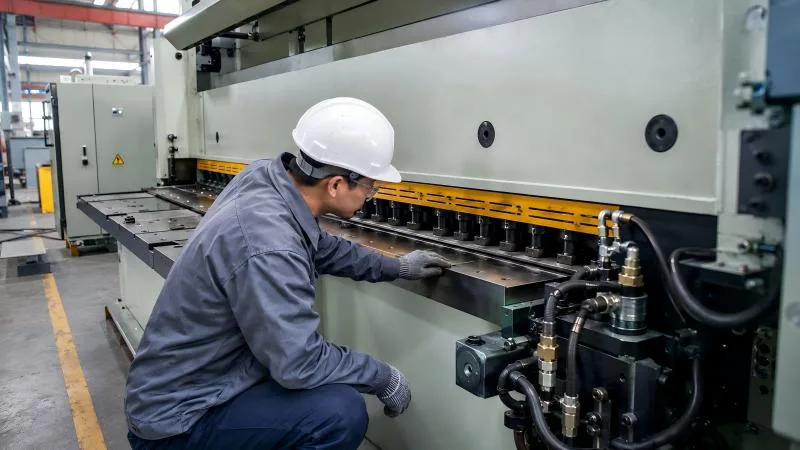
Routine inspection allows operators to detect early signs of corrosion before serious damage occurs.
Check areas including:
- Blade edges for oxidation
- Hydraulic pipes and fittings
- Guide rails and sliding surfaces
- Electrical cabinet surroundings
- Machine frame joints
Early detection helps reduce maintenance costs and prevents unexpected production interruptions.
Best Practices for Long-Term Rust Protection
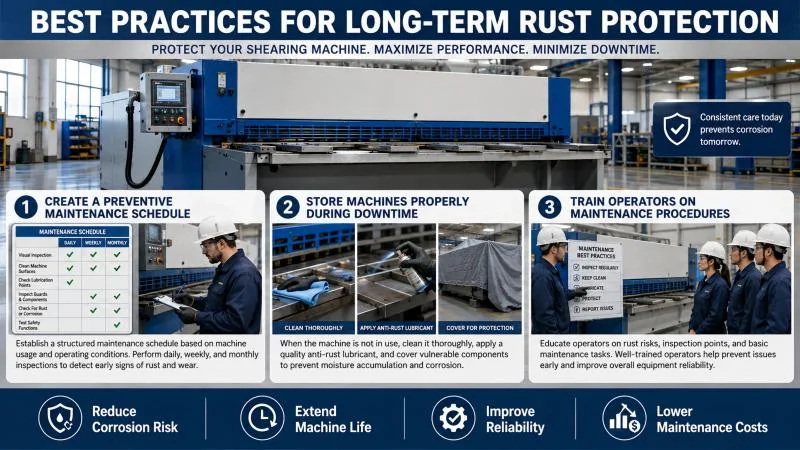
Create a Preventive Maintenance Schedule
A structured maintenance plan ensures rust prevention becomes a regular task instead of a reactive repair activity.
I recommend establishing daily, weekly, and monthly inspections based on machine usage and operating conditions.
Store Machines Properly During Downtime
When a shearing machine is unused for extended periods, proper storage is essential. Clean the machine thoroughly, apply protective lubricant, and cover vulnerable components.
This prevents moisture accumulation and keeps the machine ready for future production.
Train Operators on Maintenance Procedures
Operator awareness directly affects machine condition. Training employees to recognize rust risks and perform basic maintenance can significantly improve equipment reliability.
Proper operation combined with regular maintenance creates the best protection strategy.
FAQ
Why does my shearing machine develop rust quickly?
Rust usually develops due to moisture, poor lubrication, metal residue accumulation, or insufficient environmental protection. Regular cleaning and anti-corrosion treatment can reduce the risk.
How often should I perform shearing machine rust prevention maintenance?
Daily cleaning and regular lubrication are recommended. More detailed inspections should be performed monthly or according to the machine operating conditions.
Can rust affect shearing accuracy?
Yes. Rust can damage blades, increase friction, and affect component movement, which may reduce cutting accuracy and machine stability.
What is the best lubricant for preventing rust on shearing machines?
Use manufacturer-recommended anti-rust oils or lubricants designed for industrial metalworking equipment to provide effective protection.
Conclusion
Effective Shearing Machine Rust Prevention requires consistent cleaning, proper lubrication, environmental control, and regular inspections. By protecting critical components from moisture and corrosion, operators can extend machine lifespan, maintain cutting accuracy, and reduce unexpected maintenance costs.
Following these preventive measures helps ensure your shearing machine remains reliable and efficient throughout long-term operation. For more maintenance guidance or technical support, feel free to contact our team for professional assistance.


