


Machine à cisailler Incident Investigation plays an important role in identifying workplace hazards, understanding accident causes, and preventing similar incidents from happening again. During sheet metal processing, operators may face risks involving sharp blades, moving components, hydraulic systems, electrical failures, and heavy material handling. When an accident or near miss occurs, simply repairing the machine is not enough. I recommend conducting a systematic investigation to identify what went wrong, why it happened, and what corrective actions are necessary. In this guide, I’ll explain how incident investigations improve shearing machine safety and how manufacturers can establish an effective investigation process.
Why Is Machine à cisailler Incident Investigation Important?
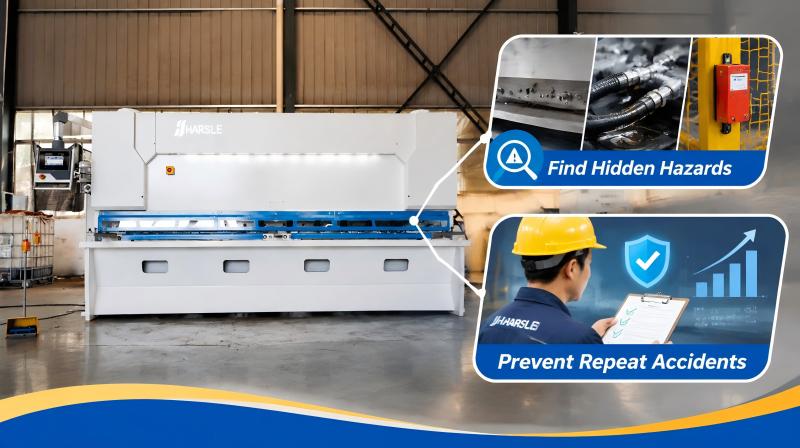
Identifying Hidden Machine Hazards
Some machine hazards are not immediately visible during routine inspections. Loose blade connections, damaged hydraulic hoses, faulty safety interlocks, and abnormal backgauge movement may contribute to unexpected incidents.
Investigating accidents and near misses helps maintenance teams identify these hidden problems before they cause more serious injuries or equipment damage.
Preventing Repeated Workplace Accidents
If a workplace only addresses the immediate consequences of an accident, the underlying problem may remain unresolved.
For example, replacing a damaged hydraulic hose without investigating why it failed may result in another similar incident. A proper investigation examines equipment condition, maintenance history, operating procedures, and operator training to prevent recurrence.
How to Conduct a Shearing Machine Incident Investigation
The first priority is protecting personnel and preventing additional injuries.
Step 1: Secure the Accident Scene
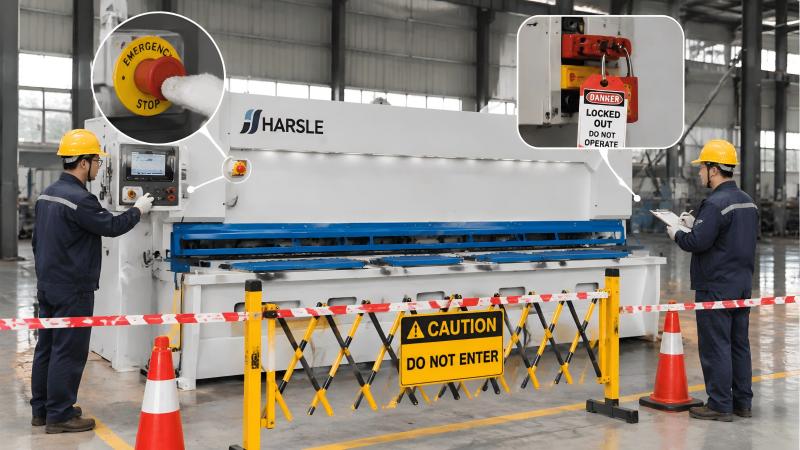
Stop the machine using the emergency stop when appropriate, alert nearby workers, and restrict access to the affected area. If an injury occurs, arrange emergency medical assistance immediately.
Before anyone attempts to recover trapped material or inspect damaged components, ensure hazardous energy has been properly isolated. Follow the facility’s lockout/tagout procedures.
Unless necessary for rescue or hazard control, avoid changing the accident scene until relevant evidence has been documented.
Step 2: Collect Evidence and Record Incident Details
Accurate information is essential for understanding how an incident occurred.
I recommend collecting the following evidence:
- Machine condition: Record the condition of the blades, guards, hydraulic components, electrical systems, and emergency stops.
- CNC records: Review available alarm messages, operating parameters, and controller records.
- Workpiece condition: Examine material positioning, thickness, dimensions, and any signs of abnormal deformation.
- Photographic evidence: Photograph the machine, surrounding work area, damaged components, and relevant safety devices.
- Maintenance records: Review previous repairs, inspection reports, and maintenance schedules.
Record the incident date, time, location, operating conditions, and people involved while the information is still available.
Step 3: Interview Operators and Witnesses
Speak with the machine operator, maintenance personnel, and witnesses who were present.
Ask clear questions about what happened before, during, and immediately after the incident.
Par exemple:
- Was the machine operating under normal conditions?
- Were any unusual noises, vibrations, or alarms noticed?
- Were the required safety guards and interlocks functioning?
- Was the material correctly positioned before cutting?
- Had any maintenance or machine adjustments recently been performed?
Avoid making assumptions or assigning blame before reviewing the available evidence. The purpose is to understand the actual sequence of events.
Step 4: Identify the Root Cause of the Incident
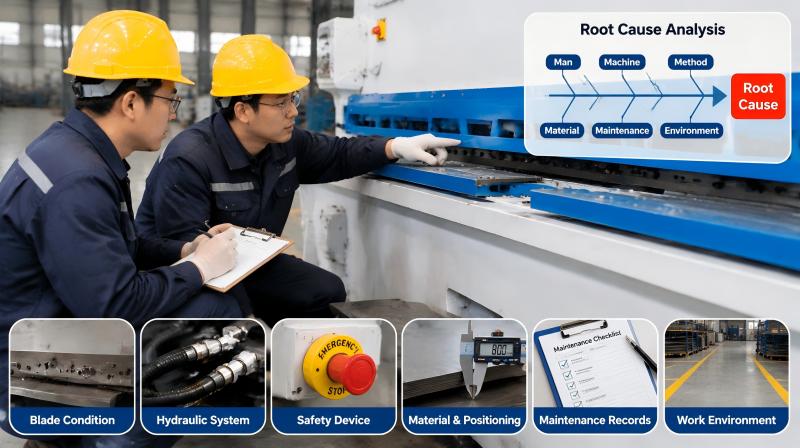
Once the evidence has been collected, determine the underlying causes rather than focusing only on the immediate failure.
Common contributing factors include:
- Incorrect machine operation or inadequate operator training.
- Damaged blades, hydraulic hoses, or mechanical components.
- Faulty emergency stops, guards, or safety interlocks.
- Incorrect material thickness or positioning.
- Inadequate maintenance and inspection procedures.
- Poor housekeeping or unsafe material-handling practices.
A root cause analysis method, such as the Five Whys, can help investigators trace an incident beyond its immediate symptoms.
Step 5: Implement Corrective and Preventive Actions
After identifying the causes, develop specific actions to eliminate or reduce the risks.
These may include repairing damaged components, replacing faulty safety devices, improving machine guarding, updating operating procedures, and providing additional operator training.
Assign responsibility for each action and establish a completion deadline. Before restarting the machine, qualified personnel should verify that repairs are complete and all required safety functions operate correctly.
Common Mistakes to Avoid During Incident Investigation
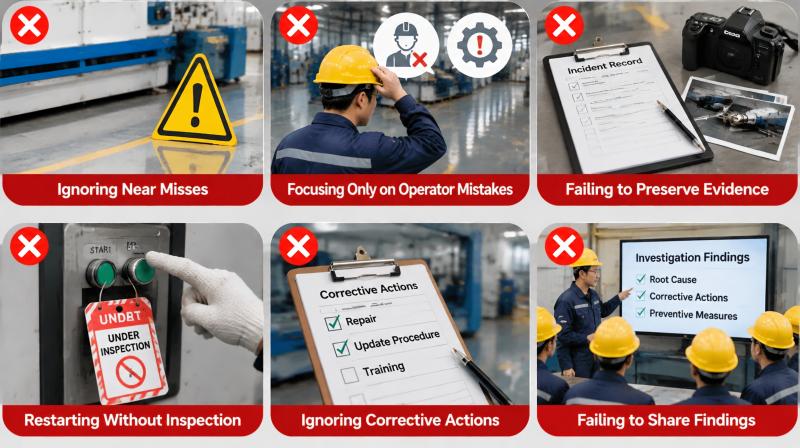
- Ignoring near misses: Minor incidents can reveal serious hazards before an injury occurs.
- Focusing only on operator mistakes: Equipment defects, inadequate procedures, and insufficient training may also contribute.
- Failing to preserve evidence: Missing photographs and incomplete records make root cause analysis difficult.
- Restarting without inspection: Never return damaged equipment to production before completing the necessary safety checks.
- Ignoring corrective actions: Identifying a problem without resolving it does not improve workplace safety.
- Failing to share findings: Investigation results should be communicated to relevant operators and maintenance personnel.
FAQ
Should Near Misses Involving Shearing Machines Be Investigated?
Yes. Near misses can reveal dangerous conditions, such as material slipping, unexpected blade movement, or malfunctioning safety devices. Investigating them helps prevent more serious accidents.
Who Should Conduct a Shearing Machine Incident Investigation?
The investigation should involve appropriate safety personnel, machine operators, supervisors, and qualified maintenance technicians. Electrical and hydraulic specialists should participate when technical failures are suspected.
How Can Root Cause Analysis Improve Shearing Machine Safety?
Root cause analysis identifies the underlying factors responsible for an incident. It helps manufacturers implement targeted improvements instead of repeatedly addressing the same symptoms.
Conclusion
Effective incident investigation is essential for improving shearing machine safety. By securing the accident scene, collecting evidence, interviewing witnesses, identifying root causes, and implementing corrective actions, manufacturers can reduce recurring accidents and create a safer working environment.
I recommend treating every accident and near miss as an opportunity to improve equipment reliability, operator training, and workplace safety procedures.


