


Em corte a laser operations, excessive vibration can severely impact precision, cutting quality, and machine longevity. Laser Machine Vibration Prevention is crucial for maintaining consistent performance, reducing maintenance costs, and ensuring operator safety. In this article, I’ll guide you through practical techniques and best practices to minimize vibration in laser machines. By applying these strategies, operators and maintenance teams can maintain optimal alignment, stabilize moving components, and achieve high-quality cuts with minimal disruptions.
Entendendo as causas de Máquina a laser Vibração
Imbalanced or Worn Bearings
Worn or improperly installed bearings cause uneven motion, which increases vibration and decreases the stability of machine axes, potentially impacting precision and smooth operation during high-speed laser cutting processes.
Loose or Misaligned Components
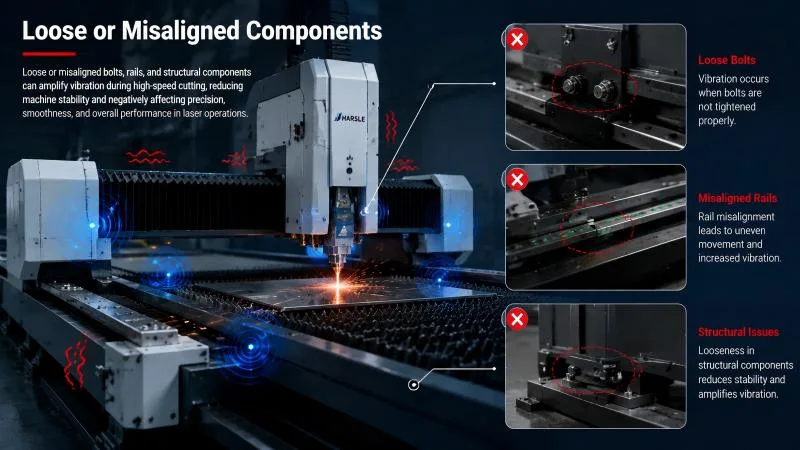
Loose or misaligned bolts, rails, and structural components can amplify vibration during high-speed cutting, reducing machine stability and negatively affecting precision, smoothness, and overall performance in laser operations.
Uneven Floor or Machine Base
An uneven or unstable floor causes the machine frame to rock, creating vibrations that decrease cutting accuracy, reduce positional stability, and can negatively impact precision and overall performance during laser cutting operations.
High-Speed Cutting Parameters
Excessive cutting speeds or rapid acceleration and deceleration can generate gantry vibrations, reducing precision, repeatability, and overall cutting quality during high-speed laser machine operations.
Step-by-Step Laser Machine Vibration Prevention Techniques
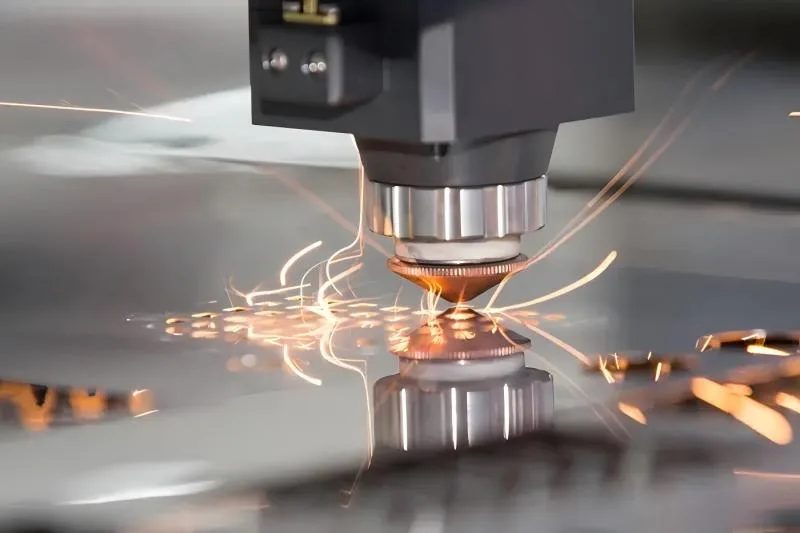
Step 1: Inspect and Maintain Bearings
Regularly check all linear and rotational bearings for wear, lubrication, and alignment. Replace damaged bearings promptly to maintain smooth movement.
Step 2: Tighten and Align Structural Components
Ensure all bolts, screws, and guides are properly secured. Use precise alignment tools to verify rails, gantry, and mounting plates are correctly positioned.
Step 3: Level the Machine Base
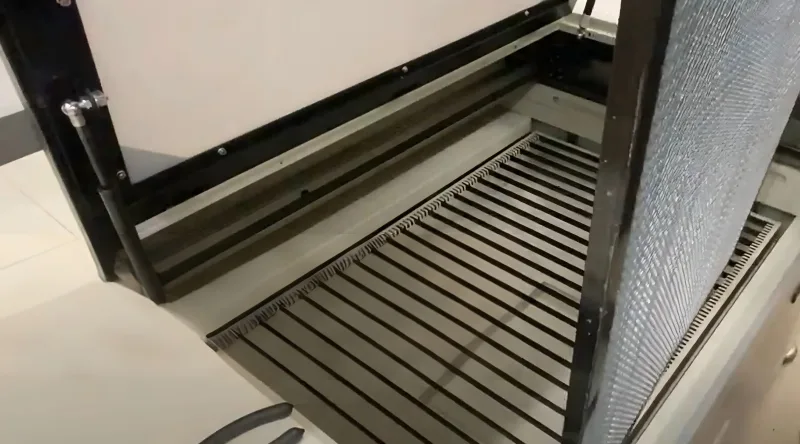
Verify that the laser machine is placed on a flat, stable surface. Use leveling pads or shims if necessary to eliminate rocking and uneven support.
Step 4: Adjust Cutting Parameters
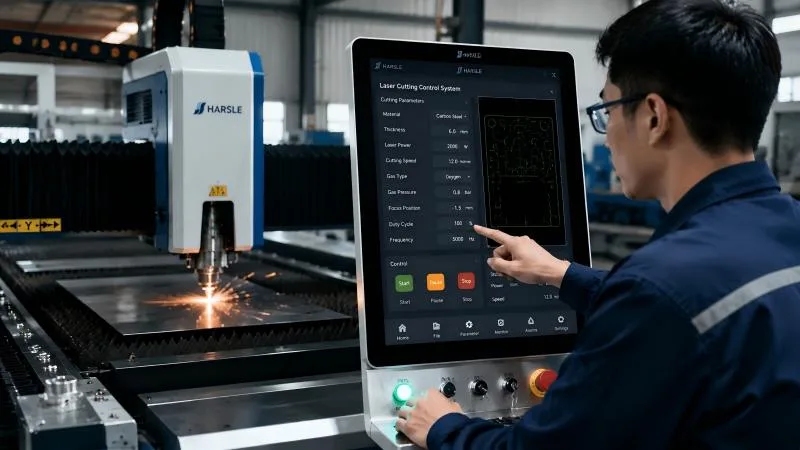
Optimize feed rates, acceleration, and cutting speeds based on material type and thickness to minimize induced vibration without sacrificing efficiency.
Step 5: Implement Vibration Damping Measures
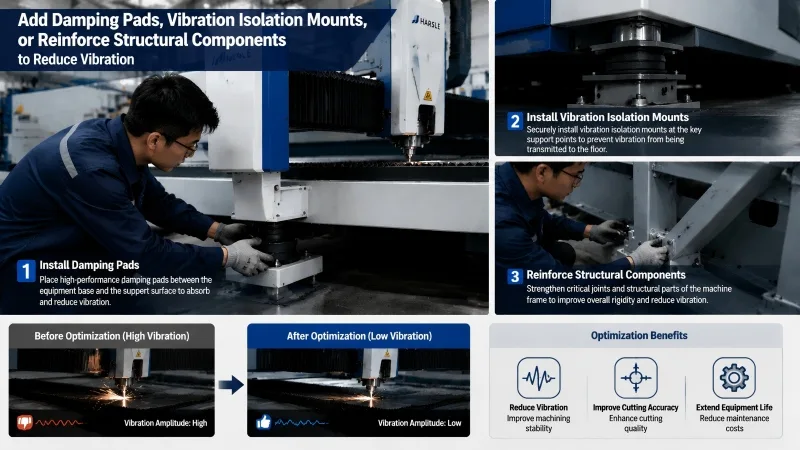
Adding damping pads, vibration isolation mounts, or reinforcing structural components helps absorb and reduce vibration transmission, improving machine stability, maintaining cutting precision, and enhancing overall performance during high-speed laser operations.
Step 6: Monitor Machine Performance
Use built-in sensors or vibration monitoring devices to detect and correct abnormal vibrations early. Regular monitoring ensures consistent machine performance over time.
Best Practices for Long-Term Vibration Control
Routine Maintenance Schedules
Establish daily, weekly, and monthly maintenance routines focusing on lubrication, cleaning, and inspection of moving parts and structural components.
Treinamento de Operadores
Educate operators on the impact of vibration and the importance of proper setup, alignment, and parameter selection.
Controle ambiental
Minimize external factors such as floor vibrations, nearby heavy machinery, and temperature fluctuations that can contribute to instability.
Perguntas frequentes
How often should I inspect bearings to prevent vibration?
Bearings should be inspected weekly or according to usage intensity. Lubrication and alignment checks are critical to avoid early wear and vibration issues.
Can vibration affect laser cutting precision?
Yes, even minor vibrations can cause misalignment, rough edges, and inaccuracies in hole placement, impacting overall cut quality.
Are vibration damping pads necessary for all laser machines?
While not always mandatory, damping pads or isolation mounts are highly recommended for high-speed operations or machines on less stable surfaces.
Conclusão
Preventing vibration in laser machines is essential to maintain cutting accuracy, machine longevity, and production efficiency. By inspecting and maintaining bearings, aligning structural components, leveling the base, optimizing cutting parameters, and using damping measures, operators can significantly reduce vibration. Consistent application of these Laser Machine Vibration Prevention strategies ensures smooth operation, precise cuts, and reduced maintenance costs. For further guidance or personalized recommendations, contact our expert team to keep your laser systems running at peak performance.


