


When I work with corte a laser systems, one of the most common issues customers ask about is Laser Cutting Repeat Positioning accuracy. In simple terms, repeat positioning means how precisely the machine can return to the same coordinate multiple times during repeated cutting cycles. If this accuracy becomes unstable, you will start to see misalignment, dimensional errors, and inconsistent part quality. In this article, I’ll walk you through the real reasons behind this problem and how you can diagnose and fix it step by step.
Understanding Laser Cutting Repeat Positioning Accuracy
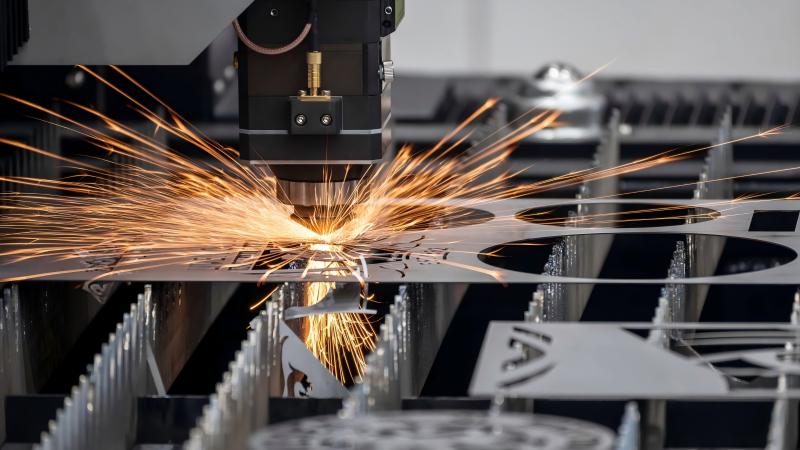
Before troubleshooting, it’s important to understand what Laser Cutting Repeat Positioning actually means in daily production. It refers to the machine’s ability to repeatedly move the cutting head back to a defined position on the worktable with minimal deviation.
Even a tiny error in repeat positioning can cause serious problems in precision fabrication, especially when working with tight-tolerance parts. If your machine shows unstable Laser Cutting Repeat Positioning, the root cause is usually a combination of mechanical wear, control system issues, and environmental factors rather than a single fault.
Mechanical Reasons Affecting Corte a laser Repeat Positioning
Worn Linear Guides or Rails

One of the most common causes of inaccurate Laser Cutting Repeat Positioning is wear on linear guide rails. When rails lose smooth motion due to dust, lubrication failure, or long-term use, the carriage cannot return to the exact same position. This creates small but noticeable deviations during repeated cutting cycles.
To solve this, I always recommend checking rail cleanliness and lubrication first. In many cases, proper cleaning and re-lubrication can significantly restore positioning stability.
Ball Screw Backlash or Wear
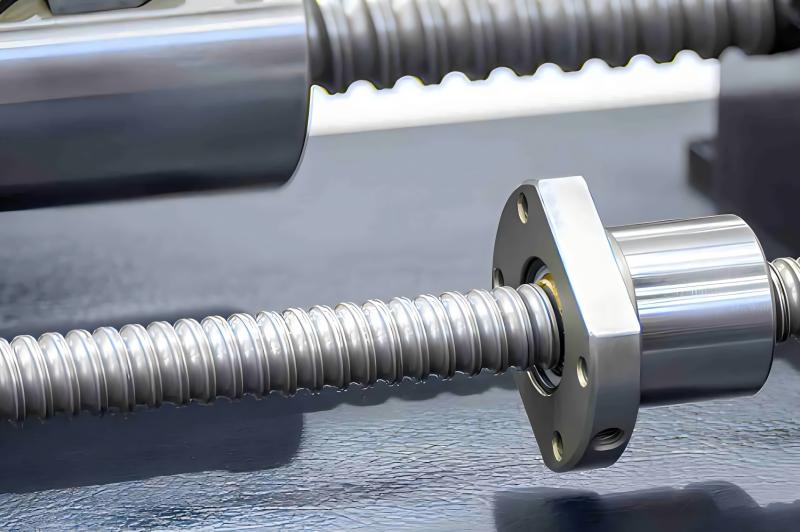
If your machine uses ball screw transmission, backlash is another major factor. Over time, mechanical clearance increases, and the system loses precision when reversing direction. This directly affects Laser Cutting Repeat Positioning accuracy, especially during high-speed operations.
Replacing or adjusting the ball screw preload can often restore accuracy.
Electrical and Servo System Issues
Servo Motor Encoder Problems
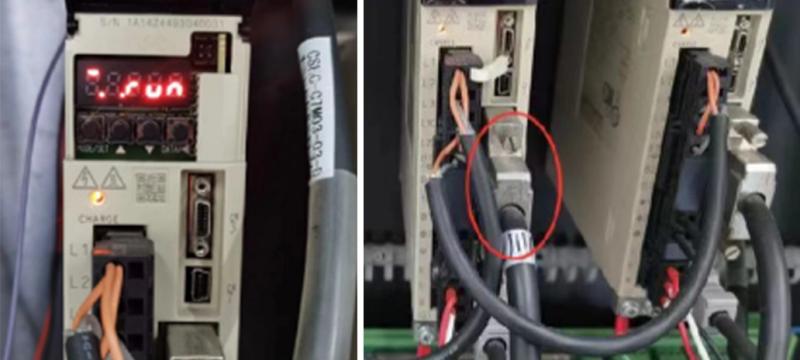
The servo motor encoder is responsible for feedback control. If the encoder signal becomes unstable or inaccurate, the machine will misjudge its position. This leads to inconsistent Laser Cutting Repeat Positioning, even if the mechanical system is in good condition.
I usually suggest checking encoder cables for looseness or interference, as signal noise can easily affect positioning performance.
Drive System Parameter Mismatch
Incorrect servo parameters can also cause repeat positioning errors. If acceleration, deceleration, or gain values are not properly tuned, the system may overshoot or undershoot target positions.
In such cases, recalibrating servo parameters according to manufacturer guidelines is essential.
Environmental and Operational Factors
Temperature Fluctuations
Thermal expansion is often underestimated. When the machine operates in environments with large temperature variations, metal components expand or contract slightly. This can affect Laser Cutting Repeat Positioning accuracy over long production cycles.
Maintaining a stable workshop temperature helps reduce this issue significantly.
Vibrations and Installation Conditions

If the machine is installed on an uneven or unstable foundation, vibration will affect movement precision. Even small floor irregularities can lead to cumulative positioning errors during continuous operation.
A stable, leveled foundation is critical for long-term accuracy.
Control System and Software-Related Issues
CNC Control Calibration Drift
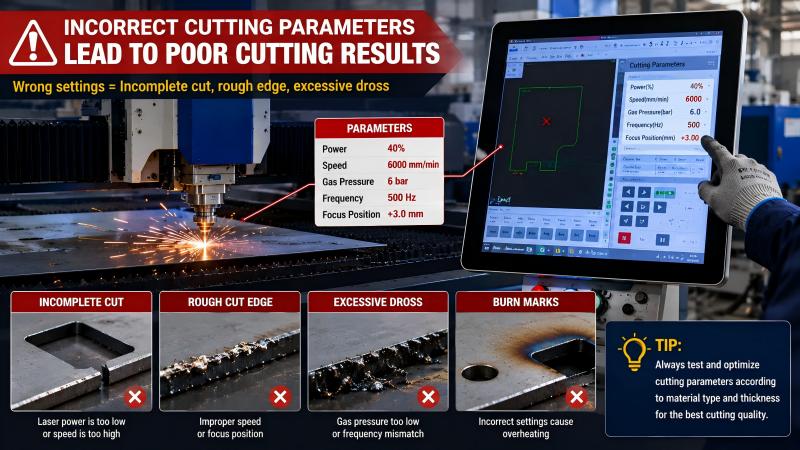
Over time, the control system itself may drift from its original calibration. This can result in inaccurate positioning commands being executed by the machine.
Regular system calibration helps maintain consistent Laser Cutting Repeat Positioning performance.
File and Program Errors
Sometimes the issue is not the machine, but the cutting program itself. Incorrect coordinate settings or corrupted G-code can create apparent positioning inaccuracies.
I always recommend rechecking program data before assuming mechanical failure.
How I Diagnose Laser Cutting Repeat Positioning Problems
When I troubleshoot Laser Cutting Repeat Positioning issues, I usually follow a structured approach:
First, I check mechanical movement by manually testing axis smoothness. Then I inspect servo alarms and encoder signals. After that, I review control parameters and finally verify environmental conditions.
This step-by-step method helps quickly isolate whether the problem is mechanical, electrical, or software-related.
PERGUNTAS FREQUENTES
What causes Laser Cutting Repeat Positioning to become inaccurate suddenly?
Sudden issues are often caused by servo encoder faults, loose cables, or control system errors. Mechanical wear usually develops gradually rather than suddenly.
How can I improve Laser Cutting Repeat Positioning accuracy?
Start with proper lubrication of linear guides, check servo tuning parameters, and ensure the machine is installed on a stable, vibration-free foundation.
Does maintenance affect Laser Cutting Repeat Positioning performance?
Yes. Regular maintenance such as cleaning rails, checking backlash, and calibrating the system plays a key role in maintaining long-term accuracy.
Conclusão
Laser Cutting Repeat Positioning accuracy depends on a combination of mechanical condition, servo system tuning, control stability, and environmental factors. In my experience, most issues can be traced back to wear, poor calibration, or unstable installation conditions rather than a single fault.
By following regular maintenance routines and keeping your system properly calibrated, you can significantly improve positioning accuracy and maintain stable cutting quality. If you are still experiencing repeat positioning problems or need technical support, feel free to contact our team for professional guidance and troubleshooting assistance.


