


Shearing Machine Safe Operation is essential for preventing workplace accidents, protecting equipment, and maintaining consistent cutting quality. Improper operation can lead to serious injuries, blade damage, hydraulic failures, and unexpected production downtime. To operate a shearing machine safely, I recommend checking safety guards, inspecting machine components, verifying material specifications, and following proper cutting procedures. In this guide, I’ll explain the essential safety precautions, step-by-step operating procedures, and preventive maintenance practices that help operators reduce risks and maintain reliable shearing performance.
Why Is Shearing Machine Safe Operation Important?
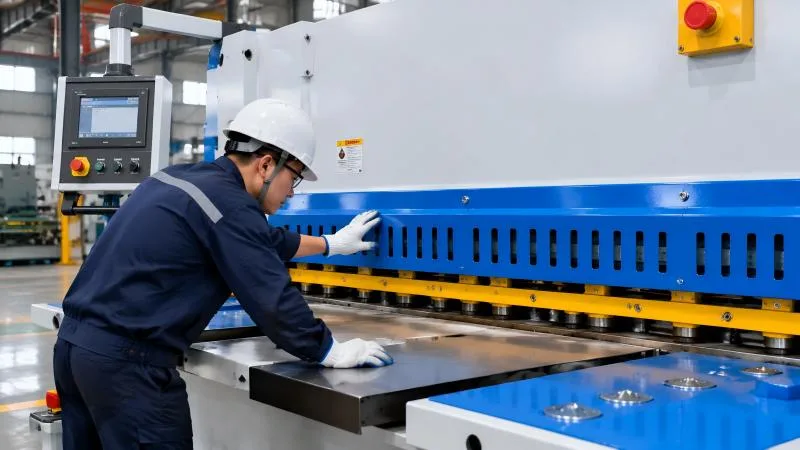
Industrial shearing machines use powerful hydraulic or mechanical systems to cut metal sheets. During operation, moving blades, hold-down cylinders, and sharp material edges can create significant safety hazards.
Without proper precautions, operators may experience hand injuries, material movement, or unexpected machine activation.
I always recommend following the manufacturer’s operating instructions and ensuring that operators receive appropriate safety training before using the equipment.
Pre-Operation Safety Checks for Shearing Machines
Step 1: Inspect Safety Guards and Emergency Stops
Before starting the machine, inspect all protective guards, emergency stop buttons, and safety interlocks.
Ensure that the front finger guards are securely installed and that protective devices have not been removed or bypassed.
Test emergency stop functions according to the manufacturer’s approved procedure.
If any safety device fails, stop the machine and arrange repairs before operation.
Step 2: Check Hydraulic and Mechanical Components
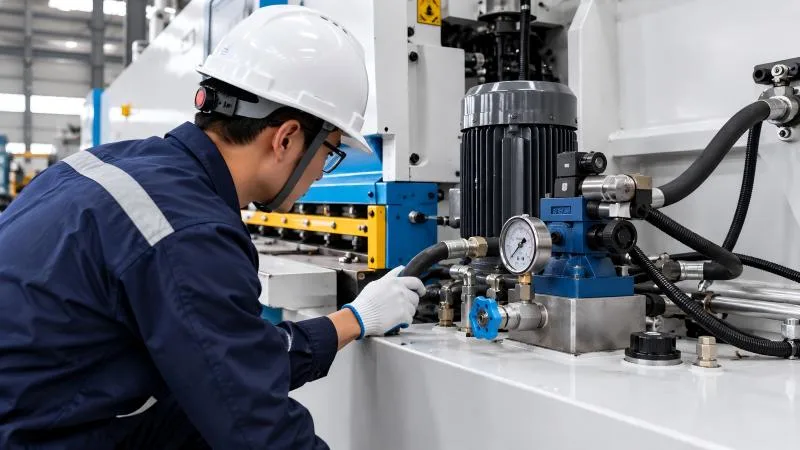
Inspect hydraulic hoses, cylinders, and connections for visible leaks or damage.
Check the blade carrier, hold-down cylinders, and accessible mechanical components for abnormal wear or loose connections.
I recommend reporting unusual noises, hydraulic leakage, or damaged components to qualified maintenance personnel.
Step 3: Verify Blade Condition and Cutting Capacity
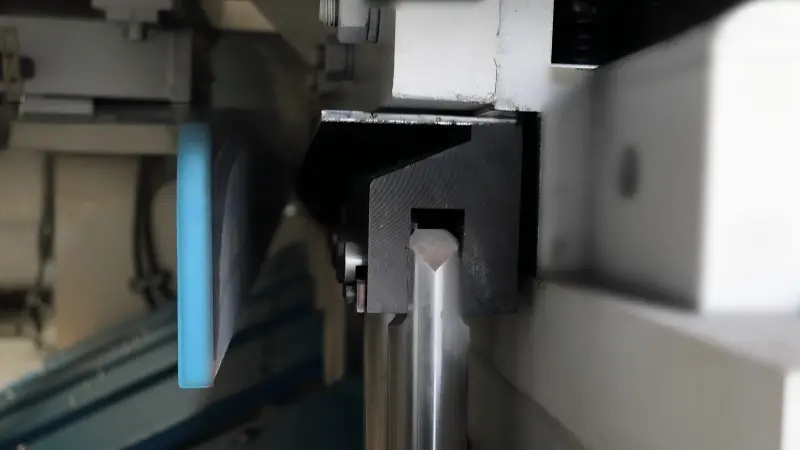
Check the visible cutting edges for cracks, chips, or excessive wear without reaching into the cutting zone.
Confirm that the material thickness and strength are within the machine’s rated cutting capacity.
Using unsuitable materials or damaged blades can increase cutting resistance and create dangerous operating conditions.
How to Operate a Shearing Machine Safely?
Step 1: Prepare and Position the Metal Sheet
Place the metal sheet securely on the front support arms and align it with the squaring arm.
Ensure that the material is properly supported and does not shift unexpectedly.
Keep hands away from the cutting area and use appropriate feeding tools when handling small workpieces.
Step 2: Set the Correct Blade Gap and Backgauge
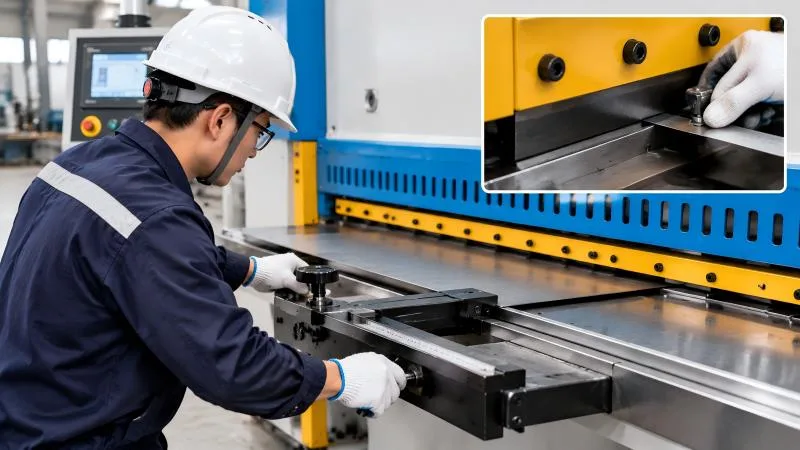
Adjust the blade clearance according to the material thickness, strength, and manufacturer’s recommendations.
Incorrect blade clearance may cause excessive burrs, material deformation, or blade damage.
Set the backgauge to the required cutting length and verify its position before starting production.
I recommend performing a controlled test cut when processing a new material specification.
Step 3: Maintain Proper Operator Positioning
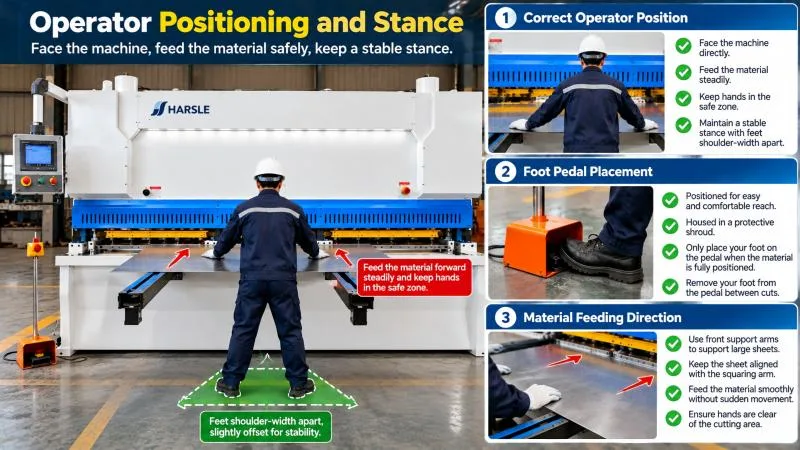
Stand in a stable position with your feet approximately shoulder-width apart.
Keep your body balanced while feeding the material and avoid reaching across moving components.
Position the protected foot pedal within comfortable reach and remove your foot between cutting cycles.
Never allow unauthorized personnel inside restricted operating areas.
Step 4: Monitor the Cutting Process
During operation, observe material movement, cutting quality, and machine behavior.
Stop immediately if the machine produces unusual noises, excessive vibration, unexpected blade movement, or material jamming.
Never attempt to remove trapped material while the machine is energized.
How to Prevent Shearing Machine Safety Hazards?
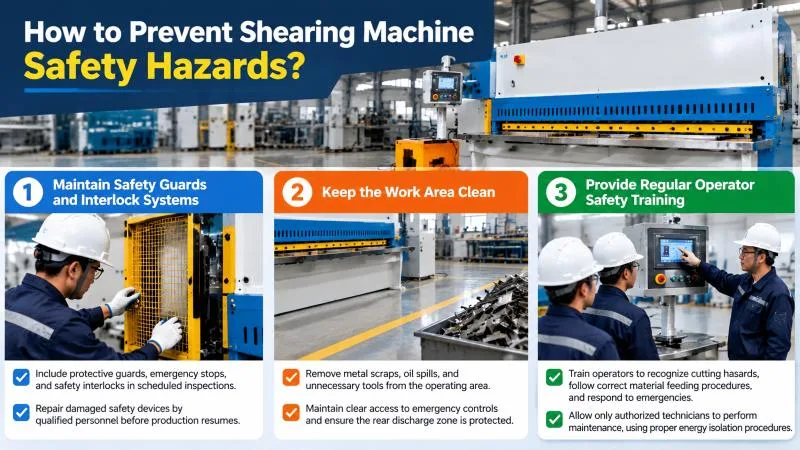
Maintain Safety Guards and Interlock Systems
I recommend including protective guards, emergency stops, and safety interlocks in scheduled inspections.
Damaged safety devices must be repaired by qualified personnel before production resumes.
Keep the Work Area Clean
Remove metal scraps, oil spills, and unnecessary tools from the operating area.
Maintain clear access to emergency controls and ensure the rear discharge zone remains protected.
Provide Regular Operator Safety Training
Train operators to recognize cutting hazards, follow correct material feeding procedures, and respond to emergencies.
Maintenance involving electrical systems, hydraulic pressure adjustments, or blade replacement should be performed only by authorized technicians using appropriate energy isolation procedures.
FAQs
What Are the Basic Rules for Shearing Machine Safe Operation?
Operators should inspect safety devices, verify cutting capacity, position materials correctly, maintain safe hand clearance, and follow approved operating procedures.
Why Is Blade Clearance Important for Safe Shearing?
Correct blade clearance reduces cutting resistance, improves edge quality, and helps prevent material deformation or blade damage.
What Should Operators Do During a Shearing Machine Emergency?
Activate the emergency stop immediately, keep personnel away from hazardous areas, and report the problem. Do not restart until the cause has been identified and the machine is confirmed safe.
How Often Should Shearing Machine Safety Checks Be Performed?
I recommend performing basic safety inspections before every shift, with additional maintenance and functional testing according to the manufacturer’s schedule.
Conclusion
Shearing Machine Safe Operation requires proper equipment inspections, correct material positioning, suitable blade settings, and consistent operator training. Following these practices helps reduce workplace hazards, protect machine components, and maintain efficient production.
For additional guidance on industrial shearing machine safety, maintenance, or troubleshooting, contact the HARSLE technical team.


