


Prensa hidráulica Die Installation requires careful planning, proper lifting equipment, and strict safety procedures to prevent crushing injuries, unexpected machine movement, and tooling damage. During die installation, maintenance personnel may work near heavy molds, moving platens, hydraulic cylinders, and other hazardous components. Even a small positioning error or unsecured die can create serious safety risks. In this guide, I’ll explain how to prepare the machine, handle and position dies safely, secure tooling correctly, and verify installation before production begins.
Why Is Prensa hidráulica Die Installation Safety Important?
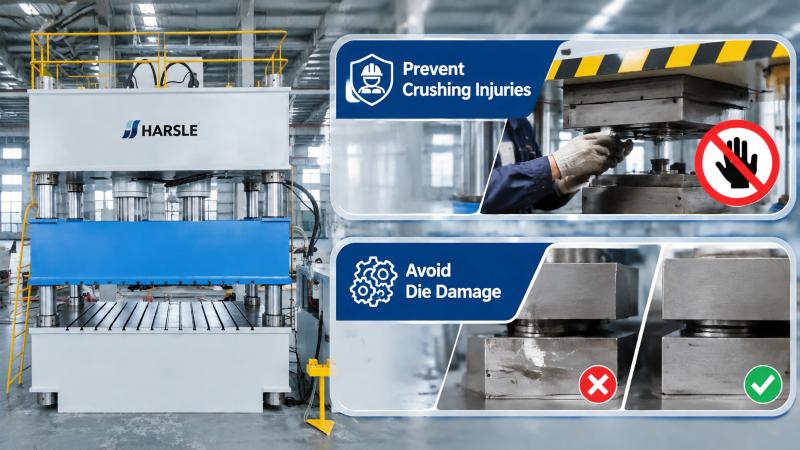
Preventing Crushing and Pinching Injuries
Hydraulic press dies are often heavy and difficult to handle. During installation, hands and fingers may become trapped between the upper and lower dies, worktable, or supporting structures.
Unexpected ram movement can also cause severe crushing injuries. Proper energy isolation, mechanical blocking, and safe handling procedures are essential to protect installation personnel.
Avoiding Die Damage and Machine Malfunctions
Incorrect die alignment, inadequate fastening, or unsuitable tooling can cause uneven loading and excessive mechanical stress.
These problems may damage the dies, worktable, hydraulic press, or other machine components. Proper installation helps maintain tooling stability and ensures reliable production.
How to Install Hydraulic Press Dies Safely
Step 1: Prepare the Work Area and Hydraulic Press
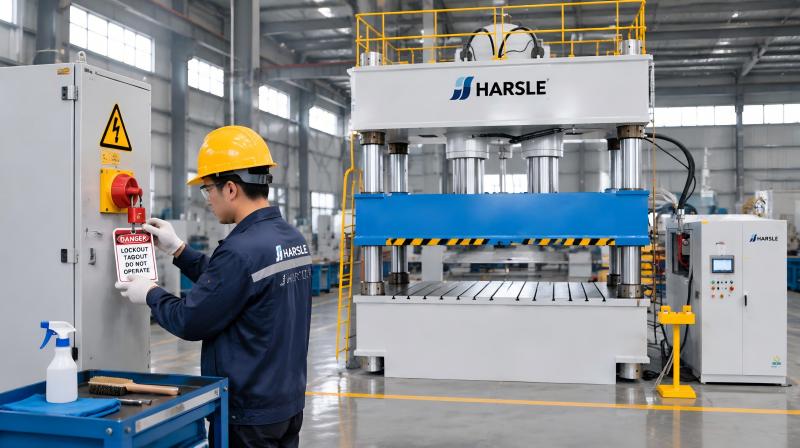
Before beginning installation, stop the machine and inspect the surrounding work area.
Remove unnecessary materials, oil, and debris from the worktable and floor. Ensure that the installation area has sufficient space for lifting equipment and tooling transportation.
Follow the manufacturer’s shutdown and lockout/tagout (LOTO) procedures to isolate electrical, hydraulic, and other hazardous energy sources. Release or safely control stored hydraulic pressure and secure moving components with approved mechanical blocking devices where required.
Never rely solely on the emergency stop button to prevent unexpected ram movement.
Step 2: Inspect the Die Before Installation
Carefully inspect the die and its mounting surfaces before placing it on the hydraulic press.
Check the following:
- Die Condition: Look for cracks, deformation, excessive wear, or other visible damage.
- Mounting Surfaces: Ensure the upper and lower mounting surfaces are clean and free of debris.
- Fasteners: Check bolts, clamps, and other fastening components for damage.
- Die Compatibility: Confirm that the die is suitable for the intended forming operation and compatible with the machine.
- Rated Capacity: Verify that the press capacity, die loading requirements, and worktable limitations are suitable for the application.
Never install damaged or unsuitable tooling.
Step 3: Use Appropriate Lifting Equipment
Many hydraulic press dies are too heavy to handle manually. Select suitable lifting equipment according to the die’s weight, dimensions, center of gravity, and lifting points.
Common lifting equipment includes overhead cranes, hoists, lifting slings, and approved die-handling devices.
Before lifting, inspect hooks, chains, slings, and lifting accessories. Confirm their rated working load limits and ensure that the lifting arrangement is appropriate for the die.
Keep personnel away from suspended loads. Never stand beneath a suspended die or attempt to stabilize heavy tooling using hands or body weight.
Step 4: Position and Align the Upper and Lower Dies
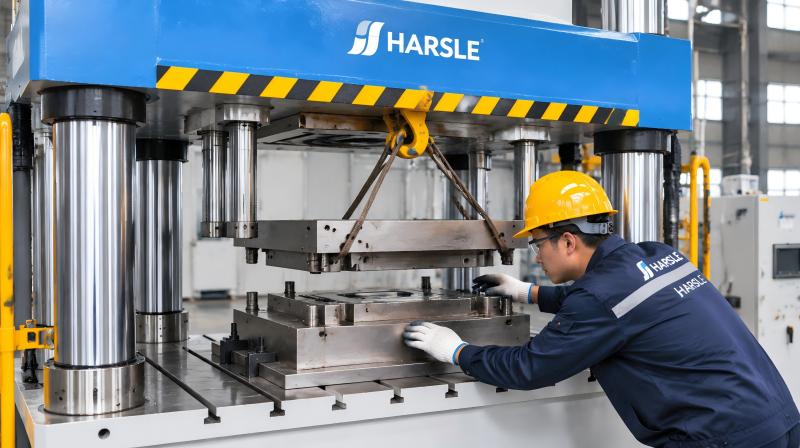
Carefully lower the die into its designated installation position using the approved lifting procedure.
Make sure the lower die is properly supported and positioned on the worktable. Then align the upper die with the lower tooling according to the machine manufacturer’s installation instructions.
Check the following points:
- The upper and lower dies are correctly matched.
- The mounting surfaces are clean and properly seated.
- The tooling is aligned with the machine’s working center.
- No foreign objects are trapped between mounting surfaces.
- The die does not interfere with surrounding machine components.
Never place your hands between the dies to correct alignment while the tooling is suspended or the machine is energized.
Step 5: Secure the Dies and Check Fasteners
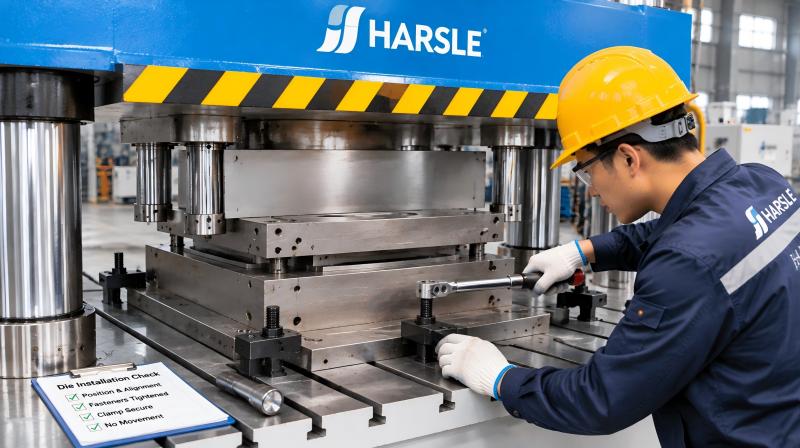
Once the tooling is correctly positioned, secure the upper and lower dies using the specified bolts, clamps, or approved fastening systems.
Tighten fasteners according to the manufacturer’s requirements and verify that the tooling cannot shift during operation.
Do not use damaged bolts, unsuitable fasteners, or improvised fixing methods. If the machine uses a specialized die-clamping system, follow its approved installation procedure.
Step 6: Verify Installation Before Production
After installation is complete, qualified personnel should inspect the tooling and machine before returning the press to service.
Remove installation tools and temporary equipment, restore protective devices, and confirm that all personnel are clear of hazardous areas.
Follow the manufacturer’s commissioning procedure to verify alignment, fastening, and machine operation. If a controlled test cycle is required, use the designated operating mode and safety procedures.
Stop immediately if abnormal noise, vibration, movement, or tooling displacement occurs.
Common Mistakes to Avoid During Die Installation
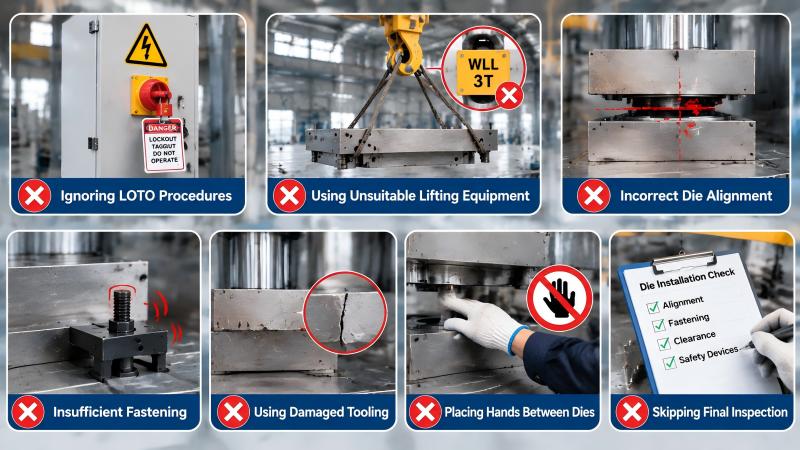
- Ignoring LOTO procedures: Never begin installation without proper energy isolation.
- Using unsuitable lifting equipment: Always verify lifting capacity and accessory condition.
- Incorrect die alignment: Misalignment may cause uneven loading and tooling damage.
- Insufficient fastening: Loose dies may shift during pressing operations.
- Using damaged tooling: Cracked or deformed dies can fail under load.
- Placing hands between dies: Never use your hands to adjust tooling in hazardous areas.
- Skipping final inspection: Always verify installation before production resumes.
Perguntas frequentes
Who Should Perform Hydraulic Press Die Installation?
Die installation should be performed by trained and authorized personnel who understand the machine, tooling, lifting equipment, and applicable safety procedures.
Is Lockout/Tagout Necessary During Die Installation?
Yes. Hazardous energy sources must be isolated according to the facility’s LOTO procedure. Stored hydraulic energy and potential ram movement must also be safely controlled.
What Should Be Checked Before Installing a Hydraulic Press Die?
Inspect the die condition, mounting surfaces, fasteners, machine capacity, lifting points, and tooling compatibility before installation.
Conclusão
Safe hydraulic press die installation depends on proper preparation, equipment inspection, controlled lifting, accurate alignment, secure fastening, and final verification. By following these procedures, manufacturers can reduce installation accidents, protect maintenance personnel, and extend tooling service life.
I recommend making die installation safety checks a standard part of every tooling changeover and maintenance procedure.


