


Hazard recognition and control measures for metal shearing equipment involve identifying mechanical, hydraulic, and operational risks—such as point-of-operation crushing or blade lacerations—and implementing rigorous safeguards like fixed guarding, light curtains, and strict lockout/tagout protocols. This documentation applies to operators, maintenance personnel, and safety supervisors working with hydraulic swing beam and guillotine shears. Effective control ensures that all high-force movements are shielded and that operational boundaries remain within the machine’s rated material capacities.
Scope, Responsibilities, and Training Prerequisites
The safe operation of metal shearing machinery requires a clear understanding of the division of labor and the specific technical requirements of the equipment. Metal shears, whether hydraulic or mechanical, exert immense force to fracture metal along a predetermined line. Because these machines are designed to cut through thick steel plates, they possess the potential to cause catastrophic injury if safety protocols are ignored.
Personnel Definitions
- Authorized Operator: An individual who has completed machine-specific training, demonstrated proficiency in using the controller, and understands the specific hazard recognition and control measures for metal shearing equipment.
- Qualified Technician: A person with technical expertise in hydraulics, electronics, and mechanical systems authorized to perform internal repairs, blade rotations, and safety system calibrations.
- Safety Supervisor: Responsible for ensuring that all guarding is in place, conducting regular audits, and verifying that the work environment meets industrial safety standards.
Training Requirements
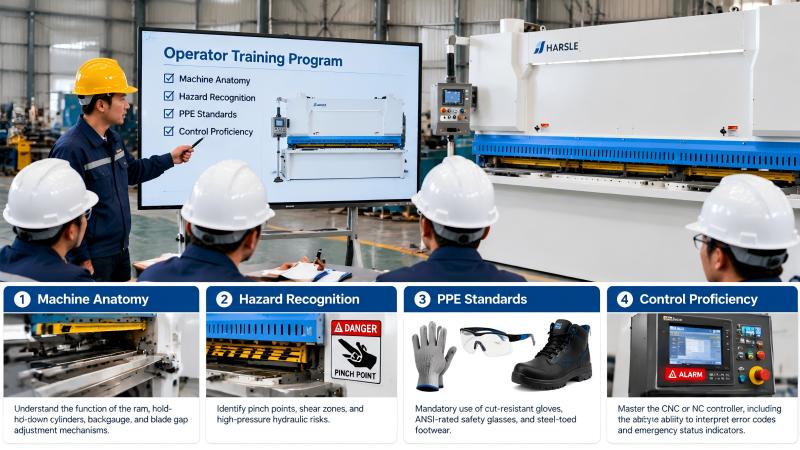
Before operating any shearing equipment, personnel must be trained in the following areas:
- Machine Anatomy: Identifying the ram, the hold-downs, the blade gap adjustment mechanism, and the backgauge.
- Control Interface: Understanding the function of every button, including the emergency stop (E-stop) and the foot pedal shroud.
- Material Handling: Proper techniques for loading large sheets and managing off-cuts without entering the danger zone.
- PPE Requirements: Mandatory use of cut-resistant gloves, ANSI-rated eye protection, and steel-toed footwear.
Hazard Recognition and Control Measure Matrix
Identifying hazards is the first step in risk mitigation. The following table outlines the primary risks associated with metal shearing and the corresponding engineering and administrative controls required to maintain a safe working environment.
| Hazard Type | Source of Danger | Primary Control Measure | Secondary Control Measure |
|---|---|---|---|
| Mechanical Crushing | Hydraulic hold-downs (clamps) | Fixed finger guards and distance requirements. | Operator awareness and “no-go” zone marking. |
| Shearing/Amputation | Upper and lower cutting blades | Interlocked physical barriers or light curtains. | Two-hand control devices (where applicable). |
| Impact/Entrapment | Motorized backgauge movement | Rear enclosure fencing with interlocked gates. | Warning signs and floor markings. |
| High-Pressure Injection | Hydraulic hose failure | Regular inspection of hoses and fittings. | Protective sleeving on high-pressure lines. |
| Lacerations | Sharp material edges and off-cuts | Use of material support tables and scrap bins. | Mandatory cut-resistant PPE (Level A4 or higher). |
Detailed Hazard Recognition: The Point of Operation
The “Point of Operation” is the area where the actual cutting occurs. In metal shearing, this includes the entire length of the blade and the area immediately surrounding the hold-down cylinders. Hazard recognition and control measures for metal shearing equipment must prioritize this zone above all others.
The Danger of Hold-Downs
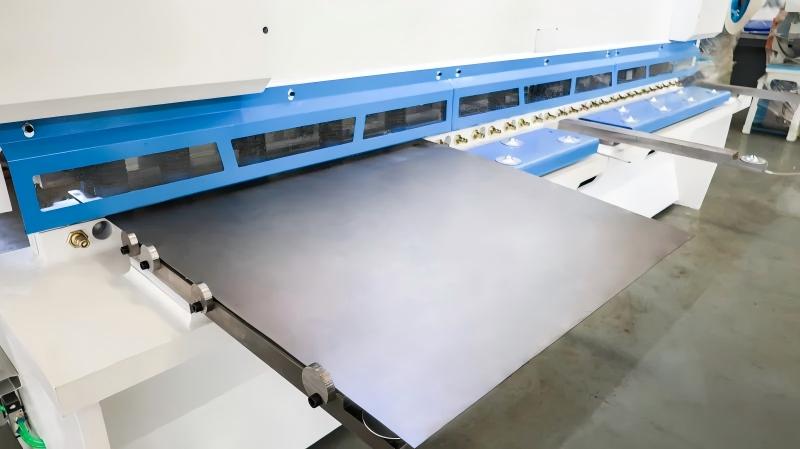
Many operators focus solely on the blade, but the hold-down cylinders are equally dangerous. These cylinders descend with several tons of pressure milliseconds before the blade moves. If an operator’s finger is placed under a hold-down to steady a small piece of metal, the resulting injury is often a crush-amputation. Control measures include ensuring that the finger guard is positioned low enough to prevent a finger from entering the space between the hold-down and the worktable, typically no more than 6mm to 8mm of clearance.
Blade Gap and Material Kickback
Improper blade gap settings (the distance between the upper and lower blades) can cause the material to “kick back” or fold rather than shear cleanly. This sudden movement can strike the operator or cause the hands to slip into the cutting zone. Recognition of this hazard involves checking the material thickness against the machine’s gap chart before every shift. Control measures include the use of automated blade gap adjustment systems found on modern CNC shears, which reduce the need for manual intervention.
Pre-Operation Safety Checklist
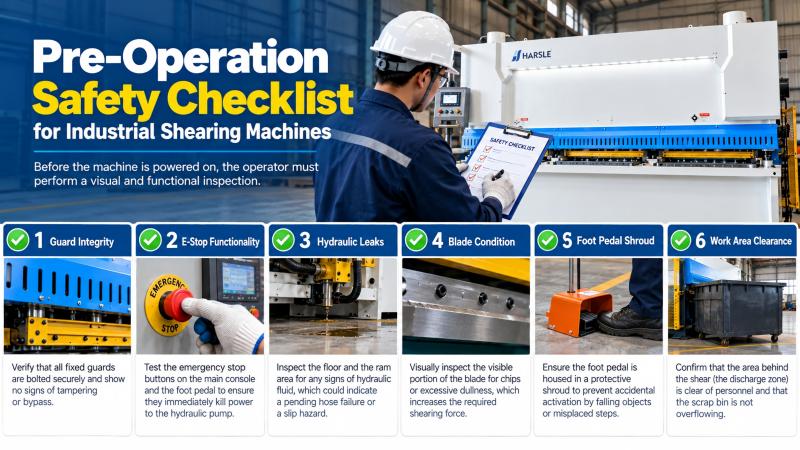
Before the machine is powered on, the operator must perform a visual and functional inspection. This checklist serves as a critical administrative control measure.
- Guard Integrity: Verify that all fixed guards are bolted securely and show no signs of tampering or bypass.
- E-Stop Functionality: Test the emergency stop buttons on the main console and the foot pedal to ensure they immediately kill power to the hydraulic pump.
- Hydraulic Leaks: Inspect the floor and the ram area for any signs of hydraulic fluid, which could indicate a pending hose failure or a slip hazard.
- Blade Condition: Visually inspect the visible portion of the blade for chips or excessive dullness, which increases the required shearing force.
- Foot Pedal Shroud: Ensure the foot pedal is housed in a protective shroud to prevent accidental activation by falling objects or misplaced steps.
- Work Area Clearance: Confirm that the area behind the shear (the discharge zone) is clear of personnel and that the scrap bin is not overflowing.
Safe Operation Boundaries and Stop Conditions
Operating within the machine’s design limits is a fundamental aspect of hazard recognition and control measures for metal shearing equipment. Exceeding these boundaries can lead to catastrophic structural failure or unpredictable machine behavior.
Material Thickness and Tensile Strength
Every shear is rated for a maximum thickness based on a specific material tensile strength (usually 450 N/mm² for mild steel). If an operator attempts to cut stainless steel (which has a higher tensile strength) at the machine’s maximum mild steel rating, the shear may stall, the blades may chip, or the hydraulic system may overheat. Operators must consult the capacity plate on the side of the machine before processing non-standard alloys.
Minimum Material Length
Cutting pieces that are too small to be safely held by at least two hold-down cylinders is a significant hazard. Small pieces can tilt during the cut, causing them to be ejected from the machine at high velocity. If a piece is too small to be safely supported, alternative cutting methods (such as a bandsaw or laser) should be used.
Immediate Stop Conditions
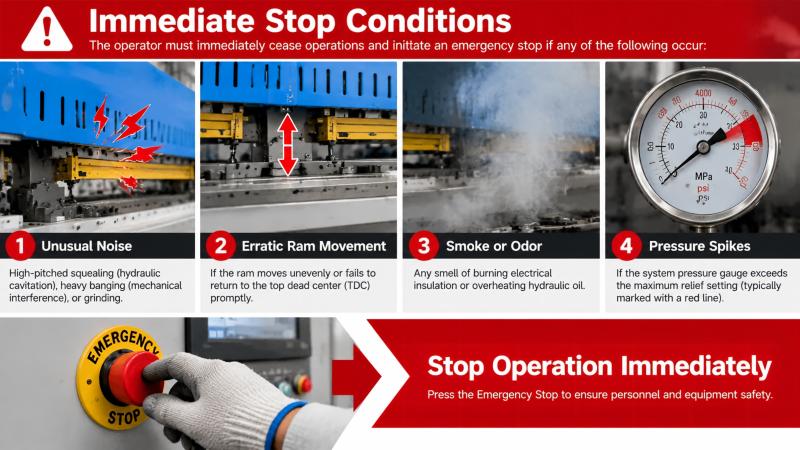
The machine must be stopped immediately if any of the following occur:
- Unusual metallic banging or grinding noises during the stroke.
- The ram moves unevenly or “shudders” during descent.
- Visible smoke or a burning smell from the motor or electrical cabinet.
- A failure of the backgauge to reach its programmed position.
- Any safety guard or light curtain becomes misaligned or non-functional.
Engineering Controls: Guarding Systems
Engineering controls are the most effective way to manage risks because they physically prevent access to the hazard. For metal shearing equipment, these systems are categorized into three main types.
Fixed Barriers
Fixed guards are the primary defense. These are typically heavy-duty metal grates that allow the operator to see the cutting line (often aided by a shadow line) but prevent fingers from reaching the hold-downs or blades. These guards should only be removed by qualified personnel during maintenance and must be interlocked so the machine cannot run without them.
Presence-Sensing Devices (Light Curtains)
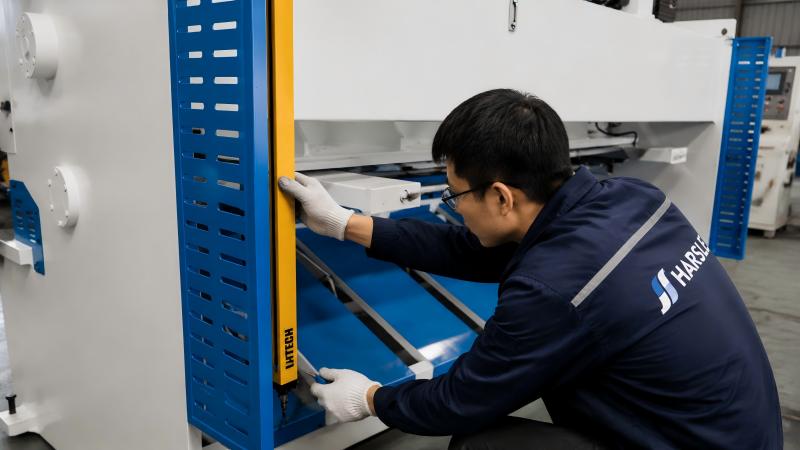
Light curtains use a series of infrared beams to create an invisible barrier. If any part of the operator’s body breaks the beam, the machine’s controller sends a stop signal to the hydraulic valves. While highly effective, light curtains must be regularly calibrated to ensure the “stop time” of the machine is faster than the time it takes for a human hand to reach the danger zone.
Rear Zone Protection
The back of the machine is often overlooked. The motorized backgauge moves quickly and with significant force. Hazard recognition and control measures for metal shearing equipment must include rear fencing or light curtains to prevent personnel from entering the discharge area while the machine is in operation. This is especially critical in shops where multiple people work around the same equipment.
Emergency Response and Qualified-Personnel Escalation
In the event of an incident or a mechanical failure, clear procedures must be followed to prevent further injury or damage.
Emergency Stop Protocol
If a person or object becomes trapped, the E-stop must be depressed immediately. Once the E-stop is engaged, the hydraulic pressure is typically dumped, but the ram may remain in its current position due to counterbalance valves. Only a qualified technician should attempt to manually raise the ram using the designated emergency override procedures found in the manufacturer’s manual.
Lockout/Tagout (LOTO)
Before any maintenance, blade rotation, or internal inspection, the machine must be subjected to a full LOTO procedure:
- Notify all affected employees that the machine will be shut down.
- Shut down the machine using the normal stop procedure.
- Isolate the main electrical disconnect and lock it in the “OFF” position.
- Dissipate any stored hydraulic pressure (accumulators) according to the manual.
- Verify that the machine is de-energized by attempting to start it.
- Place a “Danger: Do Not Operate” tag on the lock.
Safety FAQs
How often should the safety light curtains be tested?
Light curtains should be tested at the beginning of every shift. The operator should use a test object (provided by the light curtain manufacturer) to interrupt the beam at various points along its length while the machine is in a non-hazardous state to verify that the “stop” signal is correctly received by the controller.
Can I bypass the finger guard for small, thin strips of metal?
No. Bypassing or removing guards is a violation of safety protocols and significantly increases the risk of amputation. If the material is too small to be cut with the guards in place, the machine is not the correct tool for that specific task. Use specialized small-part shears or manual snips instead.
What should I do if the shear makes a loud “bang” during a cut?
A loud bang often indicates that the blade gap is too wide, causing the material to tear rather than shear, or that the material exceeds the machine’s tensile strength capacity. Stop the machine immediately, check the blade gap settings, and inspect the blades for damage before proceeding.
Safety Review Checklist and Model-Manual References
To maintain a high standard of safety, use this final review checklist during monthly safety audits. For specific torque values, hydraulic pressures, and blade gap clearances, always refer to the technical manual provided with your specific HARSLE model.
- Documentation: Is the machine manual accessible to all operators?
- Signage: Are all warning labels (High Voltage, Pinch Point, Eye Protection) legible and securely attached?
- Lighting: Is the shadow line or cutting area sufficiently illuminated (minimum 500 lux recommended)?
- Floor Condition: Is the area around the shear free of oil, scrap metal, and tripping hazards?
- Training Logs: Are all operator training records up to date and signed?
- Blade Maintenance: Have the blades been rotated or sharpened within the manufacturer’s recommended interval?
By strictly adhering to these hazard recognition and control measures for metal shearing equipment, fabrication shops can maximize productivity while ensuring the physical well-being of their most valuable asset: their personnel. Safety is not a one-time setup but a continuous process of vigilance and maintenance.


