


Operator safety training and PPE standards for industrial shearing operations involve a comprehensive framework of hazard recognition, protective equipment selection, and rigorous machine-handling protocols. This documentation applies to all personnel operating hydraulic or mechanical shearing machinery, such as HARSLE equipment, ensuring that risks like crushing, shearing, and lacerations are mitigated through standardized safety boundaries. Successful implementation requires adherence to manufacturer-specified limits and the consistent use of certified personal protective equipment (PPE).
Scope, Responsibilities, and Training Prerequisites
Industrial shearing operations involve the use of high-pressure hydraulic systems and precision-ground blades to cut sheet metal and plate. Because these machines exert hundreds of tons of force, the scope of safety training extends beyond the operator to include maintenance technicians and floor supervisors. The primary objective is to establish a zero-incident environment through education and technical compliance.
Operator Responsibilities
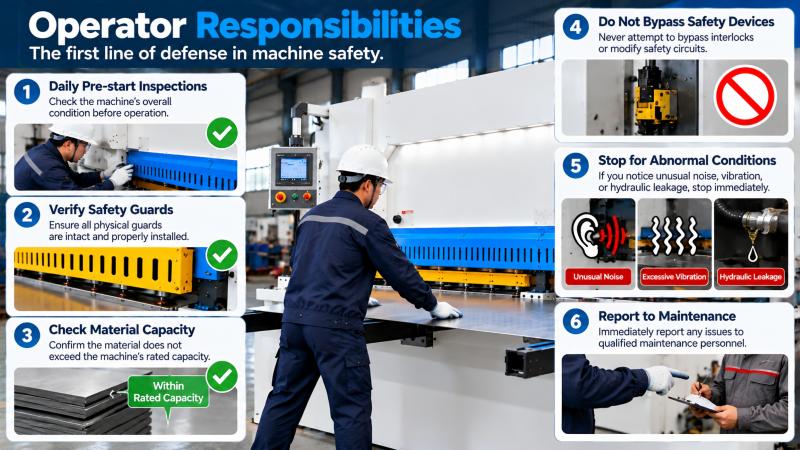
The operator is the first line of defense in machine safety. Responsibilities include performing daily pre-start inspections, verifying the integrity of all physical guards, and ensuring that the material being processed does not exceed the machine’s rated capacity. Operators must never attempt to bypass interlocks or modify safety circuits. If a machine exhibits unusual noise, vibration, or hydraulic leakage, the operator is responsible for initiating an immediate stop and reporting the issue to qualified maintenance personnel.
Training Prerequisites
Before an individual is permitted to operate an industrial shear, they must meet the following prerequisites:
- Technical Literacy: Ability to read and interpret the specific HARSLE model manual, including pressure charts and blade gap settings.
- Hazard Recognition: Completion of a certified course in industrial hazard identification, focusing on pinch points and stored energy (Lockout/Tagout).
- Physical Competency: Capability to handle material weights safely and maintain the required posture for extended operation.
- PPE Proficiency: Demonstrated knowledge of how to inspect, wear, and maintain required protective gear.
Hazard and Control Measure Table
The following table outlines the primary hazards associated with industrial shearing and the corresponding control measures required to maintain a safe working environment.
| Hazard Type | Description of Risk | Primary Control Measure | Secondary Control Measure |
|---|---|---|---|
| Mechanical Shearing | Amputation or severe laceration from the moving blade. | Fixed finger guards and light curtains. | Strict adherence to the “No-Hands-In-Die” policy. |
| Crushing (Hold-downs) | Hydraulic hold-downs securing the plate before the cut. | Physical barriers preventing hand entry under hold-downs. | Operator positioning at the control console. |
| Material Kick-back | Sheet metal flipping upward during or after the cut. | Proper adjustment of the rake angle and hold-down pressure. | Use of back-support systems for thin materials. |
| Hydraulic Failure | High-pressure fluid injection or loss of ram control. | Regular inspection of hoses and fittings for wear. | Installation of velocity fuses and pressure relief valves. |
| Sharp Edges | Lacerations from handling raw material or sheared blanks. | Mandatory use of high-cut-resistance gloves (ANSI Level A4+). | Use of magnetic lifters or vacuum suction tools. |
PPE Standards for Shearing Operations

Personal Protective Equipment (PPE) is the final layer of protection. For industrial shearing, PPE must meet specific international standards (such as ANSI/ISEA or EN) to ensure it can withstand the rigors of metal fabrication.
Hand Protection (Gloves)
Gloves used in shearing must provide a balance between dexterity and cut resistance. Standard leather gloves are often insufficient for handling freshly sheared edges. Operators should utilize gloves rated at least ANSI Cut Level A4 or EN388 Level D/E. These gloves typically incorporate Kevlar or high-performance polyethylene (HPPE) fibers. For handling oily sheets, a nitrile-coated palm is recommended to maintain grip and prevent slips that could lead to accidental contact with the blade.
Eye and Face Protection
Flying metal slivers (burrs) and scale are common during the shearing process. Operators must wear ANSI Z87.1+ rated safety glasses with side shields. In operations involving high-speed mechanical shears or brittle materials, a full-face shield over safety glasses is recommended to protect against unpredictable material fragmentation.
Hearing Protection
The impact of the blade against the metal, combined with hydraulic pump noise, can exceed 85-90 decibels (dB). Long-term exposure leads to permanent hearing loss. Operators must use earplugs or earmuffs with a Noise Reduction Rating (NRR) of at least 25 dB. Regular audiometric testing is recommended for full-time operators.
Foot Protection
Heavy steel plates pose a significant crush risk to the feet. Safety footwear must comply with ASTM F2413 standards, featuring steel or composite toes and metatarsal guards. Slip-resistant soles are also essential to prevent falls near the machine’s foot pedal or material handling area.
Pre-Operation Safety Checklist
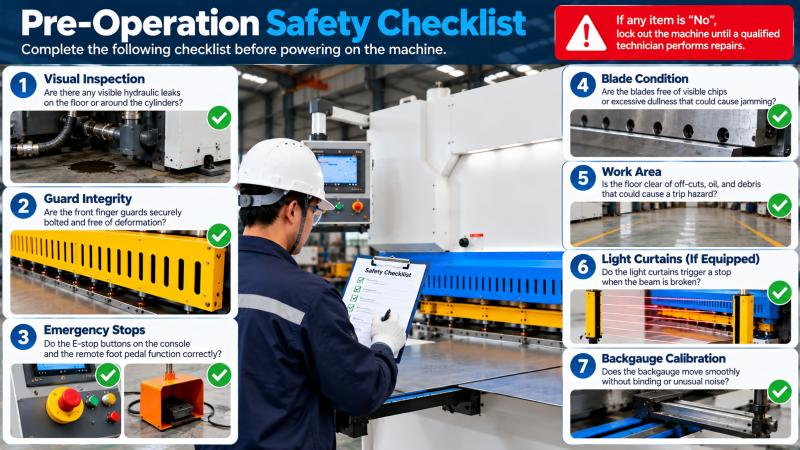
Before powering on the machine, the operator must complete the following checklist. Any “No” result requires the machine to be locked out until a qualified technician performs repairs.
- Visual Inspection: Are there any visible hydraulic leaks on the floor or around the cylinders?
- Guard Integrity: Are the front finger guards securely bolted and free of deformation?
- Emergency Stops: Do the E-stop buttons on the console and the remote foot pedal function correctly?
- Blade Condition: Are the blades free of visible chips or excessive dullness that could cause material jamming?
- Work Area: Is the floor clear of off-cuts, oil, and debris that could cause a trip hazard?
- Shadow Wiring/Light Curtains: If equipped, do the light curtains trigger a stop when the beam is broken?
- Backgauge Calibration: Does the backgauge move smoothly without binding or unusual noise?
Safe Operation Boundaries and Stop Conditions
Operating within the machine’s design limits is critical for safety. Overloading a shear can cause catastrophic structural failure or unpredictable material behavior.
Material Thickness and Type
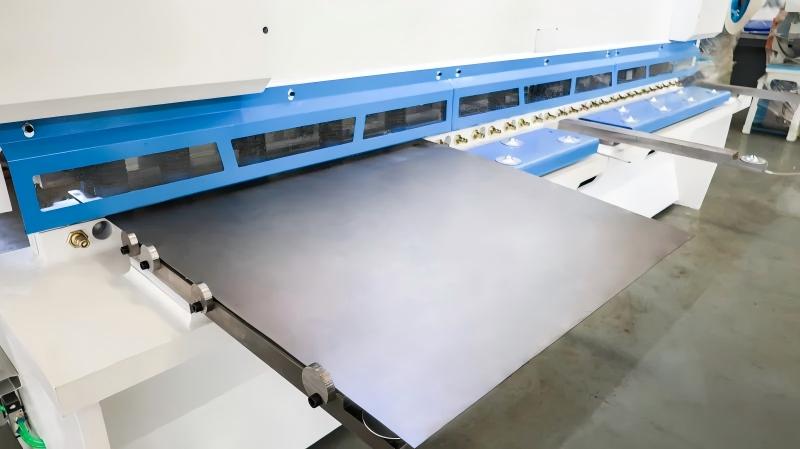
Never exceed the maximum thickness rated for the specific material type. For example, a shear rated for 12mm (0.47″) carbon steel may only be capable of cutting 6mm (0.23″) stainless steel due to the higher tensile strength of the latter. Refer to the HARSLE capacity chart located on the machine frame. Cutting material that is too thick can cause the blade to deflect, potentially damaging the machine and endangering the operator.
The “Danger Zone”
The danger zone is defined as any area within 100mm (approx. 4 inches) of the cutting line. No part of the operator’s body should ever enter this zone while the machine is powered. Use magnetic push sticks or tongs for small workpieces. If a workpiece is too small to be safely held outside the danger zone, it should not be cut on an industrial shear.
Immediate Stop Conditions
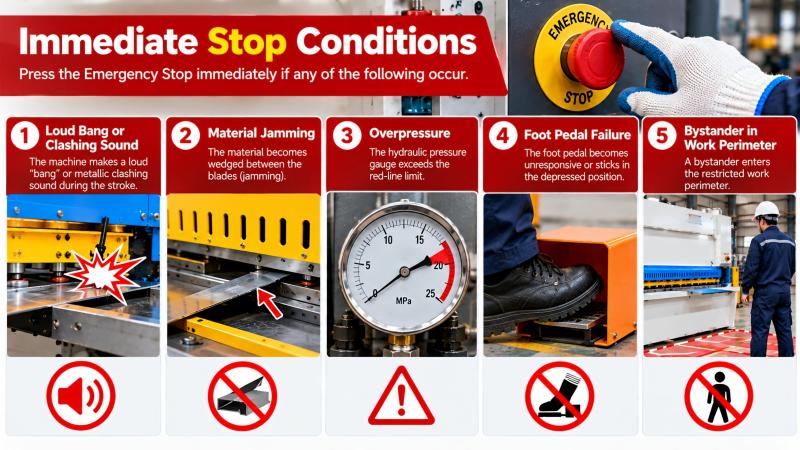
Operators must immediately press the Emergency Stop if any of the following occur:
- The machine makes a loud “bang” or metallic clashing sound during the stroke.
- The material becomes wedged between the blades (jamming).
- The hydraulic pressure gauge exceeds the red-line limit.
- The foot pedal becomes unresponsive or sticks in the depressed position.
- A bystander enters the restricted work perimeter.
Emergency Response and Qualified-Personnel Escalation
In the event of an accident or mechanical failure, following a structured response plan can prevent further injury or damage.
Emergency Response Steps
- Hit the E-Stop: Immediately neutralize all power to the machine.
- Secure the Area: Ensure no one else can restart the machine.
- First Aid: If an injury has occurred, follow workplace first-aid protocols and call emergency services if necessary.
- Lockout/Tagout (LOTO): Apply a physical lock to the main power disconnect to ensure the machine remains de-energized during investigation.
When to Call a Qualified Technician
Operators are generally trained for production, not complex repair. Escalation to a qualified technician is mandatory for:
- Blade Rotation/Gap Adjustment: Adjusting the clearance between the upper and lower blades requires precision measuring tools (feeler gauges) and specific torque sequences.
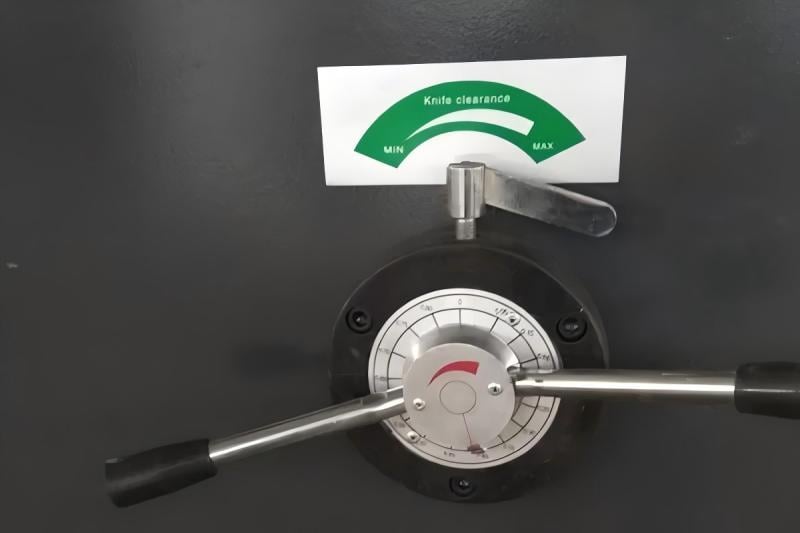
- Hydraulic System Repair: Opening hydraulic lines or adjusting relief valves involves high-pressure risks.
- Electrical Troubleshooting: Any issues within the PLC or control cabinet must be handled by a certified industrial electrician.
- Structural Welding: Any cracks in the machine frame or ram require professional structural assessment.
Safety FAQs
How often should operator safety training be refreshed?
Safety training should be refreshed at least annually. However, supplemental training is required whenever a new machine is installed, if an operator is observed performing unsafe acts, or if the machine undergoes significant modifications or blade changes.
Can I use standard work gloves for shearing?
No. Standard cotton or light leather work gloves do not provide sufficient cut resistance against the razor-sharp edges of sheared metal. You must use gloves with a certified cut rating (ANSI A4 or higher) to prevent deep lacerations and tendon damage.
What is the purpose of the rake angle adjustment in safety?
The rake angle (the angle of the upper blade) affects the force required to cut and the stability of the material. A proper rake angle reduces the risk of “material twist” or kick-back, which can strike the operator or cause the sheet to slide unpredictably.
Safety Review Checklist and Model-Manual References
To maintain long-term safety standards, management should conduct monthly safety audits using the following criteria:
- Manual Accessibility: Is the HARSLE operation manual available at the machine station for quick reference?
- Signage: Are all warning decals (e.g., “Keep Hands Clear,” “Wear Eye Protection”) legible and properly adhered?
- Incident Logs: Are all near-misses and minor malfunctions recorded and analyzed for patterns?
- PPE Inventory: Is there a sufficient stock of clean, undamaged PPE available for all shifts?
- Floor Markings: Are the “Operator Only” zones clearly painted on the floor around the machine?
For specific technical settings such as blade gap tolerances and hydraulic pressure limits, always refer to the Technical Specifications section of your HARSLE model-specific manual. Do not rely on generic settings from other machinery brands, as hydraulic pressures and frame rigidity vary significantly between models.
Next Action: Conduct a walk-through of your shearing department today to verify that all operators are wearing the correct cut-rated gloves and that all machine guards are in their proper positions.


