


A Shearing Machine Pre-Start Checklist is a series of safety and equipment inspections performed before operating an industrial shearing machine. It helps identify hydraulic leaks, damaged guards, worn blades, faulty emergency stops, and other problems that could lead to accidents or unexpected downtime. I recommend completing these checks at the beginning of every shift and whenever a machine has undergone maintenance. In this guide, I’ll explain the essential inspection steps, how to verify critical safety devices, and what to do if you discover a problem before production begins.
Why Is a Shearing Machine Pre-Start Checklist Important?
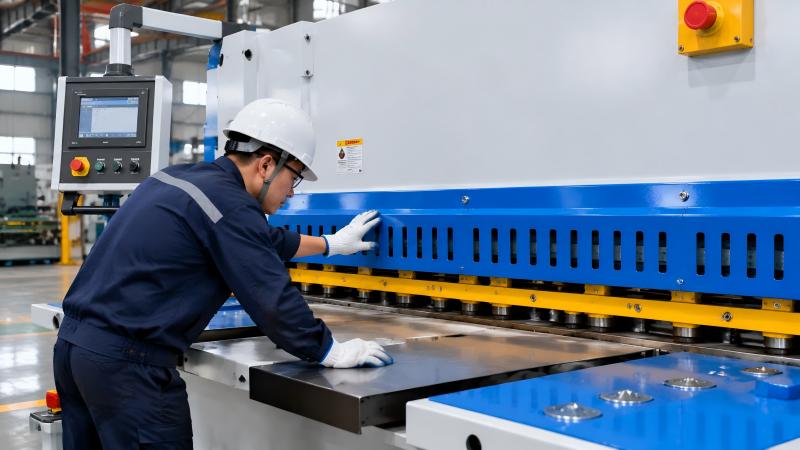
A pre-start inspection helps operators identify potential hazards before the machine begins cutting metal sheets. Even a small hydraulic leak, loose guard, or malfunctioning safety device can create serious risks.
Following a consistent inspection procedure also helps maintain cutting accuracy, reduce equipment wear, and prevent avoidable production interruptions. Most importantly, operators should never start a machine when a safety-critical component is damaged or not functioning correctly.
How to Perform a Shearing Machine Pre-Start Inspection
Step 1: Inspect the Machine and Work Area
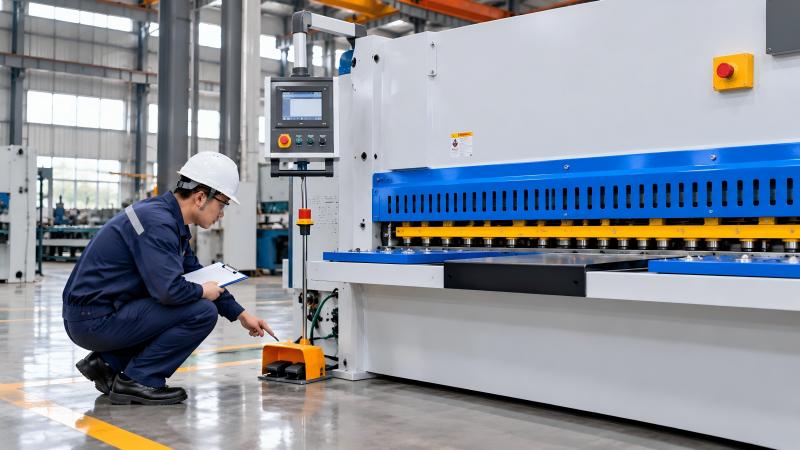
Start by checking the machine’s overall condition. Look for hydraulic oil leaks around cylinders, hoses, fittings, and the floor beneath the equipment. Inspect visible cables, connectors, and mechanical components for damage or loose connections.
Next, ensure the floor is clean and free of oil, metal offcuts, and other obstacles. Confirm that the material feeding area and rear discharge zone are clear of unauthorized personnel and obstructions.
If you find a leak, damaged cable, or other potentially dangerous condition, keep the machine out of service until the problem has been assessed and corrected.
Step 2: Check Safety Guards and Emergency Stops
Inspect the front finger guard and other protective barriers to ensure they are securely installed and free of deformation. Never operate the shearing machine with a missing guard or a safety device that has been bypassed.
Check the emergency stop buttons on the main control console and other designated operating stations. Test them only according to the manufacturer’s approved procedure, confirming that they initiate the required safe stop.
After testing, reset the emergency stop as instructed and verify that the machine is ready for operation. If an emergency stop fails to function correctly, do not continue operating the equipment.
Step 3: Examine Blade Condition and Clearance
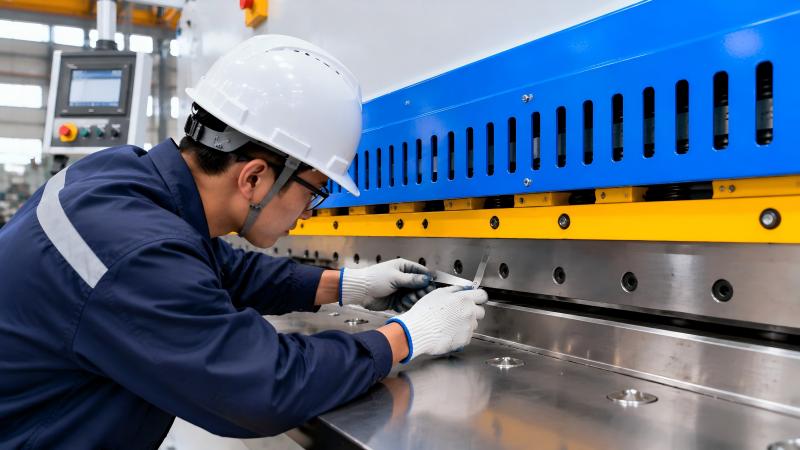
Inspect accessible blade edges for visible chips, cracks, excessive wear, or other damage. Damaged or dull blades can reduce cutting quality, increase the required shearing force, and contribute to material deformation.
Verify that the blade clearance is appropriate for the material type and thickness being processed. Incorrect clearance can cause excessive burrs, distorted edges, or unnecessary stress on the machine.
Only qualified personnel should perform blade replacement, rotation, or mechanical clearance adjustments when these tasks require maintenance intervention. Follow the manufacturer’s instructions and isolate hazardous energy before accessing the cutting mechanism.
Step 4: Verify the Backgauge and Hold-Down System
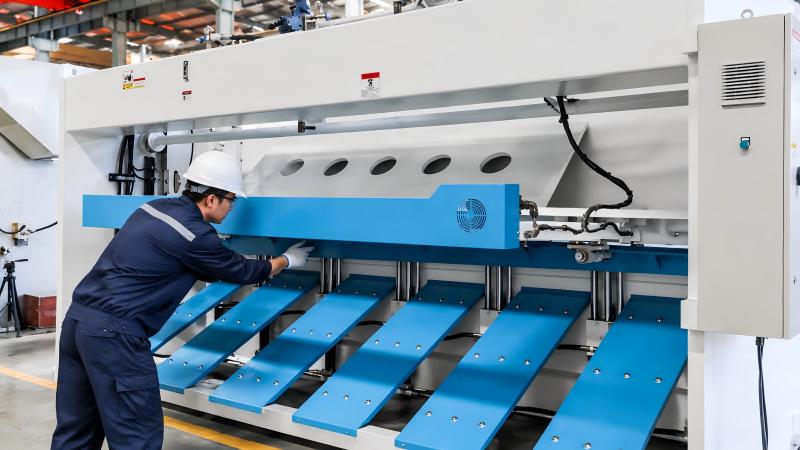
Check that the backgauge moves smoothly and reaches its programmed positions without unusual noise or binding. Make sure no scrap metal or other debris obstructs its movement.
Inspect the hold-down components and their contact pads for visible damage or wear. During an approved functional test, verify that the system holds the material securely without unexpected movement.
If the backgauge behaves inconsistently or the material shifts during operation, stop and investigate the cause before continuing production.
Step 5: Test Safety Sensors and Control Functions
If the machine is equipped with light curtains, interlocked guards, or other safety sensors, inspect their condition and confirm that they function according to the manufacturer’s test procedure.
Verify that the controller displays no unresolved safety alarms or abnormal operating messages. Check the selected operating mode and confirm that the machine’s settings match the planned cutting operation.
Never test an interlock by placing yourself or another person in a hazardous area, and never attempt to bypass a safety device. Any failed safety function must be investigated by qualified personnel.
What Should You Do If a Pre-Start Check Fails?
If any safety-critical inspection fails, do not start or continue operating the shearing machine. Inform the supervisor, identify the issue, and follow the facility’s lockout/tagout procedure when maintenance or hazardous-energy isolation is required.
Operators may report faults and perform authorized routine checks, but electrical repairs, hydraulic pressure adjustments, and safety-control modifications must be handled by appropriately qualified personnel.
Document the problem, the corrective action, and the inspection results. Before returning the machine to service, verify that the fault has been resolved and all required safety checks have passed.
FAQS
How Often Should I Use a Shearing Machine Pre-Start Checklist?
I recommend completing the checklist before each shift and repeating relevant checks after maintenance, machine adjustments, or any event that could affect safety. Follow the manufacturer’s maintenance schedule and your facility’s procedures.
Can I Operate a Shearing Machine if One Safety Guard Is Damaged?
No. Do not operate the machine with a damaged, missing, or bypassed safety guard. Have the issue corrected and verify the safety function before restarting.
What Are the Most Important Pre-Start Checks?
Prioritize machine condition, hydraulic leaks, safety guards, emergency stops, blade condition, work area clearance, and the proper function of the backgauge and installed safety devices.
Who Is Responsible for Completing the Checklist?
Trained and authorized operators generally perform routine pre-start inspections. Qualified maintenance technicians must handle repairs and technical adjustments beyond the operator’s authorization.
Conclusion
A reliable Shearing Machine Pre-Start Checklist helps protect operators, maintain cutting quality, and reduce unplanned downtime. By inspecting the machine, checking safety devices, examining the blades, and verifying control functions before each shift, operators can identify problems before they become serious hazards.


