


مكبس هيدروليكي Problems can affect machine performance, cause unexpected downtime, and increase maintenance costs. When a hydraulic press develops issues such as insufficient pressure, slow movement, oil leakage, or overheating, I recommend identifying the symptoms before replacing any components. In this guide, I’ll explain the most common hydraulic press failures, their possible causes, and practical troubleshooting methods to help you restore machine performance safely and efficiently.
What Are the Most Common مكبس هيدروليكي Problems?
Insufficient Hydraulic Pressure
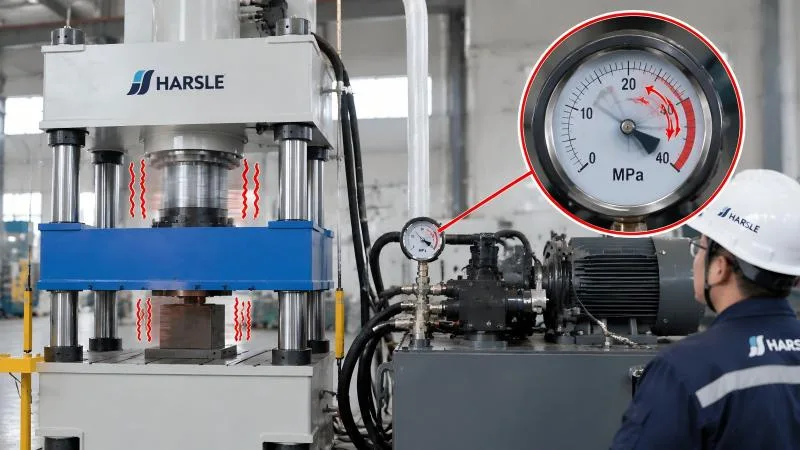
Low hydraulic pressure can prevent the machine from generating enough force for pressing operations.
Common causes include insufficient hydraulic oil, worn pumps, internal cylinder leakage, and malfunctioning pressure relief valves.
I recommend checking the oil level, monitoring system pressure, and comparing readings with the manufacturer’s specifications.
Slow or Unstable Cylinder Movement
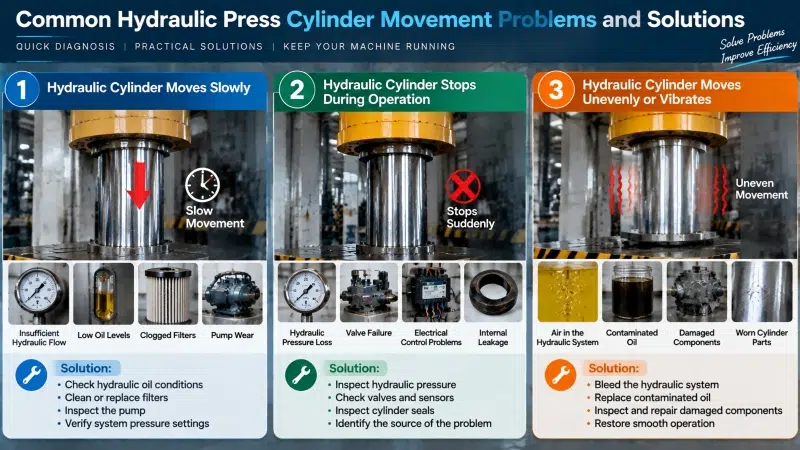
When a hydraulic press moves slowly, vibrates, or operates inconsistently, the problem may involve restricted oil flow, contaminated hydraulic fluid, or faulty directional valves.
Air entering the hydraulic circuit can also cause irregular movement and reduce positioning stability.
Hydraulic Oil Leakage
Hydraulic oil leakage commonly occurs around cylinder seals, hose connections, pipe fittings, and hydraulic valves.
External leakage reduces oil levels and may create safety hazards, while internal leakage decreases hydraulic efficiency without visible oil loss.
ارتفاع درجة حرارة النظام الهيدروليكي
Excessive hydraulic oil temperature can damage seals, reduce lubrication performance, and accelerate component wear.
Blocked oil coolers, defective cooling fans, excessive pressure losses, and internal leakage are common causes of hydraulic overheating.
Electrical and Control System Failures
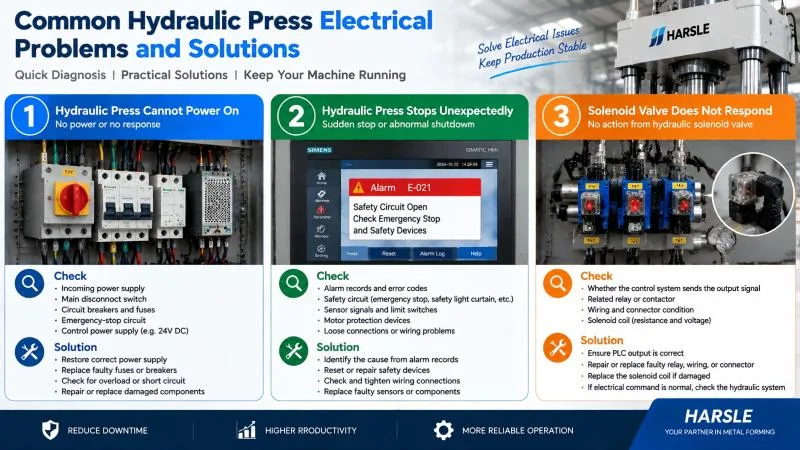
Damaged control buttons, faulty sensors, loose wiring, or PLC alarms may prevent the hydraulic press from responding correctly.
These problems can interrupt automatic cycles, affect positioning accuracy, or prevent machine startup.
How to Troubleshoot Hydraulic Press Problems Step by Step
Step 1: Check Hydraulic Oil Level and Condition
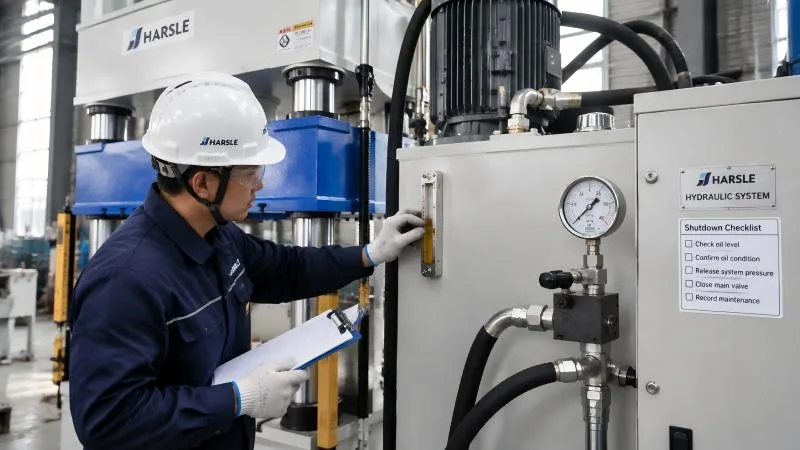
I recommend beginning with the hydraulic oil reservoir.
Check whether the oil level meets the manufacturer’s requirements and inspect the fluid for contamination, discoloration, or foaming.
Low oil levels may cause pump cavitation, while contaminated oil can interfere with valve operation.
Replace deteriorated oil and filters according to the recommended maintenance schedule.
Step 2: Inspect Hydraulic Pressure and Pump Performance
Check the hydraulic pressure readings using the machine’s diagnostic system or suitable measuring equipment.
Compare the readings with the specified operating pressure.
If pressure remains insufficient, qualified technicians should inspect the hydraulic pump, relief valve, and cylinder seals.
Never increase pressure beyond the manufacturer’s approved limits to compensate for a malfunction.
Step 3: Examine Hydraulic Cylinders and Valves
Inspect cylinders, directional control valves, and hydraulic connections for abnormal operation.
Look for visible leakage, damaged seals, unusual vibration, and inconsistent cylinder movement.
If internal leakage is suspected, perform manufacturer-approved diagnostic tests to identify the affected component.
Before disconnecting hydraulic lines, isolate the machine, support the ram, and release stored hydraulic pressure.
Step 4: Check the Cooling System and Oil Temperature
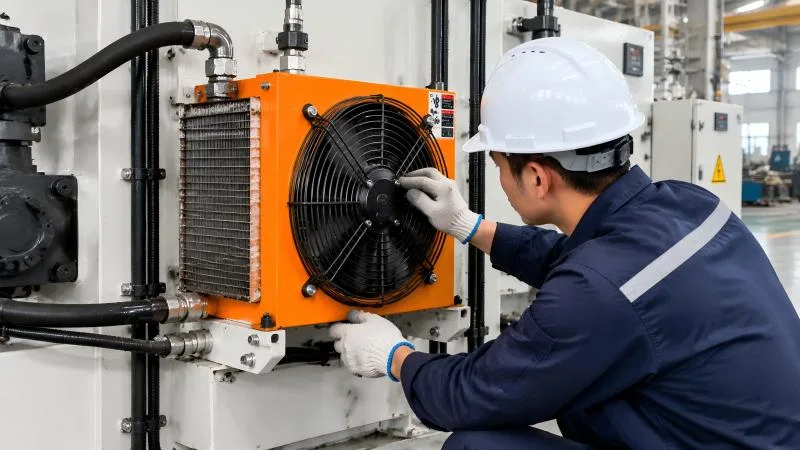
Monitor hydraulic oil temperature during normal operation.
Inspect cooling fans, oil coolers, ventilation openings, and heat exchange surfaces for blockage or damage.
For water-cooled systems, verify that cooling water circulation is functioning correctly.
Repair cooling faults before returning the machine to continuous production.
Step 5: Diagnose Electrical and Control System Problems
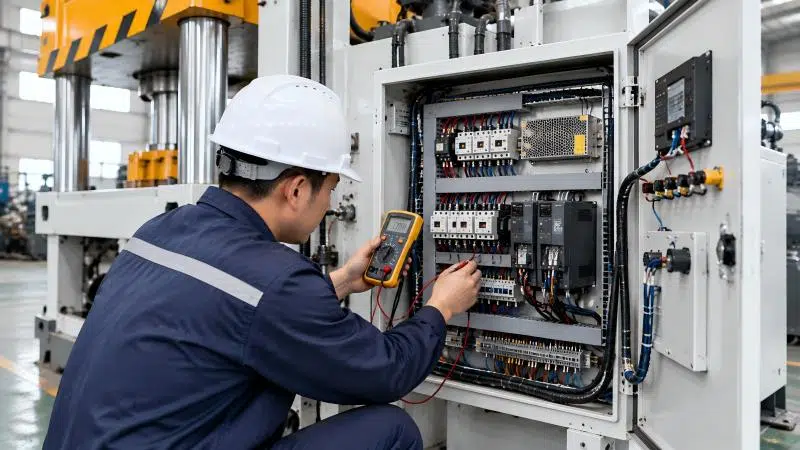
Inspect controller alarms, emergency stop status, position sensors, and control panel indicators.
Qualified electrical technicians should check wiring connections, control power supplies, and PLC input signals.
I recommend recording error codes before resetting alarms.
Never bypass emergency stops, safety interlocks, or protective circuits during troubleshooting.
Step 6: Test Machine Performance After Repairs
After completing repairs, restore all protective covers and verify that safety systems operate correctly.
Perform controlled test cycles according to the manufacturer’s procedures.
Check pressing force, cylinder movement, positioning accuracy, and oil temperature.
Return the hydraulic press to production only when its performance meets the specified requirements.
How to Prevent Common Hydraulic Press Failures?
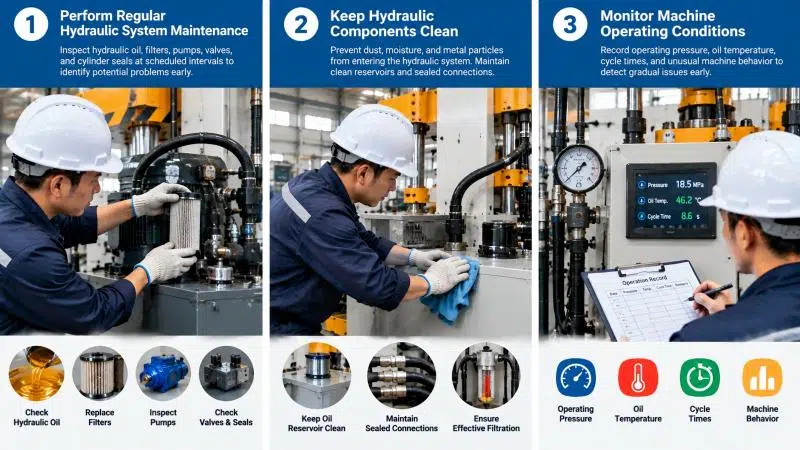
Perform Regular Hydraulic System Maintenance
I recommend inspecting hydraulic oil, filters, pumps, valves, and cylinder seals at scheduled intervals.
Routine maintenance helps identify developing problems before they cause unexpected machine shutdowns.
Keep Hydraulic Components Clean
Prevent dust, moisture, and metal particles from entering the hydraulic system.
Maintain clean oil reservoirs, properly sealed connections, and effective filtration to protect sensitive hydraulic components.
Monitor Machine Operating Conditions
Record operating pressure, oil temperature, cycle times, and unusual machine behavior.
Comparing these measurements over time can reveal gradual deterioration and support more effective preventive maintenance.
الأسئلة الشائعة
What Is the First Step in Hydraulic Press Troubleshooting?
I recommend checking the machine’s symptoms, controller alarms, hydraulic oil level, and visible leakage before performing detailed diagnostics.
Why Is My Hydraulic Press Not Building Pressure?
Possible causes include low hydraulic oil levels, worn pumps, defective relief valves, internal leakage, or incorrect control settings.
What Causes a Hydraulic Press to Move Slowly?
Slow movement may result from restricted oil flow, contaminated filters, pump wear, internal leakage, or malfunctioning control valves.
خاتمة
Effective Hydraulic Press Troubleshooting requires systematic inspection of hydraulic pressure, oil condition, cylinders, valves, cooling components, and electrical controls. Identifying problems early and following proper maintenance procedures can reduce downtime, improve operating efficiency, and extend machine service life.
If your hydraulic press continues experiencing performance problems, the HARSLE technical team can help you identify potential causes and recommend suitable maintenance solutions.


