


How to Solve مكبس هيدروليكي Motor Overheating Problems? is a common question when operators notice abnormal temperature rise, reduced machine performance, or unexpected shutdowns during hydraulic press operation. Motor overheating can be caused by electrical issues, excessive load, poor ventilation, hydraulic system problems, or insufficient maintenance. In this guide, I will explain the common causes of hydraulic press motor overheating, how to troubleshoot the problem step by step, and what preventive measures can help maintain stable machine performance.
ما هي الأسباب مكبس هيدروليكي Motor Overheating Problems?
The motor is one of the key components that drives the hydraulic system. When it operates under abnormal conditions, excessive heat may build up and affect motor efficiency, insulation life, and overall hydraulic press reliability.
Understanding the source of overheating is the first step toward effective troubleshooting.
Overload Operation and Excessive Working Conditions
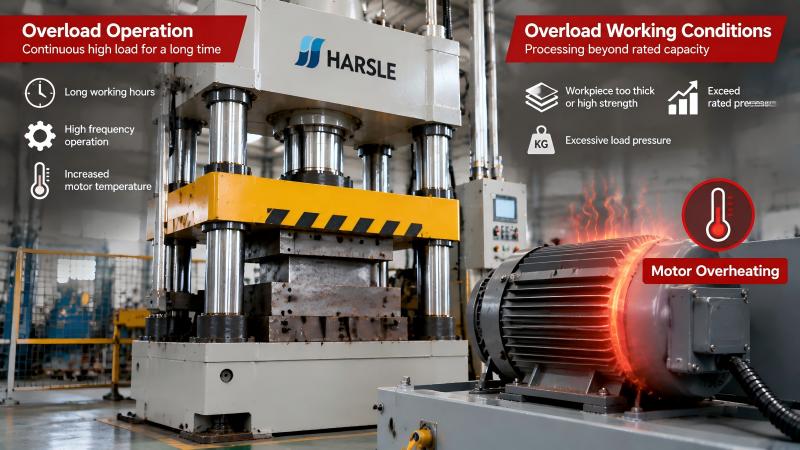
One of the most common causes of motor overheating is operating the hydraulic press beyond its designed capacity. Continuous high-load operation requires the motor to provide more power, which increases current consumption and generates additional heat.
I recommend checking whether the hydraulic press is frequently working near maximum capacity or performing tasks that exceed the machine specifications. Reducing unnecessary overload conditions can help lower motor temperature and extend service life.
Electrical Problems Causing Motor Overheating
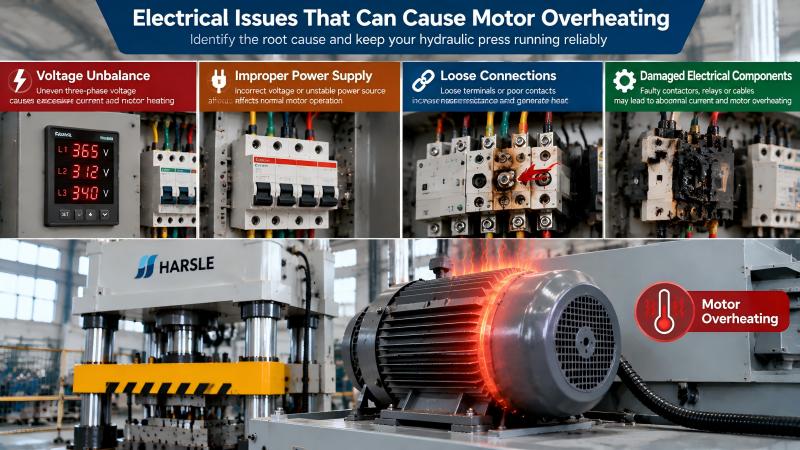
Electrical faults can also lead to excessive motor temperature. Voltage imbalance, incorrect power supply, loose connections, or damaged electrical components may cause the motor to draw abnormal current.
During inspection, check the incoming power supply, motor terminals, contactors, overload protection devices, and wiring connections. Poor electrical contact can increase resistance and create additional heat during operation.
Poor Ventilation and Cooling Conditions
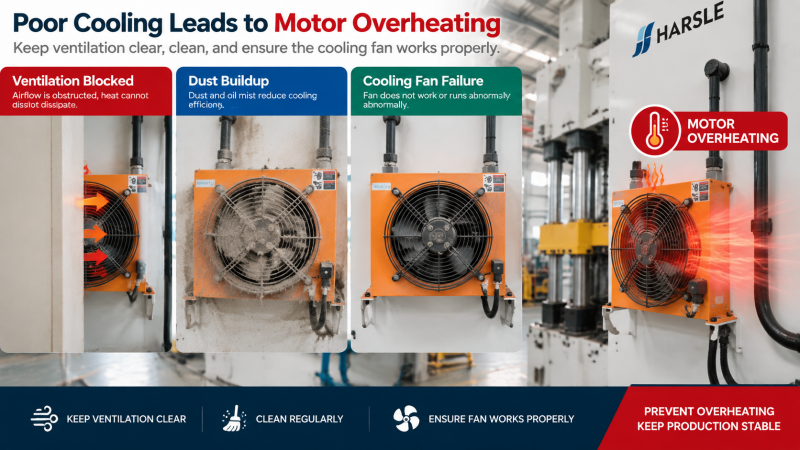
The hydraulic press motor requires proper airflow to release heat generated during operation. Blocked ventilation openings, dust accumulation, or a damaged cooling fan can reduce heat dissipation.
I recommend keeping the motor surface clean and ensuring that cooling channels are not blocked. A clean working environment helps maintain normal operating temperature and prevents overheating issues.
How to Troubleshoot Hydraulic Press Motor Overheating Problems Step by Step?
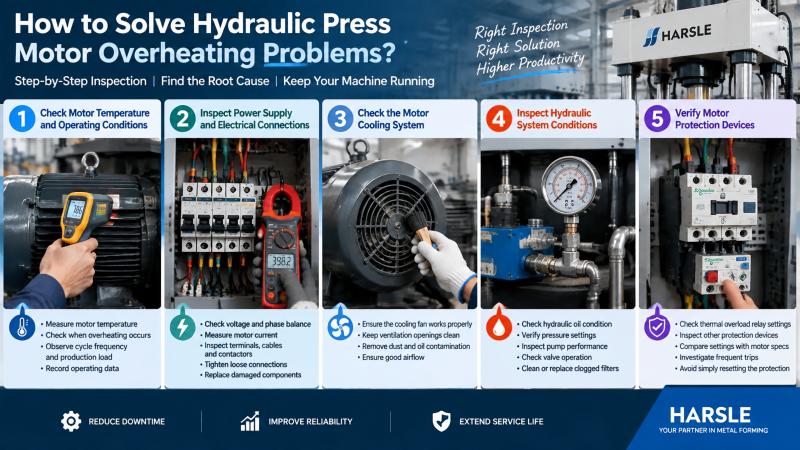
Step 1: Check Motor Temperature and Operating Conditions
The first step is identifying when and how the overheating occurs. Check whether the motor becomes hot immediately after startup or only after long periods of operation.
Observe the machine working conditions, including cycle frequency, pressing force, and production load. Recording operating temperature and working time can help determine whether the issue is related to overload or another fault.
Step 2: Inspect Power Supply and Motor Electrical Connections
Electrical inspection is an important part of diagnosing hydraulic press motor overheating problems. Check the voltage level, phase balance, and motor current to confirm whether the motor is receiving stable power.
Inspect terminals, cables, contactors, and overload relays for loose connections or signs of overheating. Tighten loose connections and replace damaged electrical components when necessary.
Step 3: Check the Motor Cooling System
If the electrical system is normal, inspect the motor cooling condition. Make sure the cooling fan is operating correctly and that the ventilation openings are clean.
Dust, oil contamination, or blocked airflow can prevent heat from escaping. Cleaning the motor housing and restoring proper ventilation can significantly improve cooling performance.
Step 4: Inspect Hydraulic System Conditions
Hydraulic system problems can indirectly increase motor load and cause overheating. For example, excessive hydraulic pressure, clogged filters, or abnormal pump operation may force the motor to work harder.
Check hydraulic oil condition, pressure settings, pump performance, and valve operation. Maintaining a properly adjusted hydraulic system helps reduce unnecessary motor stress.
Step 5: Verify Motor Protection Devices
Motor protection devices such as thermal overload relays and circuit protection components help prevent serious damage. If these devices frequently activate, the cause should be investigated rather than simply resetting them.
Check protection settings and compare them with the motor specifications. Incorrect settings may cause unnecessary shutdowns or fail to provide proper protection.
How to Prevent Hydraulic Press Motor Overheating Problems?
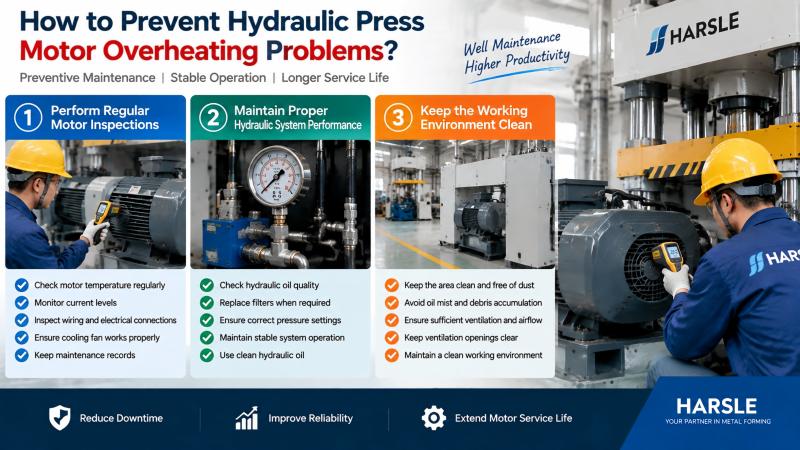
Perform Regular Motor Inspections
Preventive inspection is one of the most effective ways to avoid motor overheating. I recommend regularly checking motor temperature, current levels, wiring conditions, cooling fans, and electrical connections.
Keeping maintenance records helps identify temperature trends and detect developing problems before they cause unexpected downtime.
Maintain Proper Hydraulic System Performance
A well-maintained hydraulic system reduces unnecessary motor load. Regularly check hydraulic oil quality, replace filters when required, and ensure that pressure settings match operating requirements.
Clean hydraulic oil and stable system pressure help the motor operate more efficiently.
Keep the Working Environment Clean
Dust, oil mist, and debris can affect motor cooling performance and electrical reliability. Keep the area around the hydraulic press clean and ensure sufficient airflow around the motor.
A clean environment reduces heat accumulation and helps maintain long-term equipment reliability.
Common Hydraulic Press Motor Overheating Problems and Solutions
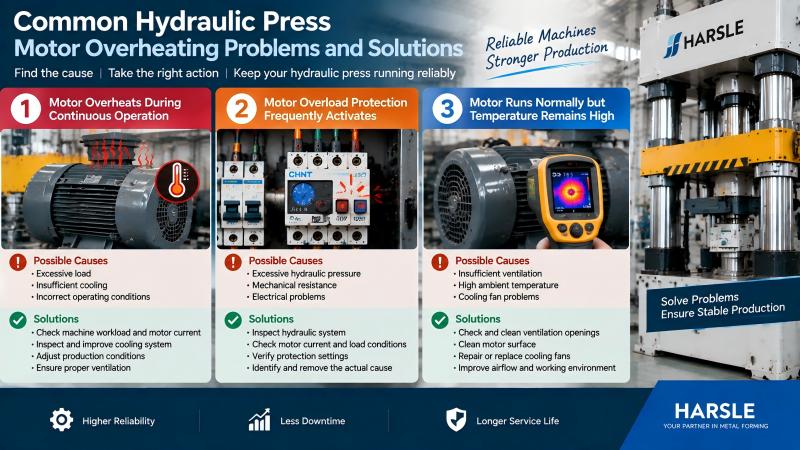
Motor Overheats During Continuous Operation
If the motor temperature increases during long production cycles, the possible causes may include excessive load, insufficient cooling, or incorrect operating conditions.
Check the machine workload, motor current, and cooling system. Adjusting production conditions or improving ventilation may solve the issue.
Motor Overload Protection Frequently Activates
Repeated overload trips usually indicate that the motor is working under abnormal conditions. Possible causes include excessive hydraulic pressure, mechanical resistance, or electrical problems.
Inspect the hydraulic system, motor current, and protection settings to locate the actual cause.
Motor Runs Normally but Temperature Remains High
If the motor operates normally but remains hotter than expected, check ventilation, ambient temperature, and cooling components.
Cleaning the motor surface, repairing cooling fans, or improving airflow can help reduce operating temperature.
الأسئلة الشائعة
What are the main causes of hydraulic press motor overheating problems?
Common causes include overload operation, unstable power supply, poor ventilation, hydraulic system problems, and insufficient maintenance of electrical or mechanical components.
How can I check if the motor is overloaded?
I recommend checking the motor current during operation and comparing it with the rated value. Abnormally high current may indicate overload conditions.
Can hydraulic oil problems cause motor overheating?
Yes. Poor hydraulic oil quality, clogged filters, or incorrect pressure settings can increase pump load and force the motor to work harder.
خاتمة
Solving Hydraulic Press Motor Overheating Problems requires checking multiple factors, including electrical conditions, operating load, cooling performance, and hydraulic system status. By following a systematic troubleshooting process and performing regular preventive maintenance, operators can reduce downtime, improve efficiency, and extend motor service life.
At HARSLE, we provide professional hydraulic press solutions and technical support to help customers maintain reliable machine operation. For more troubleshooting guidance or maintenance information, contact our engineering team or explore additional hydraulic press documentation.


