


مكبس هيدروليكي System Overload occurs when the force required during operation exceeds the machine’s rated capacity or when abnormal hydraulic conditions place excessive stress on its components. This problem can cause unstable pressure, overheating, equipment damage, and unexpected production downtime. When a hydraulic press shows overload warnings or abnormal operating behavior, I recommend checking the working load, hydraulic pressure, tooling condition, and control system settings. In this guide, I’ll explain the common causes of hydraulic press overload, how to identify potential problems, and practical ways to prevent equipment damage.
What Are the Common Causes of مكبس هيدروليكي System Overload?
Excessive Pressing Force and Material Resistance
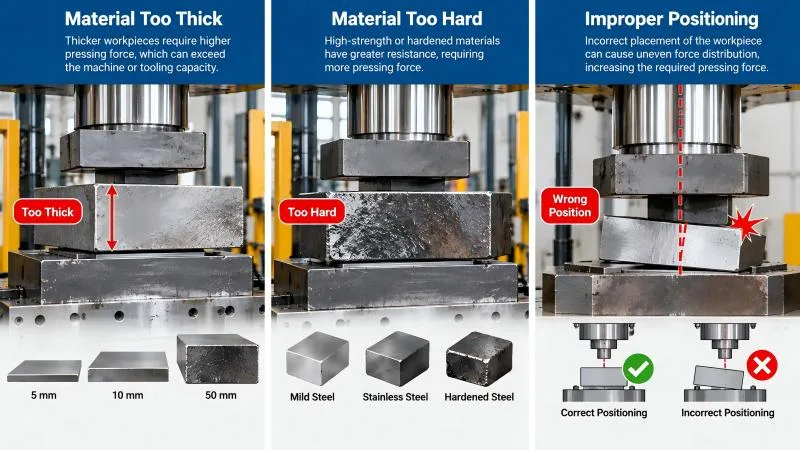
One of the most common causes of hydraulic press overload is applying more force than the machine or tooling can safely withstand.
Processing materials that are too thick, too hard, or improperly positioned may increase the required pressing force.
I recommend calculating the required forming force before production and confirming that it remains within the machine’s rated capacity.
Incorrect Hydraulic Pressure Settings
Incorrect pressure settings can expose hydraulic components to excessive loads.
If the relief valve is improperly adjusted or fails to regulate pressure, the hydraulic system may experience abnormal pressure buildup.
Excessive pressure can damage seals, hydraulic cylinders, pipelines, and other critical components.
Improper Tooling Installation and Alignment
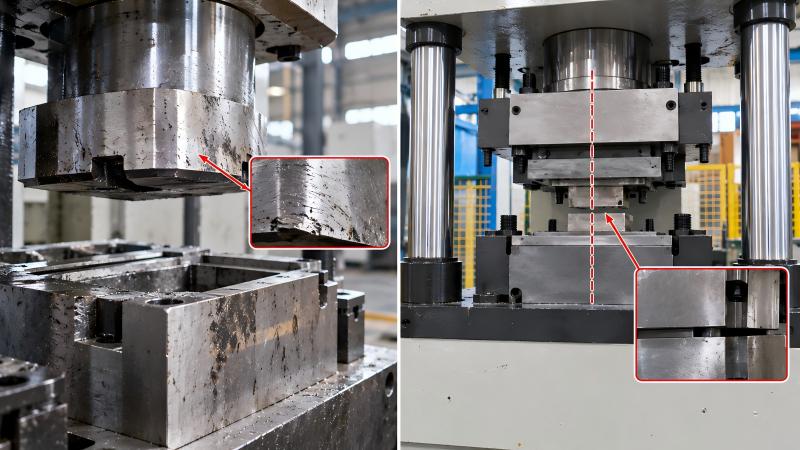
Incorrectly installed or misaligned tooling can create uneven force distribution during pressing operations.
When the upper and lower dies are not properly aligned, localized stress may increase significantly.
This condition can damage tooling, reduce forming accuracy, and contribute to Hydraulic Press System Overload.
Hydraulic Component Malfunctions
Faulty directional valves, blocked hydraulic passages, damaged pressure sensors, or malfunctioning control components may interfere with normal pressure regulation.
These problems can cause unexpected pressure increases, restricted movement, or overload alarms.
Regular hydraulic system inspections help identify these issues before serious damage occurs.
How to Diagnose Hydraulic Press System Overload
Step 1: Check the Actual Pressing Load
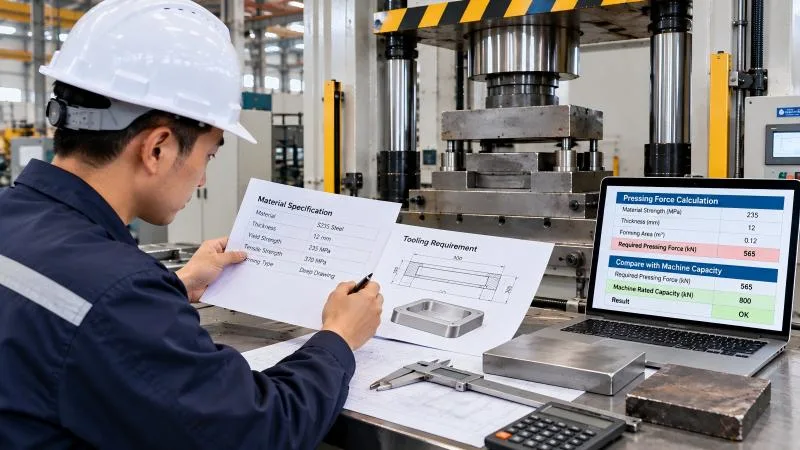
I recommend starting by reviewing the material specifications, tooling requirements, and pressing force calculations.
Compare the required force with the machine’s rated capacity.
If the required force exceeds the permitted limit, select suitable equipment or modify the forming process rather than increasing hydraulic pressure.
Step 2: Inspect Hydraulic Pressure and Relief Valves
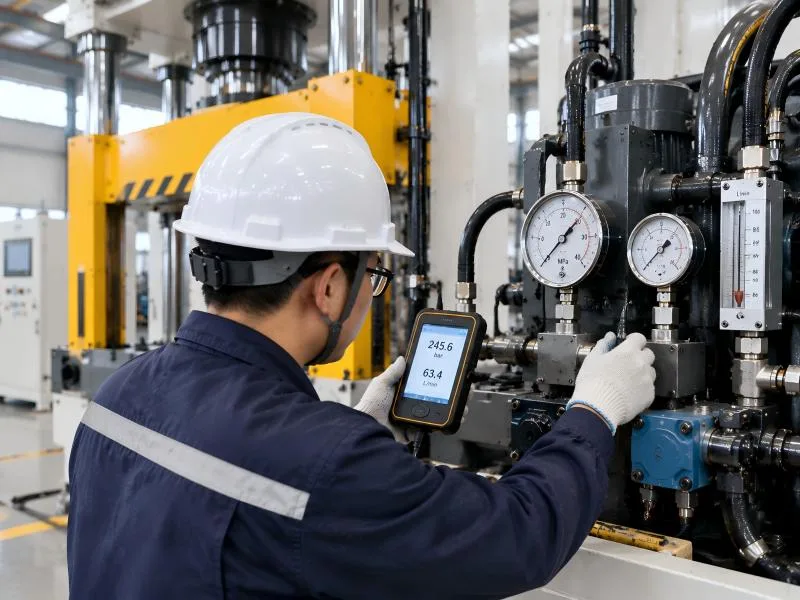
Check the hydraulic pressure displayed on the control system and compare it with the manufacturer’s specifications.
Qualified technicians should verify pressure readings using appropriate calibrated equipment.
Inspect relief valves for incorrect settings, contamination, or mechanical failure.
Never increase relief valve settings beyond approved limits to overcome an overload condition.
Step 3: Examine Tooling Alignment and Workpiece Positioning
Before inspecting the tooling, shut down the machine, isolate energy sources, release stored pressure, and secure the ram using approved procedures.
Check the upper and lower dies for misalignment, damage, or loose mounting components.
Verify that the workpiece is correctly positioned and supported to prevent uneven loading.
Step 4: Check Hydraulic Components and Control Signals
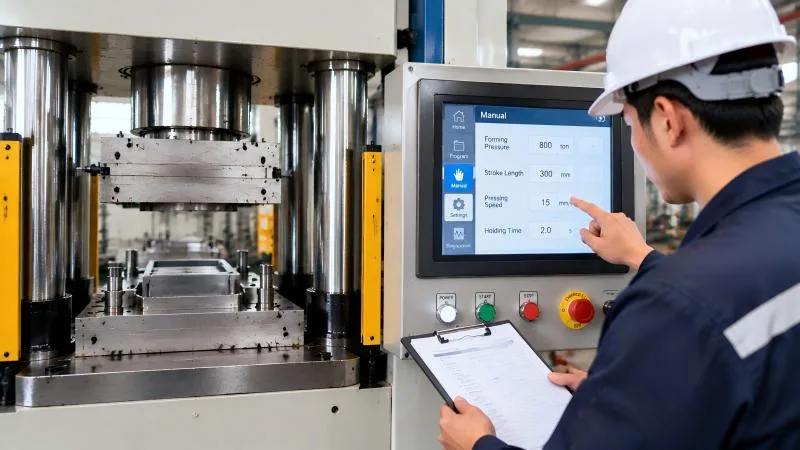
Inspect pumps, valves, pressure sensors, and hydraulic cylinders for abnormal operating conditions.
Review controller alarms and pressure feedback readings to identify possible hydraulic press overload faults.
If the control system reports inconsistent pressure values, qualified technicians should inspect sensor connections and calibration.
Step 5: Verify Machine Operation After Troubleshooting
After correcting the identified problem, perform a controlled functional test according to the manufacturer’s instructions.
Monitor pressure, ram movement, and controller alarms during testing.
I recommend confirming that all safety systems operate correctly before returning the hydraulic press to normal production.
How to Prevent Hydraulic Press System Overload?
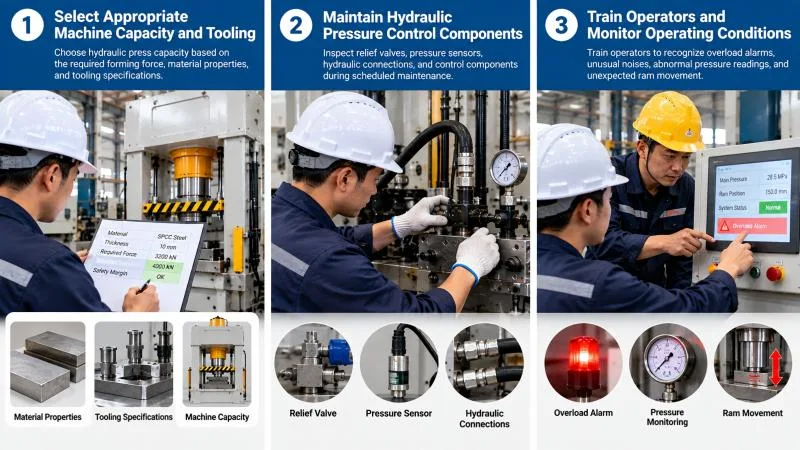
Select Appropriate Machine Capacity and Tooling
Choose hydraulic press capacity based on the required forming force, material properties, and tooling specifications.
Avoid operating beyond the rated limits of either the machine or its tooling.
Maintain Hydraulic Pressure Control Components
Inspect relief valves, pressure sensors, hydraulic connections, and control components during scheduled maintenance.
Reliable pressure regulation helps prevent excessive loading and protects hydraulic components.
Train Operators and Monitor Operating Conditions
I recommend training operators to recognize overload alarms, unusual noises, abnormal pressure readings, and unexpected ram movement.
Record recurring overload events and investigate their causes before restarting production.
الأسئلة الشائعة
What Are the Signs of Hydraulic Press System Overload?
Common signs include overload alarms, excessive hydraulic pressure, abnormal machine noise, unexpected stopping, and tooling deformation.
Can Excessive Hydraulic Pressure Damage a Press?
Yes. Excessive pressure can damage hydraulic seals, cylinders, valves, pipelines, and structural components if the system’s protective limits are exceeded.
How Can I Prevent Hydraulic Press Overload?
Verify pressing force requirements, use correctly rated tooling, maintain pressure control components, and follow approved operating procedures.
خاتمة
Hydraulic Press System Overload can result from excessive pressing force, incorrect pressure settings, tooling misalignment, or hydraulic component malfunctions. I recommend combining accurate load calculations, regular inspections, and proper machine operation to reduce overload risks and maintain reliable production.


