


مكبس هيدروليكي Oil Leakage Problems can significantly affect machine performance, production efficiency, and operational safety if they are not identified and resolved in time. When hydraulic oil leaks occur, they may result from worn seals, loose fittings, damaged hoses, aging components, or insufficient maintenance. In this guide, I will explain the common causes of hydraulic oil leakage, provide practical troubleshooting steps, and share effective maintenance methods to help operators restore stable hydraulic press operation. By understanding the warning signs and applying proper solutions, you can reduce downtime, prevent costly repairs, and extend the service life of your hydraulic press.
ما هي الأسباب مكبس هيدروليكي Oil Leakage Problems?
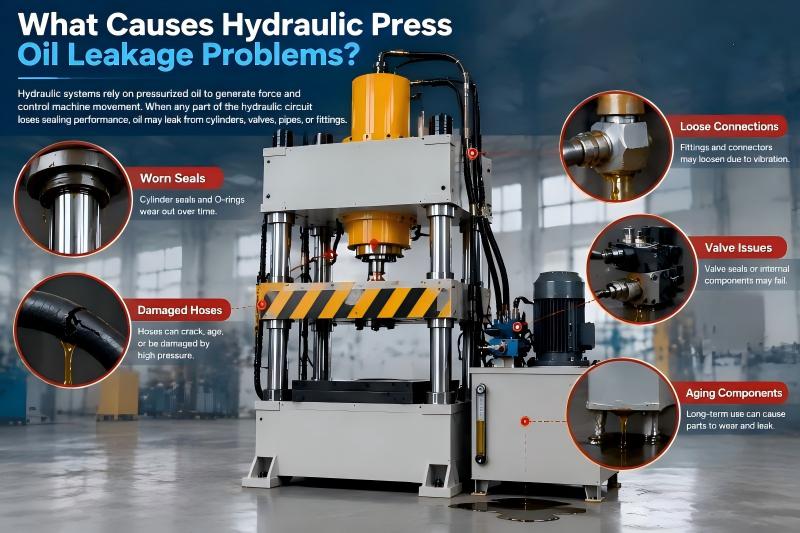
Hydraulic systems rely on pressurized oil to generate force and control machine movement. When any part of the hydraulic circuit loses sealing performance, oil may leak from cylinders, valves, pipes, or fittings.
Understanding the root causes of oil leakage helps operators solve problems faster and prevent repeated failures.
Damaged Hydraulic Cylinder Seals and O-Rings
Hydraulic cylinder seals are designed to prevent oil from escaping during high-pressure operation. Over time, continuous movement, high temperatures, and contaminated hydraulic oil can cause seals to wear, harden, or crack.
When cylinder seals fail, operators may notice oil around the piston rod, reduced pressing force, or slower machine movement. Replacing worn seals with suitable components is one of the most effective solutions for hydraulic press oil leakage repair.
Loose Hydraulic Connections and Fittings
Loose pipes, connectors, and fittings are another common reason for hydraulic oil leaks. Vibration during long-term operation can gradually loosen connection points and reduce sealing performance.
I recommend regularly checking hydraulic hoses, joints, and fittings. Tightening loose connections and replacing damaged fittings can prevent small leaks from developing into major hydraulic system failures.
Aging or Damaged Hydraulic Hoses
Hydraulic hoses operate under high pressure and repeated movement. After long-term use, hoses may develop cracks, surface wear, or swelling, which can lead to oil leakage.
During routine maintenance, inspect hose conditions carefully. If any damage is found, replace the hose immediately with a suitable pressure-rated component to ensure safe operation.
How to Troubleshoot Hydraulic Press Oil Leakage Problems Step by Step
Step 1: Identify the Hydraulic Oil Leakage Location
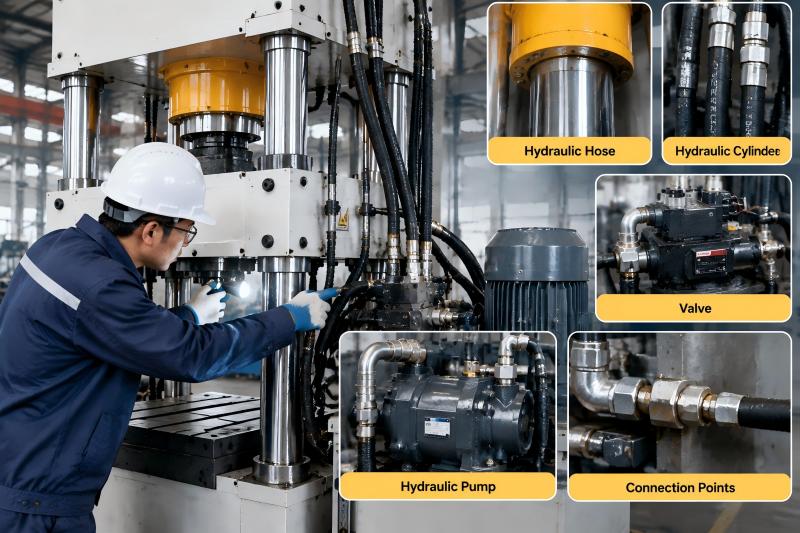
Before repairing a hydraulic press oil leak, the first step is finding the exact leakage point. Clean the machine surface and remove existing oil residue to make the source easier to identify.
Check important areas including hydraulic cylinders, oil pipes, valves, pumps, and connection points. Observing when the leak appears during operation can also help determine whether the problem occurs under pressure or during machine movement.
Step 2: Check Hydraulic Oil Level and Oil Condition
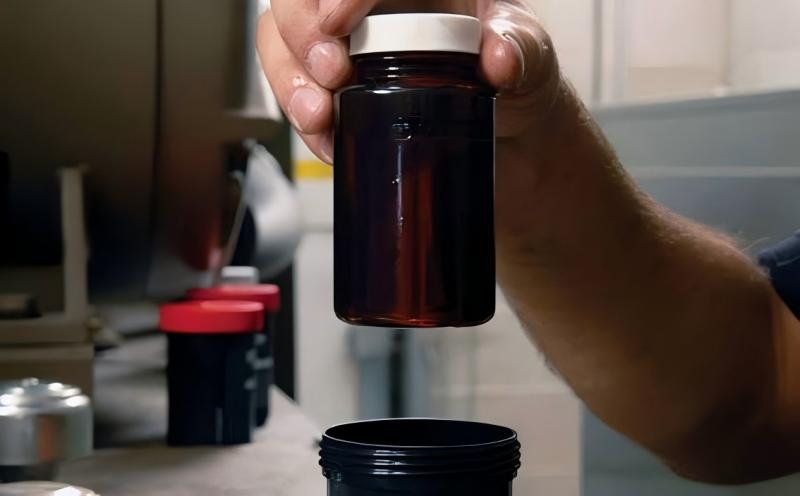
Low-quality or contaminated hydraulic oil can accelerate component wear and increase the possibility of leakage. I recommend checking the oil level regularly and inspecting the oil condition.
If the oil appears dirty, contains particles, or has unusual color changes, it may need filtration or replacement. Clean hydraulic oil helps protect seals, pumps, and valves while improving overall hydraulic system stability.
Step 3: Inspect and Replace Damaged Sealing Components
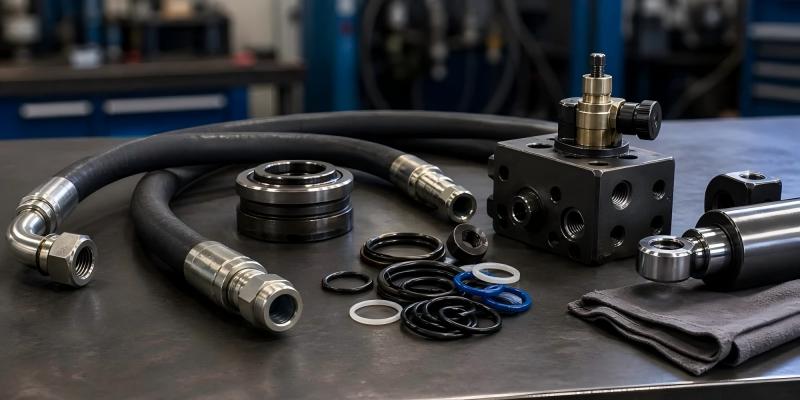
After locating the leak source, inspect related sealing parts such as O-rings, gaskets, and cylinder seals. Damaged seals should be replaced according to the manufacturer’s specifications.
When installing new seals, make sure the sealing surface is clean and free from scratches or contamination. Incorrect installation can cause new leaks even after replacement.
Step 4: Test Hydraulic Pressure After Repair
After completing repairs, test the hydraulic press under normal operating conditions. Check whether the system can maintain stable pressure and confirm that no new leaks appear.
Monitoring pressure changes, cylinder movement, and machine performance after maintenance helps ensure that the repair has been completed successfully.
How to Prevent Hydraulic Press Oil Leakage Problems?
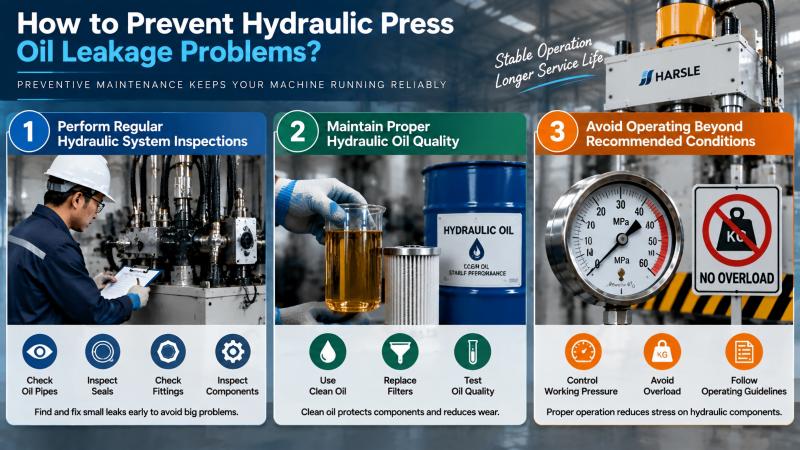
Perform Regular Hydraulic System Inspections
Preventive maintenance is the most effective way to reduce hydraulic oil leakage. I suggest creating a regular inspection schedule that includes checking oil pipes, seals, fittings, and hydraulic components.
Early detection of small leaks allows operators to solve problems before they cause production downtime or expensive repairs.
Maintain Proper Hydraulic Oil Quality
Clean hydraulic oil plays an important role in protecting internal components. Contaminated oil can damage seals, increase friction, and shorten the service life of hydraulic parts.
Regular oil testing, filter replacement, and proper oil storage can significantly reduce the risk of hydraulic system problems.
Avoid Operating the Hydraulic Press Beyond Recommended Conditions
Excessive pressure, overload operation, and improper machine use can accelerate wear on hydraulic components.
Following the manufacturer’s operating guidelines helps maintain stable performance and prevents unnecessary stress on seals, cylinders, and hydraulic connections.
Common Hydraulic Press Oil Leakage Problems and Solutions
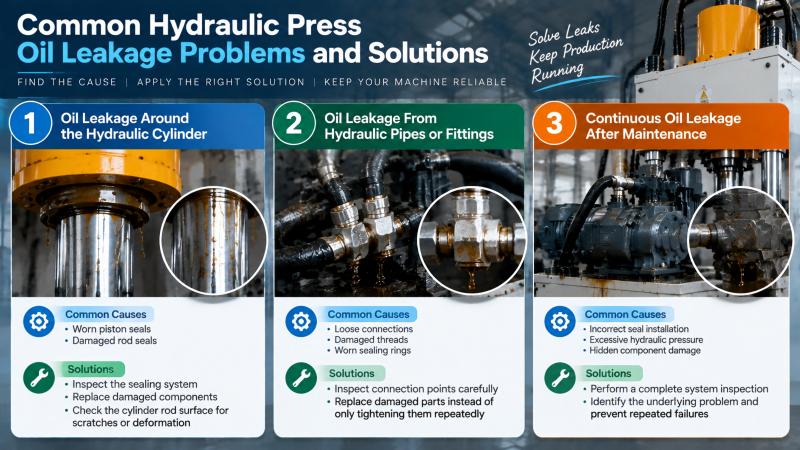
Oil Leakage Around the Hydraulic Cylinder
Cylinder leakage is often caused by worn piston seals or damaged rod seals. The recommended solution is to inspect the sealing system and replace damaged components.
If leakage continues after seal replacement, check whether the cylinder rod surface has scratches or deformation that may damage new seals.
Oil Leakage From Hydraulic Pipes or Fittings
Leaks around pipes and fittings are usually related to loose connections, damaged threads, or worn sealing rings.
Inspect the connection points carefully and replace damaged parts instead of only tightening them repeatedly.
Continuous Oil Leakage After Maintenance
If oil leakage continues after repair, possible causes include incorrect seal installation, excessive hydraulic pressure, or hidden component damage.
A complete system inspection is necessary to identify the underlying problem and prevent repeated failures.
الأسئلة الشائعة
What are the most common causes of hydraulic press oil leakage problems?
The most common causes include damaged cylinder seals, loose hydraulic fittings, worn hoses, contaminated oil, and aging hydraulic components. Regular inspections can help identify these issues early.
How can I find the source of a hydraulic press oil leak?
First, clean the hydraulic press surface and remove existing oil residue. Then inspect cylinders, hoses, valves, and connection points while observing the machine during operation.
Can contaminated hydraulic oil cause oil leakage?
Yes. Contaminated hydraulic oil can damage seals and internal components, increasing wear and creating conditions that lead to oil leakage.
خاتمة
Proper troubleshooting and preventive maintenance are essential for solving Hydraulic Press Oil Leakage Problems and maintaining reliable machine performance. By checking hydraulic components regularly, maintaining oil quality, replacing damaged seals, and monitoring system pressure, operators can reduce downtime and extend equipment service life.
At HARSLE, we provide professional hydraulic press solutions and technical support to help customers improve machine reliability. For more troubleshooting guidance or maintenance information, contact our engineering team or explore additional hydraulic press documentation.


