


مكبس هيدروليكي Excessive Vibration can affect machine accuracy, reduce production efficiency, and accelerate wear on key components. When a hydraulic press produces unusual shaking, noise, or unstable movement, the cause may come from mechanical looseness, hydraulic system problems, improper installation, or component failures. In this guide, I will explain the common causes of excessive vibration, how to diagnose the problem step by step, and what maintenance methods can help restore smooth and reliable machine operation.
ما هي الأسباب مكبس هيدروليكي Excessive Vibration?
A hydraulic press requires the coordinated operation of mechanical structures, hydraulic systems, and electrical controls. Any abnormal condition in these areas can create vibration during pressing, returning, or idle operation.
Understanding the source of vibration is the first step toward effective troubleshooting. Different vibration patterns usually indicate different problems, so operators should carefully observe when the vibration occurs and under what working conditions.
Loose Mechanical Components and Structural Issues
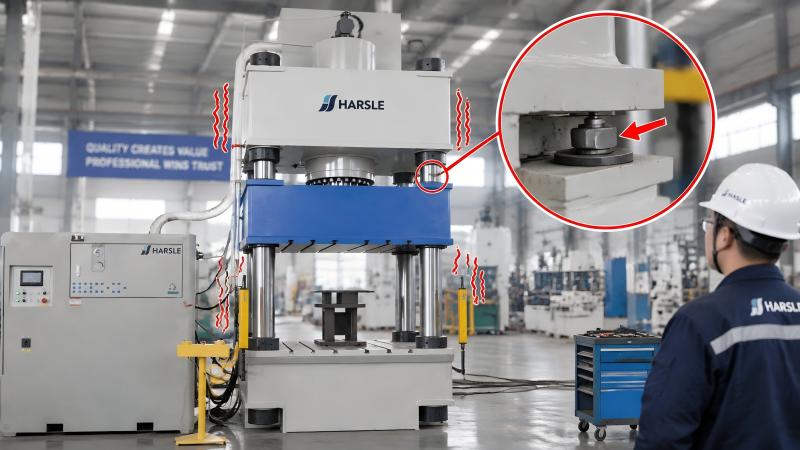
Loose mechanical parts are one of the most common causes of hydraulic press excessive vibration. During long-term operation, vibration and repeated pressing forces may loosen bolts, fasteners, guide components, or machine frame connections.
Loose components can create additional movement between parts, resulting in abnormal noise and unstable operation. I recommend checking foundation bolts, connecting screws, guide rails, and moving structures regularly.
If excessive clearance exists between mechanical components, the machine may lose stability and affect pressing accuracy. Tightening fasteners and replacing worn parts can help restore normal operation.
تقلبات ضغط النظام الهيدروليكي
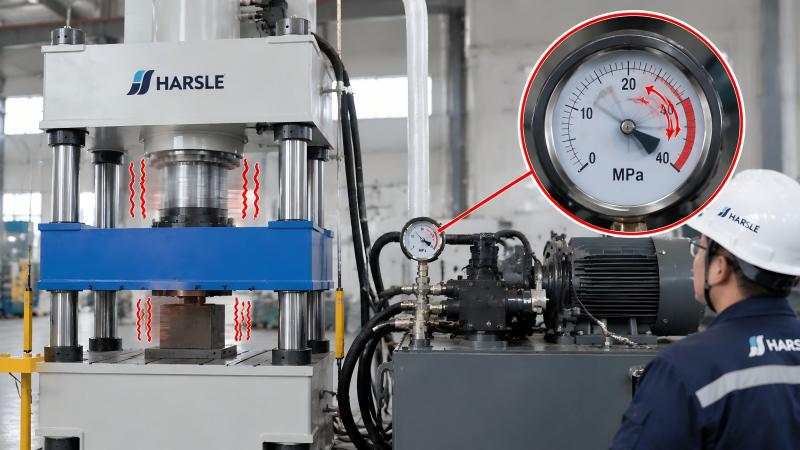
The hydraulic system provides the force required for pressing operations. When hydraulic pressure is unstable, the machine may experience shaking, irregular movement, or sudden vibration.
Common hydraulic causes include contaminated hydraulic oil, air entering the system, blocked filters, worn pumps, or malfunctioning valves.
I suggest checking hydraulic oil condition, oil level, pressure readings, and valve operation when vibration appears during cylinder movement. Maintaining clean hydraulic oil and stable pressure helps ensure smoother machine performance.
Air Inside the Hydraulic System
Air trapped in the hydraulic circuit can cause unstable cylinder movement and vibration. Unlike hydraulic oil, air is compressible, which may lead to uneven pressure transmission.
Typical symptoms include cylinder jerking, abnormal noise, slow movement, or inconsistent pressing performance.
To solve this problem, inspect the hydraulic system for possible air entry points and follow the manufacturer’s recommended procedure for air removal. Proper oil filling and regular system maintenance can reduce the risk of air-related vibration.
How to Diagnose Hydraulic Press Excessive Vibration Step by Step?
Step 1: Identify When the Vibration Occurs
The first step in troubleshooting is determining the operating condition when vibration happens. Observe whether the vibration appears during pressing, cylinder return, startup, or continuous operation.
Different situations can indicate different causes. For example, vibration during pressing may be related to hydraulic pressure instability, while vibration during idle operation may indicate mechanical or motor-related issues.
Recording the operating conditions and vibration characteristics helps technicians locate the source faster.
Step 2: Inspect Mechanical Components and Machine Installation
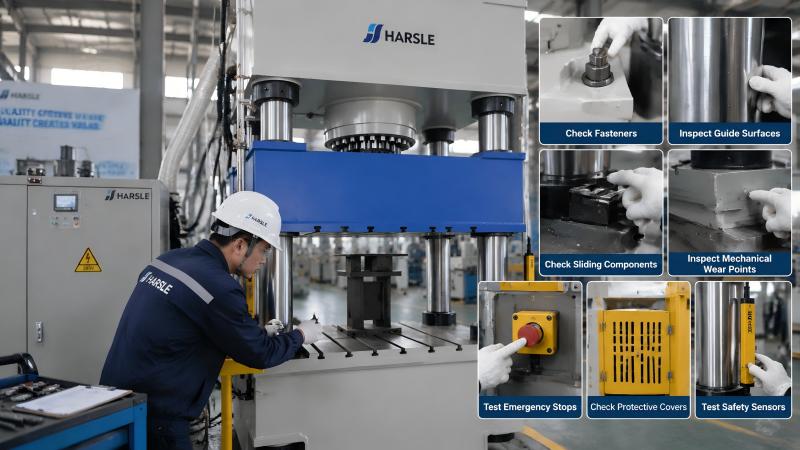
After identifying the vibration condition, inspect the mechanical structure of the hydraulic press.
Check foundation stability, anchor bolts, frame connections, guide rails, sliders, and moving parts. Loose installation or uneven machine leveling can cause additional vibration during operation.
For machines that have been installed for a long time, I recommend checking whether wear has increased the clearance between moving components.
Step 3: Check Hydraulic System Performance
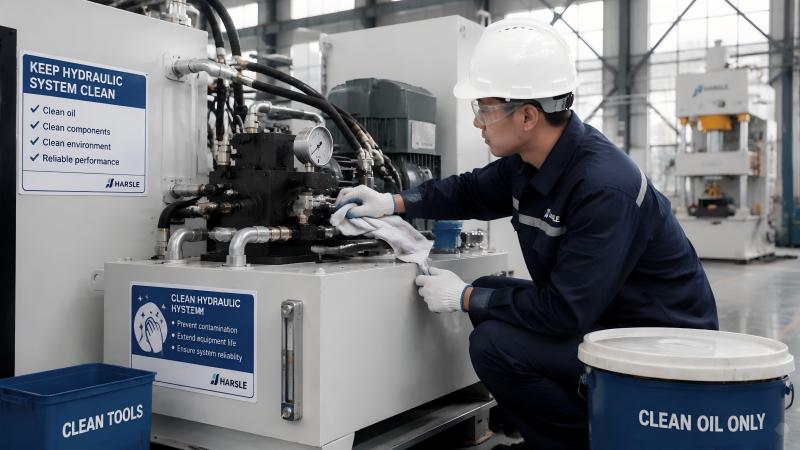
If mechanical components appear normal, inspect the hydraulic system.
Check hydraulic oil quality, filter condition, pump operation, pressure settings, and control valves. Contaminated oil or unstable pressure can directly affect cylinder movement and create vibration.
Monitoring pressure changes during operation can help determine whether the hydraulic system is working correctly.
Step 4: Inspect Motors, Pumps, and Rotating Components
Hydraulic pumps and motors can also create vibration if they become worn or misaligned.
Check for unusual sounds, excessive heat, abnormal rotation, or coupling problems. Damaged bearings, worn pump components, or improper alignment may require repair or replacement.
Regular inspection of rotating components helps prevent vibration from developing into larger equipment failures.
How to Prevent Hydraulic Press Excessive Vibration?
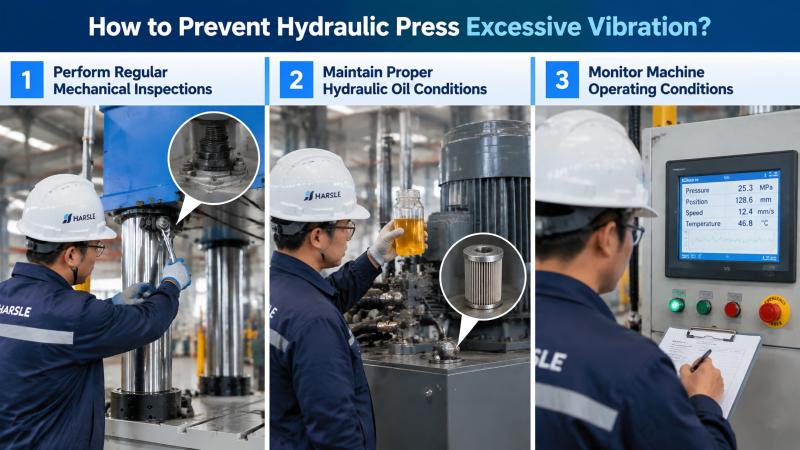
Perform Regular Mechanical Inspections
Preventive maintenance is one of the most effective ways to reduce vibration problems. I recommend regularly checking bolts, fasteners, guide systems, and structural components.
Keeping mechanical parts properly tightened and lubricated helps maintain stable operation and reduces unnecessary wear.
Maintain Proper Hydraulic Oil Conditions
Clean hydraulic oil is essential for smooth hydraulic press operation. Contaminated oil can damage pumps, valves, and cylinders, increasing the possibility of vibration.
Regularly check oil quality, replace filters when necessary, and follow recommended oil replacement intervals to maintain hydraulic system reliability.
Monitor Machine Operating Conditions
Operators should pay attention to changes in machine behavior. Increased vibration, unusual noise, slower movement, or inconsistent pressing results may indicate developing problems.
Recording maintenance history and operating conditions allows technicians to identify repeated issues and take preventive action.
Common Hydraulic Press Vibration Problems and Solutions
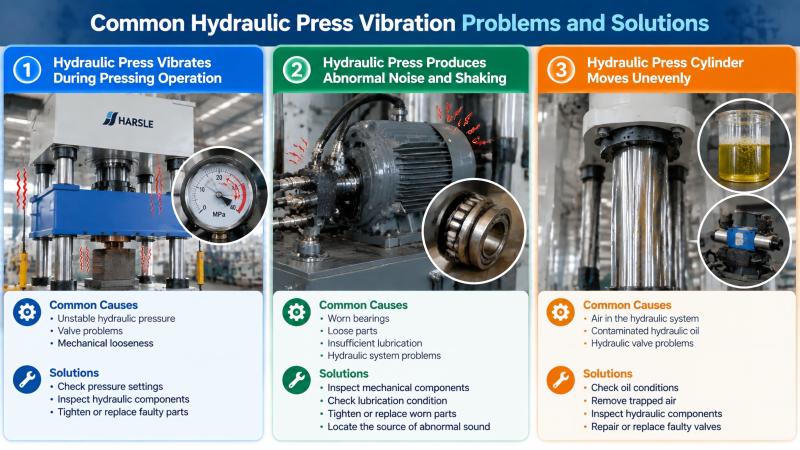
Hydraulic Press Vibrates During Pressing Operation
If vibration occurs mainly during pressing, possible causes include unstable hydraulic pressure, valve problems, or mechanical looseness.
Check pressure settings, hydraulic components, and structural connections to identify the source. Correct adjustment or component replacement may be required.
Hydraulic Press Produces Abnormal Noise and Shaking
Noise combined with vibration may indicate worn bearings, loose parts, insufficient lubrication, or hydraulic system problems.
Inspect mechanical components and listen carefully to locate the source of the abnormal sound.
Hydraulic Press Cylinder Moves Unevenly
Uneven cylinder movement is often related to air in the hydraulic system, contaminated oil, or hydraulic valve problems.
Check oil conditions, remove trapped air, and inspect hydraulic components to restore smooth cylinder operation.
الأسئلة الشائعة
What are the most common causes of hydraulic press excessive vibration?
Common causes include loose mechanical components, hydraulic pressure fluctuations, air inside the hydraulic system, worn pumps, poor lubrication, and improper machine installation.
How can I reduce vibration in a hydraulic press?
Regular mechanical inspections, proper lubrication, clean hydraulic oil, stable pressure control, and timely replacement of worn components can help reduce vibration.
Can hydraulic oil problems cause hydraulic press vibration?
Yes. Contaminated oil, low oil levels, blocked filters, or unstable hydraulic pressure can affect cylinder movement and create vibration.
خاتمة
Diagnosing Hydraulic Press Excessive Vibration requires a systematic approach that includes checking mechanical components, hydraulic system conditions, installation stability, and rotating parts. By identifying the root cause early and applying proper maintenance methods, operators can reduce downtime, improve pressing accuracy, and extend machine service life.
At HARSLE, we provide professional hydraulic press solutions and technical support to help customers maintain stable and efficient production. For more troubleshooting guidance or detailed maintenance information, contact our engineering team or explore additional hydraulic press documentation.


