


Hydraulic Press Filter Blockage Issues can reduce machine performance, slow down hydraulic movement, and increase the risk of component damage. When a hydraulic filter becomes blocked, the system may experience insufficient oil flow, unstable pressure, abnormal noise, or longer working cycles. In this guide, I will explain the common causes of hydraulic filter blockage, how to diagnose the problem step by step, and what maintenance methods can help restore efficient hydraulic press operation.
ما هي الأسباب مكبس هيدروليكي Filter Blockage Issues?
Hydraulic filters play an important role in removing contaminants from hydraulic oil and protecting pumps, valves, and cylinders. During long-term operation, filters may gradually become clogged due to contamination, improper maintenance, or poor oil conditions.
A blocked filter restricts oil flow and increases resistance inside the hydraulic circuit. As a result, the hydraulic press may operate slowly, generate excessive heat, or fail to maintain stable pressure.
Contaminated Hydraulic Oil Causes Filter Blockage
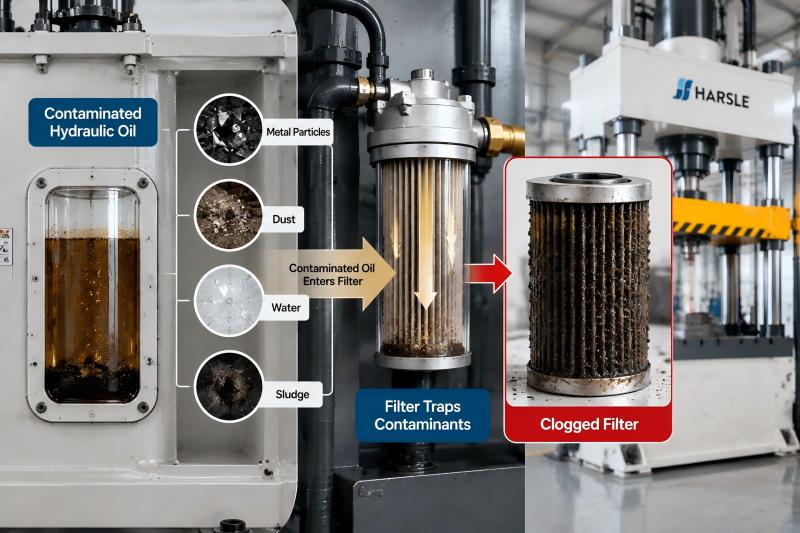
One of the most common causes of filter blockage is contaminated hydraulic oil. Dust, metal particles, water, and other impurities can enter the hydraulic system during operation and accumulate inside the filter element.
When contamination levels increase, the filter captures more particles and gradually loses its flow capacity. I recommend checking hydraulic oil cleanliness regularly and replacing oil when it no longer meets operating requirements.
Incorrect Filter Selection or Maintenance
Using an unsuitable filter or delaying filter replacement can also lead to blockage problems. A filter with an incorrect filtration rating may not effectively protect the hydraulic system or may become clogged too quickly.
Regular maintenance schedules should include checking filter condition, recording replacement dates, and selecting filters that match the hydraulic press specifications.
Hydraulic Component Wear Produces Excessive Contaminants
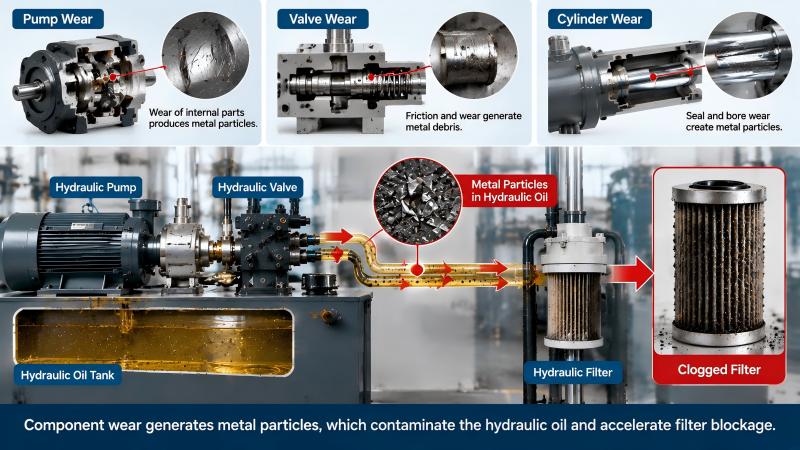
Internal wear of pumps, valves, and cylinders can generate metal particles and accelerate filter blockage. If a filter becomes clogged repeatedly after replacement, the problem may not be the filter itself but a deeper hydraulic system issue.
Inspecting hydraulic components helps identify whether abnormal wear or internal damage is creating excessive contamination.
كيفية التشخيص مكبس هيدروليكي Filter Blockage Issues Step by Step?
Step 1: Check Hydraulic Press Operating Symptoms
The first step in troubleshooting Hydraulic Press Filter Blockage Issues is observing machine performance. A blocked filter usually creates noticeable operating changes.
Common symptoms include slow cylinder movement, reduced pressing speed, unstable pressure, increased hydraulic temperature, or unusual pump noise.
I recommend recording when the problem occurs and whether it appears during startup, continuous operation, or high-load production. This information helps determine whether the filter is the main cause.
Step 2: Inspect Hydraulic Filter Condition
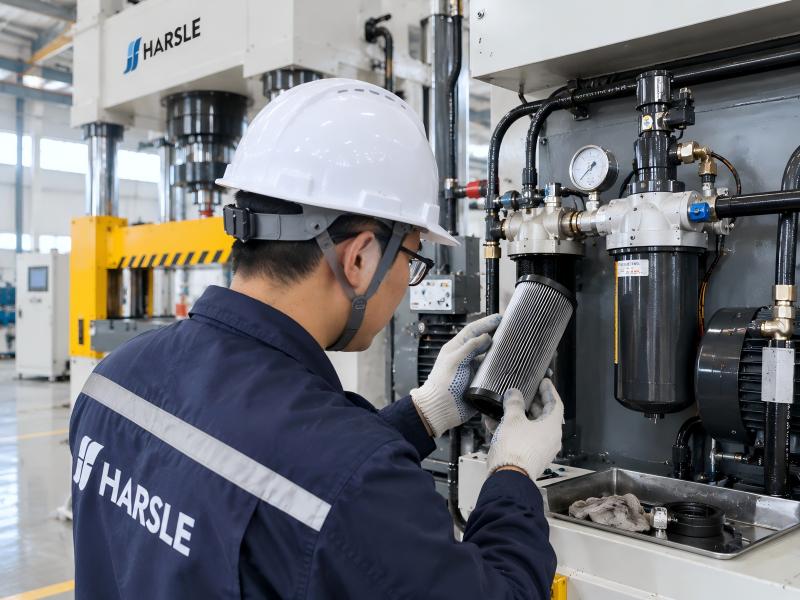
After identifying possible filter-related problems, inspect the hydraulic filter condition. Check the filter indicator if the machine is equipped with a blockage warning system.
If the indicator shows excessive pressure difference, the filter element may be restricted. Remove and inspect the filter according to the manufacturer’s maintenance procedure.
A dirty or damaged filter element should be replaced instead of cleaned repeatedly, especially for precision hydraulic systems.
Step 3: Check Hydraulic Oil Quality and Contamination Level
Hydraulic oil inspection is an important part of filter troubleshooting. Check oil color, clarity, and possible contamination.
Dirty hydraulic oil can quickly block a new filter and reduce the service life of hydraulic components. If contamination is severe, the system may require oil replacement, flushing, and additional inspection.
Maintaining clean hydraulic oil helps reduce repeated filter blockage and improves overall machine reliability.
Step 4: Inspect Hydraulic Pressure and Flow Performance
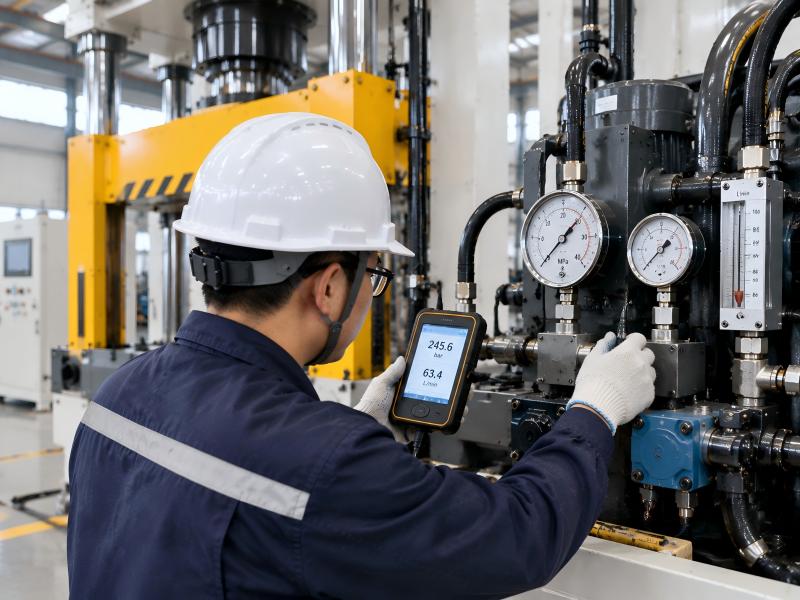
A blocked filter can affect hydraulic pressure and flow. Check whether the hydraulic system reaches the required pressure and whether oil flow remains stable during operation.
Compare actual pressure and flow values with normal machine parameters. If pressure loss occurs before the filter, the filter may be restricting oil movement.
If pressure problems remain after filter replacement, inspect pumps, valves, and other hydraulic components.
Step 5: Replace the Filter and Verify Machine Performance
After confirming filter blockage, replace the filter element according to the correct maintenance procedure. Ensure that the replacement filter matches the original specifications.
After replacement, operate the hydraulic press and monitor movement speed, pressure stability, and hydraulic temperature.
Recording the machine performance after maintenance helps confirm whether the filter blockage problem has been fully resolved.
How to Prevent Hydraulic Press Filter Blockage Issues?
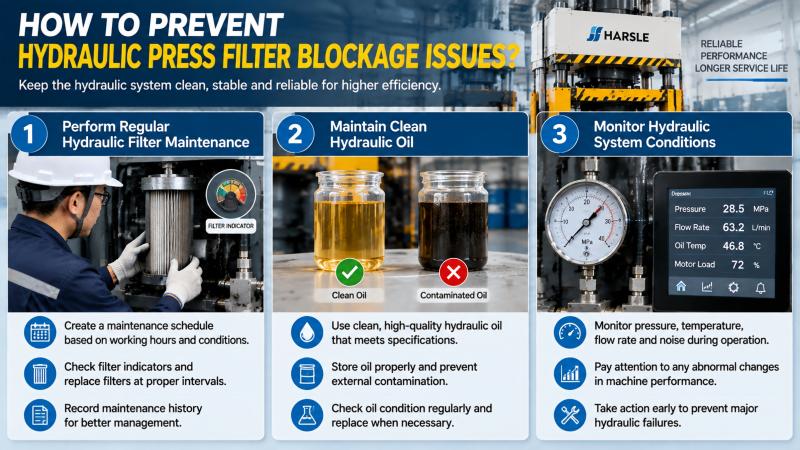
Perform Regular Hydraulic Filter Maintenance
Preventive maintenance is the most effective way to avoid filter blockage. I recommend creating a maintenance schedule based on machine working hours, production conditions, and operating environment.
Regularly check filter indicators, replace filters at appropriate intervals, and record maintenance history.
الحفاظ على نظافة زيت الهيدروليك
Clean hydraulic oil reduces contamination inside the hydraulic system and extends filter service life.
Use proper oil storage methods, prevent external contamination, and perform regular oil inspections. Good oil management protects hydraulic components and improves machine efficiency.
Monitor Hydraulic System Conditions
Changes in hydraulic performance can indicate developing filter problems. Monitor pressure, temperature, noise, and machine speed during operation.
Early detection allows operators to solve contamination issues before they cause major hydraulic failures.
Common Hydraulic Press Filter Blockage Problems and Solutions
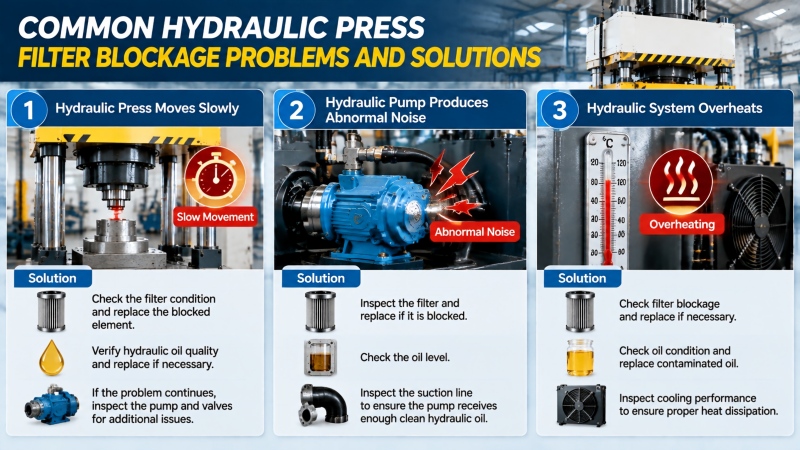
Hydraulic Press Moves Slowly
A slow hydraulic press is often caused by restricted oil flow from a clogged filter.
Check the filter condition, replace the blocked element, and verify hydraulic oil quality. If the problem continues, inspect the pump and valves for additional issues.
Hydraulic Pump Produces Abnormal Noise
A blocked filter may cause the pump to receive insufficient oil supply, resulting in cavitation and abnormal noise.
Inspect the filter, oil level, and suction line to ensure the pump receives enough clean hydraulic oil.
Hydraulic System Overheats
Restricted oil flow increases system resistance and may cause excessive heat generation.
Check filter blockage, oil condition, and cooling performance to restore normal hydraulic operation.
الأسئلة الشائعة
What are the common signs of hydraulic press filter blockage issues?
Common signs include slow machine movement, unstable pressure, increased hydraulic temperature, abnormal pump noise, and reduced production efficiency.
How often should I replace a hydraulic press filter?
Filter replacement frequency depends on machine usage, working environment, and hydraulic oil condition. Regular inspection and manufacturer recommendations should be followed.
Can dirty hydraulic oil cause filter blockage?
Yes. Contaminated hydraulic oil containing dust, metal particles, or moisture can accelerate filter clogging and reduce hydraulic system performance.
خاتمة
Hydraulic Press Filter Blockage Issues can affect machine speed, pressure stability, and overall production efficiency. By checking operating symptoms, inspecting filter conditions, maintaining clean hydraulic oil, and performing regular maintenance, operators can reduce downtime and extend hydraulic system life.
At HARSLE, we provide professional hydraulic press solutions and technical support to help customers maintain reliable equipment performance. For more maintenance guidance or troubleshooting support, contact our engineering team or explore additional hydraulic press documentation.


