


مكبس هيدروليكي تدريب سلامة المشغل is a structured training program designed to help operators understand machine hazards, follow safe operating procedures, and respond correctly to emergencies. Hydraulic presses generate substantial force and involve high-pressure hydraulic systems, moving platens, electrical controls, and heavy tooling. Without proper training, operators may face crushing injuries, hydraulic injection hazards, electrical accidents, and unexpected machine movement. In this guide, I’ll explain the essential training requirements for hydraulic press operators, including hazard identification, machine operation, safety inspections, emergency procedures, and preventive maintenance responsibilities.
Why Is مكبس هيدروليكي Operator Safety Training Important?
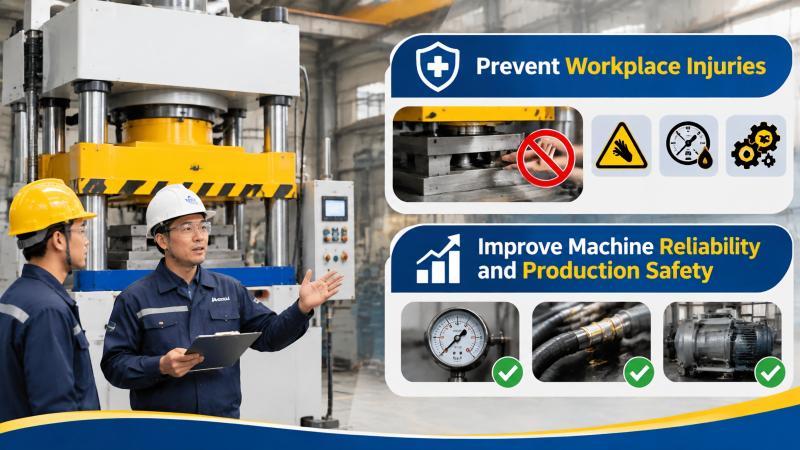
Preventing Workplace Injuries
Hydraulic presses can generate extremely high pressure during forming, stamping, and pressing operations. Operators who do not understand machine hazards may accidentally place their hands in dangerous areas or operate equipment under unsafe conditions.
Proper training helps workers recognize crushing points, moving components, hydraulic pressure hazards, and other potential dangers before starting production.
Improving Machine Reliability and Production Safety
Trained operators are more likely to identify abnormal pressure readings, oil leaks, unusual noises, and unexpected machine movement.
Early identification of these problems helps reduce equipment damage, unexpected downtime, and production interruptions.
What Should Hydraulic Press Operator Safety Training Include?
1. Understanding Hydraulic Press Components and Hazards
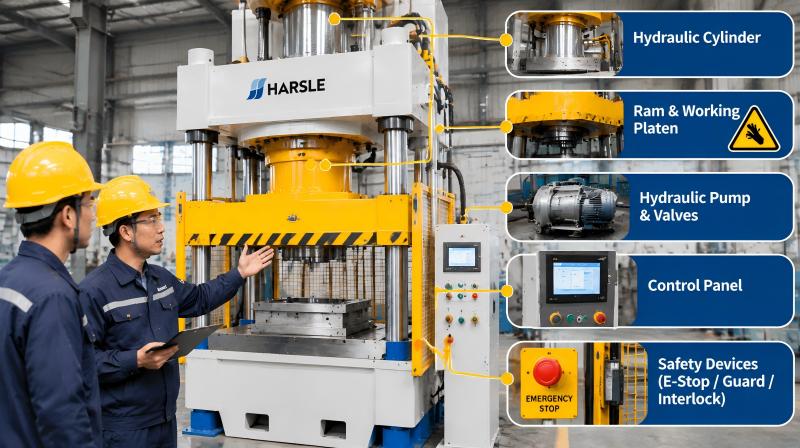
Operators should understand the basic structure and functions of the hydraulic press before using it.
Training should cover:
- Hydraulic cylinders: Understand how hydraulic pressure generates the force required for pressing operations.
- Working platen and ram: Recognize moving components and potential crushing zones.
- Hydraulic pump and valves: Understand their basic functions and recognize abnormal operating conditions.
- Control panel: Identify operating buttons, mode selectors, indicators, and alarm messages.
- Safety devices: Understand the functions of emergency stops, guards, interlocks, and other installed protective systems.
Operators should know which areas are dangerous and understand that protective devices must never be bypassed.
2. Learning Safe Hydraulic Press Operating Procedures
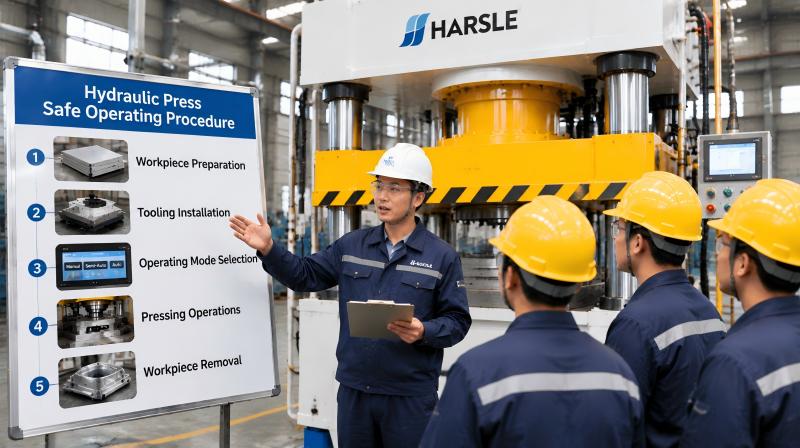
Operators must receive practical instruction on how to operate the machine correctly.
Training should include the following procedures:
Workpiece Preparation: Check material dimensions, thickness, and condition before placing the workpiece on the press table.
Tooling Installation: Understand the correct positioning and alignment of dies and other tooling. Tool installation and adjustments involving hazardous energy must follow approved procedures.
Operating Mode Selection: Understand the differences between manual, semi-automatic, and automatic operating modes, where available.
Pressing Operations: Follow the specified pressure, stroke, and operating parameters for the intended process.
Workpiece Removal: Remove finished products only when the machine is in a safe condition and moving components cannot create a hazard.
Operators should never exceed the machine’s rated capacity or use tooling that is unsuitable for the application.
3. Conducting Pre-Operation Safety Inspections
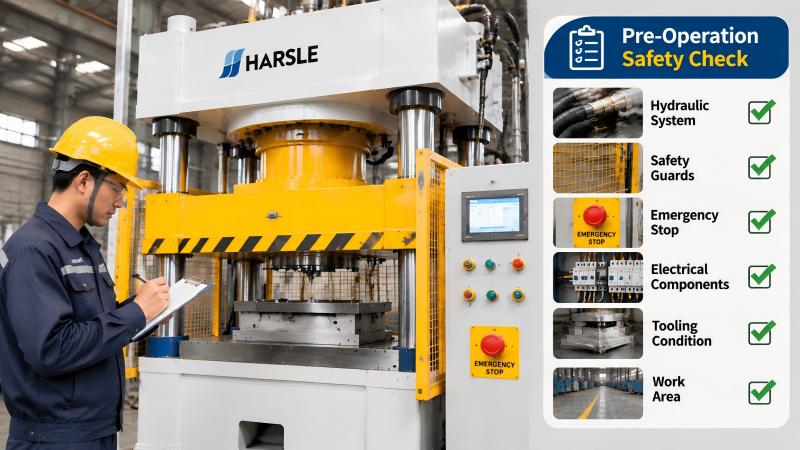
Before beginning each shift, operators should perform routine inspections to confirm that the machine is ready for operation.
Important inspection points include:
- Hydraulic system: Check for visible oil leaks and abnormal pressure indications.
- Safety guards: Verify that protective barriers are securely installed.
- Emergency stop: Confirm that emergency stop devices are accessible and function correctly according to the approved test procedure.
- Electrical components: Check for visible cable damage and abnormal control panel indicators.
- Tooling condition: Inspect dies and fixtures for visible cracks, deformation, or damage.
- Work area: Remove unnecessary materials and ensure sufficient working clearance.
If an inspection identifies a safety-related defect, the operator must stop and report the problem rather than continue production.
4. Understanding Emergency Response Procedures
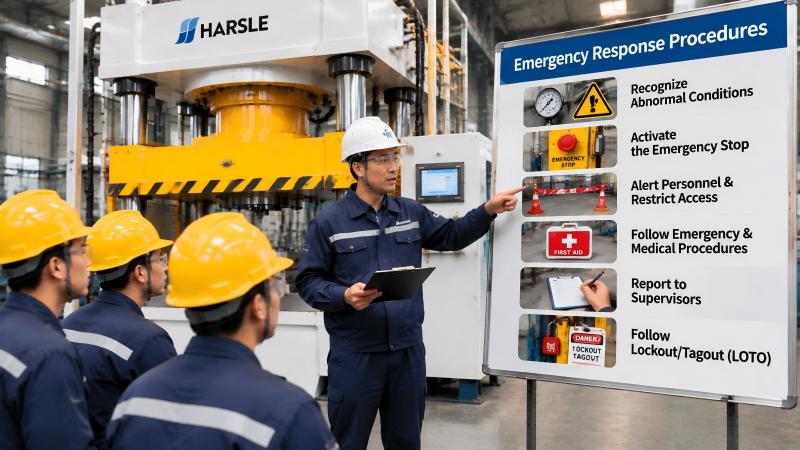
Emergency response training is essential because hydraulic press accidents can develop quickly.
Operators should know how to:
- Recognize abnormal pressure, unusual noises, oil leakage, and unexpected ram movement.
- Activate the emergency stop when an immediate hazard occurs and it is safe to do so.
- Alert nearby personnel and restrict access to the hazardous area.
- Follow workplace emergency response and medical assistance procedures.
- Report the incident to supervisors and qualified maintenance personnel.
Operators must also understand that an emergency stop does not necessarily isolate all stored hydraulic, electrical, or mechanical energy.
Before maintenance or recovery work begins, qualified personnel must follow the approved lockout/tagout procedures.
5. Understanding Operator Responsibilities and Maintenance Limits
Hydraulic press operator training should clearly distinguish routine operating tasks from specialized maintenance work.
Operators may generally perform authorized visual inspections, basic cleaning, routine lubrication, and production monitoring.
However, the following tasks should be reserved for qualified personnel:
- Adjusting main hydraulic relief valves and pressure-control components.
- Repairing hydraulic cylinders, pumps, and high-pressure connections.
- Troubleshooting PLC systems and electrical control circuits.
- Modifying safety interlocks or protective control systems.
- Performing maintenance involving stored hydraulic or electrical energy.
Unauthorized adjustments can create serious safety risks and affect machine reliability.
Common Hydraulic Press Operator Training Mistakes to Avoid
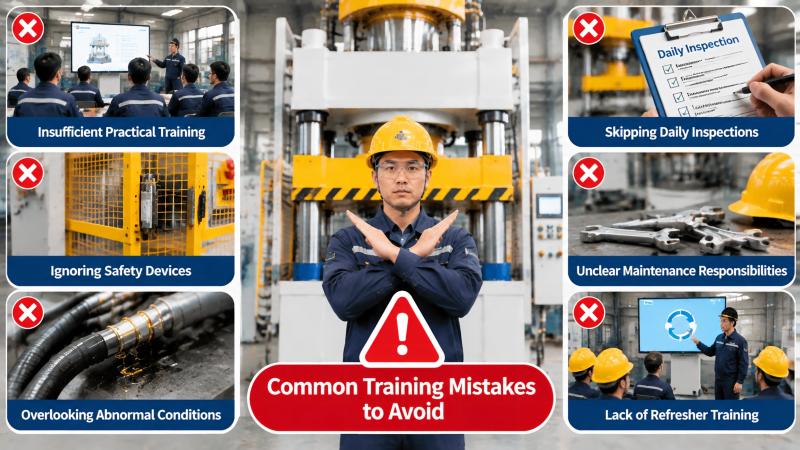
- Insufficient practical training: Classroom instruction alone may not prepare operators for actual production conditions.
- Ignoring safety devices: Operators must never bypass guards, interlocks, or emergency stops.
- Overlooking abnormal conditions: Unusual noises, pressure fluctuations, and oil leaks require immediate attention.
- Skipping daily inspections: Routine checks are essential for identifying developing problems.
- Unclear maintenance responsibilities: Operators must understand when to report problems and when qualified technicians are required.
- Lack of refresher training: Training should be reviewed periodically and whenever equipment or operating procedures change.
الأسئلة الشائعة
Who Needs Hydraulic Press Operator Safety Training?
Anyone responsible for operating a hydraulic press should receive appropriate training before working independently. Supervisors and maintenance personnel may also require additional training according to their responsibilities.
How Often Should Hydraulic Press Operators Receive Training?
Initial training should take place before independent operation. Refresher training should be provided periodically and whenever new equipment, processes, hazards, or safety procedures are introduced.
Can Operators Perform Hydraulic Press Maintenance?
Operators may perform authorized routine inspections and basic maintenance activities. Repairs involving hydraulic pressure systems, electrical circuits, and safety controls must be handled by qualified personnel.
خاتمة
Hydraulic press operator safety training is essential for preventing workplace injuries, improving equipment reliability, and maintaining safe production conditions. By understanding machine components, following operating procedures, conducting regular inspections, and recognizing emergency situations, operators can work more confidently and responsibly.
I recommend combining theoretical instruction, supervised practical training, regular safety inspections, and periodic refresher courses to maintain a strong safety culture.


