


Laser Positioning System Maintenance is essential for maintaining cutting accuracy, production efficiency, and long-term machine stability in laser cutting operations. Even minor positioning errors can affect edge quality, hole precision, and overall machining consistency. In this article, I’ll explain practical maintenance methods and preventive measures to help keep your laser positioning system operating at peak performance. From cleaning guide rails and lubricating moving components to checking encoders and calibrating servo systems, these maintenance practices can significantly reduce downtime and mechanical wear. Whether you are a machine operator, maintenance engineer, or production manager, understanding proper positioning system maintenance will help improve cutting reliability, extend equipment lifespan, and ensure stable high-precision laser processing.
Understanding the Importance of Laser Positioning System Maintenance
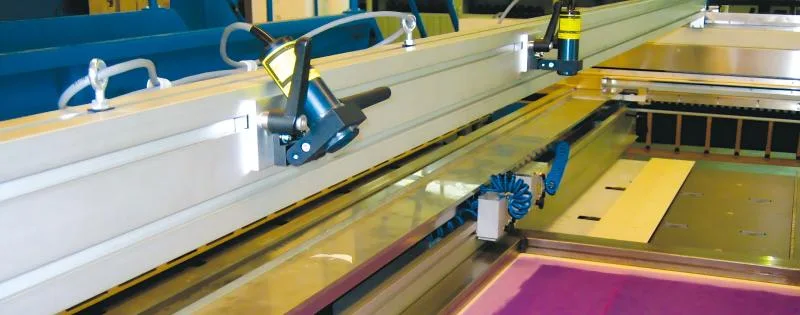
Maintaining Cutting Accuracy
The positioning system controls the movement of the laser head and worktable. Even small positioning deviations can lead to inaccurate cuts, rough edges, or mismatched holes.
Preventing Mechanical Wear
Guide rails, ball screws, and linear bearings constantly move at high speed. Without proper maintenance, wear and friction increase, reducing positioning precision.
Improving Production Efficiency
A well-maintained positioning system allows smooth acceleration and stable motion, reducing vibration and improving overall cutting speed.
Reducing Unexpected Downtime
Routine maintenance helps detect loose components, sensor failures, or lubrication issues before they cause machine stoppages.
Step-by-Step Laser Positioning System Maintenance Guide
Step 1: Clean Guide Rails and Linear Components
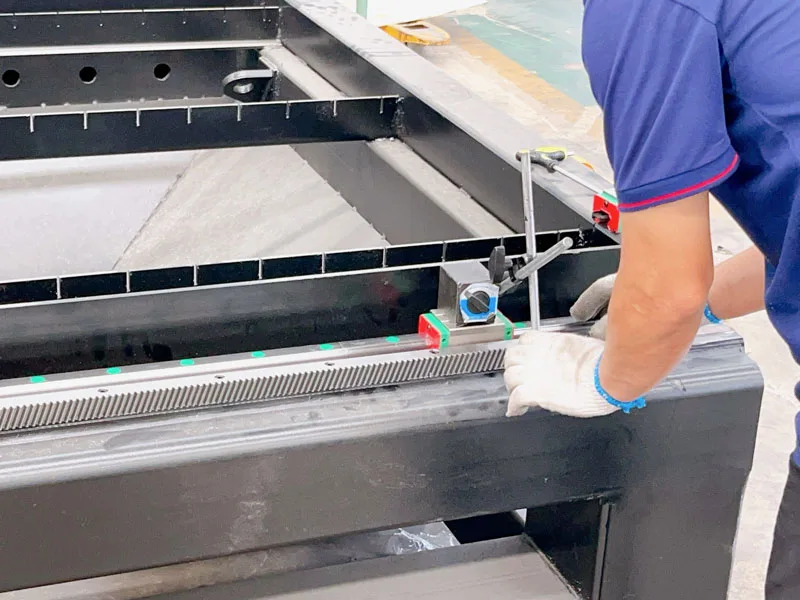
Dust, metal debris, and oil residue can accumulate on guide rails and bearings. I always recommend cleaning these parts daily using a soft cloth and approved cleaning solution. Keeping rails clean minimizes friction and prevents premature wear.
Step 2: Lubricate Ball Screws and Bearings
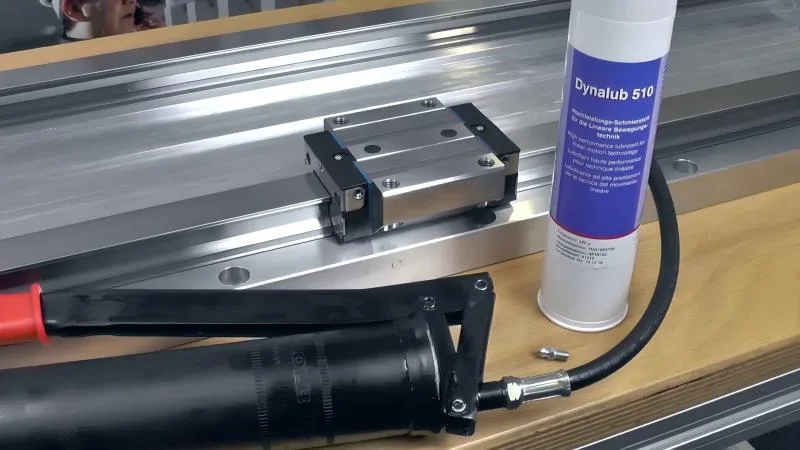
Proper lubrication is critical for smooth movement. Apply the manufacturer-recommended lubricant to ball screws, linear bearings, and moving assemblies at scheduled intervals. Insufficient lubrication can cause vibration, overheating, and positioning instability.
Step 3: Inspect Couplings and Fasteners
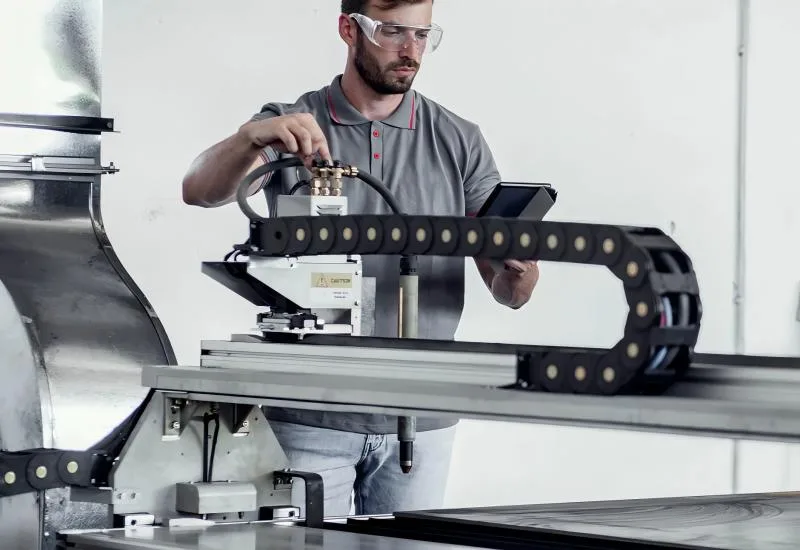
Loose couplings or mounting bolts can create positioning inaccuracies. Check all fasteners, motor couplings, and structural joints regularly to ensure they remain secure during high-speed operation.
Step 4: Verify Servo Motor Performance
Servo motors are responsible for accurate positioning and motion control. Monitor motor temperature, abnormal noise, and response stability. If positioning delays or vibration occur, recalibrate or inspect the servo system immediately.
Step 5: Check Encoder and Sensor Accuracy
Linear encoders and positioning sensors provide real-time feedback to the CNC system. Clean encoder surfaces carefully and verify signal stability to prevent positioning errors.
Step 6: Calibrate the Positioning System
Regular calibration ensures the CNC system accurately interprets machine movement. Use precision measuring tools to verify positioning accuracy and compensate for any detected deviation.
Common Problems in Laser Positioning Systems
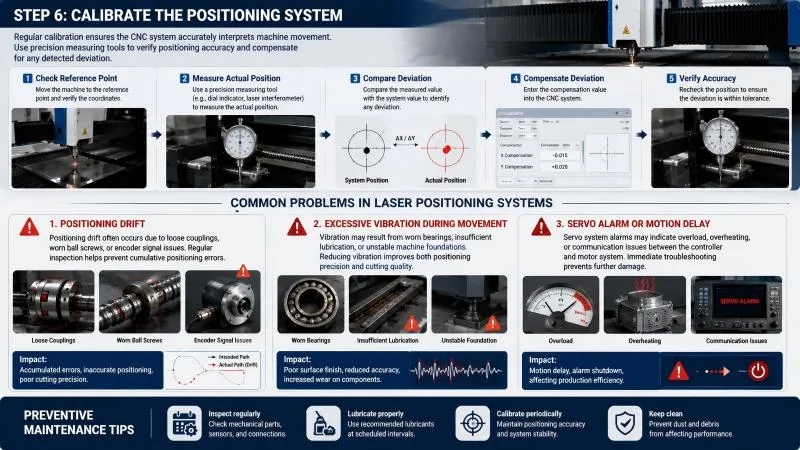
Positioning Drift
Positioning drift often occurs due to loose couplings, worn ball screws, or encoder signal issues. Regular inspection helps prevent cumulative positioning errors.
Excessive Vibration During Movement
Vibration may result from worn bearings, insufficient lubrication, or unstable machine foundations. Reducing vibration improves both positioning precision and cutting quality.
Servo Alarm or Motion Delay
Servo system alarms may indicate overload, overheating, or communication issues between the controller and motor system. Immediate troubleshooting prevents further damage.
Best Practices for Long-Term Positioning Accuracy
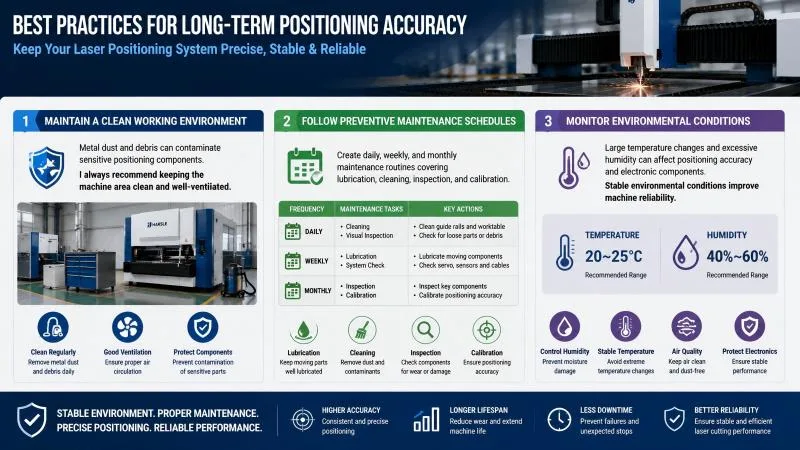
Maintain a Clean Working Environment
Metal dust and debris can contaminate sensitive positioning components. I always recommend keeping the machine area clean and well-ventilated.
Follow Preventive Maintenance Schedules
Create daily, weekly, and monthly maintenance routines covering lubrication, cleaning, inspection, and calibration.
Monitor Environmental Conditions
Large temperature changes and excessive humidity can affect positioning accuracy and electronic components. Stable environmental conditions improve machine reliability.
FAQs
How often should I perform Laser Positioning System Maintenance?
Basic cleaning and visual inspections should be performed daily, while lubrication and calibration should follow the manufacturer’s recommended schedule.
What causes positioning inaccuracies in laser machines?
Common causes include worn guide rails, loose couplings, insufficient lubrication, encoder contamination, and servo motor issues.
Can poor positioning affect cutting quality?
Yes, inaccurate positioning directly affects hole placement, edge quality, dimensional accuracy, and overall cutting consistency.
Conclusion
Proper Laser Positioning System Maintenance is essential for maintaining high cutting precision, stable machine performance, and long equipment life. By regularly cleaning guide rails, lubricating moving components, checking sensors and servo motors, and performing routine calibration, operators can significantly reduce positioning errors and unexpected downtime.
Consistent preventive maintenance not only improves production efficiency but also protects critical machine components from premature wear. If you need additional support or professional guidance for maintaining your laser positioning system, feel free to contact our technical team for expert assistance.


