


Laser cutting machines operate with high energy and precision, making safety devices a critical part of the entire system. Proper Laser Safety Devices Maintenance helps protect operators, prevent accidents, and ensure stable machine performance. In this article, I’ll explain how to maintain laser safety devices correctly, including inspection methods, cleaning procedures, calibration tips, and preventive maintenance practices. By following these steps, you can improve workplace safety, reduce unexpected downtime, and extend the service life of your laser equipment.
Why Laser Safety Devices Maintenance Matters
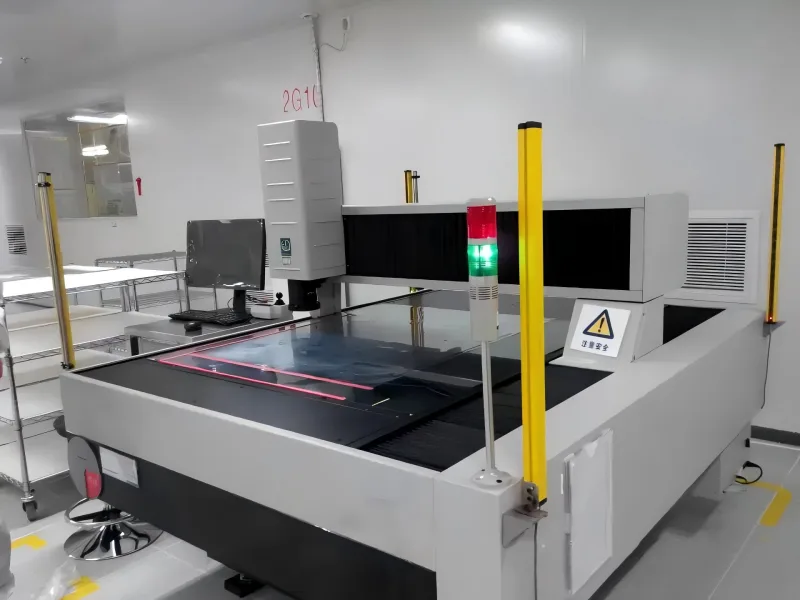
Protecting Operators from Laser Hazards
Laser cutting systems generate high-intensity beams that can cause severe injuries if safety devices fail. Proper maintenance ensures that protective systems such as light curtains, safety interlocks, and emergency stop buttons function reliably.
Preventing Unexpected Machine Shutdowns
Faulty safety sensors or damaged protective systems can trigger alarms and stop production unexpectedly. Routine maintenance helps identify problems early before they affect productivity.
Ensuring Compliance with Safety Standards

Industrial laser machines must comply with workplace safety regulations. Maintaining safety devices helps manufacturers meet operational and legal safety requirements.
Step-by-Step Laser Safety Devices Maintenance Guide
Step 1: Inspect Safety Interlock Systems
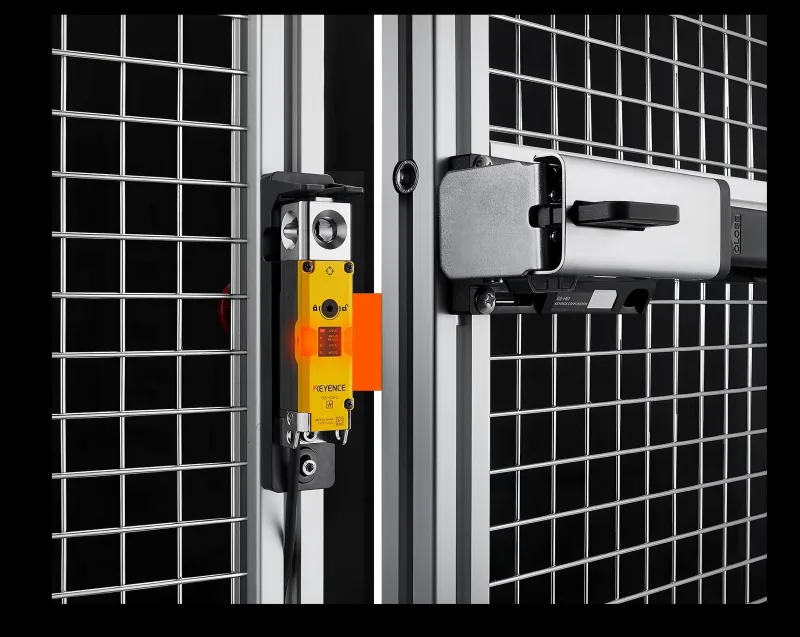
Check all door interlocks and enclosure safety switches regularly. Ensure that the machine immediately stops laser operation when protective doors are opened. Loose wiring or damaged switches should be replaced immediately.
Step 2: Clean Light Curtains and Laser Sensors
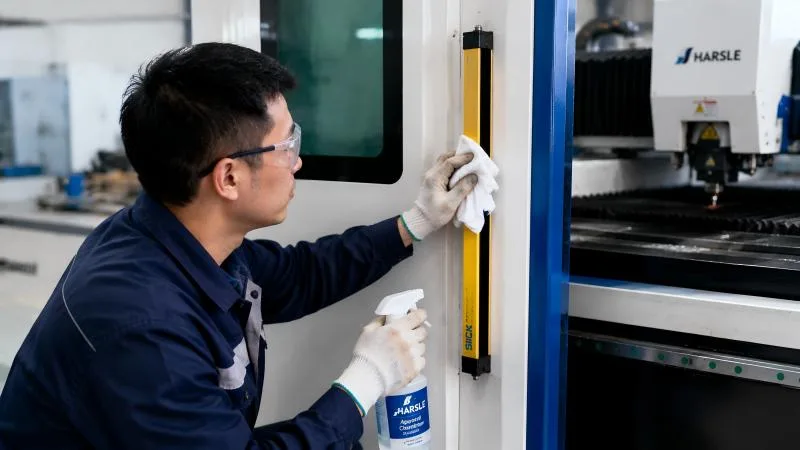
Dust, smoke residue, and oil contamination can reduce sensor accuracy. I recommend cleaning safety sensors and light curtains using a soft lint-free cloth and approved cleaning solution. Avoid scratching optical surfaces during cleaning.
Step 3: Test Emergency Stop Buttons
Emergency stop buttons must respond instantly during operation. Press each emergency stop switch during routine inspection to verify proper machine shutdown and reset functionality.
Step 4: Check Safety Wiring and Electrical Connections
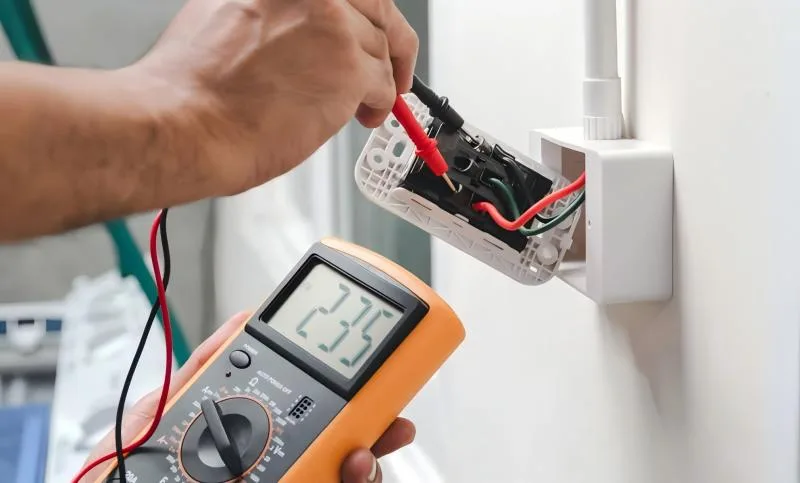
Inspect cables, connectors, and control circuits for wear, looseness, or heat damage. Damaged wiring can lead to safety device malfunction or false alarms.
Step 5: Verify Alarm and Warning Systems
Test audible alarms, warning lights, and fault notifications regularly. Operators should immediately recognize safety warnings during machine operation.
Step 6: Calibrate Safety Monitoring Systems
Modern laser machines often use integrated monitoring systems for enclosure protection and beam detection. Regular calibration ensures accurate response and reliable protection.
Common Problems in Laser Safety Devices
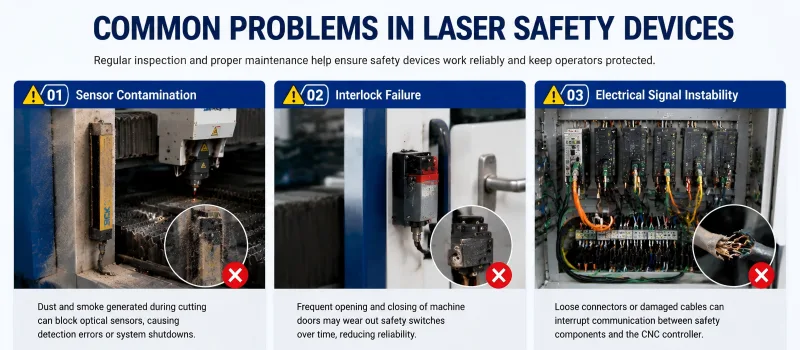
Sensor Contamination
Dust and smoke generated during cutting can block optical sensors, causing detection errors or system shutdowns.
Interlock Failure
Frequent opening and closing of machine doors may wear out safety switches over time, reducing reliability.
Electrical Signal Instability
Loose connectors or damaged cables can interrupt communication between safety components and the CNC controller.
Best Practices for Long-Term Laser Safety Devices Maintenance
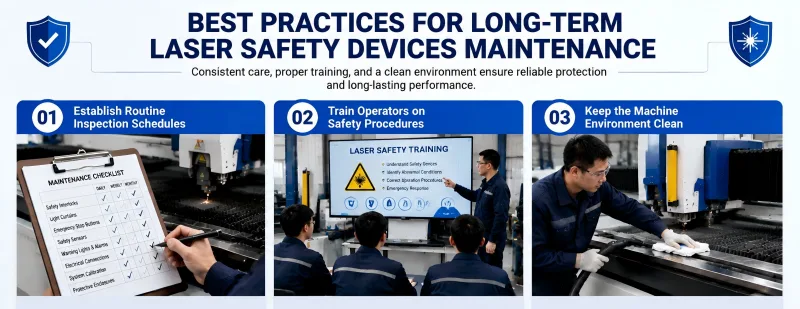
Establish Routine Inspection Schedules
Create daily, weekly, and monthly maintenance plans for all safety systems. Consistent inspection reduces the risk of sudden failures.
Train Operators on Safety Procedures
Operators should understand how safety devices work and how to identify abnormal conditions. Proper training significantly improves workplace safety.
Keep the Machine Environment Clean
A clean workshop minimizes dust accumulation on sensors and electrical components, improving safety system reliability.
FAQs
How often should laser safety devices be inspected?
I recommend performing basic visual inspections daily and conducting detailed functional tests weekly or according to machine usage.
What happens if laser safety sensors are dirty?
Dirty sensors may fail to detect hazards correctly, causing false alarms or reducing operator protection.
Can damaged safety interlocks affect machine operation?
Yes. Faulty interlocks can prevent machine startup or create serious safety risks during laser operation.
Conclusion
Proper Laser Safety Devices Maintenance is essential for ensuring operator protection, machine reliability, and stable production performance. By regularly inspecting interlocks, cleaning sensors, testing emergency systems, and maintaining electrical connections, you can significantly reduce operational risks and improve equipment lifespan.
Consistent preventive maintenance not only protects workers but also minimizes downtime and improves production efficiency. If you need additional guidance or professional support for maintaining your laser machine safety systems, feel free to contact our technical team.


