


Laser Air Assist System Maintenance is essential for achieving clean cuts, preventing debris buildup, and extending the lifespan of your laser machine. Proper maintenance ensures efficient operation, minimizes downtime, and reduces the risk of component failure. In this article, I’ll share practical steps and best practices for maintaining the air assist system so operators and maintenance teams can keep the laser system performing at its best, preserving both cutting quality and safety in demanding production environments.
Understanding the Importance of Air Assist Systems
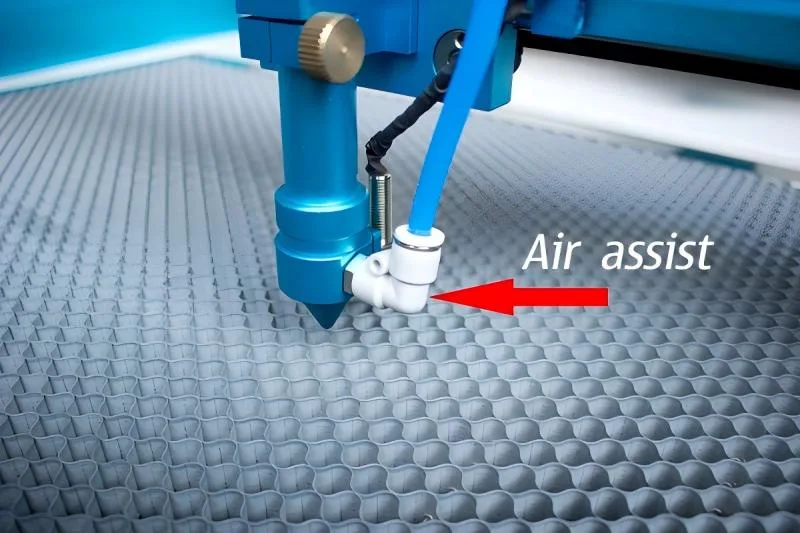
Purpose of the Laser Air Assist System
The air assist system blows a focused stream of air over the cutting area to remove smoke, debris, and molten material. This protects the lens and workpiece, prevents flare-ups, and ensures clean, precise cuts.
Common Issues from Poor Maintenance
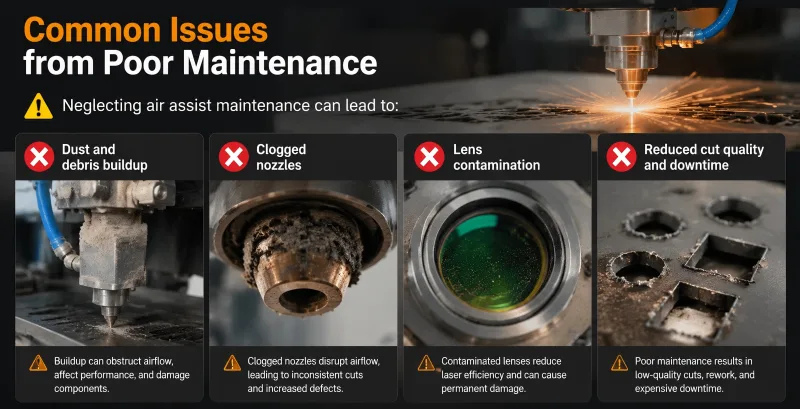
Neglecting air assist maintenance can lead to:
- Dust and debris buildup
- Clogged nozzles
- Lens contamination
- Reduced cut quality and potential downtime
Step-by-Step Laser Air Assist System Maintenance
Step 1: Inspect Air Filters
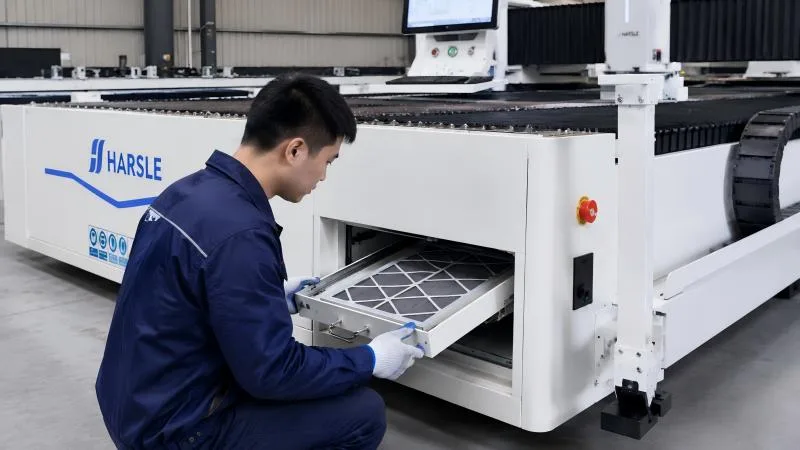
Regularly inspect, clean, or replace air filters to maintain proper airflow. Clogged filters can reduce efficiency, cause inconsistent cutting results, and may lead to blower overheating or system malfunction.
Step 2: Clean Air Nozzles
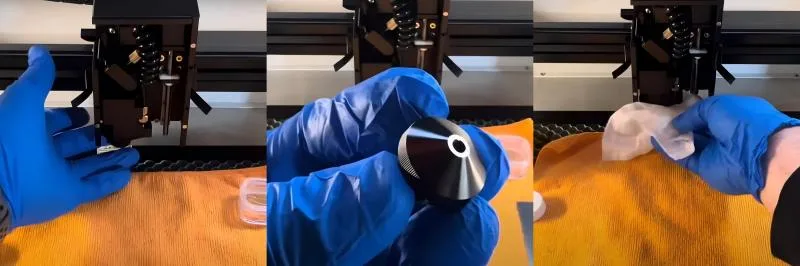
Remove the air nozzles and carefully inspect them for dust, debris, or residue. Use compressed air or approved cleaning tools to clear any blockages, ensuring an unobstructed airflow for optimal laser cutting performance.
Step 3: Check Air Pressure and Flow
Ensure the air pressure matches the manufacturer’s specifications. Check that airflow remains consistent, and inspect all hoses to confirm they are free from kinks, blockages, or leaks, maintaining optimal system performance.
Step 4: Lubricate Moving Components
If the system includes movable valves or servo-driven mechanisms, apply lubrication as recommended by the manufacturer to prevent wear and maintain smooth operation.
Step 5: Inspect Connections and Hoses
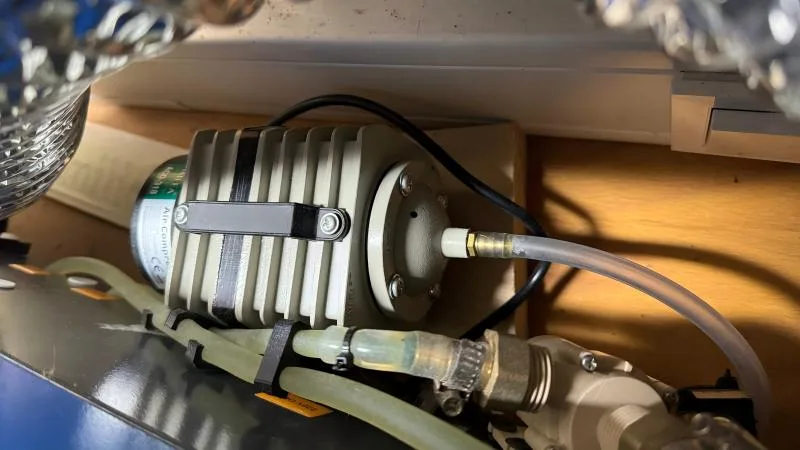
Regularly inspect all hoses and fittings for wear, cracks, or leaks. Promptly replace any damaged components to prevent airflow interruptions, maintain system efficiency, and avoid contamination in the laser air assist system.
Step 6: Schedule Routine Maintenance
Establish a weekly or monthly maintenance schedule based on machine usage. Document all inspections and replacements to ensure consistent upkeep and reliable operation of the laser air assist system.
Best Practices for Long-Term System Reliability
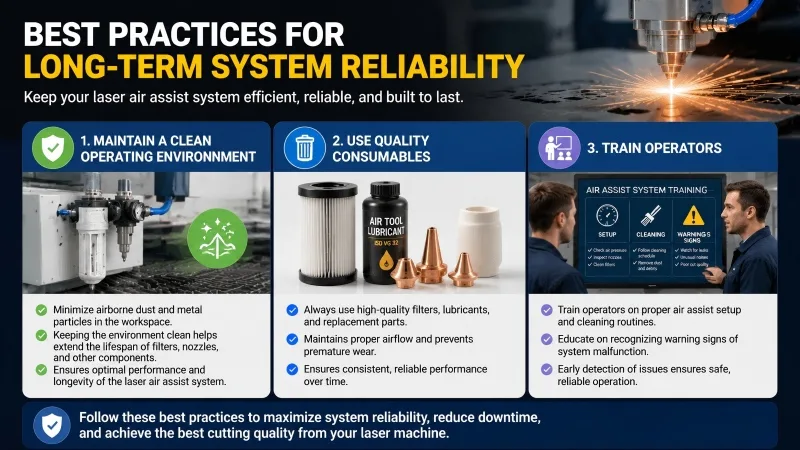
Maintain a Clean Operating Environment
Minimize airborne dust and metal particles in the workspace. Maintaining a cleaner environment helps extend the lifespan of filters, nozzles, and other components, ensuring optimal performance and longevity of the laser air assist system.
Use Quality Consumables
Always use high-quality filters, lubricants, and replacement parts to maintain proper airflow, prevent premature wear, and ensure consistent, reliable performance of the laser air assist system over time.
Train Operators
Train operators on proper air assist setup, cleaning routines, and recognizing warning signs of system malfunction, enabling early detection of issues and ensuring safe, reliable operation of the laser air assist system.
FAQs
How often should I clean the air assist nozzles?
Nozzles should be inspected and cleaned at least weekly or more frequently for heavy usage environments.
Can clogged air assist nozzles damage the laser lens?
Yes, clogged nozzles can allow smoke and debris to reach the lens, reducing cutting quality and potentially causing damage.
What is the optimal air pressure for most systems?
Check the manufacturer’s guidelines, but most laser systems operate effectively between 0.2–0.5 MPa, depending on material thickness and type.
Conclusion
Effective Laser Air Assist System Maintenance is essential for clean cutting, system reliability, and machine longevity. By regularly inspecting filters, cleaning nozzles, monitoring airflow, and maintaining components, operators can prevent downtime and maintain optimal cutting performance. For more detailed guidance or questions on maintaining your laser system, don’t hesitate to contact our expert support team.


