


Laser Cutting Bearing Maintenance is one of the most important tasks I focus on to keep a fiber laser cutting machine running accurately and reliably. Bearings support the movement of guide rails, drive shafts, and rotary components, and even minor wear can affect cutting precision. If you are noticing unusual noise, vibration, or reduced positioning accuracy, poor bearing maintenance may be the cause. In this article, I’ll explain why Laser Cutting Bearing Maintenance matters, how it affects machine performance, and what steps I recommend to extend bearing life and reduce costly downtime.
How Bearings Affect Laser Cutting Machine Performance
Bearings are essential components in the motion system of a laser cutting machine. They reduce friction and allow the X, Y, and Z axes to move smoothly at high speeds. When bearings are properly maintained, the machine can deliver clean cuts, accurate positioning, and stable operation.
Common Bearing Locations in Fiber Laser Cutting Machines
Linear Guide Bearings
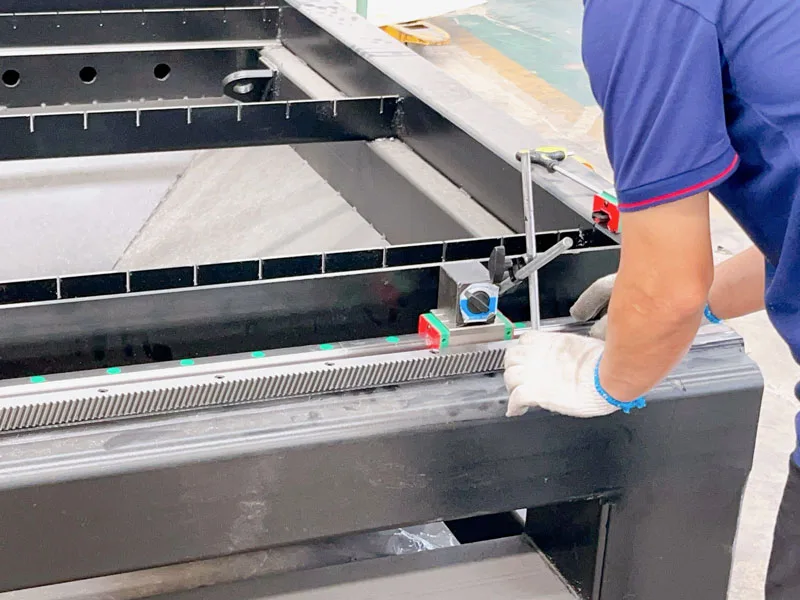
These bearings support the motion of the gantry and cutting head along the machine axes.
Servo Motor Bearings
These components ensure smooth rotation and accurate power transmission.
Rotary Chuck Bearings
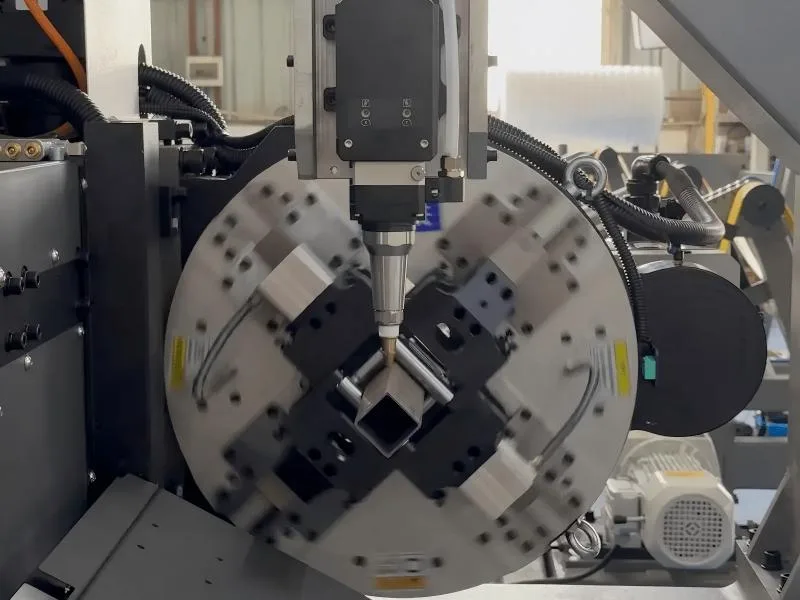
In tube laser cutting machines, bearings support the chuck and maintain concentric rotation.
Cooling Fan Bearings
Fans in electrical cabinets and laser sources also rely on bearings for continuous operation.
Why Laser Cutting Bearing Maintenance Is Important
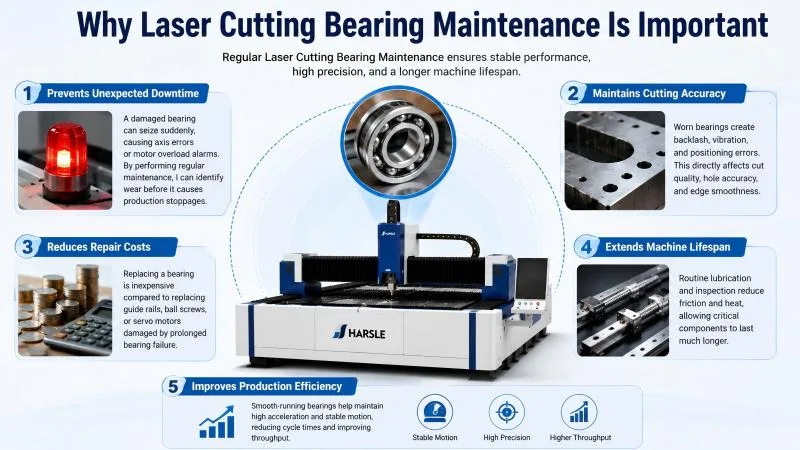
Prevents Unexpected Downtime
A damaged bearing can seize suddenly, causing axis errors or motor overload alarms. By performing regular Laser Cutting Bearing Maintenance, I can identify wear before it causes production stoppages.
Maintains Cutting Accuracy
Worn bearings create backlash, vibration, and positioning errors. This directly affects cut quality, hole accuracy, and edge smoothness.
Reduces Repair Costs
Replacing a bearing is inexpensive compared to replacing guide rails, ball screws, or servo motors damaged by prolonged bearing failure.
Extends Machine Lifespan
Routine lubrication and inspection reduce friction and heat, allowing critical components to last much longer.
Improves Production Efficiency
Smooth-running bearings help maintain high acceleration and stable motion, reducing cycle times and improving throughput.
How to Perform Laser Cutting Bearing Maintenance
Step 1: Listen for Unusual Noise
I always pay attention to grinding, squealing, or clicking sounds during operation. These noises often indicate insufficient lubrication or bearing wear.
Step 2: Check for Excessive Heat
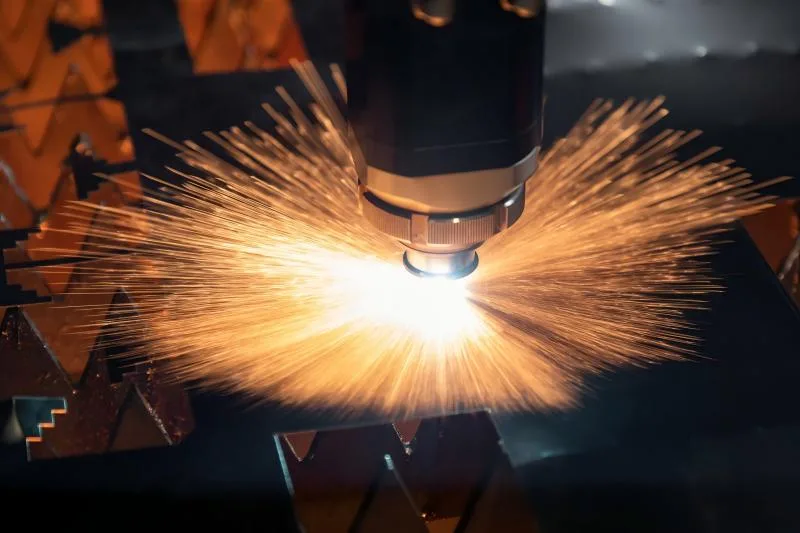
After running the machine, I carefully inspect bearing housings. Abnormally high temperatures suggest friction or internal damage.
Step 3: Inspect for Vibration
If the cutting head or gantry vibrates more than usual, bearing wear may be affecting motion stability.
Step 4: Lubricate Bearings Properly
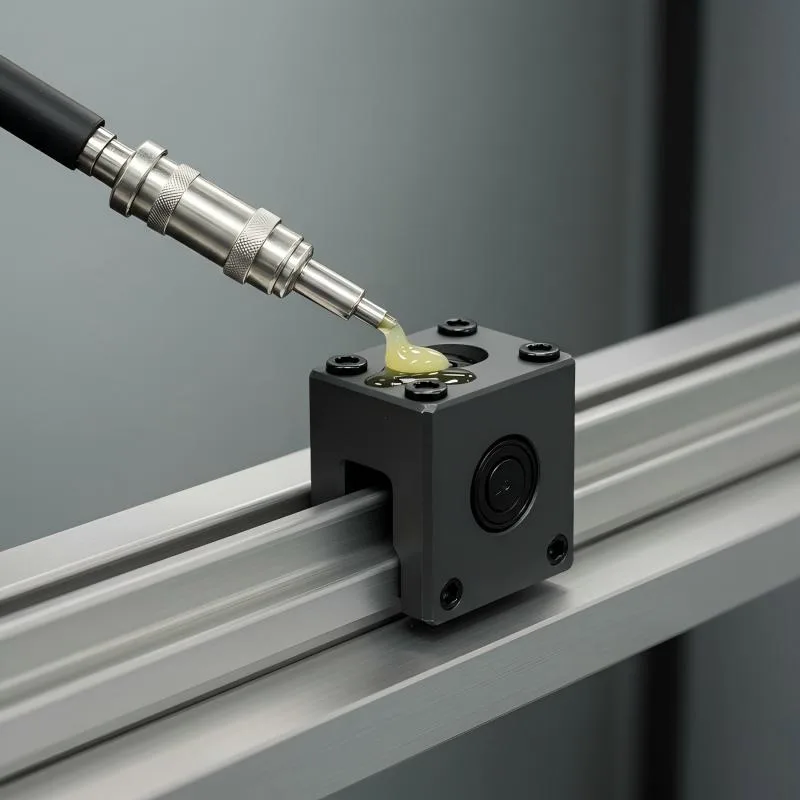
I apply the manufacturer-recommended grease at the correct intervals. Over-lubrication can be as harmful as insufficient lubrication.
Step 5: Clean Surrounding Components
Dust and metal particles can contaminate bearings. I keep guide rails, seals, and protective covers clean.
Step 6: Replace Worn Bearings Promptly
If I detect excessive play, noise, or rough rotation, I replace the bearing before it damages nearby components.
Common Mistakes in Laser Cutting Bearing Maintenance
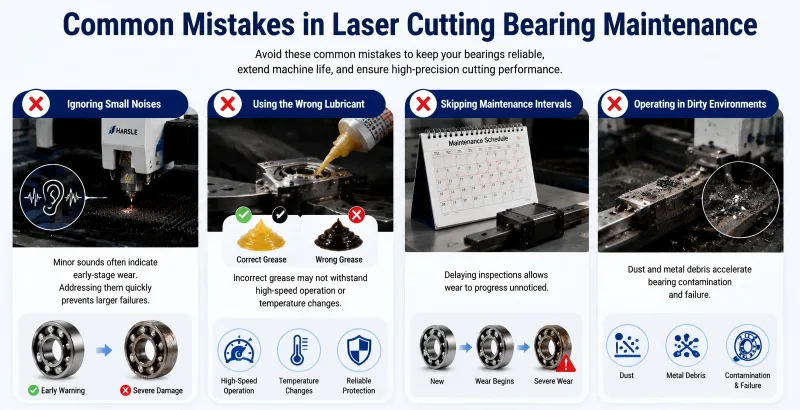
Ignoring Small Noises
Minor sounds often indicate early-stage wear. Addressing them quickly prevents larger failures.
Using the Wrong Lubricant
Incorrect grease may not withstand high-speed operation or temperature changes.
Skipping Maintenance Intervals
Delaying inspections allows wear to progress unnoticed.
Operating in Dirty Environments
Dust and metal debris accelerate bearing contamination and failure.
FAQs
What happens if Laser Cutting Bearing Maintenance is neglected?
Poor maintenance can cause vibration, positioning errors, overheating, and sudden machine breakdowns.
How often should I perform Laser Cutting Bearing Maintenance?
I recommend inspecting bearings weekly and lubricating them according to the machine manufacturer’s maintenance schedule.
Can worn bearings affect cutting quality?
Yes. Worn bearings can cause axis instability, resulting in inaccurate cuts and poor edge finish.
What is the most common sign of bearing failure?
The earliest signs are unusual noise, increased vibration, and rising operating temperature.
Conclusion
Laser Cutting Bearing Maintenance is essential for maintaining cutting accuracy, preventing downtime, and extending the life of your fiber laser cutting machine. By listening for unusual noise, checking temperature, lubricating properly, and replacing worn bearings promptly, you can keep your machine operating at peak performance.
I always treat bearing maintenance as a simple but powerful way to protect production efficiency and reduce repair costs. If you need expert guidance, replacement parts, or technical support, contact the HARSLE team. We are ready to help you keep your laser cutting machine running smoothly and reliably.


