


Prasa hydrauliczna Oil Filter Replacement is an essential maintenance task that helps maintain hydraulic system cleanliness, improve machine performance, and extend equipment service life. When hydraulic filters become clogged or lose filtration efficiency, contaminants can circulate through the system, causing valve problems, pump wear, and unstable operation. If you want to learn how to replace hydraulic press oil filters correctly and avoid common maintenance mistakes, you’re in the right place. In this article, I’ll explain the replacement process step by step and share practical methods to keep your hydraulic press operating reliably.
Zrozumienie znaczenia Prasa hydrauliczna Oil Filter Replacement
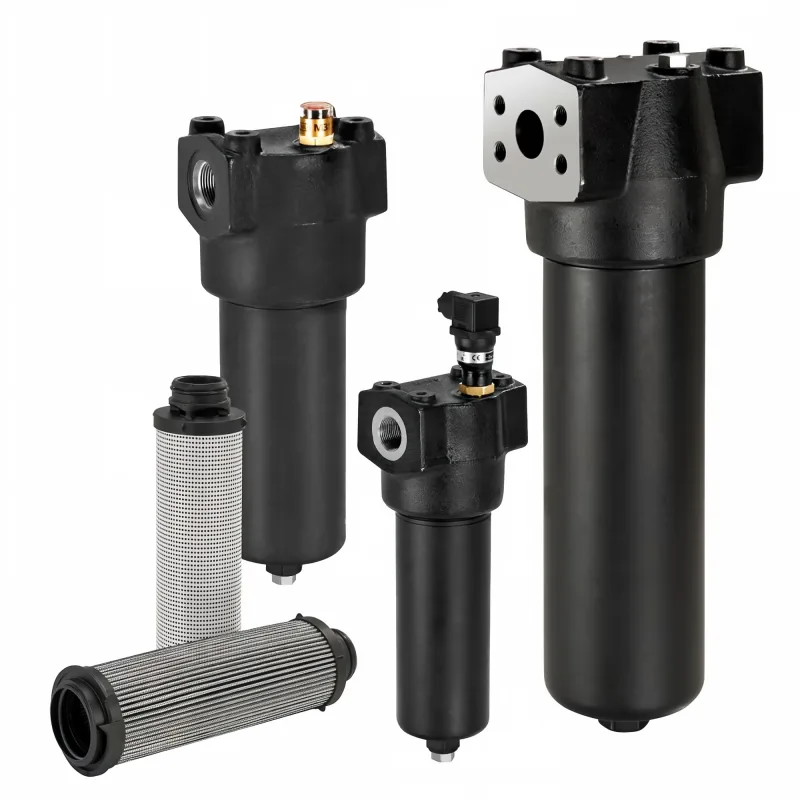
Why Hydraulic Oil Filters Are Important
Hydraulic oil filters play a critical role in removing metal particles, dust, sludge, and other contaminants from hydraulic oil. A clean filtration system protects important components such as hydraulic pumps, valves, cylinders, and seals.
During hydraulic press operation, high pressure and continuous movement generate internal wear particles. Without effective filtration, these contaminants can damage precision components and reduce machine efficiency.
Signs That Hydraulic Oil Filters Need Replacement
Before performing Hydraulic Press Oil Filter Replacement, I recommend checking for early warning signs, including reduced hydraulic pressure, slow machine movement, abnormal hydraulic noise, increased oil temperature, or frequent system alarms.
A clogged filter can restrict oil flow and force the hydraulic pump to work harder, which may eventually lead to component failure.
How to Perform Hydraulic Press Oil Filter Replacement Step by Step
Step 1: Prepare the Hydraulic Press Before Replacement
Before replacing the oil filter, safety preparation is essential. I always recommend stopping the hydraulic press completely, disconnecting the power supply, and releasing any remaining hydraulic pressure.
Clean the surrounding area of the filter housing to prevent dust or metal particles from entering the hydraulic system during maintenance.
Prepare the correct replacement filter, cleaning materials, protective gloves, and necessary tools before starting the procedure.
Step 2: Identify the Correct Hydraulic Oil Filter
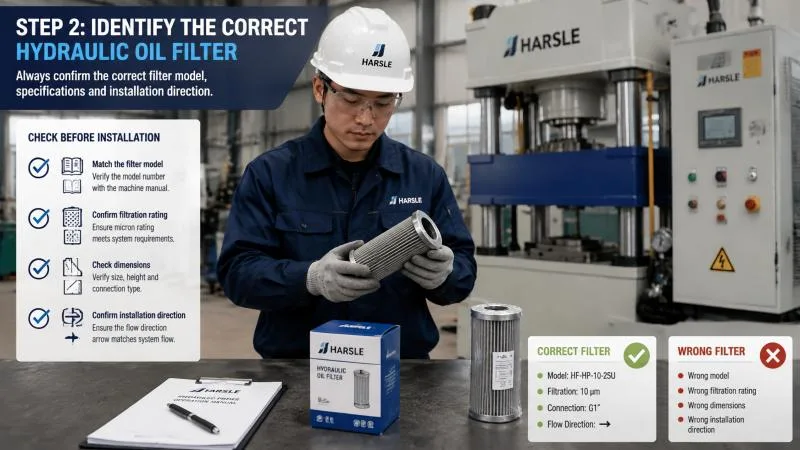
Different hydraulic presses use different filter types and filtration ratings. Using an incorrect filter may reduce system protection or affect oil flow performance.
Check the equipment manual or manufacturer specifications to confirm the correct filter model, filtration accuracy, and installation direction.
Selecting a high-quality replacement filter ensures better contamination control and longer hydraulic system life.
Step 3: Remove the Old Hydraulic Oil Filter
Carefully remove the filter housing cover or filter element according to the machine design. Place a suitable container underneath to collect any remaining hydraulic oil.
Avoid allowing contaminated oil to contact clean components. During removal, inspect the old filter for signs of excessive contamination, metal particles, or unusual deposits.
These conditions may indicate internal component wear that requires further inspection.
Step 4: Clean the Filter Housing and Installation Area
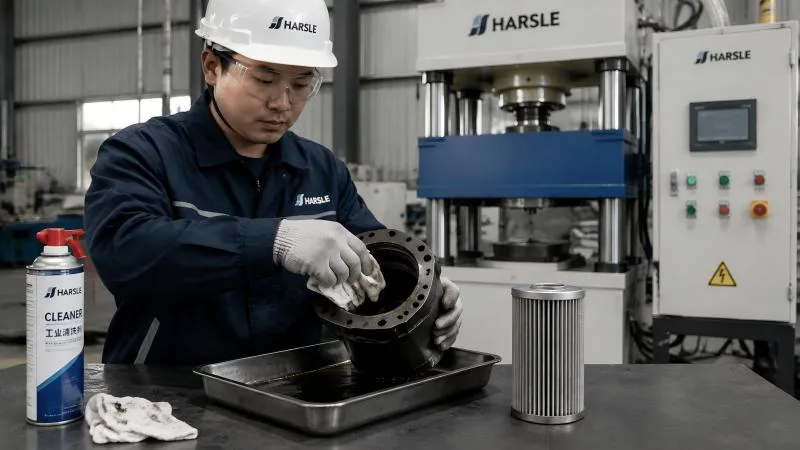
After removing the old filter, clean the filter housing thoroughly. Remove oil residue, dirt, and contamination from the internal surfaces.
I recommend using clean maintenance materials and avoiding materials that may leave fibers inside the hydraulic system.
A clean installation environment prevents new filters from becoming contaminated immediately after replacement.
Step 5: Install the New Hydraulic Oil Filter
Install the new filter carefully according to the correct direction and position. Ensure that seals, O-rings, and mounting parts are properly installed.
A damaged or incorrectly positioned seal can cause oil leakage or allow unfiltered oil to bypass the filtration system.
After installation, tighten all components according to the recommended torque requirements.
Step 6: Check Hydraulic System Performance After Replacement
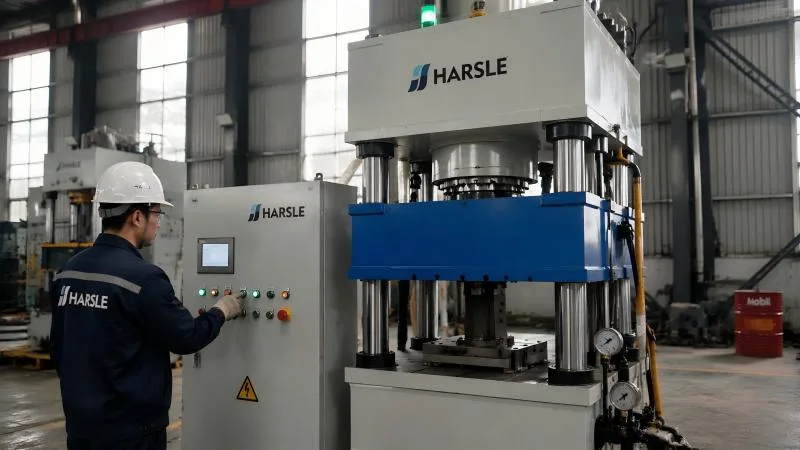
Po ukończeniu Hydraulic Press Oil Filter Replacement, restart the hydraulic press and check system operation carefully.
Monitor hydraulic pressure, oil temperature, machine movement, and possible leakage around the filter housing.
Allow the system to run for a short period and confirm that the hydraulic circuit operates smoothly before returning to normal production.
Best Practices for Hydraulic Press Oil Filter Maintenance
Establish a Regular Filter Replacement Schedule
The replacement frequency depends on working conditions, hydraulic oil quality, and machine operating hours. Machines operating in dusty or heavy-load environments usually require more frequent filter inspection.
Following a planned maintenance schedule helps prevent unexpected hydraulic system failures.
Monitor Hydraulic Oil Cleanliness
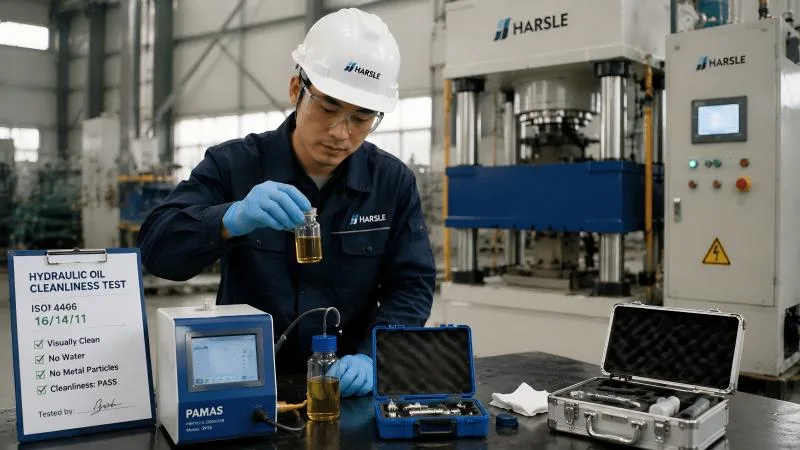
Replacing filters alone is not enough. Regular oil inspection helps identify contamination levels and determine whether additional maintenance is needed.
Clean hydraulic oil improves component protection and supports stable hydraulic press performance.
Use Recommended Filter Components
Always select filters that meet the manufacturer’s requirements. Low-quality filters may have poor filtration efficiency or insufficient dirt-holding capacity.
Using suitable filters helps maintain reliable hydraulic performance and reduces long-term maintenance costs.
Common Mistakes During Hydraulic Press Oil Filter Replacement
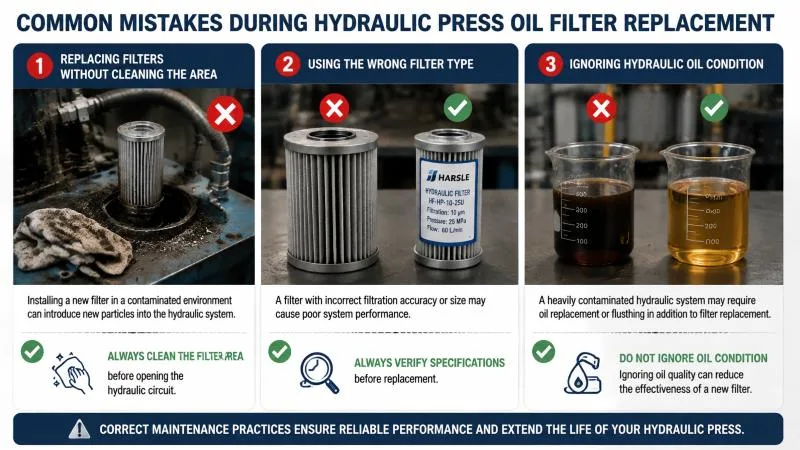
Replacing Filters Without Cleaning the Area
Installing a new filter in a contaminated environment can introduce new particles into the hydraulic system.
Always clean the filter area before opening the hydraulic circuit.
Using the Wrong Filter Type
A filter with incorrect filtration accuracy or size may cause poor system performance.
Always verify specifications before replacement.
Ignoring Hydraulic Oil Condition
A heavily contaminated hydraulic system may require oil replacement or flushing in addition to filter replacement.
Ignoring oil quality can reduce the effectiveness of a new filter.
Często zadawane pytania
How often should I perform Hydraulic Press Oil Filter Replacement?
The replacement interval depends on machine usage, operating environment, and manufacturer recommendations. Regular inspection helps determine the correct timing.
What happens if a hydraulic press filter is not replaced?
A clogged filter can restrict oil flow, increase pump load, reduce pressure stability, and accelerate hydraulic component wear.
Can I clean and reuse a hydraulic oil filter?
Most industrial hydraulic filters are designed for replacement rather than reuse. Installing a new filter ensures reliable filtration performance.
What should I check after replacing a hydraulic press oil filter?
Check for oil leaks, stable pressure, normal machine movement, and proper hydraulic system operation after replacement.
Wniosek
Właściwy Hydraulic Press Oil Filter Replacement is a key part of maintaining hydraulic system reliability and preventing costly failures. By preparing the machine correctly, selecting the right filter, installing it carefully, and monitoring system performance afterward, operators can improve equipment efficiency and extend machine lifespan.
Regular hydraulic maintenance not only protects important components but also reduces downtime and improves production stability. For more technical guidance or professional support on hydraulic press maintenance, feel free to contact our team.


