


Prasa hydrauliczna Sensor Maintenance is essential for ensuring accurate machine operation, stable hydraulic control, and reliable production performance. When hydraulic press sensors become dirty, damaged, or incorrectly calibrated, they can cause inaccurate pressure readings, unexpected machine stops, and reduced pressing accuracy. If you want to improve sensor reliability and prevent unnecessary downtime, you are in the right place. In this article, I’ll explain how to inspect, clean, calibrate, and maintain hydraulic press sensors effectively, helping you keep your hydraulic system operating safely and efficiently.
Zrozumienie znaczenia Prasa hydrauliczna Sensor Maintenance
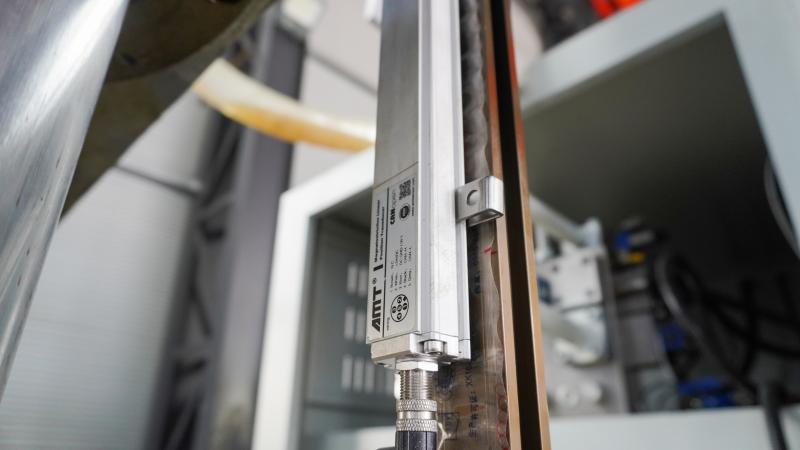
Why Hydraulic Press Sensors Need Regular Maintenance
Hydraulic press sensors play a critical role in monitoring and controlling machine operation. Depending on the machine design, sensors may measure hydraulic pressure, cylinder position, temperature, oil level, or other operating conditions.
These signals allow the control system to adjust machine performance and maintain stable pressing operations. Without proper Hydraulic Press Sensor Maintenance, sensor accuracy can gradually decrease due to contamination, vibration, electrical issues, or component aging.
Regular maintenance helps ensure that sensors provide accurate feedback and prevents small problems from developing into major system failures.
Common Problems Caused by Poor Sensor Maintenance
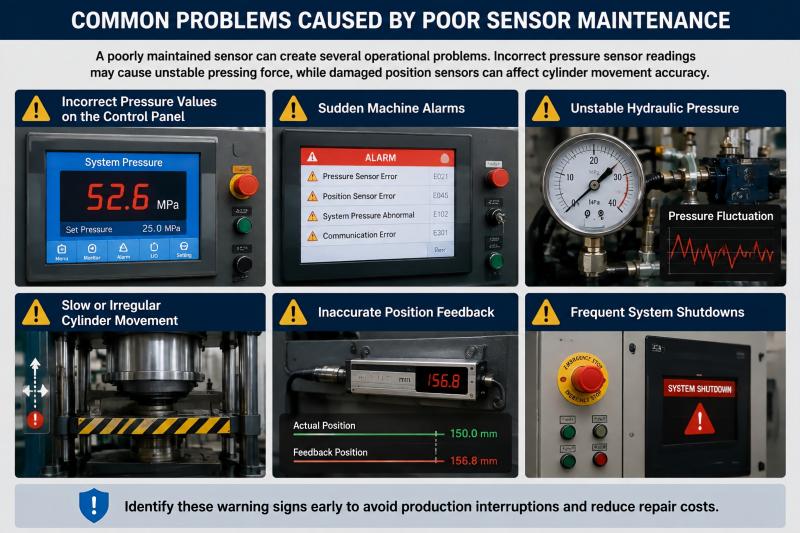
A poorly maintained sensor can create several operational problems. Incorrect pressure sensor readings may cause unstable pressing force, while damaged position sensors can affect cylinder movement accuracy.
Common warning signs include:
- Incorrect pressure values on the control panel
- Sudden machine alarms
- Unstable hydraulic pressure
- Slow or irregular cylinder movement
- Inaccurate position feedback
- Frequent system shutdowns
Identifying these problems early helps operators avoid production interruptions and expensive repairs.
How to Perform Hydraulic Press Sensor Maintenance Step by Step
Step 1: Inspect Sensor Appearance and Installation Condition
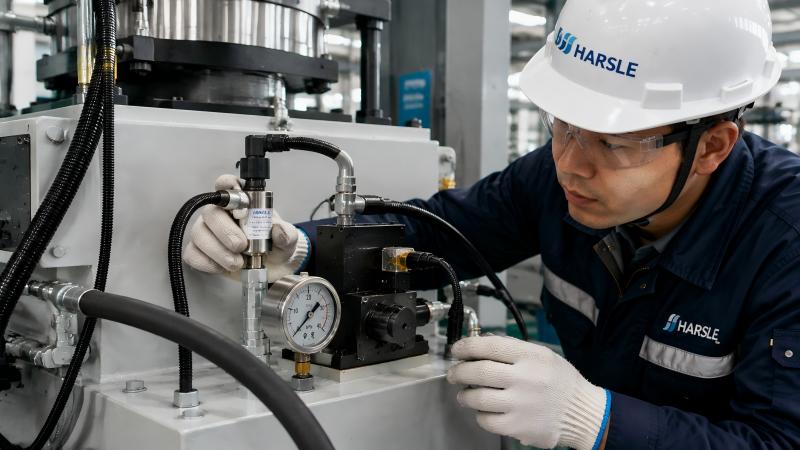
The first step in hydraulic press sensor maintenance is performing a visual inspection. I recommend checking each sensor for physical damage, loose mounting points, oil leakage, corrosion, or contamination.
Sensors installed near hydraulic components may be exposed to oil mist, dust, vibration, and temperature changes. These factors can affect sensor performance over time.
Make sure sensor connections are secure and mounting brackets remain stable. A loose sensor installation can create inaccurate readings even when the sensor itself is functioning correctly.
Step 2: Clean Sensors and Connection Areas
Keeping sensors clean is one of the simplest but most effective maintenance methods. Dirt, oil residue, and metal particles can affect sensor sensitivity and electrical connections.
During cleaning, I use suitable cleaning materials and avoid damaging sensor surfaces or cables. The surrounding area should also be cleaned to prevent contaminants from entering connectors.
For hydraulic presses operating in dusty environments, regular cleaning intervals should be established based on production conditions.
Step 3: Check Electrical Connections and Wiring
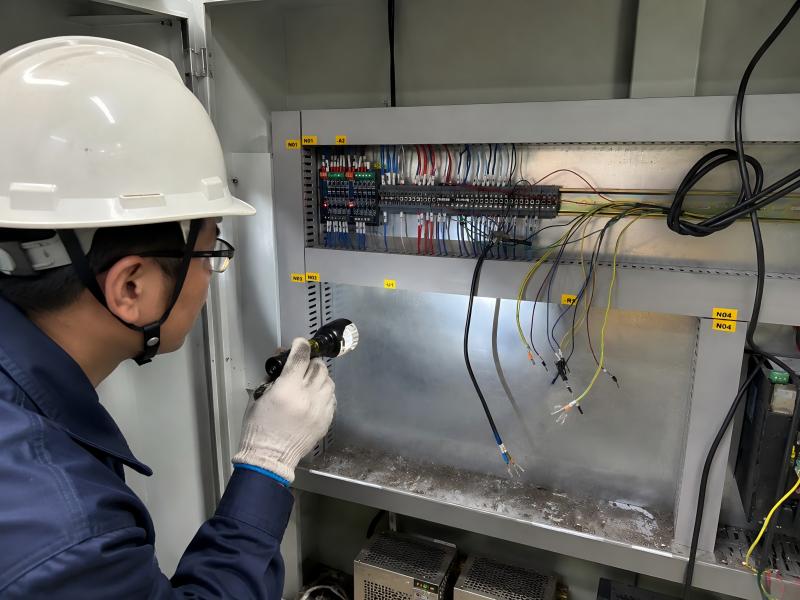
Hydraulic press sensors depend on stable electrical signals. Loose terminals, damaged cables, or poor connections can cause incorrect feedback signals.
During inspection, check:
- Sensor cables for cracks or wear
- Connector tightness
- Signs of corrosion
- Electrical insulation condition
- Signal stability
If the control system displays unstable readings, checking wiring conditions should be one of the first troubleshooting steps.
Step 4: Verify Sensor Calibration Accuracy
Calibration is an important part of maintaining sensor accuracy. Over time, pressure sensors and position sensors may develop measurement deviations due to vibration, temperature changes, or component aging.
I recommend comparing sensor readings with standard measurement equipment to confirm accuracy. If a sensor value does not match the actual machine condition, recalibration may be required.
Proper calibration helps maintain consistent pressing force, accurate positioning, and reliable machine control.
Step 5: Monitor Sensor Performance During Operation
After inspection and calibration, observe sensor performance during normal machine operation.
Monitor whether:
- Pressure readings remain stable
- Position feedback matches actual movement
- Temperature values are within normal ranges
- Alarms occur unexpectedly
Abnormal changes may indicate sensor aging, hydraulic system problems, or control system issues.
Continuous monitoring helps maintenance teams detect problems before they affect production.
Step 6: Replace Damaged or Unreliable Sensors
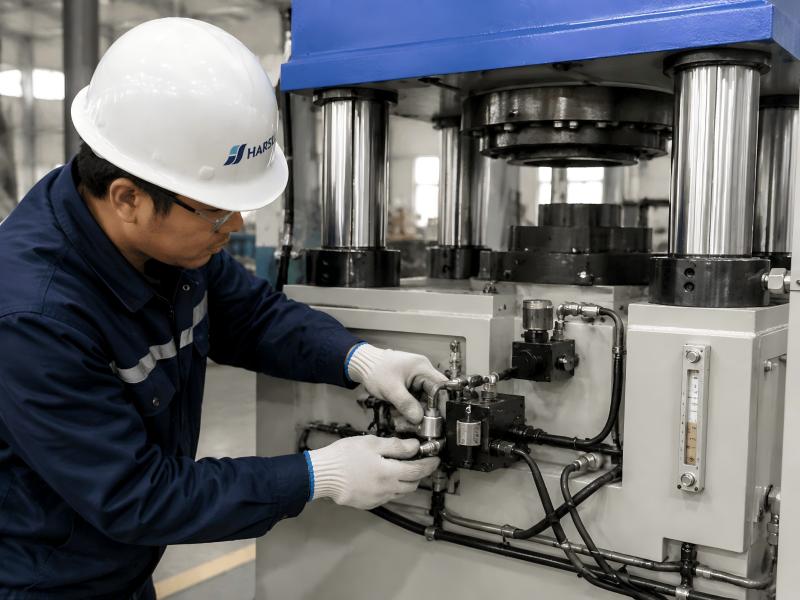
Not all sensor problems can be solved through cleaning or calibration. If a sensor has internal damage, unstable signals, or repeated failures, replacement may be the best solution.
When replacing sensors, always select compatible components with the correct specifications, including measurement range, electrical connection type, and working environment requirements.
Using unsuitable sensors can cause inaccurate feedback and affect the overall hydraulic press performance.
Best Practices for Long-Term Hydraulic Press Sensor Reliability
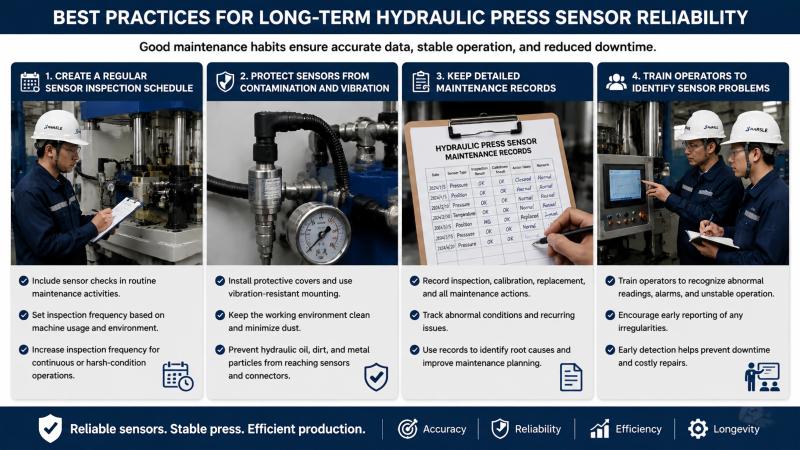
Create a Regular Sensor Inspection Schedule
A planned inspection schedule helps prevent unexpected sensor failures. I recommend including sensor checks in routine hydraulic press maintenance activities.
Inspection frequency should depend on machine usage, working environment, and production requirements. Machines operating continuously or in harsh conditions may require more frequent checks.
Protect Sensors from Contamination and Vibration
Hydraulic presses often operate under high loads, which can generate vibration and contamination. Installing proper protection and maintaining a clean working environment helps extend sensor service life.
Avoid allowing hydraulic oil, dust, or metal particles to accumulate around sensor connections.
Prowadź szczegółowe zapisy konserwacji
Recording sensor inspections, calibration results, replacements, and abnormal conditions helps improve future maintenance decisions.
These records allow operators to identify repeated issues and determine whether problems are caused by sensors, hydraulic components, or control systems.
Train Operators to Identify Sensor Problems
Operators are usually the first people to notice abnormal machine behavior. Proper training helps them recognize warning signs such as incorrect readings, unusual alarms, or unstable machine movement.
Early reporting allows maintenance teams to solve problems before serious failures occur.
Często zadawane pytania
How often should I perform Hydraulic Press Sensor Maintenance?
The maintenance frequency depends on operating conditions, machine workload, and sensor type. Regular inspections should be included in routine hydraulic press maintenance schedules.
What causes hydraulic press sensor failure?
Common causes include contamination, vibration, electrical connection problems, incorrect calibration, temperature changes, and natural component aging.
How can I check if a hydraulic press sensor is working correctly?
Compare sensor readings with actual machine conditions or use professional testing equipment to verify measurement accuracy.
Wniosek
Skuteczny Hydraulic Press Sensor Maintenance helps ensure accurate measurements, stable hydraulic control, and reliable machine operation. By regularly inspecting sensors, cleaning components, checking electrical connections, verifying calibration, and replacing damaged parts when necessary, operators can reduce downtime and improve production efficiency.
A well-maintained sensor system supports better hydraulic press performance and extends the service life of critical machine components. For more technical guidance on hydraulic press maintenance and troubleshooting, feel free to contact our team for professional support.


