


Prasa hydrauliczna Control System Maintenance is essential for keeping a hydraulic press operating safely, accurately, and reliably during daily production. From PLC controllers and sensors to electrical wiring and control panels, every part of the control system influences how the machine responds to operator commands. If you are dealing with unexpected stops, inaccurate movements, alarm messages, or unstable machine operation, proper maintenance can help prevent these problems from becoming serious failures. In this article, I’ll explain how I inspect and maintain the main control system components, identify common problems, and establish practical preventive maintenance procedures for long-term hydraulic press reliability.
Dlaczego Prasa hydrauliczna Control System Maintenance Is Important
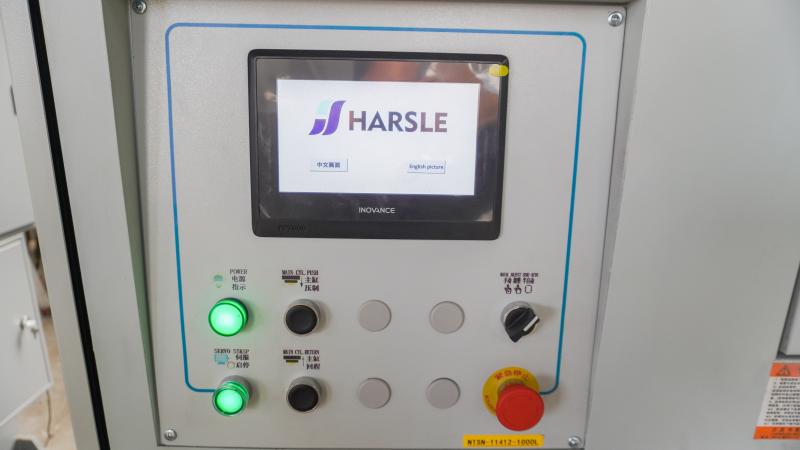
Maintaining Accurate Machine Control
Modern hydraulic presses rely on electrical and electronic control systems to coordinate pressure, position, speed, and operating sequences. If a sensor sends an incorrect signal or a connection becomes loose, the machine may not perform the commanded movement correctly.
Regular maintenance helps me identify these problems early and maintain stable communication between the controller, sensors, valves, and other machine components.
Preventing Unexpected Hydraulic Press Downtime
A small electrical problem can stop an entire hydraulic press. Loose terminals, contaminated electrical cabinets, damaged cables, and faulty sensors can all trigger alarms or interrupt production.
Ustrukturyzowany Hydraulic Press Control System Maintenance program allows me to identify developing problems before they result in unexpected downtime.
How to Maintain a Hydraulic Press Control System Step by Step
Step 1: Inspect the Electrical Control Cabinet
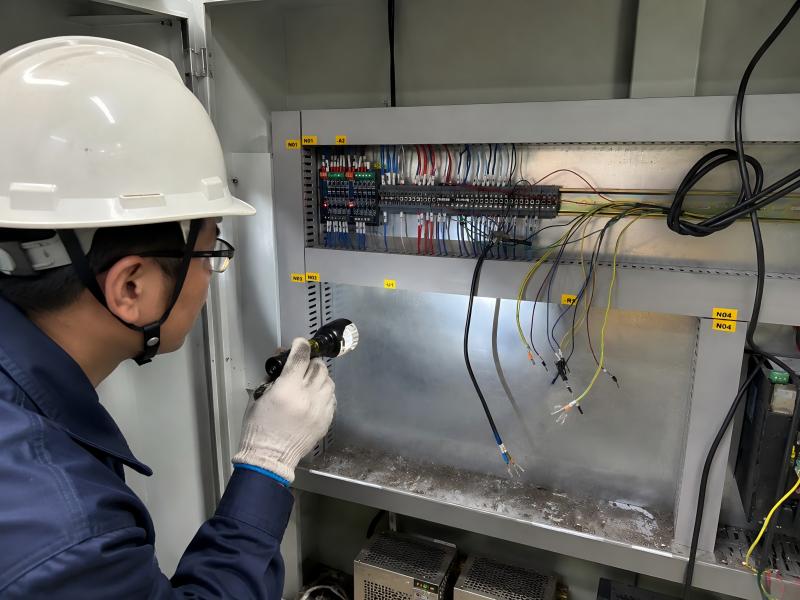
Before inspection or maintenance, I make sure the machine is safely shut down and isolated according to the required electrical safety and lockout procedures.
I then inspect the electrical cabinet for dust, oil, moisture, loose components, unusual discoloration, or signs of overheating. Excessive contamination can affect relays, contactors, PLC modules, drives, and power supplies.
The cabinet ventilation system should also be checked. Dirty filters or blocked fans can increase internal temperature and shorten the service life of electronic components.
Step 2: Check Electrical Wiring and Connections
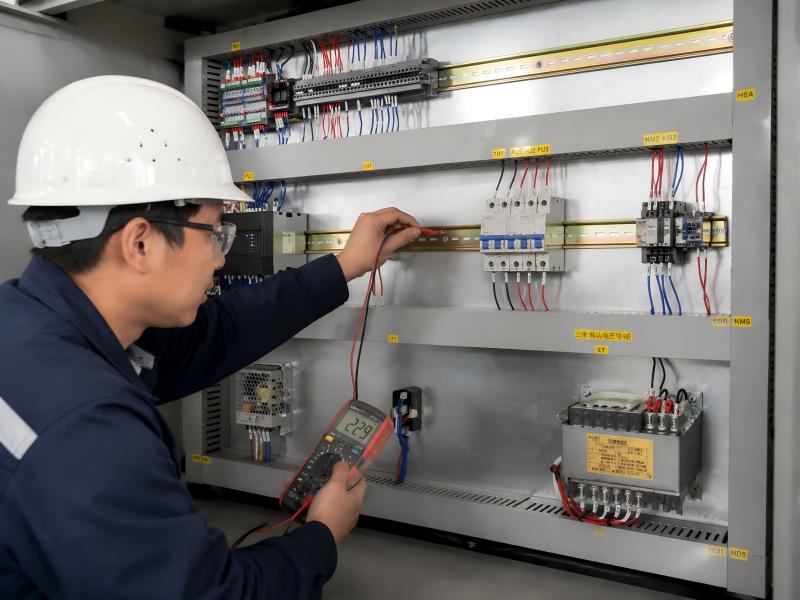
Loose electrical connections are a common source of intermittent hydraulic press control problems. I inspect terminal blocks, connectors, grounding points, and visible wiring for looseness, corrosion, overheating, or physical damage.
Any damaged cable should be repaired or replaced using the correct specification. I avoid making unnecessary changes to the original wiring arrangement because improper modifications can create new control problems.
Step 3: Inspect Sensors and Feedback Devices
Hydraulic presses may use pressure sensors, proximity switches, limit switches, position sensors, and other feedback devices to control machine movements.
I check whether each sensor is securely mounted, correctly aligned, clean, and free from damage. Oil, dust, or mechanical displacement can interfere with sensor signals.
When a machine repeatedly stops at the wrong position or produces inconsistent movements, checking sensor status is one of my first troubleshooting steps.
Step 4: Check PLC and HMI Operation
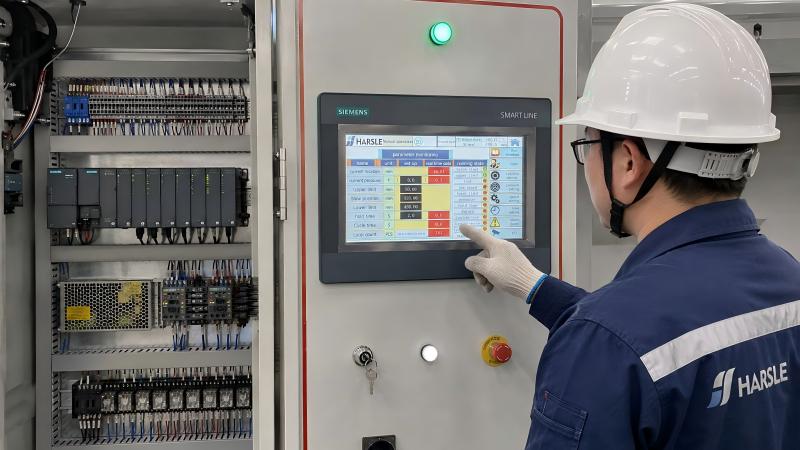
The PLC controls the operating logic of the hydraulic press, while the HMI allows operators to enter parameters and monitor machine conditions.
During maintenance, I check the PLC and HMI for abnormal alarms, communication errors, unexpected restarts, or unusual response delays. Error histories can provide useful information about recurring faults.
I also make sure important machine parameters and programs are backed up according to the manufacturer’s procedures before making significant changes.
Step 5: Inspect Control Valves and Electrical Signals
The control system works closely with the hydraulic system. Solenoid valves and proportional valves depend on electrical commands to regulate hydraulic pressure and movement.
If the machine responds slowly or behaves inconsistently, I check both the electrical signal and the hydraulic component instead of assuming that only one system is responsible.
Inspecting connectors, solenoid coils, valve response, and command signals can help determine whether the fault is electrical or hydraulic.
Step 6: Test Safety Control Functions
Safety devices are an important part of the hydraulic press control system. Depending on the machine configuration, these may include emergency stops, safety doors, light curtains, interlocks, two-hand controls, and limit switches.
I regularly verify that these devices respond correctly and that the machine enters a safe state when a safety function is activated. Safety devices should never be bypassed simply to keep production running.
Common Hydraulic Press Control System Problems
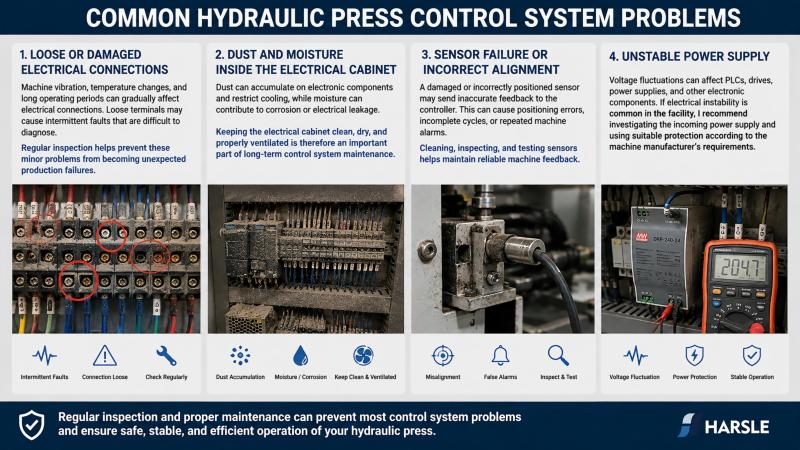
Luźne lub uszkodzone połączenia elektryczne
Machine vibration, temperature changes, and long operating periods can gradually affect electrical connections. Loose terminals may cause intermittent faults that are difficult to diagnose.
Regular inspection helps prevent these minor problems from becoming unexpected production failures.
Dust and Moisture Inside the Electrical Cabinet
Dust can accumulate on electronic components and restrict cooling, while moisture can contribute to corrosion or electrical leakage.
Keeping the electrical cabinet clean, dry, and properly ventilated is therefore an important part of long-term control system maintenance.
Sensor Failure or Incorrect Alignment
A damaged or incorrectly positioned sensor may send inaccurate feedback to the controller. This can cause positioning errors, incomplete cycles, or repeated machine alarms.
Cleaning, inspecting, and testing sensors helps maintain reliable machine feedback.
Unstable Power Supply
Voltage fluctuations can affect PLCs, drives, power supplies, and other electronic components. If electrical instability is common in the facility, I recommend investigating the incoming power supply and using suitable protection according to the machine manufacturer’s requirements.
Best Practices for Long-Term Hydraulic Press Control System Maintenance
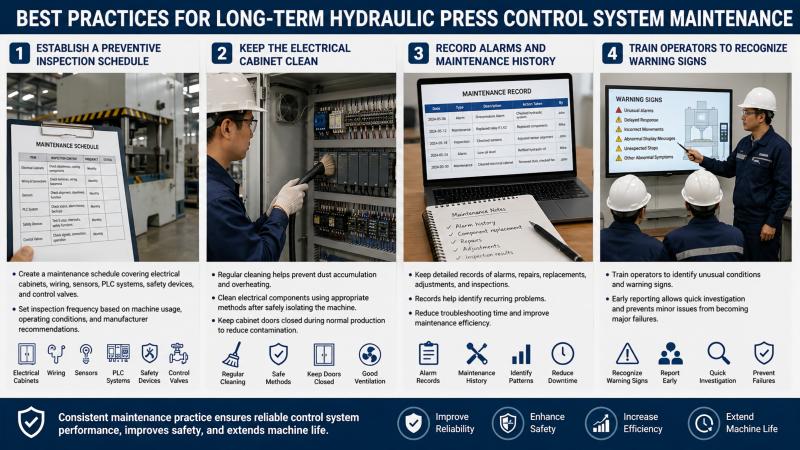
Establish a Preventive Inspection Schedule
I recommend creating a maintenance schedule that covers electrical cabinets, wiring, sensors, PLC systems, safety devices, and control valves.
The actual inspection frequency should be based on machine usage, operating conditions, and manufacturer recommendations rather than relying on the same interval for every hydraulic press.
Keep the Electrical Cabinet Clean
Regular cleaning helps prevent dust accumulation and overheating. However, electrical components should only be cleaned using appropriate methods after the machine has been safely isolated.
Keeping cabinet doors properly closed during normal production also reduces contamination.
Record Alarms and Maintenance History
I keep records of recurring alarms, component replacements, electrical repairs, sensor adjustments, and other maintenance activities.
These records make it easier to identify recurring problems and can significantly reduce troubleshooting time when similar faults appear again.
Train Operators to Recognize Warning Signs
Operators should know how to identify unusual alarms, delayed machine responses, incorrect movements, abnormal display messages, and other signs of control system problems.
Early reporting allows maintenance personnel to investigate the issue before it develops into a more expensive failure.
Często zadawane pytania
How often should Hydraulic Press Control System Maintenance be performed?
The appropriate frequency depends on operating hours, production conditions, machine design, and manufacturer recommendations. I recommend combining routine visual checks with scheduled detailed inspections.
What are common signs of a hydraulic press control system problem?
Common signs include unexpected stops, repeated alarms, incorrect movements, sensor errors, communication failures, delayed responses, and unstable operating cycles.
Can dust inside the electrical cabinet cause hydraulic press failures?
Yes. Heavy dust accumulation can interfere with cooling and contribute to overheating or electrical problems. Maintaining a clean cabinet environment helps improve electronic component reliability.
Wniosek
Skuteczny Hydraulic Press Control System Maintenance helps maintain accurate machine control, improve operational safety, and reduce unexpected downtime. By inspecting electrical cabinets, checking wiring and sensors, monitoring PLC and HMI operation, testing safety devices, and recording maintenance history, I can identify many control problems before they interrupt production.
A reliable control system is essential for stable hydraulic press performance. Following a consistent preventive maintenance routine can extend component life and improve overall production efficiency. If you need more detailed assistance with hydraulic press control system inspection, maintenance, or troubleshooting, contact our team for professional technical support.


