


Prasa hydrauliczna Accuracy Maintenance is essential for keeping a hydraulic press precise, stable, and reliable throughout long-term production. In my experience, accuracy problems rarely a
ppear without warning; they usually develop gradually because of hydraulic pressure fluctuations, guide wear, tooling misalignment, oil contamination, sensor errors, or improper machine adjustment. If your hydraulic press is producing inconsistent dimensions, uneven forming results, or inaccurate ram positions, systematic maintenance can help identify the cause. In this guide, I’ll explain how to inspect, maintain, and adjust the key systems that influence hydraulic press accuracy so you can reduce production errors and maintain consistent forming quality.
Dlaczego Prasa hydrauliczna Accuracy Maintenance Is Important
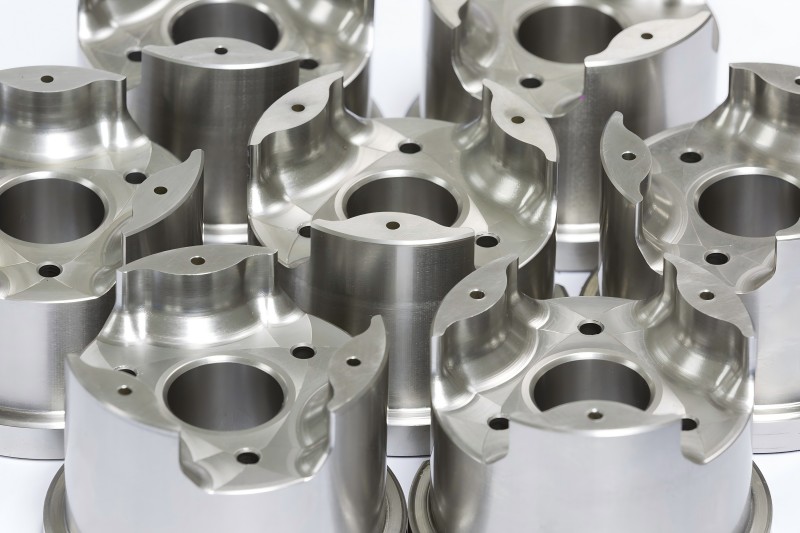
Hydraulic presses depend on several systems working together accurately. The hydraulic system generates force, the cylinder controls ram movement, the guide system maintains alignment, and sensors or position-control devices determine the stopping position.
When one of these systems begins to deteriorate, press accuracy can gradually decrease. The machine may still operate normally, but operators may notice dimensional variation, uneven pressure, inconsistent stroke positions, or poor repeatability.
Regularny Hydraulic Press Accuracy Maintenance allows me to identify these small changes before they develop into larger mechanical or hydraulic problems.
Common Signs of Hydraulic Press Accuracy Problems
Several symptoms can indicate that a hydraulic press is losing accuracy. These include inconsistent forming dimensions, uneven workpiece surfaces, ram position deviation, unstable pressure, abnormal vibration, and differences between repeated production cycles.
When these problems appear, I recommend checking the complete machine condition instead of adjusting only the process parameters.
How to Improve Hydraulic Press Accuracy Maintenance
Step 1: Check Hydraulic Pressure Stability
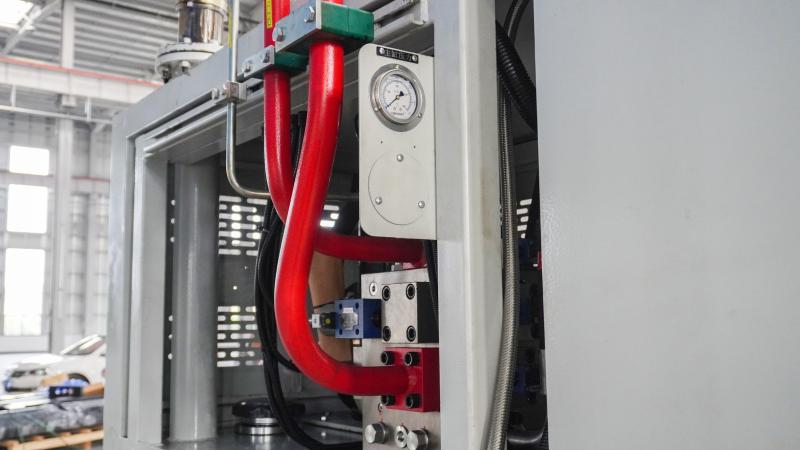
Stable hydraulic pressure is essential for maintaining consistent pressing force. I start by observing the pressure gauge during several operating cycles and checking whether the pressure rises, holds, and releases consistently.
If pressure fluctuates significantly, I inspect the hydraulic pump, relief valve, proportional valve, seals, and pipelines. Internal leakage or valve contamination can prevent the system from maintaining stable pressure.
Correcting pressure problems can significantly improve hydraulic press repeatability.
Step 2: Inspect Hydraulic Oil Condition
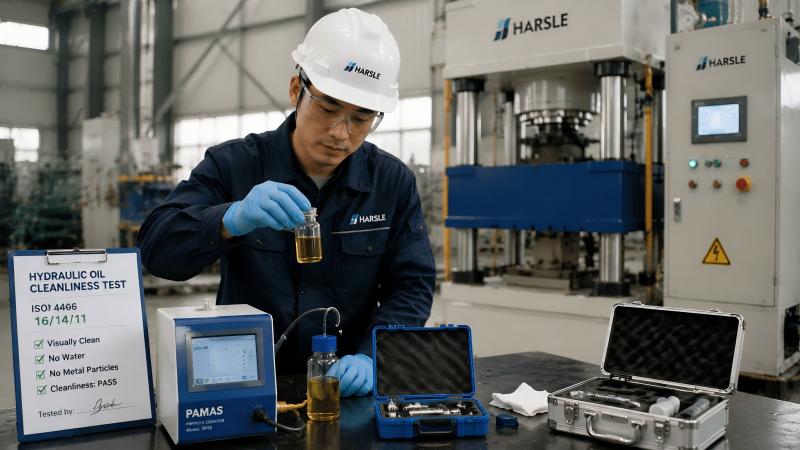
Contaminated or degraded hydraulic oil can affect valve response and cylinder movement. Small particles may interfere with precision valves, while excessive oil temperature can change viscosity and reduce system stability.
I regularly check the oil for discoloration, unusual odors, water contamination, and visible particles. Hydraulic filters should also be inspected and replaced according to the machine manufacturer’s maintenance requirements.
Clean hydraulic oil helps maintain predictable pressure and smoother ram movement.
Step 3: Inspect Ram and Guide System Alignment
Ram alignment directly affects forming accuracy. Worn guide rails, loose fasteners, or uneven guide clearances can allow unwanted ram movement during pressing.
I inspect the guide system for abnormal wear and verify that the ram travels smoothly without excessive lateral movement. Guide clearances should be measured and adjusted according to the manufacturer’s specifications.
For high-precision applications, alignment should also be checked across the working area.
Step 4: Check Tooling Condition and Alignment
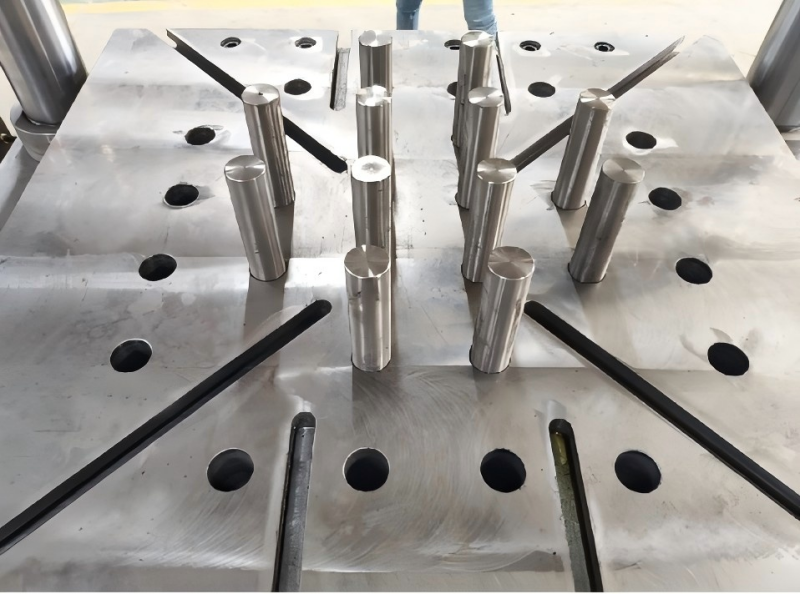
Even when the hydraulic press itself is accurate, worn or incorrectly installed tooling can produce inconsistent parts.
I inspect dies, punches, fixtures, and working surfaces for wear, deformation, cracks, or contamination. I also verify that the upper and lower tooling is properly centered and securely installed.
Correct tooling alignment helps distribute force evenly and improves dimensional consistency.
Step 5: Calibrate Position Sensors and Stroke Control
Modern hydraulic presses may use linear encoders, proximity sensors, limit switches, or other position-feedback devices to control ram movement.
If these devices become loose, contaminated, or incorrectly calibrated, the actual ram position may differ from the programmed position.
I recommend checking sensor mounting, wiring connections, reference positions, and calibration values periodically. After adjustment, several test cycles should be performed to confirm repeatability.
Step 6: Check the Hydraulic Cylinder for Internal Leakage
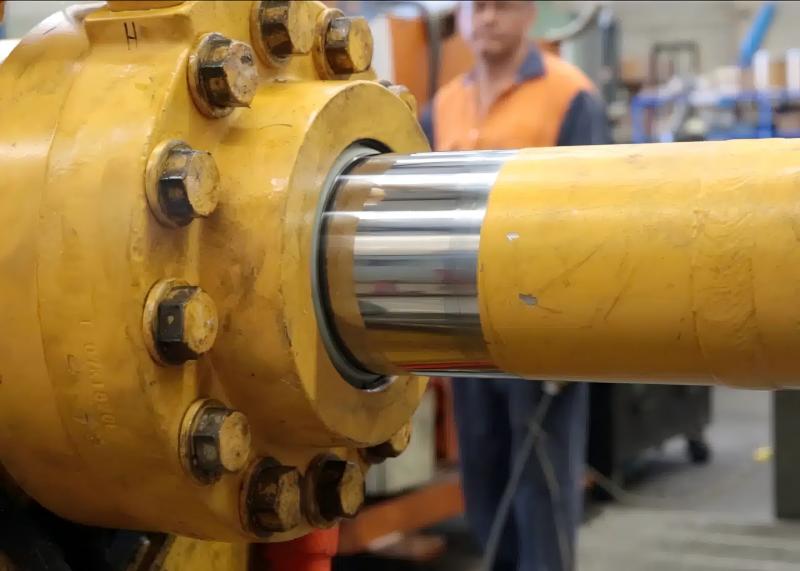
Internal cylinder leakage can create gradual ram movement or inconsistent pressure during the pressing cycle. Unlike an external oil leak, internal leakage may not be immediately visible.
If I notice pressure loss or position drift, I inspect the cylinder seals and compare pressure behavior during loaded and unloaded conditions.
Damaged seals should be replaced promptly to restore stable cylinder performance.
How to Test Hydraulic Press Accuracy After Maintenance
Perform Repeatability Tests
After completing maintenance, I recommend running multiple press cycles under the same operating conditions.
Measure the ram position, pressure, stroke, and finished workpiece dimensions during each cycle. Large differences between cycles may indicate that an underlying problem still exists.
Repeatability testing is particularly useful because it shows whether the machine can consistently return to the same operating condition.
Perform a Trial Production Run
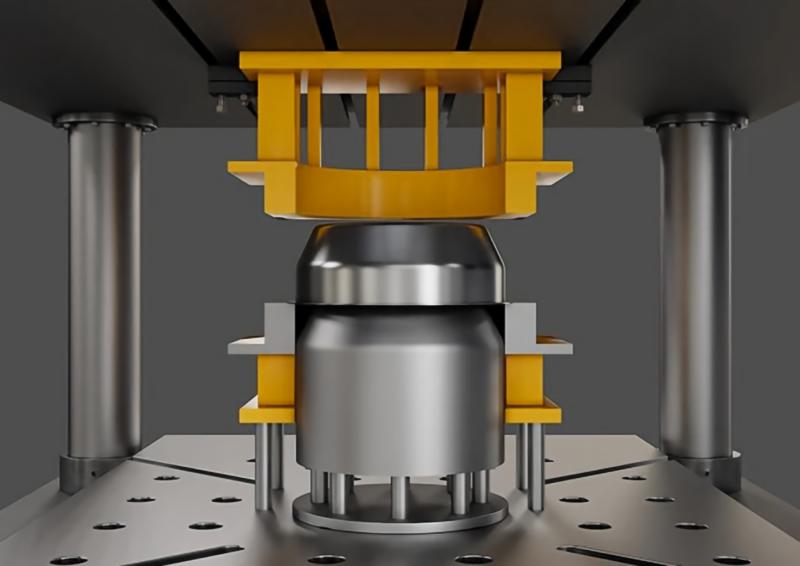
Before returning the machine to full production, I perform several test operations using representative workpieces.
I compare the finished dimensions with the required tolerances and check whether the forming result remains consistent across multiple parts. If deviations remain, I investigate tooling, material variation, pressure settings, and position control before continuing production.
Preventive Maintenance for Long-Term Hydraulic Press Accuracy
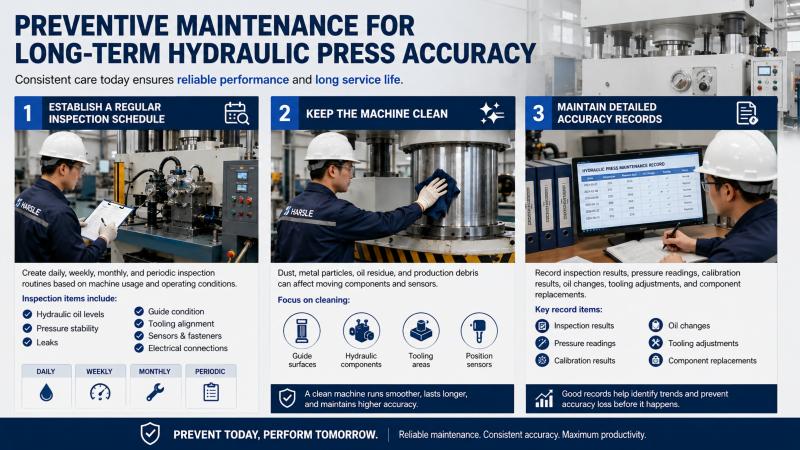
Establish a Regular Inspection Schedule
Accuracy maintenance should not begin only after defective parts appear. I recommend creating daily, weekly, monthly, and periodic inspection routines based on machine usage and operating conditions.
Routine inspections can include hydraulic oil levels, pressure stability, leaks, guide condition, tooling alignment, sensors, fasteners, and electrical connections.
Utrzymuj maszynę w czystości
Dust, metal particles, oil residue, and production debris can affect moving components and sensors. Keeping the machine and surrounding area clean reduces contamination and makes leaks or abnormal wear easier to identify.
Special attention should be given to guide surfaces, hydraulic components, tooling areas, and position sensors.
Maintain Detailed Accuracy Records
Maintenance records help me identify gradual changes that may otherwise go unnoticed. I recommend recording inspection results, pressure readings, calibration results, oil changes, tooling adjustments, and component replacements.
Comparing historical data makes it easier to detect trends and plan maintenance before accuracy deteriorates significantly.
Common Mistakes in Hydraulic Press Accuracy Maintenance
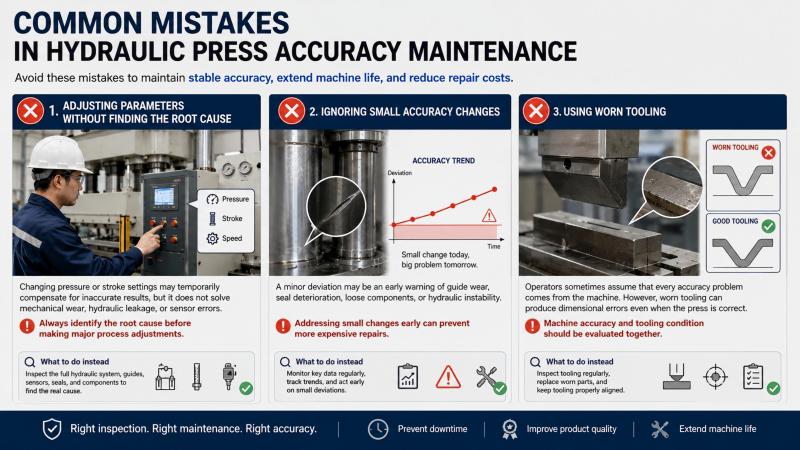
Adjusting Parameters Without Finding the Root Cause
Changing pressure or stroke settings may temporarily compensate for inaccurate results, but it does not solve mechanical wear, hydraulic leakage, or sensor errors.
I always recommend identifying the root cause before making major process adjustments.
Ignoring Small Accuracy Changes
A minor deviation may be an early warning of guide wear, seal deterioration, loose components, or hydraulic instability. Addressing small changes early can prevent more expensive repairs.
Using Worn Tooling
Operators sometimes assume that every accuracy problem comes from the machine. However, worn tooling can produce dimensional errors even when the hydraulic press is operating correctly.
Machine accuracy and tooling condition should therefore be evaluated together.
Często zadawane pytania
How often should Hydraulic Press Accuracy Maintenance be performed?
The schedule depends on production intensity, operating environment, machine design, and manufacturer recommendations. Basic inspections should be performed routinely, while detailed alignment and calibration checks can be scheduled periodically according to machine usage.
What causes a hydraulic press to lose accuracy over time?
Common causes include guide wear, hydraulic pressure fluctuations, internal cylinder leakage, contaminated oil, tooling wear, loose mechanical components, and inaccurate position sensors.
Can hydraulic oil affect press accuracy?
Yes. Contaminated or degraded oil can affect valve response, lubrication, pressure stability, and cylinder movement, which may reduce repeatability and forming accuracy.
Wniosek
Skuteczny Hydraulic Press Accuracy Maintenance requires more than adjusting pressure or stroke settings. I recommend taking a systematic approach that includes checking hydraulic pressure, oil condition, ram alignment, guide components, tooling, cylinders, and position-control devices.
Regular inspections, repeatability testing, accurate maintenance records, and timely corrective action can help prevent gradual accuracy loss and keep production results consistent. If your hydraulic press continues to experience positioning, pressure, or forming accuracy problems after routine maintenance, contact our technical team for further inspection and professional support.


