


Prasa hydrauliczna Work Table Maintenance is essential for keeping a hydraulic press accurate, safe, and reliable during daily production. The work table supports heavy loads and directly affects material positioning, pressing accuracy, and overall machine performance. If the table surface becomes damaged, misaligned, or contaminated, it can lead to uneven pressing results, workpiece defects, and unnecessary machine wear. In this article, I’ll explain practical maintenance methods, inspection procedures, and preventive care tips to help operators keep their hydraulic press work table in excellent condition and extend the service life of the equipment.
Dlaczego Prasa hydrauliczna Work Table Maintenance Is Important
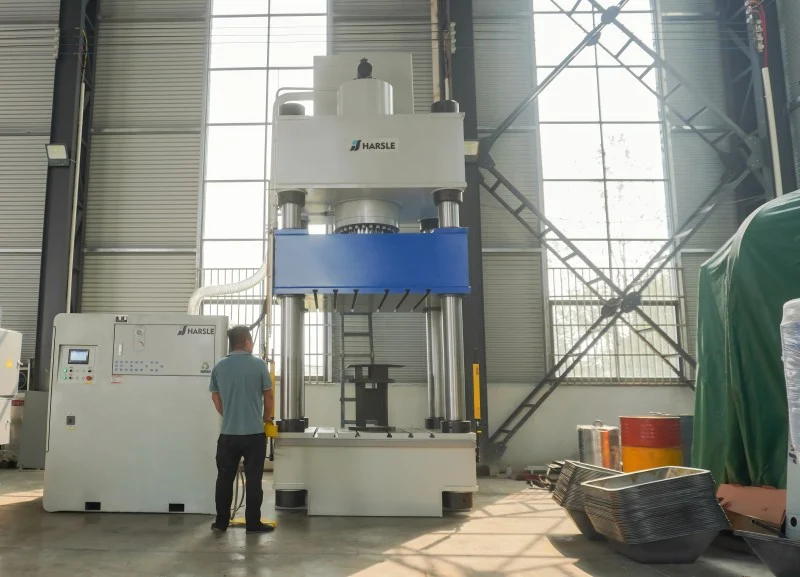
Maintaining Pressing Accuracy and Stability
The hydraulic press work table is the foundation for placing and supporting workpieces during operation. Any deformation, surface damage, or accumulated debris can affect the contact between the workpiece and the table.
Through regular Hydraulic Press Work Table Maintenance, I can ensure the working surface remains flat, clean, and stable. This helps maintain consistent pressing results and reduces dimensional errors during production.
Preventing Structural Damage and Wear
A hydraulic press work table often carries extremely high loads. Long-term operation without proper inspection may cause surface wear, cracks, loose mounting points, or deformation.
Regular maintenance allows operators to identify early signs of damage and take corrective action before they affect the machine structure or production quality.
How to Perform Hydraulic Press Work Table Maintenance
Step 1: Clean the Work Table Surface Regularly
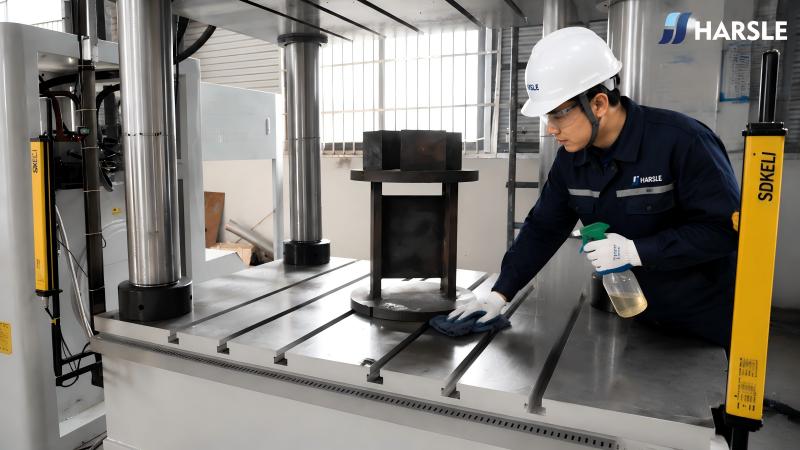
The first step in maintaining a hydraulic press work table is keeping the surface clean. During production, metal chips, dust, oil residue, and other contaminants can accumulate on the table.
I recommend cleaning the work table after daily operation using suitable cleaning tools. Avoid allowing metal debris to remain on the surface because it can create scratches or affect workpiece positioning.
A clean work surface improves safety and helps maintain accurate pressing operations.
Step 2: Inspect the Table Surface for Damage
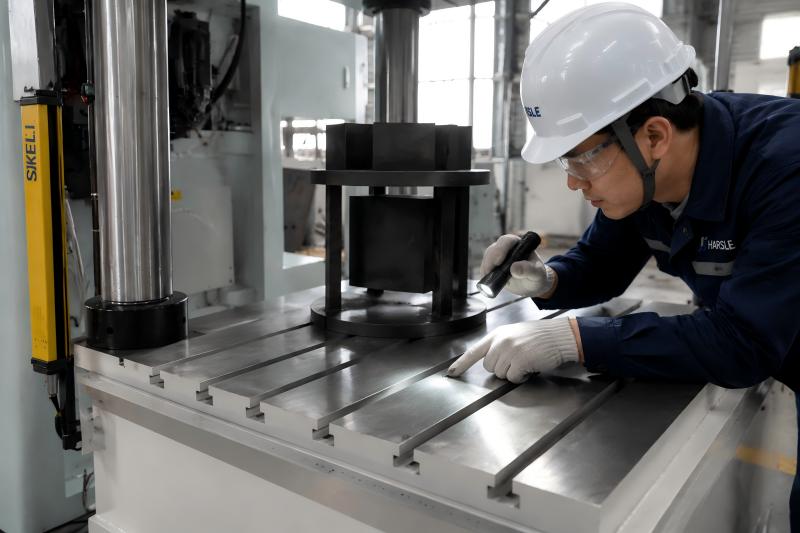
Regular visual inspection is an important part of Hydraulic Press Work Table Maintenance. I check the surface carefully for scratches, cracks, dents, corrosion, or uneven areas.
Small surface damage may seem insignificant, but repeated high-pressure operations can make these problems worse. If serious deformation or cracks are found, professional repair should be considered before continuing production.
Step 3: Check Work Table Level and Alignment
A properly aligned work table is critical for accurate hydraulic press operation. An uneven table can cause uneven force distribution and affect pressing quality.
I recommend checking table level periodically using precision measuring tools. If alignment problems are detected, adjustments should be performed according to the machine manufacturer’s guidelines.
Maintaining correct alignment helps improve pressing consistency and reduces unnecessary stress on hydraulic and mechanical components.
Step 4: Inspect Mounting Bolts and Fixing Components
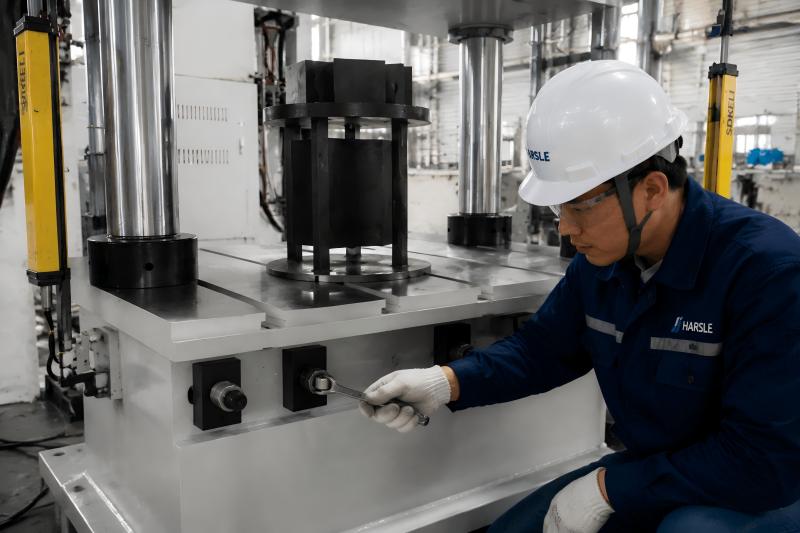
The work table is usually fixed to the machine frame using bolts or other connection components. Continuous vibration and heavy loading may gradually loosen these fasteners.
During maintenance inspections, I check whether mounting bolts, supports, and connecting parts are properly tightened. Loose components should be corrected immediately to prevent table movement or structural damage.
Step 5: Apply Proper Lubrication Where Required
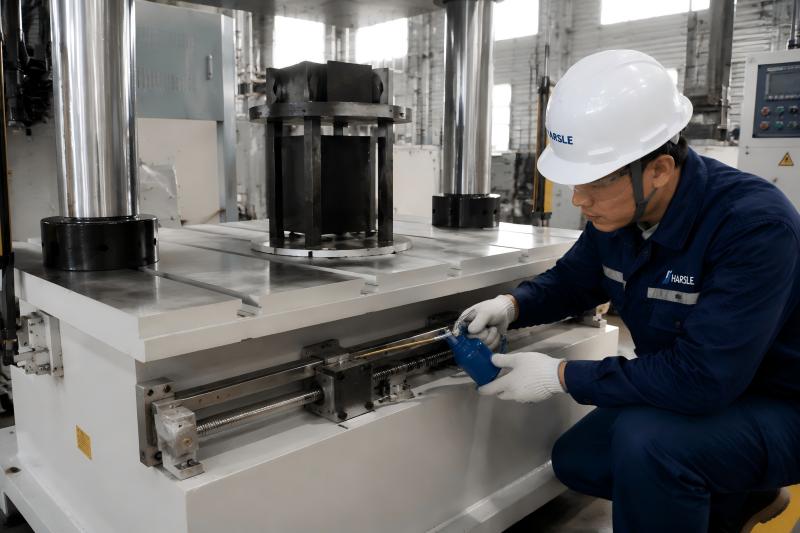
Some hydraulic press work tables include moving mechanisms, guide components, or adjustable positioning systems that require lubrication.
I always use the lubricant recommended by the manufacturer and apply the correct amount. Insufficient lubrication increases friction and wear, while excessive lubrication may attract dust and contaminants.
Proper lubrication supports smooth movement and extends component lifespan.
Step 6: Check for Corrosion Protection
The work table surface may be exposed to moisture, coolant, or chemical substances during manufacturing. Without proper protection, corrosion can develop and affect surface quality.
I recommend removing moisture quickly, applying protective coatings when necessary, and keeping the working environment clean and dry.
Good corrosion prevention is an important part of long-term hydraulic press maintenance.
Common Problems Caused by Poor Work Table Maintenance
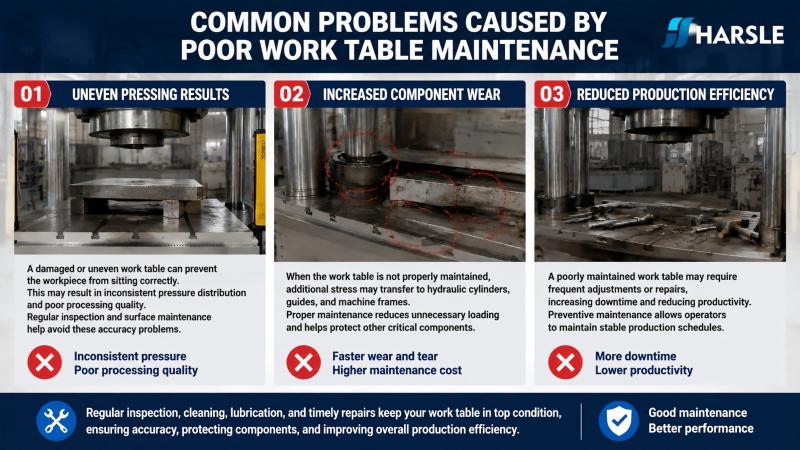
Uneven Pressing Results
A damaged or uneven work table can prevent the workpiece from sitting correctly. This may result in inconsistent pressure distribution and poor processing quality.
Regular inspection and surface maintenance help avoid these accuracy problems.
Increased Component Wear
When the work table is not properly maintained, additional stress may transfer to hydraulic cylinders, guides, and machine frames.
Proper maintenance reduces unnecessary loading and helps protect other critical components.
Reduced Production Efficiency
A poorly maintained work table may require frequent adjustments or repairs, increasing downtime and reducing productivity.
Preventive maintenance allows operators to maintain stable production schedules.
Best Practices for Long-Term Hydraulic Press Work Table Performance
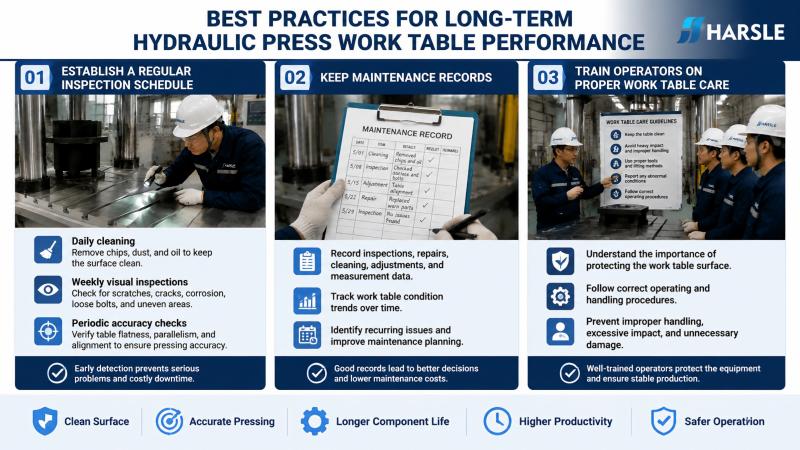
Establish a Regular Inspection Schedule
I recommend creating a maintenance schedule based on machine usage, production environment, and operating conditions.
Daily cleaning, weekly visual inspections, and periodic accuracy checks can help identify problems before they become serious.
Keep Maintenance Records
Recording inspection results, repairs, cleaning activities, and adjustments helps track work table condition over time.
These records allow maintenance teams to identify repeated issues and improve future maintenance planning.
Train Operators on Proper Work Table Care
Operators should understand the importance of protecting the work table surface and following correct operating procedures.
Training helps prevent improper handling, excessive impact, and unnecessary damage during production.
Często zadawane pytania
How often should I perform Hydraulic Press Work Table Maintenance?
Maintenance frequency depends on machine usage, working environment, and production requirements. Daily cleaning and regular inspections are recommended, while detailed checks should follow the manufacturer’s maintenance schedule.
What are the signs that a hydraulic press work table needs maintenance?
Common signs include surface damage, corrosion, uneven positioning, loose mounting bolts, and inconsistent pressing results.
Can a damaged work table affect hydraulic press accuracy?
Yes. A damaged or misaligned work table can affect workpiece positioning and pressure distribution, leading to reduced processing accuracy.
Wniosek
Właściwy Hydraulic Press Work Table Maintenance helps ensure stable operation, accurate pressing results, and longer machine service life. By regularly cleaning the surface, inspecting for damage, checking alignment, tightening connections, and preventing corrosion, operators can reduce downtime and maintain reliable performance.
A well-maintained work table not only improves production quality but also protects other hydraulic press components from unnecessary stress. For more technical guidance or professional support on hydraulic press maintenance, feel free to contact our team for expert assistance.


