


Prasa hydrauliczna Frame Inspection is essential for identifying structural damage, deformation, loose connections, and other problems that could affect machine accuracy and safety. Because the frame supports the enormous forces generated during pressing operations, even small cracks or alignment changes should never be ignored. If you want to know how to inspect a hydraulic press frame correctly, you’re in the right place. In this article, I’ll explain the key areas I check, the warning signs I look for, and the practical inspection steps that help maintain structural stability, reliable operation, and long machine service life.
Dlaczego Prasa hydrauliczna Frame Inspection Is Important
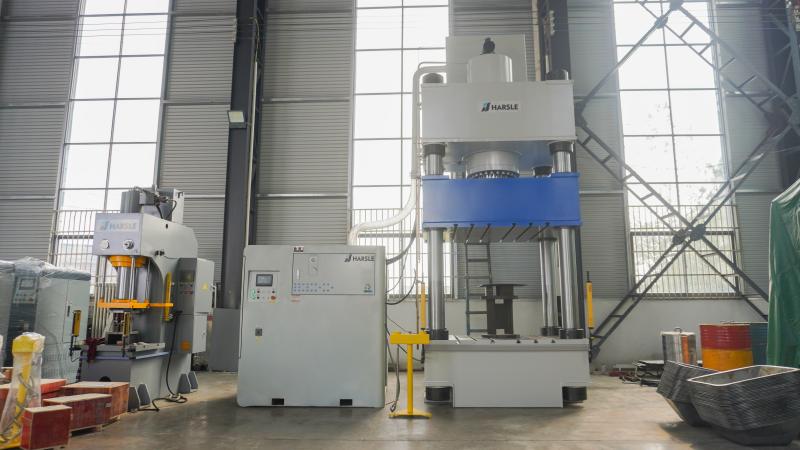
Maintaining Structural Stability Under High Loads
The frame carries and distributes the forces generated by the hydraulic cylinders during every pressing cycle. Depending on the press design, critical structural areas may include columns, side frames, crossbeams, welded joints, tie rods, and the working table.
Repeated loading can gradually cause fatigue, deformation, or looseness. Regular inspection allows me to identify these changes before they develop into more serious structural problems.
Protecting Hydraulic Press Accuracy
Frame condition can directly influence pressing accuracy. If the frame becomes distorted or important mounting points shift, the ram and working table may no longer remain correctly aligned.
This can lead to uneven loading, inconsistent forming results, abnormal guide wear, and premature tooling damage. Maintaining frame geometry is therefore important for both machine reliability and product quality.
Common Hydraulic Press Frame Problems
Cracks Around Welded Joints
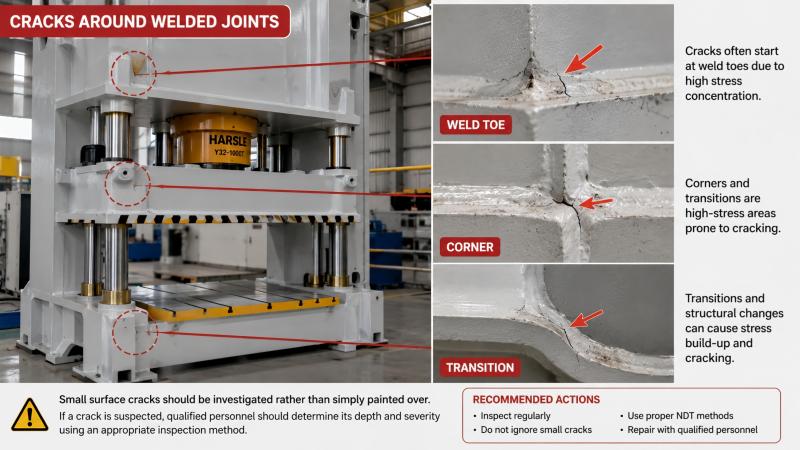
Welded areas can experience concentrated stress during repeated press cycles. I pay particular attention to weld toes, corners, transitions, and other high-stress locations.
Small surface cracks should be investigated rather than simply painted over. If a crack is suspected, qualified personnel should determine its depth and severity using an appropriate inspection method.
Frame Deformation or Misalignment
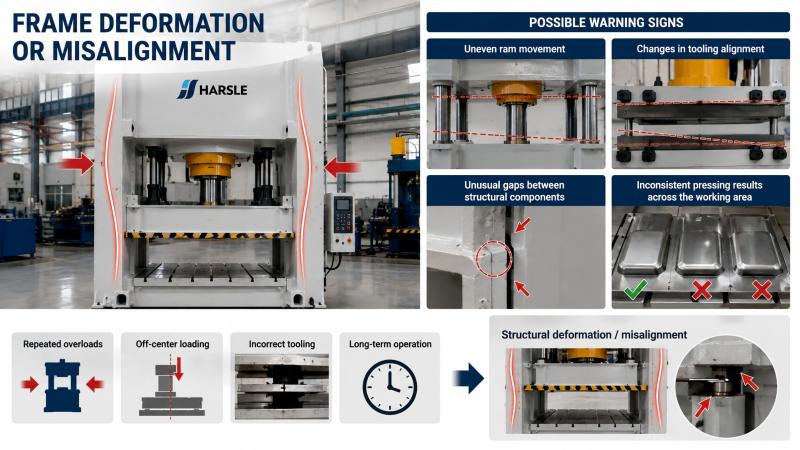
Repeated overloads, off-center loading, incorrect tooling, or long-term operation can contribute to structural deformation.
Possible warning signs include uneven ram movement, changes in tooling alignment, unusual gaps between structural components, or inconsistent pressing results across the working area.
Loose Bolts and Structural Connections
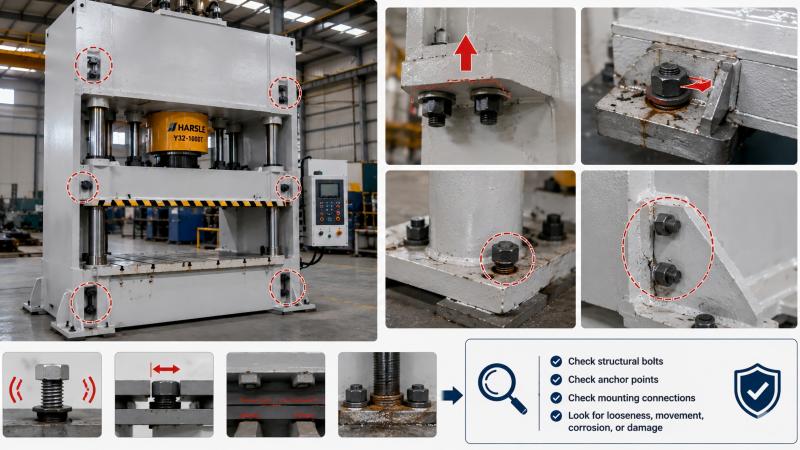
Bolted connections can loosen due to vibration and repeated loading. Loose fasteners may allow unwanted movement between structural components and can gradually affect machine stability.
During a Hydraulic Press Frame Inspection, I check accessible structural bolts, anchor points, and mounting connections for looseness, movement, corrosion, or visible damage.
Corrosion on Structural Components
Rust can gradually reduce the condition of exposed metal surfaces, particularly in humid or poorly maintained production environments.
Areas around the machine base, joints, covers, and locations where moisture or oil can accumulate deserve additional attention.
How to Perform Hydraulic Press Frame Inspection
Step 1: Shut Down and Secure the Hydraulic Press
Before starting a detailed inspection, I stop the machine and follow the required shutdown and lockout procedures. The ram and any movable components should be placed in a safe condition according to the manufacturer’s instructions.
Never enter or inspect a hazardous area where unexpected ram movement could occur without the required mechanical support and energy isolation.
Step 2: Clean the Frame Before Inspection
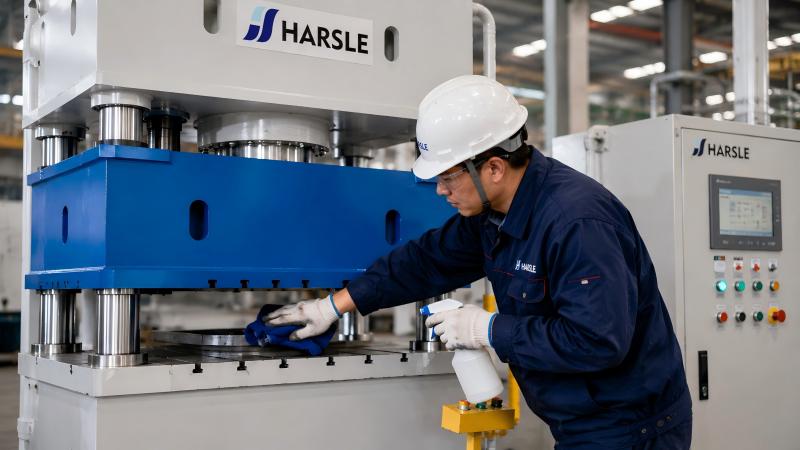
Dirt, oil, grease, and metal debris can hide small cracks and surface damage. I clean the areas being inspected so that welds, fasteners, structural surfaces, and joints are clearly visible.
Cleaning also makes it easier to identify fresh rust, oil marks, damaged paint, or unusual movement around connections.
Step 3: Inspect the Frame for Cracks and Damage
I visually inspect the frame from the base upward, paying close attention to welded joints, corners, crossbeams, column connections, and areas close to the working zone.
Look for cracks, damaged welds, chipped paint along stress lines, corrosion, dents, or unusual surface deformation. A bright inspection light can make small defects easier to identify.
Step 4: Check Structural Bolts and Connections
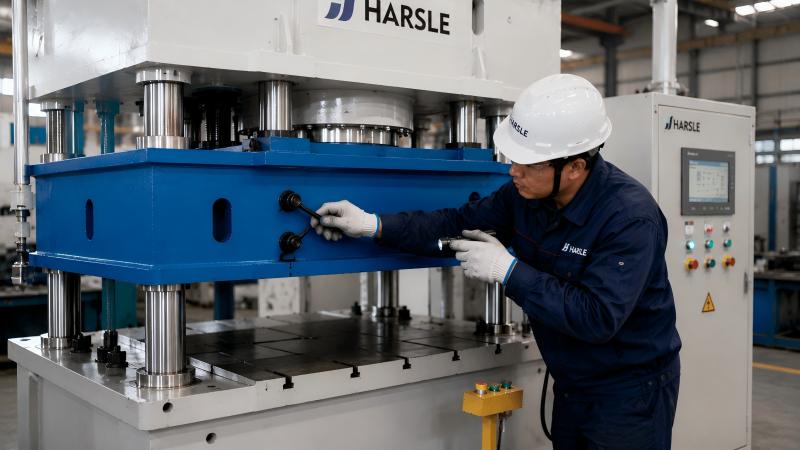
Next, inspect bolts, nuts, tie rods, anchor points, and other structural connections. Look for loose fasteners, damaged threads, missing components, or evidence of movement.
Fasteners should only be tightened to the specifications and procedures provided by the machine manufacturer. Over-tightening can be just as problematic as insufficient tightening.
Step 5: Check Hydraulic Press Frame Alignment
Frame alignment should be evaluated if I notice uneven wear, abnormal tooling contact, inconsistent pressing results, or suspected deformation.
Depending on the machine design and required accuracy, technicians may use precision levels, dial indicators, straightedges, laser measurement equipment, or other appropriate tools to evaluate geometry.
If significant misalignment is discovered, I recommend stopping production and determining the cause before making adjustments.
Step 6: Inspect the Machine Base and Foundation
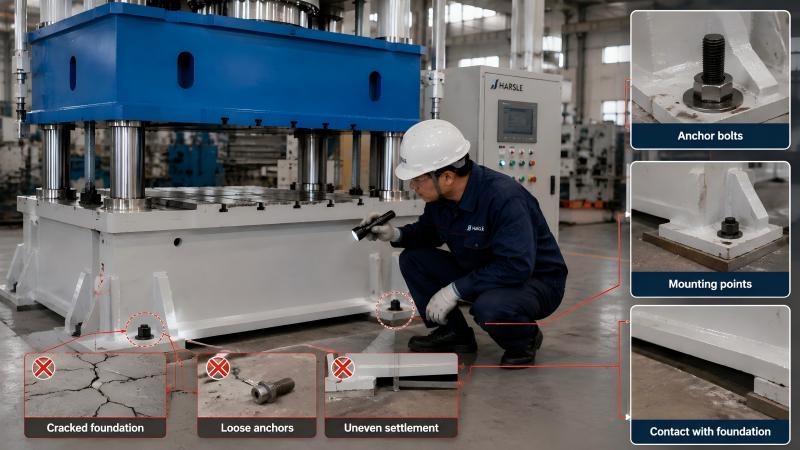
The frame cannot remain properly aligned if its foundation is unstable. Check anchor bolts, mounting points, foundation condition, and the contact between the machine base and supporting surface.
Cracked foundations, loose anchors, or uneven settlement can contribute to vibration and structural misalignment.
Step 7: Record and Evaluate Inspection Results
I recommend documenting every significant finding during the inspection. Record the location and size of suspected cracks, corrosion, loose connections, alignment measurements, and any corrective actions taken.
Photographs are also useful for comparing the same structural area during future inspections. This makes it easier to determine whether a defect is stable or becoming progressively worse.
What to Do When Frame Damage Is Found
Do Not Ignore Structural Cracks
A structural crack should not be treated as a cosmetic problem. Its severity depends on its location, depth, orientation, frame design, and operating load.
If I find a suspected structural crack, I recommend having the machine evaluated by qualified technical personnel before continuing normal production.
Investigate the Root Cause of Frame Damage
Repairing visible damage without understanding its cause may result in the same problem returning. Possible causes include machine overload, off-center pressing, incorrect tooling, foundation movement, or repeated abnormal loading.
Identifying the root cause is an important part of long-term hydraulic press frame maintenance.
Best Practices for Long-Term Hydraulic Press Frame Reliability
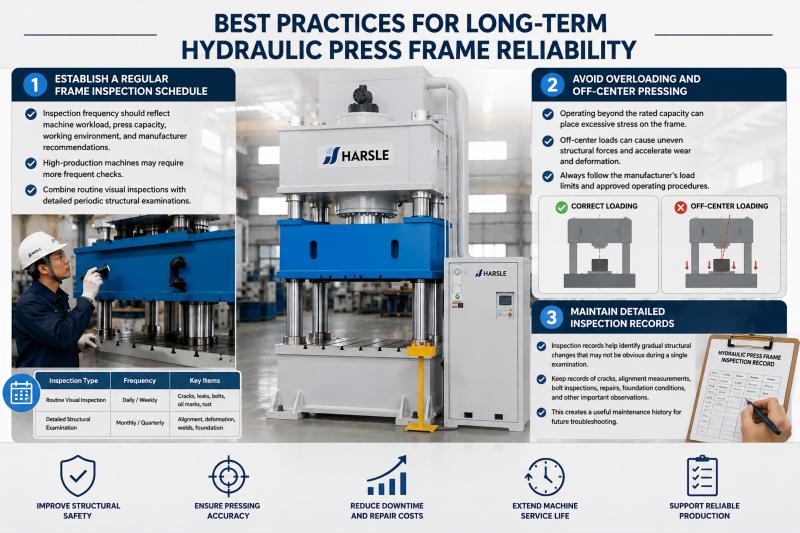
Establish a Regular Frame Inspection Schedule
Inspection frequency should reflect machine workload, press capacity, working environment, and manufacturer recommendations. High-production machines may require more frequent checks than lightly used equipment.
I recommend combining routine visual inspections with more detailed periodic structural examinations.
Avoid Overloading and Off-Center Pressing
Operating beyond the rated capacity can place excessive stress on the frame. Off-center loads can also produce uneven structural forces that accelerate wear and deformation.
Always follow the manufacturer’s load limits and approved operating procedures.
Maintain Detailed Inspection Records
Inspection records help identify gradual structural changes that may not be obvious during a single examination.
Keep records of cracks, alignment measurements, bolt inspections, repairs, foundation conditions, and other important observations. This creates a useful maintenance history for future troubleshooting.
Często zadawane pytania
How often should Hydraulic Press Frame Inspection be performed?
Inspection frequency depends on machine usage, operating loads, working conditions, and manufacturer recommendations. Routine visual checks should be combined with scheduled detailed inspections.
What are the most common signs of hydraulic press frame damage?
Common signs include cracks around welds, structural deformation, loose connections, corrosion, abnormal gaps, unusual vibration, and changes in ram or tooling alignment.
Can a cracked hydraulic press frame continue operating?
A suspected structural crack should be professionally evaluated before continued operation. The risk depends on the crack location, severity, frame design, and loading conditions.
Wniosek
Regularny Hydraulic Press Frame Inspection helps identify cracks, deformation, loose connections, corrosion, foundation problems, and alignment changes before they develop into serious equipment issues. By cleaning and visually examining the frame, checking structural connections, verifying alignment, and maintaining detailed inspection records, I can better protect machine accuracy, reliability, and structural integrity.
If you discover unusual frame deformation, cracking, or persistent alignment problems, avoid relying on temporary repairs. Contact our technical team for further inspection and professional guidance on maintaining your hydraulic press safely and reliably.


