


Prasa hydrauliczna Vibration Maintenance is essential for improving machine stability, reducing abnormal movement, and maintaining consistent pressing accuracy. When a hydraulic press develops excessive vibration, it can affect product quality, increase component wear, and shorten equipment service life. If you are experiencing unusual noise, unstable operation, or reduced pressing performance, you are in the right place. In this article, I’ll explain the main causes of hydraulic press vibration and provide practical maintenance methods to help reduce vibration, improve reliability, and keep your hydraulic press operating smoothly.
Zrozumienie Prasa hydrauliczna Vibration Problems
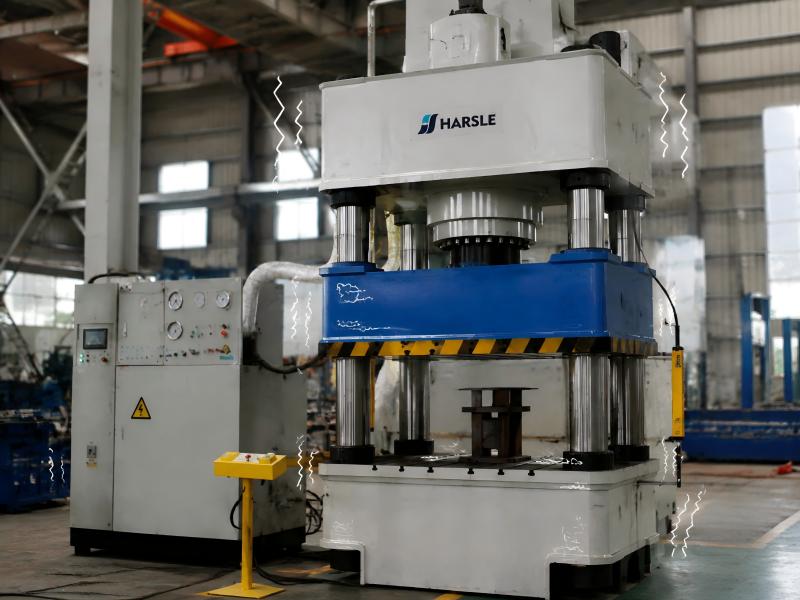
Why Hydraulic Press Vibration Occurs
Hydraulic presses generate large amounts of force during operation, and vibration can occur when mechanical, hydraulic, or electrical components are not working correctly. Small vibration levels are normal, but excessive vibration usually indicates an underlying problem that requires attention.
Common causes include hydraulic oil contamination, worn components, loose connections, unstable foundations, poor lubrication, and improper pressure adjustments. Without proper inspection and maintenance, these issues can gradually become more serious and lead to unexpected downtime.
The Impact of Excessive Hydraulic Press Vibration
Excessive vibration affects both machine performance and production efficiency. Continuous vibration can accelerate wear on hydraulic valves, pumps, bearings, guide components, and structural parts.
In addition, vibration may reduce pressing accuracy and create inconsistent product results. For manufacturers requiring stable and repeatable operations, effective Hydraulic Press Vibration Maintenance is an important part of long-term equipment management.
How to Reduce Hydraulic Press Vibration Through Maintenance
Krok 1: Kontrola i konserwacja układu hydraulicznego
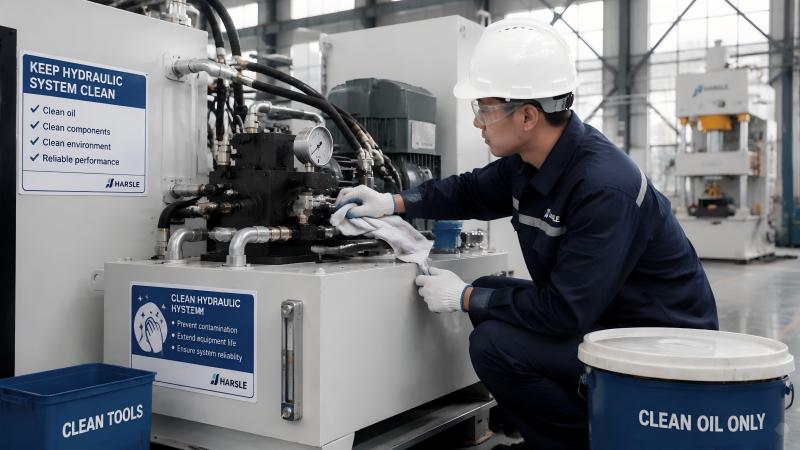
The hydraulic system is one of the first areas I check when diagnosing vibration problems. Unstable hydraulic pressure, contaminated oil, or air entering the system can cause irregular cylinder movement and create vibration.
I recommend checking hydraulic oil condition regularly. Dirty oil can affect valve response and reduce lubrication performance. If the oil contains particles, moisture, or signs of oxidation, it should be filtered or replaced according to manufacturer recommendations.
Hydraulic filters should also be inspected and replaced on schedule. A blocked filter can restrict oil flow and cause pressure fluctuations that increase vibration.
Step 2: Check Hydraulic Pressure Stability
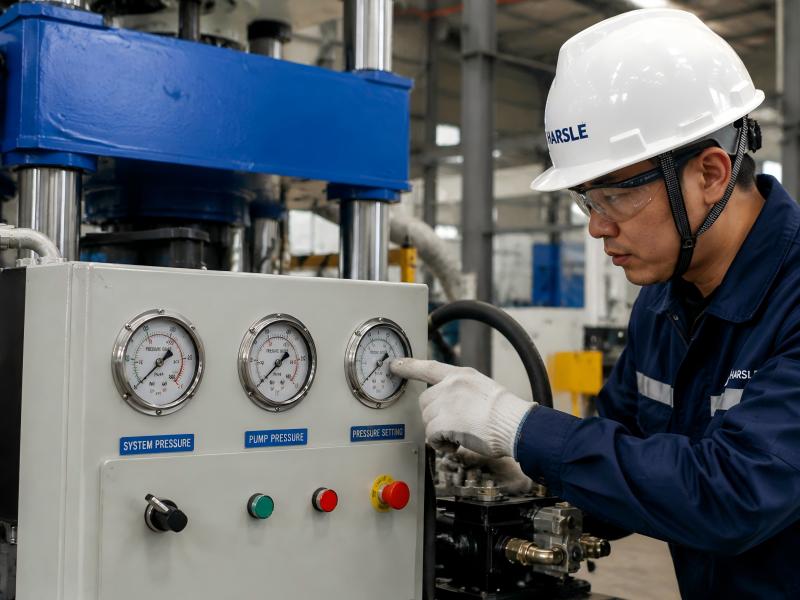
Stable hydraulic pressure is essential for smooth press operation. Pressure fluctuations may indicate problems with pumps, valves, seals, or pressure control components.
During maintenance, I check pressure gauges and compare actual readings with standard operating values. If pressure changes suddenly during pressing cycles, the hydraulic system should be inspected carefully.
Adjusting pressure settings correctly and repairing damaged hydraulic components can significantly improve machine stability.
Step 3: Inspect Mechanical Components for Wear
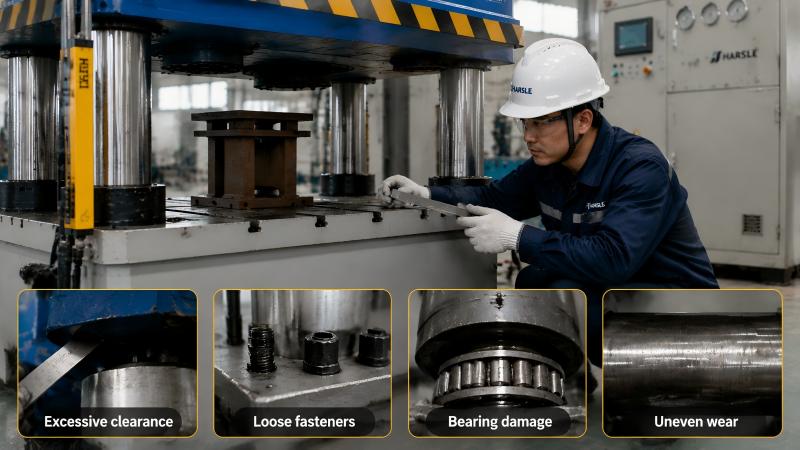
Mechanical wear is another common source of vibration. Components such as guide rails, bearings, connecting parts, and moving structures experience continuous loads during operation.
I recommend checking for excessive clearance, loose fasteners, damaged bearings, or uneven wear. Worn mechanical parts can create abnormal movement and amplify vibration during pressing cycles.
Replacing damaged components early prevents additional damage to other machine parts and improves overall operating smoothness.
Step 4: Tighten Loose Connections and Structural Parts
Loose bolts, mounting points, and structural connections can increase vibration by reducing machine rigidity.
Regular inspection should include checking foundation bolts, hydraulic component mounting screws, motor connections, and other critical fastening points.
A properly tightened structure helps maintain stability and prevents vibration from spreading throughout the machine frame.
Step 5: Maintain Proper Lubrication
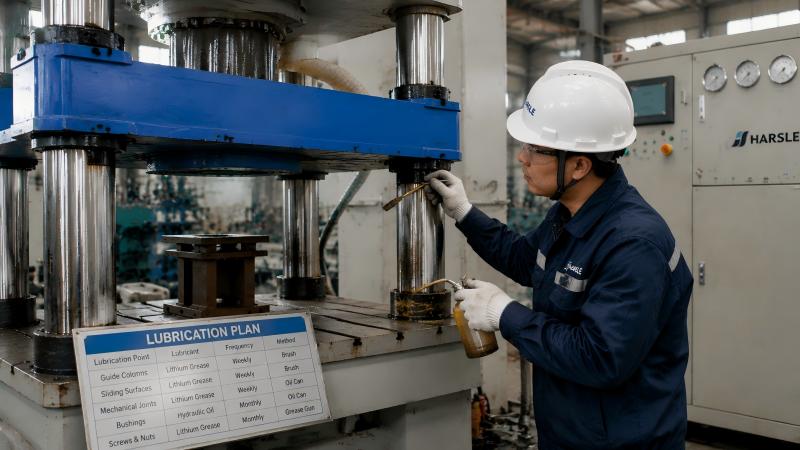
Insufficient lubrication increases friction between moving components and can generate additional vibration and heat.
I recommend following a regular lubrication schedule for guide surfaces, sliding parts, and mechanical connections. Using the correct lubricant type is also important because incorrect lubrication may not provide sufficient protection under heavy loads.
Proper lubrication reduces friction, improves movement quality, and extends component lifespan.
Step 6: Check Machine Installation and Foundation Stability
A stable installation environment plays an important role in vibration control. An uneven floor or weak foundation can cause the machine frame to move slightly during operation.
I always recommend checking whether the hydraulic press is installed on a stable and level foundation. If necessary, use appropriate leveling methods and vibration isolation solutions to improve machine stability.
A properly installed hydraulic press provides better accuracy and reduces unnecessary vibration.
Step 7: Monitor Electrical and Control System Performance
Electrical problems can also contribute to hydraulic press vibration. Unstable motor operation, incorrect control signals, or sensor issues may cause irregular machine movement.
During maintenance, check electrical connections, motor performance, sensors, and control parameters. Ensuring stable electrical operation helps maintain smooth hydraulic press movement.
Best Practices for Long-Term Hydraulic Press Vibration Control
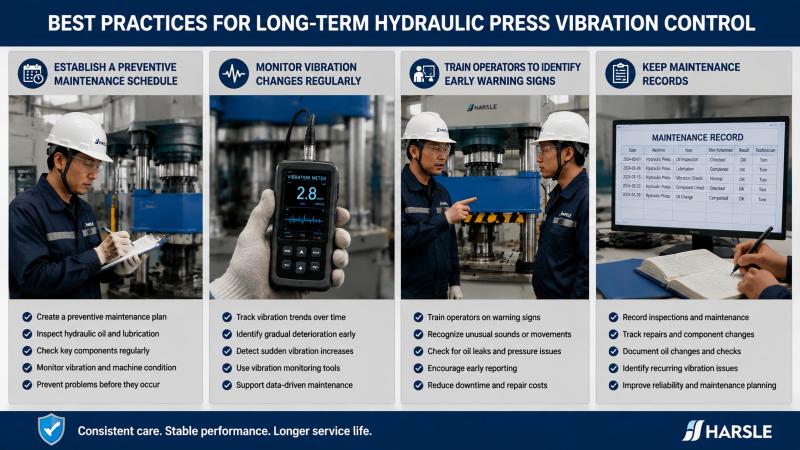
Ustal harmonogram konserwacji zapobiegawczej
Regular maintenance is the foundation of effective vibration control. I recommend creating a maintenance plan that includes hydraulic oil inspection, lubrication, component checks, and vibration monitoring.
A preventive maintenance schedule allows operators to identify problems before they become major failures.
Monitor Vibration Changes Regularly
Tracking vibration trends helps identify gradual equipment deterioration. Sudden increases in vibration often indicate developing problems such as bearing wear, hydraulic instability, or loose components.
Using vibration monitoring tools can provide valuable information for maintenance decisions.
Train Operators to Identify Early Warning Signs
Operators are usually the first people to notice abnormal machine behavior. Training them to recognize unusual sounds, movement changes, oil leaks, or pressure fluctuations can help detect problems early.
Early reporting reduces repair costs and prevents unexpected production interruptions.
Keep Maintenance Records
Detailed maintenance records help track machine condition and identify recurring issues. I recommend recording inspections, repairs, oil changes, component replacements, and vibration-related problems.
These records support better maintenance planning and improve long-term hydraulic press reliability.
Często zadawane pytania
What are the main causes of hydraulic press vibration?
Common causes include hydraulic pressure instability, contaminated oil, worn mechanical components, loose connections, poor lubrication, and unstable installation conditions.
How can Hydraulic Press Vibration Maintenance improve machine performance?
Regular maintenance reduces component wear, improves stability, prevents unexpected failures, and helps maintain consistent pressing accuracy.
How often should I inspect a hydraulic press for vibration problems?
Inspection frequency depends on machine workload and operating conditions. Regular daily checks combined with scheduled preventive maintenance are recommended.
Wniosek
Skuteczny Hydraulic Press Vibration Maintenance helps reduce machine instability, improve production accuracy, and extend equipment service life. By maintaining hydraulic systems, inspecting mechanical components, ensuring proper lubrication, and monitoring machine conditions, operators can significantly reduce vibration-related problems.
A proactive maintenance strategy not only improves hydraulic press performance but also minimizes downtime and operating costs. For more technical guidance on hydraulic press maintenance, troubleshooting, and reliability improvement, contact our team for professional support.


