


Prasa hydrauliczna Energy Consumption is an important indicator of machine performance, and a sudden increase may signal problems within the hydraulic system, electrical components, control settings, or operating conditions. When a hydraulic press consumes more power than expected, it can increase production costs, reduce efficiency, and affect long-term equipment reliability. I recommend identifying the root cause as early as possible by checking hydraulic pressure, oil condition, motor performance, and machine parameters. In this guide, I’ll explain the common reasons for rising energy consumption, provide practical troubleshooting steps, and share effective maintenance methods to improve hydraulic press energy efficiency and reduce unnecessary power usage.
Co powoduje Prasa hydrauliczna Energy Consumption to Increase?
Hydraulic System Efficiency Loss
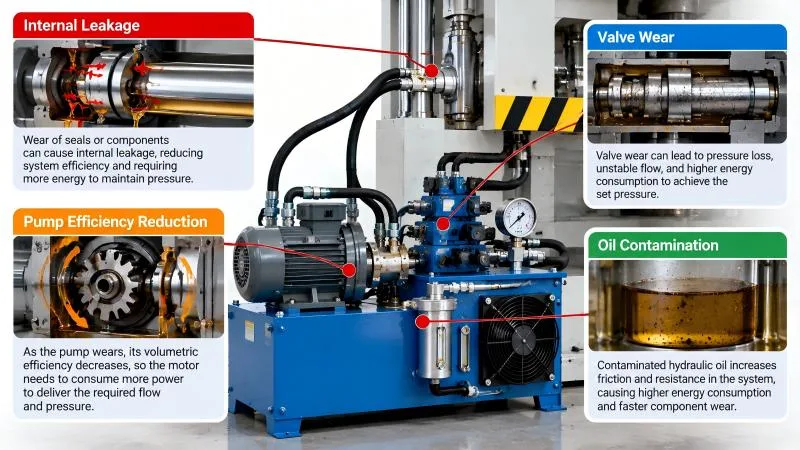
The hydraulic system is one of the main factors affecting energy consumption. As hydraulic components age, internal leakage, valve wear, and pump efficiency reduction can force the system to work harder to maintain the required pressure.
A worn hydraulic pump may require more power to deliver the same output, increasing electricity consumption during operation.
Regular inspection of hydraulic pressure, oil condition, and component performance helps identify efficiency losses early.
Hydraulic Oil Problems Affecting Energy Efficiency
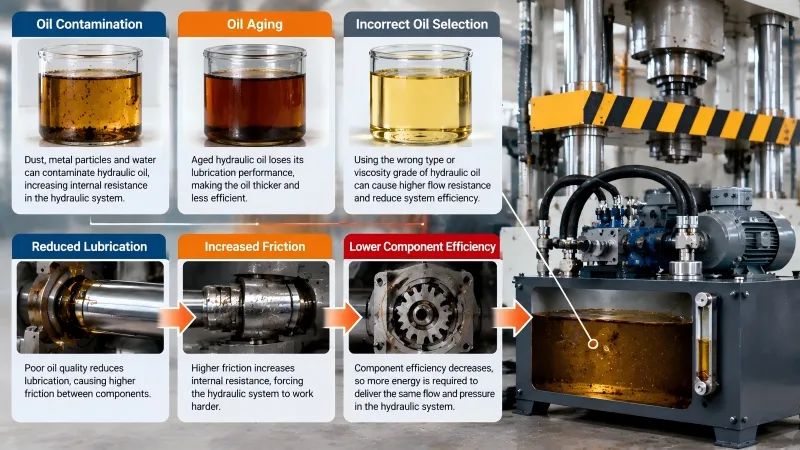
Contaminated, aged, or incorrect hydraulic oil can increase resistance inside the hydraulic system.
Poor oil quality may reduce lubrication performance, increase friction, and cause hydraulic components to operate inefficiently.
I recommend checking oil viscosity, cleanliness, and replacement intervals according to the manufacturer’s maintenance requirements.
Excessive Standby Operation and Idle Running
Many hydraulic presses consume unnecessary energy when the motor continues running during long idle periods.
If the machine remains under pressure without active production, energy is wasted without creating additional output.
Optimizing operating cycles, using standby modes, or upgrading to energy-saving hydraulic systems can significantly reduce unnecessary power consumption.
Incorrect Machine Parameters and Operating Settings
Incorrect pressure settings, excessive holding time, or unnecessary high-speed operation can increase energy demand.
For example, setting a higher hydraulic pressure than required for the application forces the motor and pump to consume more power.
Reviewing production parameters and adjusting them according to actual forming requirements can improve hydraulic press energy efficiency.
How to Diagnose Increasing Hydraulic Press Energy Consumption
Step 1: Check Hydraulic Pressure and System Performance
I recommend starting with a hydraulic system inspection.
Measure actual operating pressure and compare it with the required pressure for the production process.
If the pressure is unstable or higher than normal, inspect the pump, valves, cylinders, and hydraulic circuits for possible problems.
Abnormal pressure conditions often indicate that the system is using additional energy to maintain performance.
Step 2: Inspect Hydraulic Components for Wear
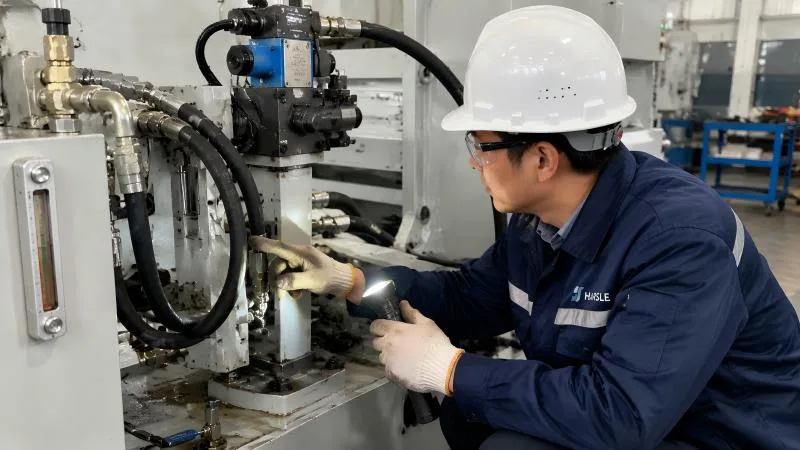
Check major hydraulic components including pumps, valves, cylinders, and seals.
Internal leakage caused by worn components can reduce system efficiency and increase energy consumption.
Inspect for oil leakage, unusual noise, overheating, or slow machine movements.
Replacing worn components at the right time can prevent further energy losses.
Step 3: Analyze Electrical Power Consumption
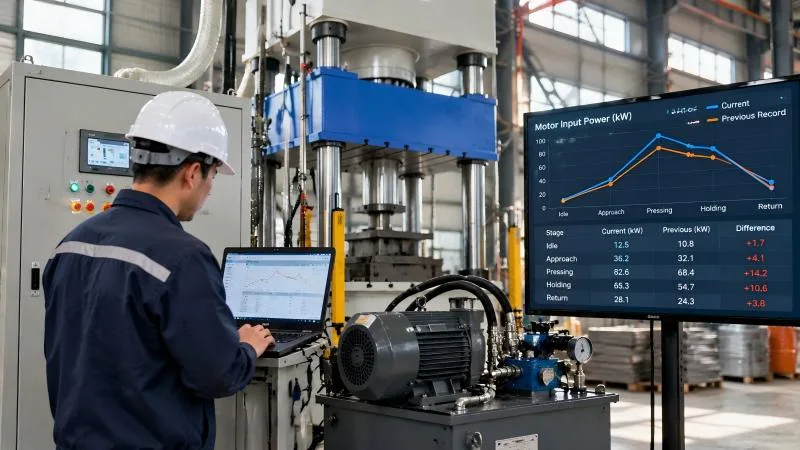
Monitor the electrical input of the hydraulic press motor during different operating stages.
Compare current energy usage with previous production records.
Higher current levels during normal operation may indicate motor overload, mechanical resistance, or hydraulic inefficiency.
A professional electrical inspection can help identify problems with motors, drives, and control systems.
Step 4: Review Production Cycle Settings
Analyze the machine’s working cycle, including pressing time, return speed, standby time, and pressure requirements.
Remove unnecessary waiting periods and avoid excessive machine operation when no forming process is active.
Optimizing the hydraulic press working cycle can reduce energy consumption while maintaining production efficiency.
How to Reduce Hydraulic Press Energy Consumption?
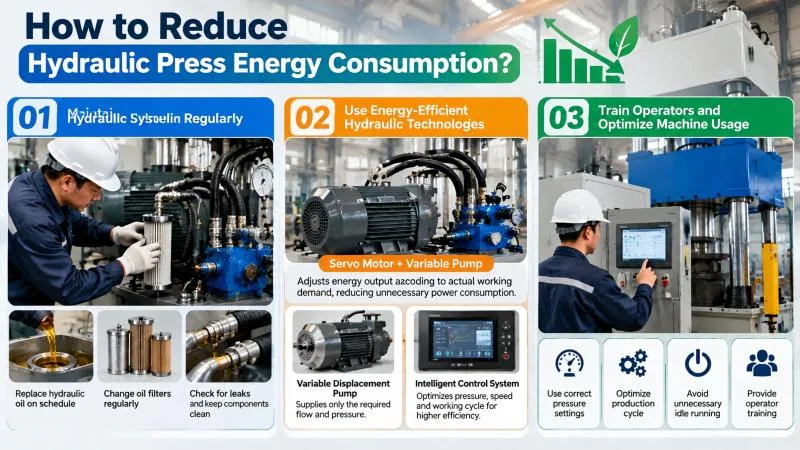
Maintain Hydraulic System Regularly
Regular maintenance helps keep hydraulic components operating efficiently.
I recommend replacing hydraulic oil and filters on schedule, checking for leaks, and cleaning hydraulic components to reduce energy losses.
Use Energy-Efficient Hydraulic Technologies
Modern hydraulic presses can use servo motors, variable pumps, and intelligent control systems to reduce power consumption.
These technologies adjust energy output according to actual working requirements instead of continuously operating at maximum capacity.
Train Operators and Optimize Machine Usage
Proper operation has a direct impact on energy efficiency.
Operators should understand correct pressure settings, production procedures, and standby management.
Avoiding unnecessary machine running time helps reduce long-term electricity costs.
Często zadawane pytania
Why Is My Hydraulic Press Energy Consumption Increasing?
Common reasons include hydraulic system wear, oil contamination, incorrect pressure settings, excessive standby operation, and inefficient machine parameters.
Can Hydraulic Oil Problems Increase Energy Consumption?
Yes. Poor-quality or contaminated hydraulic oil can increase friction, reduce component efficiency, and force the hydraulic system to consume more energy.
How Can I Improve Hydraulic Press Energy Efficiency?
Regular maintenance, optimized machine settings, reduced idle operation, and energy-saving hydraulic technologies can help improve efficiency.
Wniosek
Increasing Hydraulic Press Energy Consumption is usually caused by hydraulic inefficiency, component wear, improper settings, or unnecessary machine operation. By checking hydraulic performance, maintaining key components, optimizing parameters, and adopting energy-saving technologies, manufacturers can reduce operating costs and improve production efficiency.
If your hydraulic press shows abnormal energy consumption or requires professional diagnosis, contact the HARSLE technical team for expert support.


