


Tube Bending for Display Stands plays a crucial role in achieving the perfect balance of aesthetics, durability, and precision that makes products stand out in any setting. If you’ve ever wondered how this technique enhances both the appearance and functionality of display structures, you’re in the right place. In this article, I’ll share how modern tube bending technology enables the creation of sleek, customized, and long-lasting display frames suited for retail, exhibitions, and interior applications. Whether you’re a fabricator or designer, understanding the benefits of tube bending will help you achieve superior design results with greater efficiency.
Why Tube Bending Is Ideal for Display Stand Manufacturing
Smooth Curves and Aesthetic Appeal
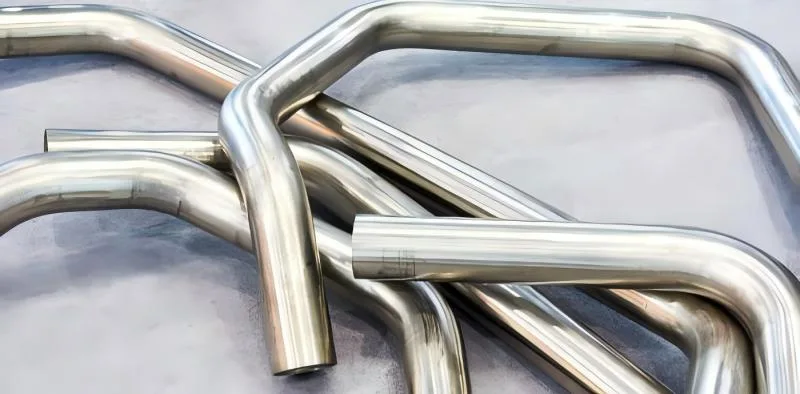
One of the most noticeable advantages of Tube Bending for Display Stands is the ability to create seamless and elegant curves without visible joints or weld marks. This not only enhances the overall appearance but also provides a modern and professional look for retail and exhibition spaces. Smooth bends allow designers to produce visually appealing frames that stand out while maintaining structural integrity.
Efficient Use of Material
Tube bending reduces the need for additional connectors and welding points, leading to less material waste and faster production. With advanced CNC tube bending machines, precise angles and radii can be achieved repeatedly, minimizing errors and saving both time and resources. This efficiency makes the process more cost-effective for large-scale production of display systems.
Increased Structural Strength
Properly bent tubes maintain their original cross-sectional strength, resulting in robust yet lightweight display structures. Unlike welded assemblies, where joints can weaken under stress, bent tubes distribute load evenly along the curve. This makes them ideal for heavy-duty applications such as clothing racks, exhibition frames, and promotional displays that require both stability and portability.
How to Optimize Tube Bending for Display Stand Design
Selecting the Right Tube Material
The choice of material greatly affects the quality of bends. Stainless steel, aluminum, and mild steel are commonly used for display stands due to their strength and surface finish. Stainless steel offers corrosion resistance, while aluminum provides excellent weight reduction — a key factor for mobile or modular display systems.
Using Precision Bending Machines
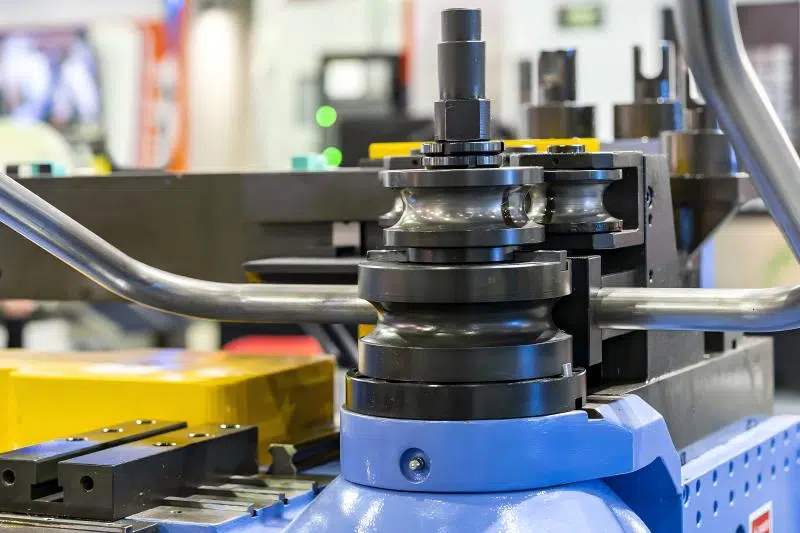
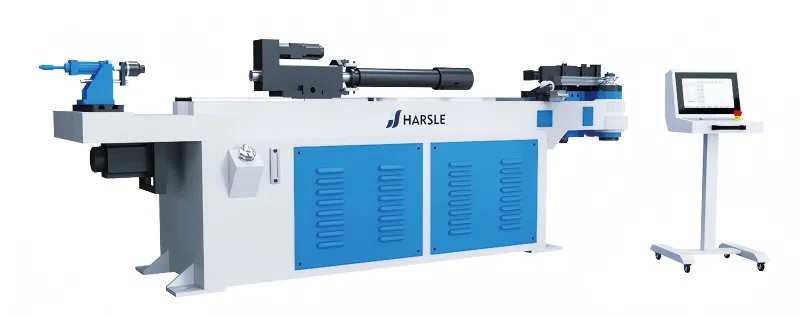
CNC tube bending machines ensure repeatable accuracy, even in complex shapes. By programming parameters like bend radius, angle, and rotation, you can achieve consistent results for mass production. Advanced models also include mandrel and wiper dies that prevent wrinkles or flattening during the bend.
Incorporating Custom Designs
Modern display solutions demand creativity. Tube bending enables manufacturers to customize shapes for branding, ergonomic designs, or space-saving layouts. For instance, curved banner supports or multi-level shelving systems can be created without extra welding or assembly, giving more flexibility to designers and marketing teams.
Common Challenges in Tube Bending for Display Stands
Managing Springback
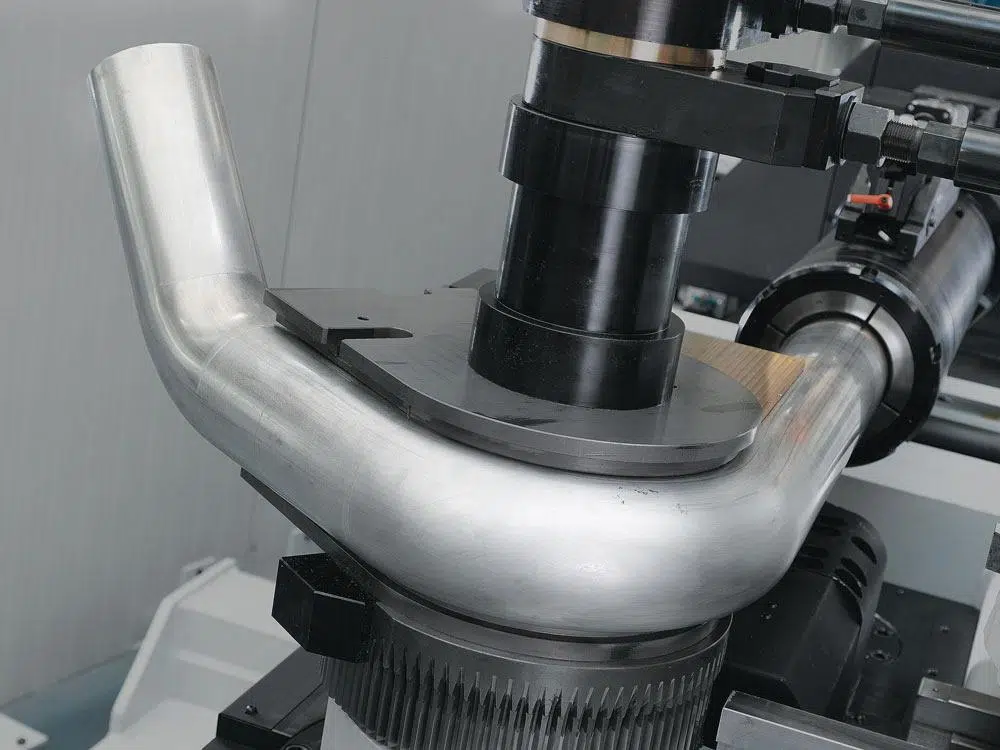
When bending metal tubes, springback occurs as the material tries to return to its original shape. To minimize this effect, it’s essential to slightly overbend the tube based on material properties and wall thickness. CNC systems can automatically compensate for springback, ensuring the final angle matches the design perfectly.
Preventing Surface Marks
Display stands often require a polished or coated surface. To maintain the visual quality of the material, protective sleeves or mandrels should be used during bending. This prevents scratches and flattening, ensuring a premium finish suitable for retail environments.
Maintaining Dimensional Accuracy
Accurate measurement and alignment are crucial, especially when assembling multiple bent parts into one display structure. Using digital measuring tools or 3D scanning systems helps verify each bend before final assembly, reducing rework and ensuring perfect fitment.
FAQs
What type of tube bending machine is best for making display stands?
For display stand production, CNC tube bending machines are ideal because they offer precise control over bend angles, radii, and rotation. This ensures accuracy and repeatability for mass production or custom projects.
Can aluminum tubes be used for display stand bending?
Yes, aluminum is a popular choice for display stands because it’s lightweight and easy to bend. However, it requires careful handling and proper tooling to prevent cracks or surface damage.
How can I maintain a smooth surface finish after bending?
To maintain surface quality, use mandrel and wiper dies, and apply lubrication during the bending process. These steps help reduce friction and prevent scratches, especially for polished stainless steel or aluminum tubes.
What is the typical bend radius used for display stands?
The ideal bend radius depends on the tube diameter and material. Generally, a radius of 2–3 times the tube diameter ensures smooth curves without distortion or thinning.
Conclusion
Tube Bending for Display Stands is more than just a manufacturing technique—it’s a design advantage that brings creativity, precision, and efficiency to every project. By using the right material, machine, and bending parameters, you can achieve seamless curves, strong structures, and aesthetically refined results. Whether for retail environments, trade shows, or interior decorations, tube bending offers unmatched flexibility for custom display solutions.
If you’re ready to enhance your production capabilities or explore customized solutions for display stand fabrication, feel free to contact HARSLE’s professional engineering team. We’ll help you choose the ideal tube bending solution to bring your design ideas to life.


