


When customers ask me what really matters during Installing Hydraulic Tube Benders, I always tell them this is not just a simple “put the machine in place and power it on” process. Proper installation directly affects bending accuracy, machine lifespan, safety, and long-term production stability. If you are planning to install a hydraulic tube bender for the first time—or relocate an existing one—you are in the right place. In this article, I’ll walk you through the key considerations for installing hydraulic tube benders, from site preparation and power requirements to alignment, testing, and early operation checks, so you can avoid common mistakes and get reliable performance from day one.
Preparing the Installation Site for Hydraulic Tube Benders
Evaluating Floor Strength and Leveling Requirements
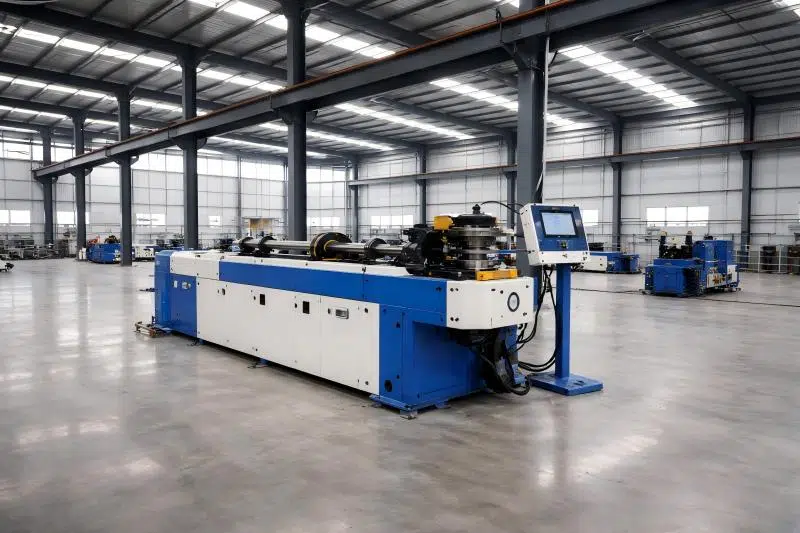
Before installing hydraulic tube benders, I always start by checking the foundation. Hydraulic tube benders are heavy machines that generate significant force during bending. The floor must have enough load-bearing capacity to support the machine weight and dynamic loads. A reinforced concrete foundation is usually recommended. Just as important is leveling—an uneven floor can lead to frame distortion, inconsistent bending angles, and premature wear on mechanical components.
Ensuring Adequate Space and Workflow Layout
Space planning is another critical step in hydraulic tube bender installation. You need sufficient clearance around the machine for tube loading, unloading, tooling changes, and maintenance access. I recommend planning the workflow in advance, including material flow direction and operator movement, to prevent bottlenecks and improve safety during daily operation.
Power, Hydraulic, and Electrical Connections
Matching Power Supply Specifications
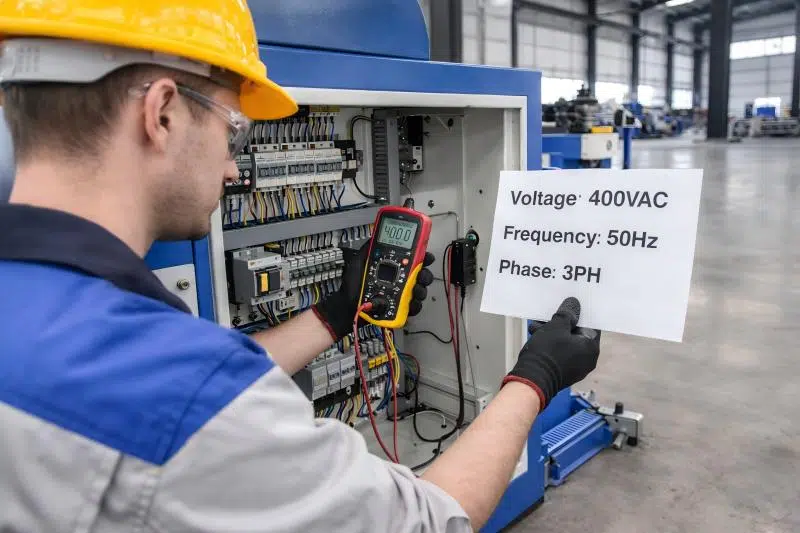
One common issue I see during Installing Hydraulic Tube Benders is incorrect power supply configuration. Always verify that the voltage, frequency, and phase match the machine’s requirements. Incorrect electrical connections can cause motor overheating, unstable operation, or control system alarms. If necessary, consult a qualified electrician to ensure compliance with local electrical standards.
Hydraulic Oil Selection and System Preparation
Hydraulic performance depends heavily on proper oil selection and system cleanliness. Before startup, I make sure the hydraulic tank is clean and filled with the recommended hydraulic oil grade. Air must be fully removed from the system to prevent pressure fluctuations, noise, and reduced bending accuracy during initial operation.
Machine Positioning and Mechanical Alignment
Aligning the Bending Head and Clamp System
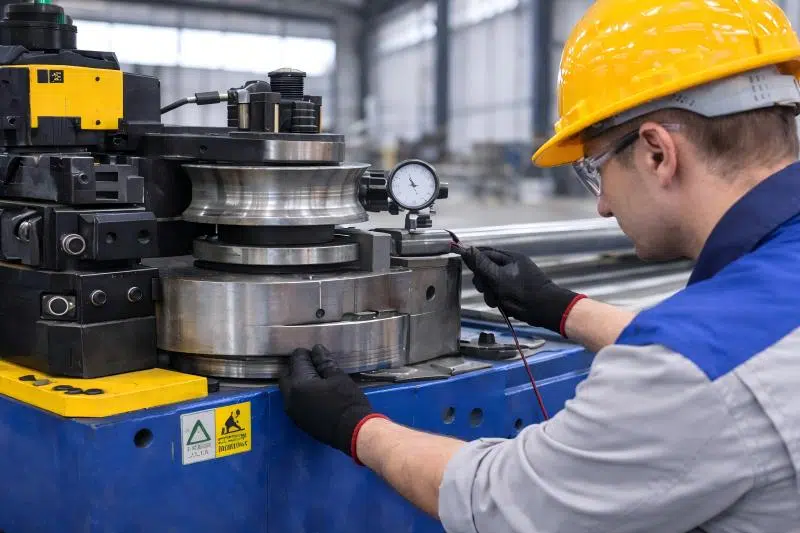
Accurate alignment is essential when installing hydraulic tube benders. The bending head, clamp die, pressure die, and mandrel system must be precisely aligned according to the manufacturer’s guidelines. Poor alignment can cause tube deformation, wrinkling, or inconsistent bend radii, especially when working with thin-wall tubes.
Checking Fasteners and Structural Stability
During installation, I always inspect all anchor bolts and fasteners. Proper torque ensures the machine remains stable under load. Loose bolts can lead to vibration, noise, and long-term structural damage, which directly affects bending quality and machine safety.
Control System Setup and Parameter Configuration
Initial CNC System Configuration
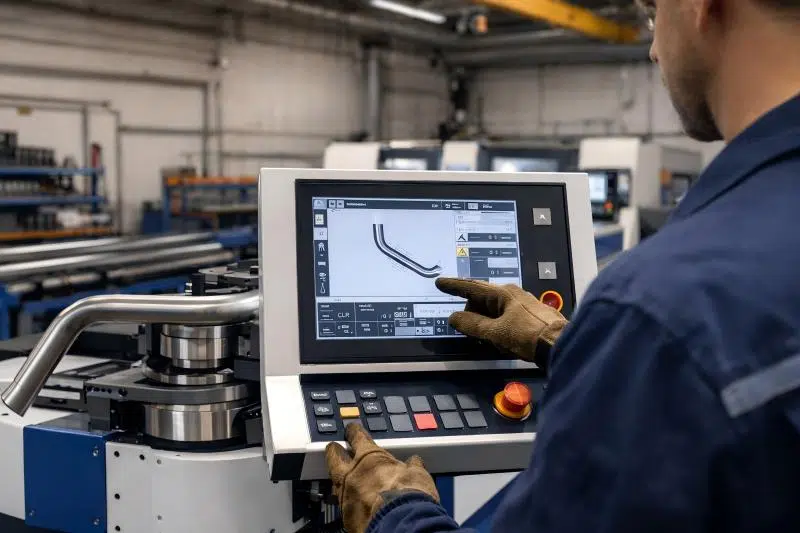
After mechanical installation, the CNC system must be properly configured. This includes setting axis limits, hydraulic pressure parameters, and safety interlocks. During Installing Hydraulic Tube Benders, I recommend carefully following the setup steps in the operating manual to avoid software-related errors that may appear during production.
Calibrating Axes and Sensors
Axis calibration is a key step that should never be rushed. Position sensors, encoders, and pressure sensors must be accurately calibrated to ensure repeatable bending results. Even small calibration errors can lead to cumulative inaccuracies over multiple bends.
Trial Runs and Test Bending Procedures
Performing No-Load and Load Testing
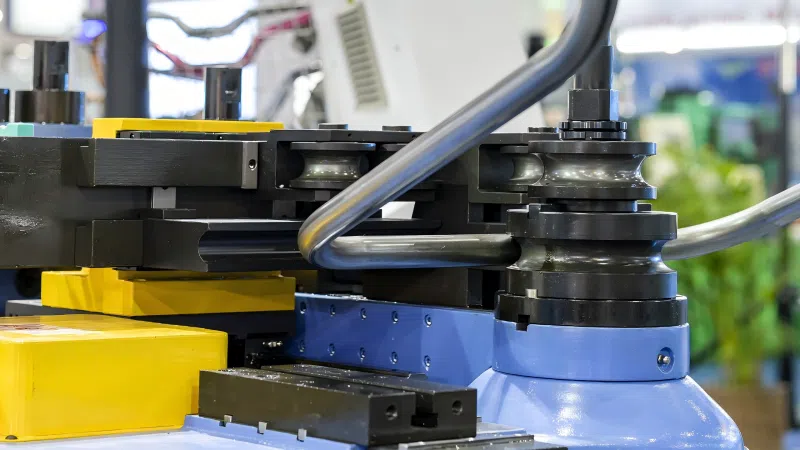
Before full production, I always perform no-load tests to check machine movement, noise levels, and hydraulic stability. Once confirmed, I proceed with test bending using sample tubes. This step helps identify any hidden issues in alignment, pressure settings, or tooling installation.
Adjusting Parameters Based on Test Results
Test bending provides valuable feedback. Based on the results, I fine-tune bending speed, pressure, and compensation settings. This optimization stage is crucial during hydraulic tube bender installation to achieve consistent quality and reduce scrap during mass production.
Operator Training and Safety Checks
Training Operators After Installation
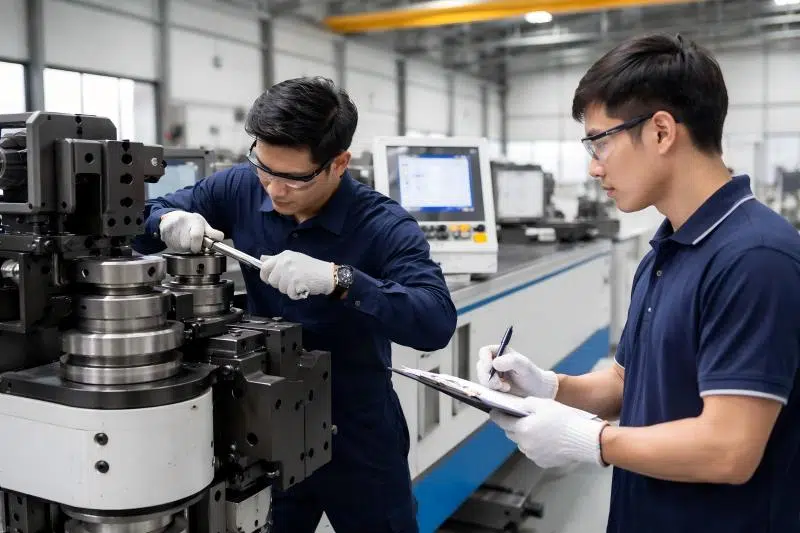
Even the best installation cannot compensate for improper operation. I strongly recommend training operators immediately after Installing Hydraulic Tube Benders. Operators should understand basic machine functions, emergency stop procedures, and daily inspection routines to ensure safe and efficient use.
Verifying Safety Devices and Guards
Safety devices such as light curtains, emergency stops, and protective covers must be checked before production begins. These systems protect operators and ensure compliance with safety regulations, especially in high-volume production environments.
FAQ
How long does installing hydraulic tube benders usually take?
Installation time depends on machine size and site conditions, but it typically takes one to three days, including leveling, alignment, and test runs.
Do I need a special foundation for hydraulic tube bender installation?
Yes, a reinforced concrete foundation is usually recommended to ensure stability and long-term accuracy.
What is the most common mistake when installing hydraulic tube benders?
Skipping proper leveling and alignment is the most common mistake, and it often leads to accuracy issues and premature wear.
Should I recalibrate the machine after relocation?
Absolutely. Any relocation requires full recalibration of axes, sensors, and bending parameters to maintain precision.
Conclusion
Installing hydraulic tube benders correctly is the foundation for stable operation, accurate bending, and long machine life. By paying close attention to site preparation, power and hydraulic connections, mechanical alignment, control setup, and test runs, you can avoid costly downtime and quality issues. If you need professional guidance, detailed installation support, or on-site assistance, feel free to contact the HARSLE team or explore our related documentation to ensure your hydraulic tube bender performs at its best from the very first bend.


