


Prasa hydrauliczna Safety Checks are essential for preventing workplace injuries, equipment failures, and unexpected production interruptions. Before starting a hydraulic press, operators should inspect the machine structure, hydraulic system, electrical components, safety devices, and working area. Even minor problems, such as oil leakage, damaged hoses, loose connections, or malfunctioning emergency stops, can create serious hazards during operation. In this guide, I’ll explain the essential pre-operation safety checks, how to inspect critical hydraulic press components, and what operators should do before starting production.
Why Are Prasa hydrauliczna Safety Checks Important?
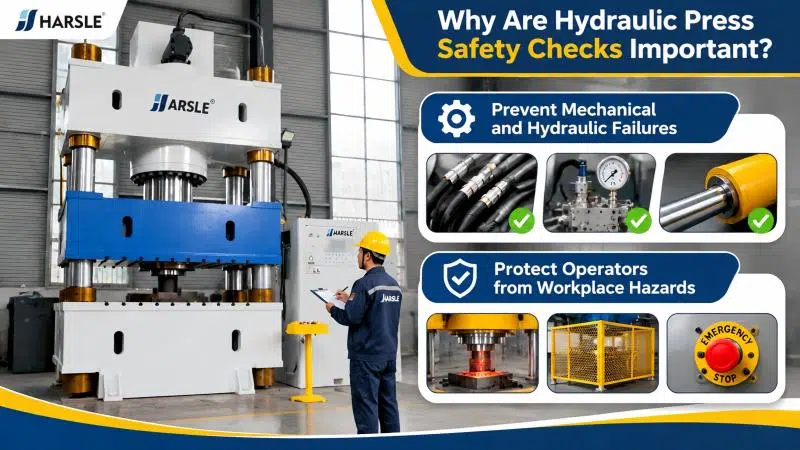
Preventing Mechanical and Hydraulic Failures
A hydraulic press generates substantial force through a pressurized hydraulic system. Damaged hoses, loose connections, worn seals, or abnormal pressure settings may cause oil leakage, unexpected movement, or component failure.
Regular inspections help identify these problems before they develop into serious equipment failures.
Protecting Operators from Workplace Hazards
Hydraulic presses contain several dangerous areas, including the moving ram, worktable, tooling, and hydraulic cylinders.
Without effective guards and functioning safety devices, operators may face crushing injuries, trapped fingers, or unexpected machine movement. Proper safety checks help ensure that protective systems are ready before production begins.
How to Perform Hydraulic Press Safety Checks Before Starting
Step 1: Inspect the Machine Structure and Working Area
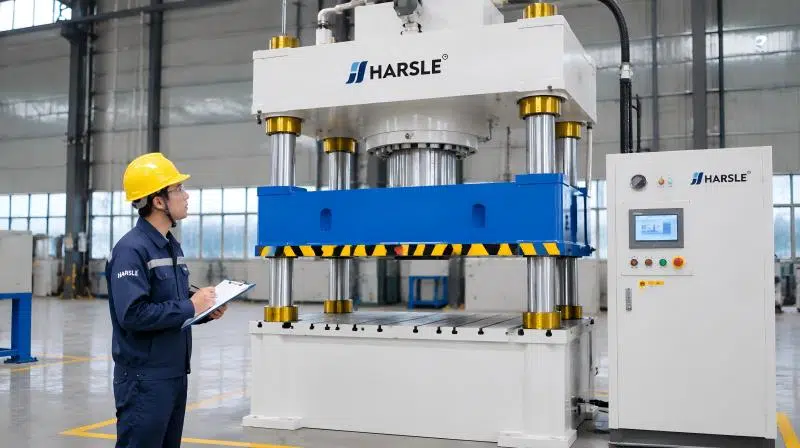
Begin with a visual inspection of the hydraulic press and its surrounding environment.
Check the following components:
- Machine frame: Look for visible cracks, deformation, loose bolts, or structural damage.
- Ram and worktable: Check for unusual wear, contamination, or visible damage.
- Tooling and dies: Ensure that the installed tooling is suitable for the intended operation and securely positioned.
- Working area: Remove unnecessary materials, tools, and obstacles from the machine surroundings.
- Safety guards: Confirm that fixed guards and protective barriers are securely installed.
The floor should also be clean, dry, and free from hydraulic oil or other materials that could create slipping hazards.
Step 2: Check the Hydraulic System for Leaks and Abnormalities
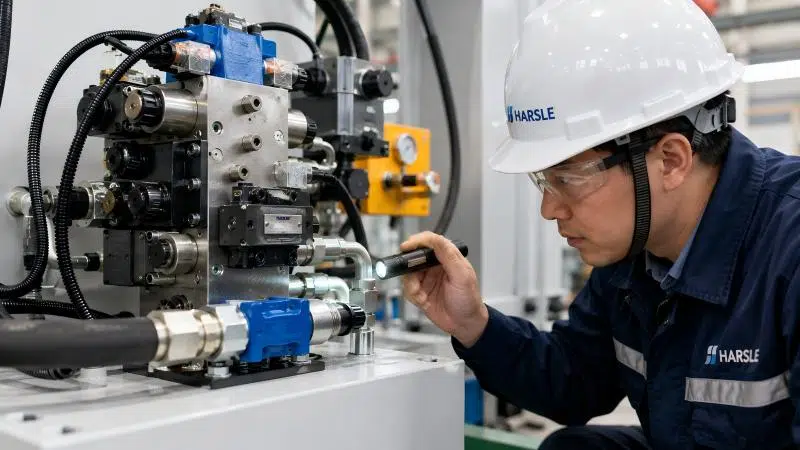
The hydraulic system is one of the most important areas to inspect before starting a press.
I recommend checking:
- Hydraulic hoses: Look for cracks, abrasion, swelling, or visible damage.
- Hydraulic connections: Inspect fittings and joints for signs of oil leakage.
- Hydraulic cylinders: Check the cylinder surfaces and seals for visible leakage or damage.
- Oil tank: Verify that the hydraulic oil level meets the manufacturer’s requirements.
- Hydraulic filters: Check maintenance records and replacement schedules.
Never use your hands to locate a suspected high-pressure hydraulic leak. Hydraulic fluid escaping under pressure can penetrate the skin and cause severe injuries.
If leakage or damage is identified, stop the startup process and arrange inspection by qualified hydraulic personnel.
Step 3: Verify Electrical Components and Control Systems
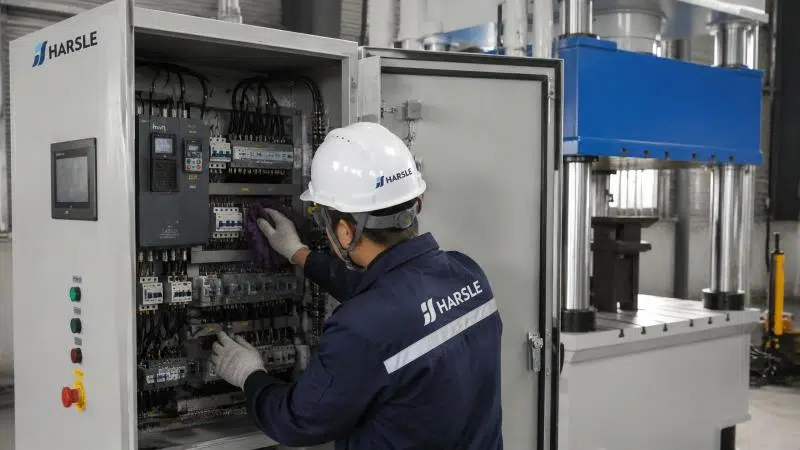
Before energizing the machine, inspect accessible electrical components and control devices.
Check the control cabinet for visible damage, unusual odors, or signs of overheating. Inspect accessible cables, connectors, and control buttons for damage.
After the machine is safely energized according to its operating procedure, verify that the control panel displays normally and that there are no unresolved alarms.
Confirm that the selected operating mode and programmed parameters are appropriate for the intended production task.
Electrical cabinet inspections and repairs must be performed by qualified electrical personnel following appropriate isolation procedures.
Step 4: Test Emergency Stops and Safety Protection Devices
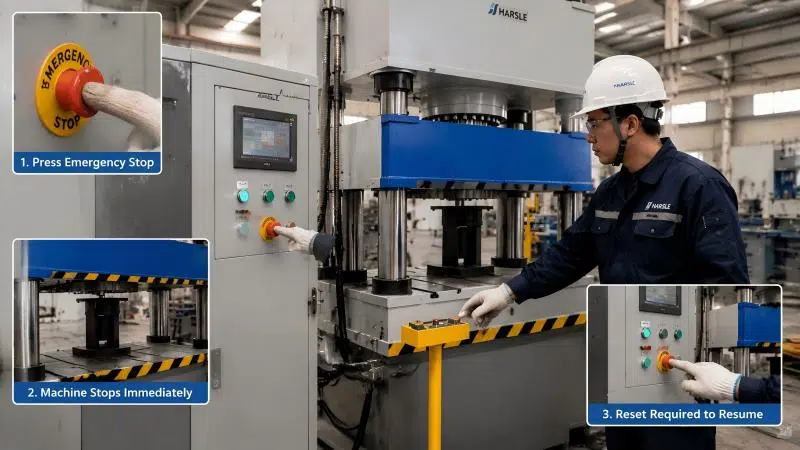
Emergency stops and protective devices must function correctly before production begins.
Important safety checks include:
- Emergency Stop Buttons: Verify that accessible emergency stop buttons function according to the manufacturer’s testing procedure.
- Safety Guards: Confirm that protective covers and barriers are correctly installed.
- Safety Interlocks: Verify that interlocked guards and access doors provide the required protective function.
- Light Curtains: If equipped, check alignment and verify the protective stopping function using the approved test procedure.
- Two-Hand Controls: Where fitted, verify correct operation and required safety functions.
Never bypass safety interlocks or modify protective circuits to keep production running. If any safety device fails, do not operate the machine until the problem has been corrected.
Step 5: Verify Pressure Settings and Machine Operating Conditions
Before processing materials, confirm that the hydraulic press is configured for the intended application.
Check the pressure settings against the approved process parameters and the machine’s rated capacity.
Also verify the following:
- The required pressing force is within the machine’s rated capability.
- The tooling is suitable for the material and forming process.
- The ram movement and operating mode follow the manufacturer’s instructions.
- Hydraulic oil temperature and other monitored conditions are within the specified operating range.
Do not adjust the main relief valve or other safety-critical pressure controls without authorization. These adjustments must be performed by qualified technicians using suitable instruments and approved procedures.
Step 6: Complete a Final Pre-Operation Safety Check
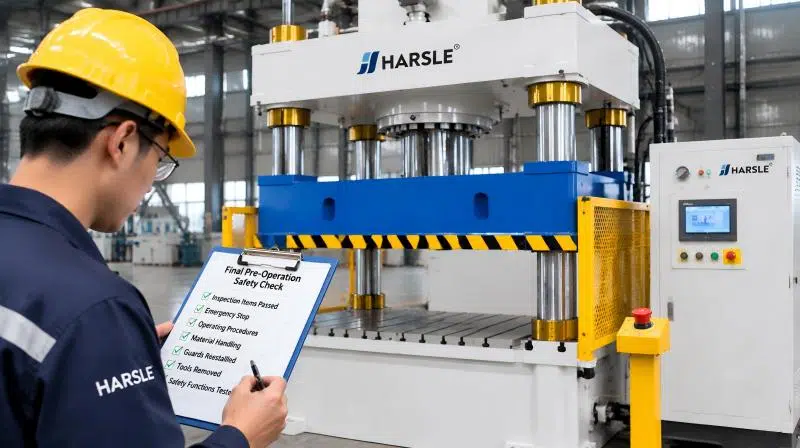
Before beginning production, confirm that all previous inspection items have passed.
Make sure operators understand the emergency stop locations, machine operating procedures, and material-handling requirements.
If the machine has been serviced or repaired, verify that all tools have been removed, guards have been reinstalled, and the required safety functions have been tested.
Record the inspection results and report any unresolved problems. Never start production if a critical safety issue remains.
Common Hydraulic Press Safety Inspection Mistakes to Avoid
- Ignoring hydraulic oil leaks: Small leaks may indicate damaged seals or connections.
- Overlooking damaged hoses: Worn hydraulic hoses can fail under operating pressure.
- Skipping safety device tests: Emergency stops and interlocks must not be assumed to work correctly.
- Using incorrect pressure settings: Excessive pressure may overload the machine or tooling.
- Ignoring unusual machine sounds: Abnormal noise or vibration may indicate mechanical or hydraulic problems.
- Restarting without inspection: Never resume production before resolving identified safety issues.
Często zadawane pytania
How Often Should Hydraulic Press Safety Checks Be Performed?
Operators should complete basic visual and functional inspections before each shift. More detailed inspections should follow the manufacturer’s maintenance schedule and workplace safety requirements.
What Should I Check First Before Starting a Hydraulic Press?
Start with the machine structure, working area, hydraulic hoses, oil level, and visible safety devices. Then verify the electrical controls and required protective functions according to the approved startup procedure.
Can I Operate a Hydraulic Press If I Notice an Oil Leak?
No. Stop the startup process and arrange an inspection by qualified hydraulic personnel. Do not operate equipment with an unresolved hydraulic leak.
Wniosek
Completing Hydraulic Press Safety Checks before production is essential for protecting operators and maintaining reliable machine performance. By inspecting the machine structure, hydraulic system, electrical components, safety devices, and operating conditions, manufacturers can identify potential hazards before they cause accidents or unexpected downtime.
I recommend establishing a documented pre-operation inspection checklist and providing regular safety training for all operators.


