


Hydraulic Press Troubleshooting : Diagnosing Fixing Common Performance Issues involves identifying deviations in pressure, speed, and sound to restore machine efficiency. This guide applies to operators and maintenance technicians working with industrial HARSLE hydraulic presses. Effective troubleshooting requires a systematic approach to fluid dynamics, electrical control, and mechanical alignment, ensuring the machine operates within its specified tonnage and cycle time parameters while maintaining strict safety protocols.
Quick Answer: Symptom and Safe First Checks
When a hydraulic press fails to perform, the most common symptoms include a failure to build pressure, excessive noise (cavitation or aeration), and erratic ram movement. Before opening any valves or panels, perform these safe first checks: verify that the emergency stop is reset, check the oil level in the sight glass, and ensure the motor is rotating in the correct direction. If the machine is overheating, check the cooling system’s water flow or fan operation. Always consult the HMI for error codes before proceeding to mechanical inspections.
Scope, Stop Conditions, and Isolation Requirements
This documentation covers standard diagnostic procedures for four-column and C-frame hydraulic presses. It is intended for routine performance issues and does not cover major structural repairs or high-voltage electrical rewiring.
When to Stop Immediately
Cease all troubleshooting and contact a qualified service engineer if you encounter the following:
- Visible cracks in the main cylinder or frame.
- Uncontrolled ram descent (drifting) that cannot be stopped by the emergency circuit.
- Electrical smoke or localized burning smells from the control cabinet.
- Hydraulic fluid spraying under high pressure (pinhole leaks).
Isolation and Safety Requirements
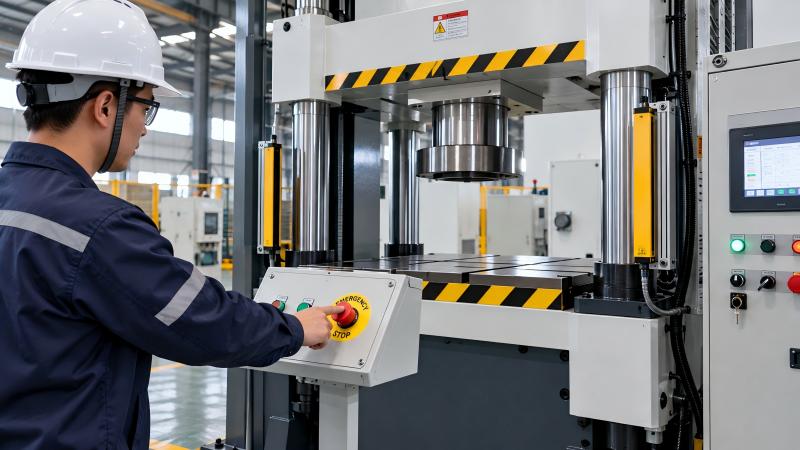
Before any physical intervention, the press must be placed in a “Zero Energy State”:
- Lower the ram to its lowest position or secure it with certified safety blocks.
- Engage the Lockout/Tagout (LOTO) procedure on the main electrical disconnect.
- Depressurize the hydraulic circuit by cycling the manual dump valve if equipped.
- Verify zero pressure on all system gauges.
Symptom, Possible Cause, and Evidence Table
The following table correlates common performance failures with their likely root causes and the evidence required for confirmation.
| Symptom | Possible Cause | Evidence/Verification |
|---|---|---|
| Failure to Build Pressure | Relief valve set too low or stuck open | Pressure gauge remains at zero or low PSI despite pump operation. |
| High-Pitched Whining | Pump Cavitation | Foaming oil in the reservoir; suction line filter is clogged. |
| Erratic/Jerky Ram Movement | Air trapped in the cylinder | Spongy feel during operation; visible air bubbles in oil. |
| Excessive Heat (>60°C/140°F) | Internal leakage or cooling failure | Oil temperature gauge exceeds limits; components feel hot to the touch. |
| Ram Drifting Downward | Leaking check valve or cylinder seals | Ram moves slowly when the pump is off and valves are centered. |
Non-Invasive Diagnostic Decision Checklist
Use this checklist to narrow down the issue without dismantling the machine. This process helps in Hydraulic Press Troubleshooting : Diagnosing Fixing Common Performance Issues by isolating variables.
- Visual Inspection: Are there puddles of oil around the base or cylinder head? (Indicates seal failure).
- Auditory Check: Is the pump making a metallic grinding sound? (Indicates bearing failure or starvation).
- Thermal Check: Use an infrared thermometer to check the temperature of the relief valve. If it is significantly hotter than the rest of the system, it is likely bypassing oil.
- Fluid Quality: Is the oil milky (water contamination) or dark/smelling burnt (oxidation)?
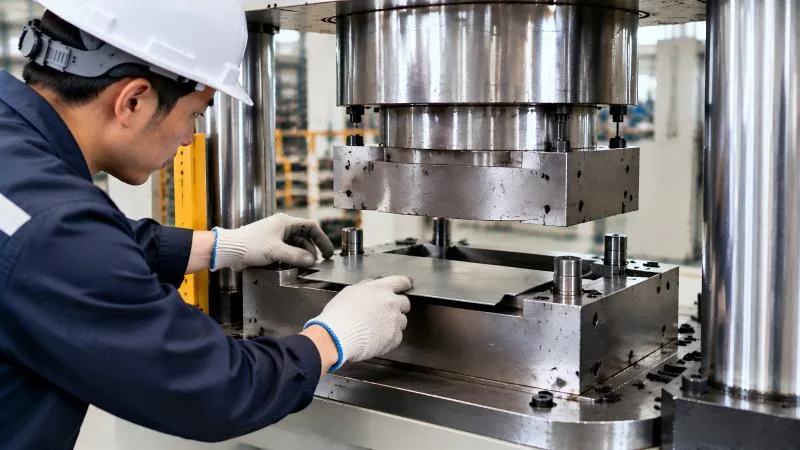
- Workpiece Alignment: Is the load centered? Off-center loading can cause binding and erratic movement.
Corrective Actions and Qualified Service Boundaries
Corrective actions are divided into operator-level maintenance and technician-level repairs. Do not exceed your training level.
Operator-Level Actions
These tasks do not require opening the hydraulic circuit or electrical cabinets:
- Cleaning Filters: If the suction filter is accessible, clean or replace it to resolve cavitation.
- Topping Off Fluid: Use only the specified ISO VG 46 or 68 hydraulic oil as per the HARSLE manual.
- Adjusting Limit Switches: Ensure the ram travel is correctly bounded by the physical or proximity switches.
Qualified Service Technician Actions
The following require specialized tools and safety training:
- Relief Valve Adjustment: Using a calibrated pressure gauge, adjust the main relief valve to the factory-specified tonnage. Never exceed the machine’s rated capacity.
- Cylinder Seal Replacement: If internal bypassing is confirmed (ram drift), the cylinder must be disassembled and seals replaced.
- Solenoid Valve Cleaning: If the ram fails to move despite electrical signals, the valve spool may be stuck due to contamination.
- Accumulator Charging: If the press uses an accumulator for rapid movement, check the nitrogen pre-charge levels.
Verification and Recurrence Prevention
Once a repair is completed, follow these steps to verify the fix and prevent future occurrences of the same issue.
Verification Steps
- Dry Cycling: Run the press through 10 full cycles without a workpiece to ensure smooth movement and no leaks.
- Pressure Testing: Hold the press at maximum pressure for 30 seconds and monitor the gauge for any drop.
- Temperature Monitoring: Run the machine for one hour of production and verify that the oil temperature stabilizes within the normal range (38°C to 55°C).
Recurrence Prevention
To avoid future Hydraulic Press Troubleshooting : Diagnosing Fixing Common Performance Issues, implement a preventative maintenance (PM) schedule:
- Monthly: Check oil cleanliness and tighten all hydraulic fittings.
- Quarterly: Test the acidity and viscosity of the hydraulic oil.
- Annually: Replace all filters and inspect the heat exchanger for scaling or debris.
- Training: Ensure operators understand the dangers of off-center loading and the importance of keeping the work area clean.
Troubleshooting FAQs
Why is my hydraulic press moving slower than usual?
Slow movement is typically caused by a decrease in flow rate. This can result from a clogged suction filter, a worn pump that can no longer maintain flow under load, or an internal leak in the cylinder or control valves. Check the oil temperature first; if the oil is too hot, its viscosity drops, leading to increased internal leakage and slower speeds.
What causes the hydraulic pump to be extremely noisy?
Noise is usually categorized as cavitation or aeration. Cavitation occurs when the pump is starved of oil (clogged filter or too thick oil). Aeration occurs when air is sucked into the system through a leak in the suction line or a low oil level. Both conditions will damage the pump quickly and must be addressed immediately.
How often should I change the hydraulic oil?
For most HARSLE hydraulic presses, oil should be changed every 2,000 to 4,000 operating hours, or once a year. However, this depends on the environment. In dusty or high-heat settings, more frequent changes or oil analysis sampling is recommended to prevent component wear.
Why does the press lose pressure during the dwell cycle?
Pressure loss during a dwell (holding) cycle is usually caused by a leaking check valve, a faulty solenoid valve, or worn piston seals in the cylinder. If the oil is bypassing the piston head inside the cylinder, the pressure will drop even if there are no external leaks visible.
Can I use any hydraulic oil in my press?
No. You must use the oil viscosity grade specified in your machine’s technical manual, typically ISO VG 46 or 68. Using the wrong oil can lead to overheating, poor lubrication of the pump, and sluggish performance in cold weather.
Support Escalation and Evidence Collection Checklist
If the issue persists after following this guide, contact HARSLE technical support. To expedite your request, please collect the following evidence:
- Machine Identity: Model number and Serial Number (found on the nameplate).
- Error Logs: Photos or transcripts of any error codes displayed on the HMI.
- Visual Evidence: Clear photos or a short video of the symptom (e.g., the sound of the pump or the erratic movement of the ram).
- Maintenance History: Date of the last oil and filter change.
- Pressure Readings: Current readings from the main system gauge during the failure.
By following this structured approach to Hydraulic Press Troubleshooting : Diagnosing Fixing Common Performance Issues, you can minimize downtime and ensure the long-term reliability of your metal fabrication equipment.


