


In the world of press brake operations, the frame strength of листогибочный пресс machines is a crucial factor in determining safety, accuracy, and longevity. The structural integrity of the machine’s frame directly impacts its ability to withstand the high forces exerted during bending operations. A weak or poorly designed frame can lead to issues such as misalignment, inaccurate bending, or even machine failure. This article explores how frame strength influences the safety and performance of press brakes, and why it is essential for operators and engineers to prioritize machine stability and rigidity for optimal operation.
Why Frame Strength Is Critical to Листогибочный пресс Безопасность
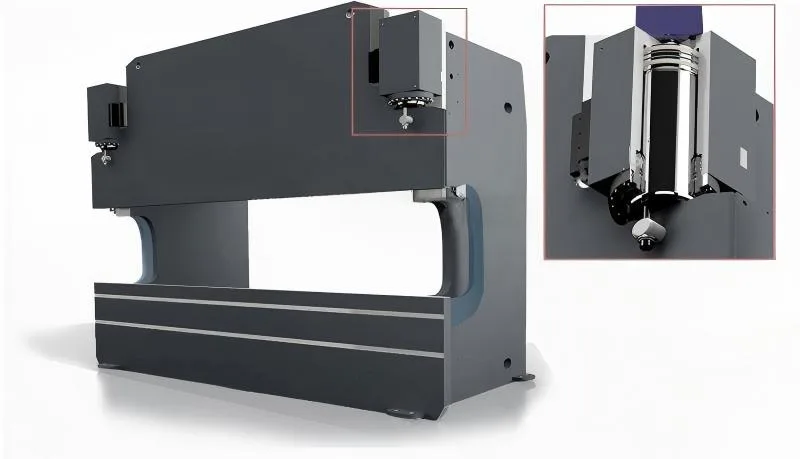
A press brake frame provides the foundational support for the entire machine, including its hydraulic and mechanical systems. When excessive force is applied to the machine, the frame experiences stress and must be rigid enough to prevent deflection or bending. Frame deflection can lead to inaccuracies in the bending process, where the bend may not meet the required angle or dimensions, leading to defective parts. Ensuring that the frame is robust and properly designed is essential to maintaining precision and safety.
The Role of Frame Strength in Preventing Misalignment
A strong press brake frame is essential to ensure that the upper ram and lower bed remain perfectly aligned under high pressure. Misalignment occurs when the frame bends under load, causing the tooling to deviate from the desired position. This misalignment results in inconsistent bends, affecting the quality of the finished part. High-quality press brakes often feature reinforced frames to prevent this issue and maintain the accuracy of each bend, ensuring repeatable results.
Frame Deflection and Its Impact on the Bending Process
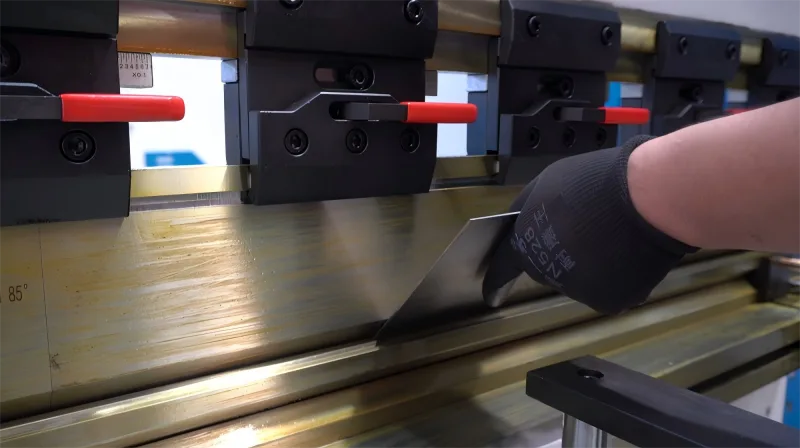
When a press brake frame is not sufficiently rigid, it can experience deflection, especially when bending thicker materials that require higher tonnage. Frame deflection can result in the “canoeing effect,” where the center of the bend is wider than the ends. This phenomenon compromises the quality of the bend and the overall dimensional accuracy of the part. Proper frame strength, combined with crowning systems, helps mitigate this effect and produces a uniform bend across the entire length of the sheet.
The Importance of Material Selection for the Frame
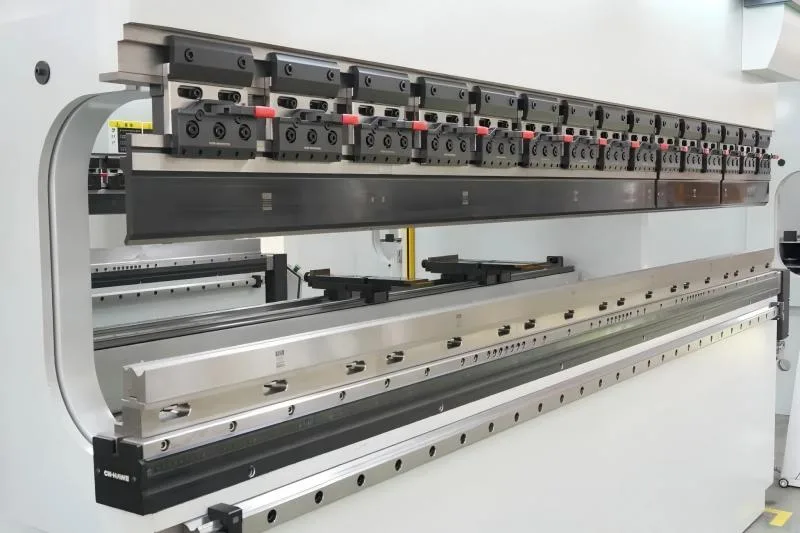
The materials used in the construction of the press brake frame significantly influence its strength and rigidity. High-quality steel or alloy materials with superior tensile strength are commonly used in the production of frames to withstand the immense forces applied during bending. Frame material selection plays a critical role in ensuring that the machine can handle heavy-duty applications and resist deformation over time. Choosing the right materials is essential for achieving optimal performance and ensuring the longevity of the press brake.
How to Evaluate Frame Strength
Evaluating the frame strength of a press brake involves inspecting its construction for signs of wear or deformation. Operators should regularly assess the machine for any visible cracks, bends, or structural flaws that could compromise its integrity. Advanced press brakes often come equipped with monitoring systems that can detect excessive deflection or misalignment, alerting operators to potential issues before they affect production.
Common Problems Due to Insufficient Frame Strength
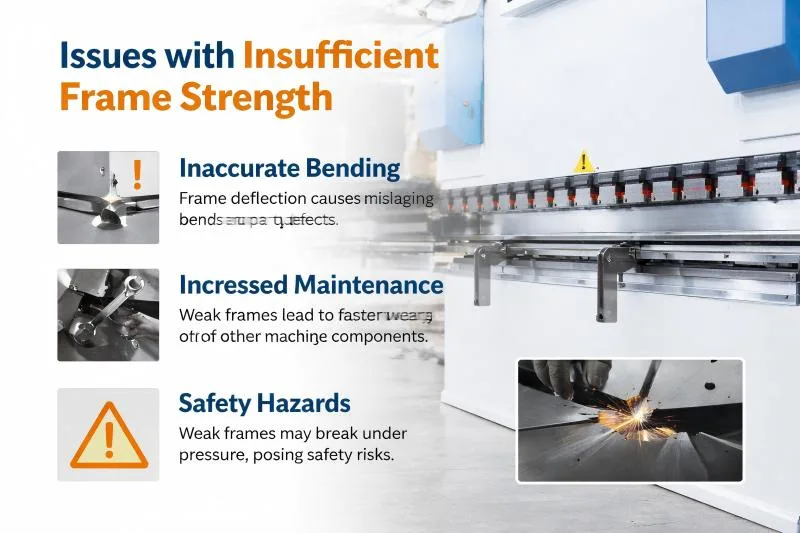
A press brake with insufficient frame strength may experience several issues, including:
- Inaccurate Bending: As discussed earlier, frame deflection can lead to misaligned bends, resulting in defective parts.
- Increased Maintenance Needs: A weak frame may lead to premature wear on other machine components, requiring more frequent maintenance and repairs.
- Safety Hazards: In extreme cases, a compromised frame can pose a safety risk to operators, as it may fail under pressure or cause dangerous vibrations.
Раздел часто задаваемых вопросов
How do I know if my press brake’s frame is strong enough?
Regularly inspect the machine for signs of bending or cracking. High-quality press brakes will have a solid, reinforced frame and will rarely show signs of deflection during normal operation.
What can I do to improve my press brake’s frame strength?
Ensure your press brake is constructed from high-quality steel or alloys. Periodic inspections and regular maintenance are also essential to keep the frame in optimal condition.
Can weak frame strength affect my production efficiency?
Yes, weak frame strength can lead to inconsistent bending, which may slow down production and result in wasted material. Ensuring frame rigidity is crucial for efficiency.
Заключение
The frame strength of a press brake is a fundamental factor that directly impacts its safety, performance, and longevity. A strong frame ensures accurate bends, prevents deflection, and maintains the machine’s overall structural integrity. For operators and engineers, choosing machines with robust frames made from high-quality materials is essential to achieving consistent, high-quality production results. Regular maintenance and monitoring of the frame’s condition will also help ensure the press brake operates safely and efficiently over its lifespan.


