


Learn how to solve press brake zero drift by adjusting servo drive parameters. This guide explains common causes, troubleshooting methods, adjustment logic, and important precautions for CNC press brakes.
Introduzione
In CNC press brake operation, stable positioning accuracy is essential for maintaining bending consistency and product quality. However, in actual production and field service situations, operators may sometimes encounter a phenomenon commonly referred to as press brake zero drift.
Typical symptoms may include slight ram movement after stopping, unstable Y-axis positioning, inconsistent bending angles, or repeated offset deviations during operation. Although “zero drift” is not a strict official technical term, it is widely used by service technicians to describe small position drift issues related to the servo control system.
In many cases, adjusting servo drive parameters can help reduce or stabilize press brake zero drift. However, the actual causes may vary depending on the CNC system, servo drive brand, encoder feedback, hydraulic condition, and machine structure.
This article explains the common causes of press brake zero drift, how servo drive adjustment may help, and what precautions should be considered before modifying parameters.
What Is Press Brake Zero Drift?
Press brake zero drift generally refers to a small deviation in the servo system reference position or feedback position.
In CNC press brakes, especially electro-hydraulic synchronized machines, the control system continuously monitors and corrects slider position through a closed-loop system. If the reference position gradually changes or becomes unstable, the machine may show drifting behavior.
Press brake zero drift is more commonly discussed in CNC press brakes equipped with servo control systems, such as:
- Electro-hydraulic synchronized press brakes
- Servo-driven press brakes
- Pure electric press brakes
Traditional torsion-bar press brakes may also experience positioning deviations, but the mechanism is usually different from servo-related press brake zero drift.
It is important to understand that press brake zero drift is often a symptom rather than the root cause. The actual issue may involve electrical, hydraulic, mechanical, or feedback-related factors.
Common Symptoms of Press Brake Zero Drift
Different machines may show different behaviors when press brake zero drift occurs.
I sintomi tipici includono:
- Ram slowly moving downward after stopping
- Unstable Y-axis position values
- Repeated bending angle deviation
- Different positioning results after restarting the machine
- Small synchronization differences between Y1 and Y2 axes
- Position fluctuation during repeated bending cycles
In some cases, the machine may still operate normally for basic movement, but bending accuracy gradually becomes unstable over time.
These symptoms are especially noticeable in high-precision CNC bending applications.
Possible Causes of Press Brake Zero Drift
There are several possible causes of press brake zero drift, and proper diagnosis is important before adjusting any parameters.
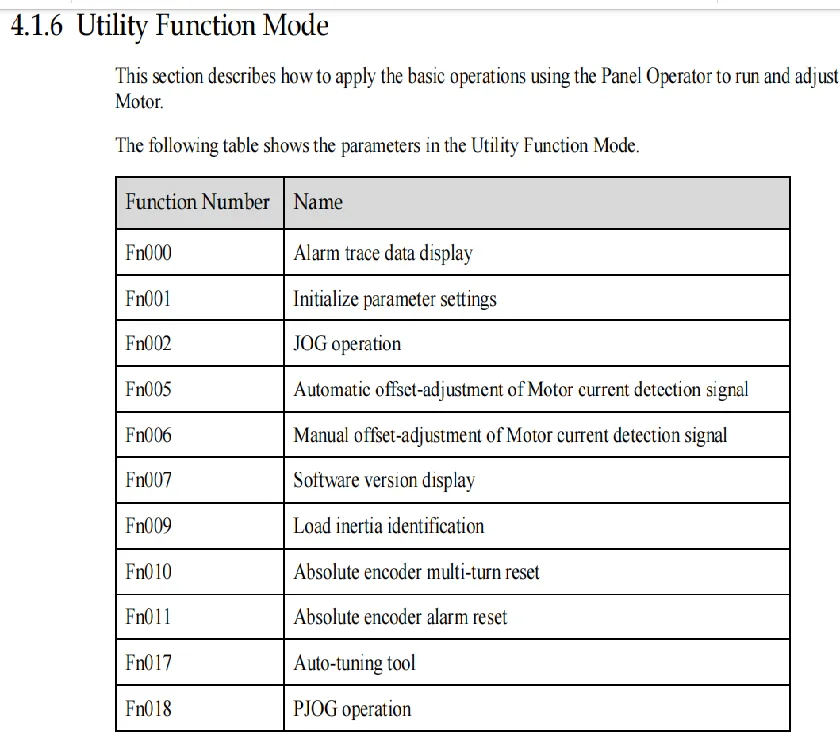
Servo Drive Parameter Issues
Servo drive parameters directly influence system response, positioning stability, and compensation behavior.
Incorrect gain settings, compensation values, or offset parameters may lead to unstable position correction and cause press brake zero drift.
Encoder Feedback Instability
The encoder is responsible for position feedback. If the encoder signal becomes unstable due to interference, contamination, loose connections, or hardware issues, the CNC system may receive incorrect position information.
This can result in position drift or synchronization deviation.
Closed-Loop Control Instability
CNC press brakes rely on closed-loop position control. If the control loop becomes unstable, the servo system may continuously attempt small corrections, causing oscillation or drift.
In some situations, improper parameter matching between the drive and hydraulic response may worsen press brake zero drift.
Hydraulic Factors
Hydraulic conditions can also influence positioning stability.
Alcuni esempi:
- Perdita interna
- Unstable proportional valve response
- Oil temperature variation
- fluttuazione della pressione
These factors may indirectly affect servo positioning performance.
Fattori meccanici
Mechanical conditions should not be ignored.
Wear, looseness, backlash, or uneven load conditions may create additional movement that appears similar to press brake zero drift.
Why Servo Drive Adjustment Can Help
In some field-service situations, adjusting servo drive parameters can help improve system stability and reduce press brake zero drift.
The purpose of adjustment is usually to improve:
- Position stability
- Response consistency
- Feedback correction behavior
- Synchronization performance
However, it is important to understand that servo parameter adjustment is not a universal solution. The same symptom may have completely different causes on different machines.
For this reason, drive adjustment should always be performed carefully and based on actual machine behavior.
General Adjustment Process
Although different servo drives use different parameter structures, the general troubleshooting logic for press brake zero drift is often similar.
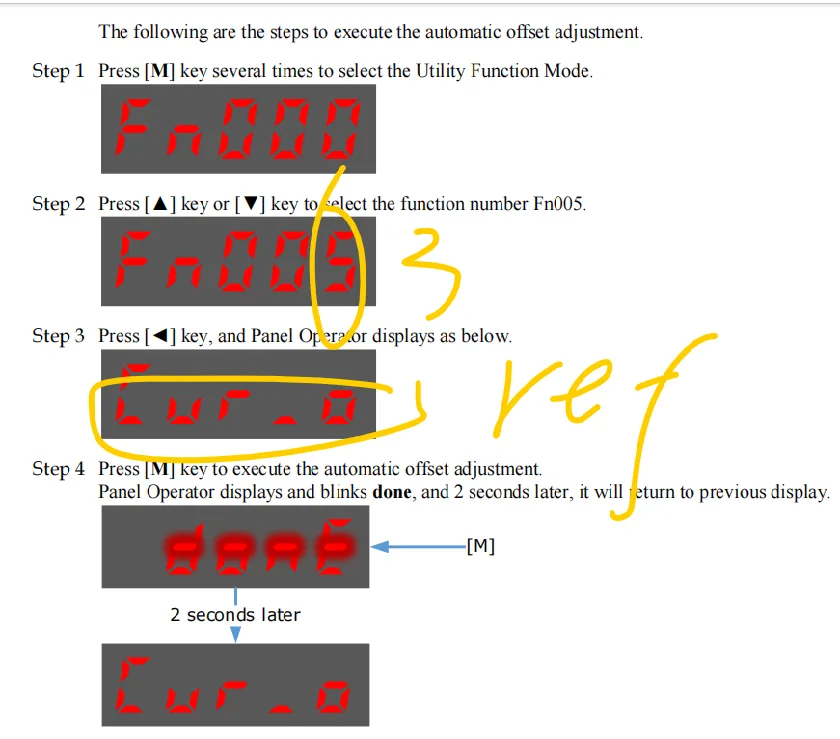
A typical adjustment process may include:
observe drift behavior
→ monitor feedback values
→ check synchronization status
→ adjust compensation or response parameters
→ test repeated positioning accuracy
→ verify long-term stability
In practical maintenance work, technicians usually monitor whether the machine maintains stable positioning after repeated cycles.
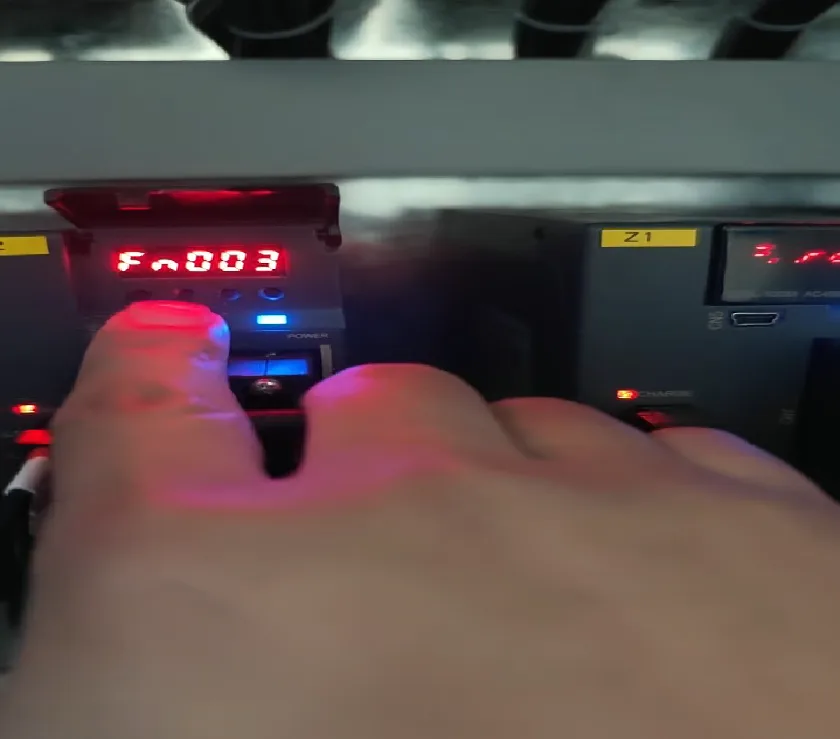
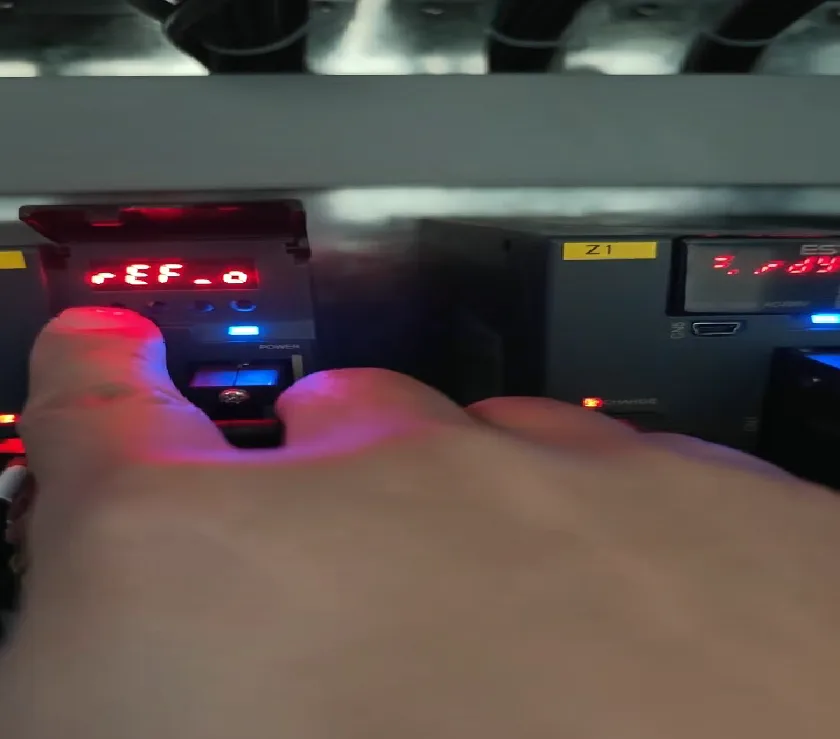
The goal is not only to eliminate immediate drift, but also to ensure stable operation over time.
Important Notes for Different Drive Systems
Different CNC systems and servo drives may use completely different adjustment methods.
For example, the following systems may have different parameter structures and tuning logic:
- DELEM
- ESA
- Cybelec
- Estun
- Inovance
- Yaskawa
Some systems may use position compensation parameters, while others may rely on gain tuning or feedback filtering methods.
In addition, different machine manufacturers may customize parameter logic according to their own hydraulic systems and control strategies.
Therefore, there is no universal parameter setting for solving press brake zero drift.
The adjustment method shown in videos or tutorials should only be used for learning and reference purposes.
Actual parameter modification should always be confirmed with the machine manufacturer or professional technicians before operation.
Risks of Incorrect Parameter Adjustment
Incorrect servo parameter adjustment may create additional problems instead of solving press brake zero drift.
Possible risks include:
- Y-axis instability
- Excessive oscillation
- Synchronization errors
- Positioning loss
- Allarmi di sovraccarico del servo
- Movimento instabile dell'ariete
In severe cases, incorrect parameters may affect machine safety or damage components.
For this reason, parameter adjustment should always be performed cautiously and with proper technical understanding.
When Professional Technical Support Is Necessary
Some situations require professional diagnosis rather than simple parameter adjustment.
Technical support is strongly recommended when:
- The machine repeatedly loses position
- Encoder alarms appear frequently
- Synchronization deviation continues to increase
- Servo overheating occurs
- Mechanical abnormal noise is detected
- Hydraulic instability is suspected
A complete inspection may involve the servo system, hydraulic system, encoder feedback, and machine structure together.
Suggerimenti per la manutenzione
To reduce the risk of press brake zero drift, regular maintenance is recommended.
- Check encoder connections regularly
- Keep electrical cabinets clean and dry
- Inspect hydraulic oil condition and temperature
- Monitor synchronization performance during operation
- Verify stable grounding and shielding
- Avoid unauthorized parameter modification
Preventive maintenance helps maintain long-term positioning stability and reduces troubleshooting frequency.
Conclusione
Press brake zero drift is a common field-service issue in CNC press brakes, especially in electro-hydraulic synchronized systems with servo closed-loop control.
Although servo drive parameter adjustment may help improve stability in some situations, press brake zero drift can have multiple possible causes involving electrical, hydraulic, mechanical, or feedback-related factors.
Understanding the behavior, causes, and adjustment logic of press brake zero drift helps operators and technicians diagnose problems more effectively while avoiding unnecessary parameter changes.
Most importantly, any parameter adjustment should be treated carefully and verified according to the specific drive system and machine configuration.


