


Shearing Machine Danger Zones include the cutting blades, hold-down mechanisms, moving backgauge, and rear discharge area. Keeping hands away from these hazards requires proper machine guarding, safe material handling, correct operator positioning, and strict operating procedures. In this guide, I’ll explain how to identify dangerous areas on a shearing machine, keep hands outside the cutting zone, and respond safely to common operating risks. These practices help reduce injuries, prevent unexpected downtime, and maintain a safer metalworking environment.
What Are the Main Shearing Machine Danger Zones?
1. Cutting Blade Area
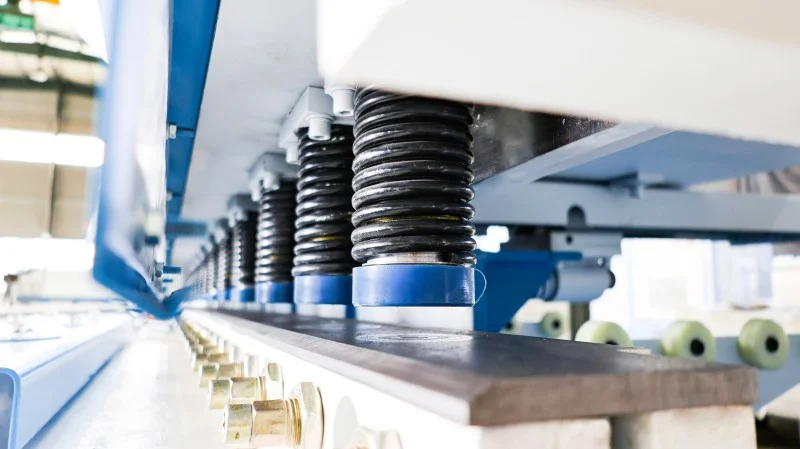
The cutting zone between the upper and lower blades is the most critical hazard area. The blades can cause severe crushing or cutting injuries during a shearing stroke.
Operators must never place their hands near the blade opening to align, hold, or retrieve material while the machine is operating. Use approved material supports and handling tools when necessary, and keep all body parts outside the designated danger area.
2. Hold-Down Mechanisms
Hydraulic hold-down cylinders secure the sheet before cutting. Their downward movement creates crushing and pinch-point hazards, particularly when an operator attempts to reposition material by hand.
Keep fingers away from the hold-down pads and other moving components. Confirm that the material is properly positioned before initiating the cutting cycle.
3. Backgauge and Rear Discharge Area
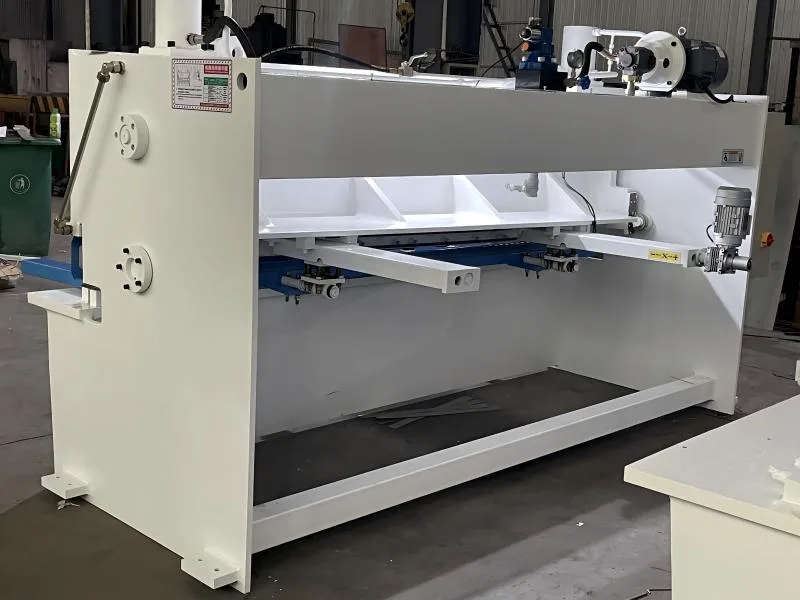
The backgauge moves to position the sheet accurately. Its movement can trap fingers between the gauge, workpiece, and machine structure.
The rear discharge area also presents risks from moving components and falling or sharp-edged cut pieces. Never reach behind the machine while it is operating. Before entering a restricted rear area, follow the approved shutdown and lockout/tagout procedure.
How to Keep Hands Away from Shearing Machine Danger Zones
Step 1: Inspect Machine Guards Before Operation
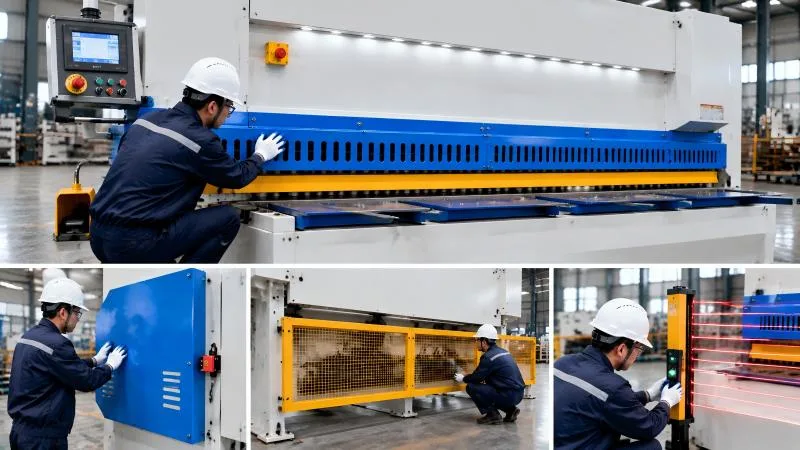
Before starting production, inspect the front finger guard, side guards, rear barriers, and any installed interlocks or light curtains.
Make sure guards are securely mounted and show no visible damage. Test safety devices according to the manufacturer’s approved procedure. Never remove a fixed guard or bypass a safety interlock to make material feeding easier.
If any safeguard is damaged or fails its functional test, stop and report the problem before using the machine.
Step 2: Use Proper Material Feeding Techniques
Position the sheet on the front support arms or worktable and align it with the squaring arm or backgauge as specified by the machine’s operating procedure.
Use suitable handling equipment for large, heavy, or awkward sheets. Keep your hands on designated safe surfaces and away from the blade opening and hold-down mechanisms.
For small workpieces that cannot be handled safely by hand, use an approved feeding tool or fixture. Never push material into the cutting zone with your fingers.
Step 3: Maintain a Safe Operator Position
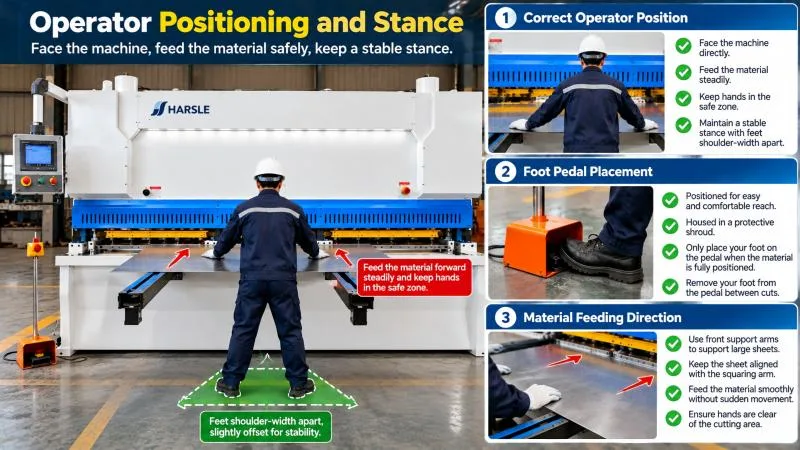
Stand in the designated operating position with a stable stance. Keep your body clear of moving machine components and avoid leaning across the cutting area.
Ensure that the foot pedal is positioned for comfortable access and protected against accidental activation. Operate it only when the material is correctly positioned, the work area is clear, and all required safety conditions are satisfied.
Step 4: Keep Hands Clear During Every Cutting Cycle
Once the material is positioned, remove your hands from the hazardous area before initiating the stroke.
Never attempt to hold a sheet in place by reaching beneath the blade guard or near the hold-down pads. If material shifts, becomes jammed, or requires repositioning, stop the machine and follow the approved procedure before intervening.
An emergency stop does not replace energy isolation when hands-on maintenance or jam removal is required.
Step 5: Follow Lockout/Tagout Procedures During Maintenance
Before cleaning near blades, removing jammed material, or performing maintenance that exposes hazardous components, shut down and isolate the machine according to site procedures.
Apply lockout/tagout where required, isolate all relevant energy sources, and verify that hazardous movement cannot occur. Stored hydraulic pressure and gravity-driven movement must also be addressed using the manufacturer’s instructions.
Only qualified personnel should perform repairs or work on safety-related electrical and hydraulic systems.
Common Hand Safety Mistakes to Avoid
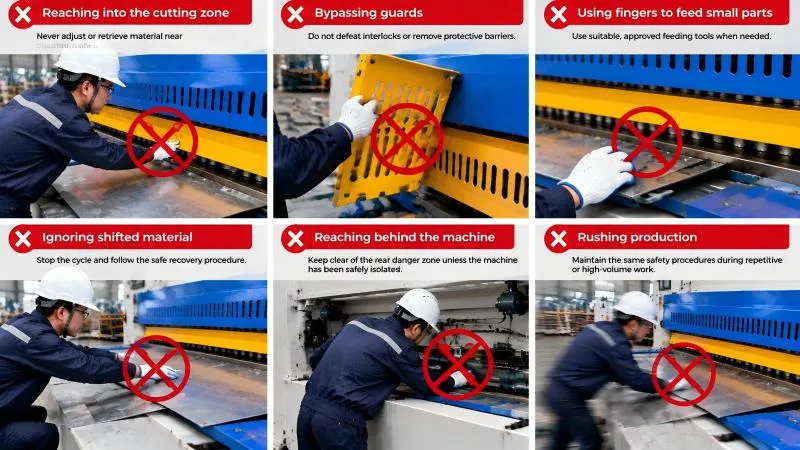
- Reaching into the cutting zone: Never adjust or retrieve material near moving blades.
- Bypassing guards: Do not defeat interlocks or remove protective barriers.
- Using fingers to feed small parts: Use suitable, approved feeding tools when needed.
- Ignoring shifted material: Stop the cycle and follow the safe recovery procedure.
- Reaching behind the machine: Keep clear of the rear danger zone unless the machine has been safely isolated.
- Rushing production: Maintain the same safety procedures during repetitive or high-volume work.
FAQs
Why Are Shearing Machine Danger Zones So Hazardous?
The blades, hold-down cylinders, and moving backgauge can create cutting, crushing, and trapping hazards. Even a brief hand movement into these areas can result in serious injury.
How Can Operators Feed Metal Sheets Without Putting Their Hands Near the Blades?
Use front support arms, suitable material-handling equipment, and approved feeding tools. Position the sheet according to the operating procedure, then move your hands clear before starting the cutting cycle.
Are Light Curtains Enough to Protect Operators?
Not necessarily. Light curtains must be suitable for the machine’s risk assessment and correctly installed and integrated. They do not eliminate the need for other required guards, safe working procedures, or protection against hazards outside their detection field.
Conclusion
Avoiding Shearing Machine Danger Zones depends on effective guarding, safe material feeding, correct operator positioning, and strict energy-isolation procedures. I recommend inspecting safety devices before each shift, keeping hands clear during every cutting cycle, and stopping work whenever a hazard or abnormal condition appears.


