


Shearing Machine Sheet Loading Safety is essential for preventing workplace injuries, material damage, and unexpected machine accidents. When handling large or heavy metal sheets, improper lifting, unstable positioning, and incorrect feeding methods can create serious risks. I recommend checking the material weight, using suitable lifting equipment, and maintaining a safe distance from the cutting area. In this guide, I’ll explain how to load metal sheets safely, position materials correctly, and avoid common mistakes during hydraulic shearing machine operations.
Why Is Shearing Machine Sheet Loading Safety Important?
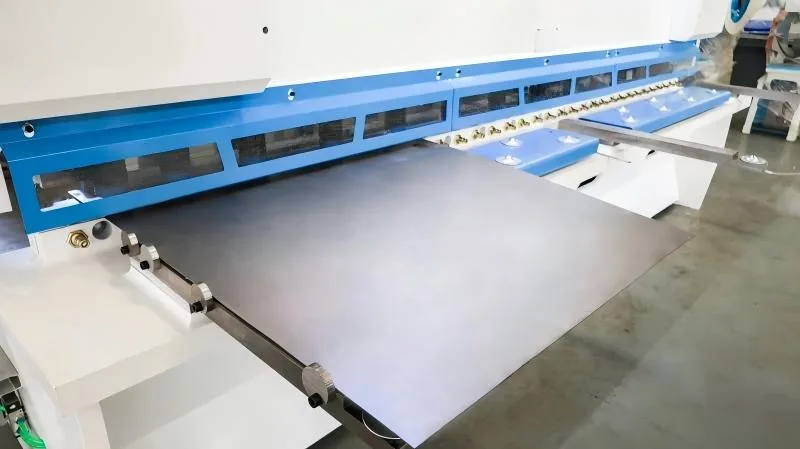
Large metal sheets can be difficult to control because of their weight, sharp edges, and flexible structure. Improper handling may cause materials to slip, bend unexpectedly, or strike nearby personnel.
Risks of Improper Sheet Metal Handling
When operators manually handle oversized sheets without sufficient support, the material may become unstable during loading.
Common hazards include hand injuries, crushed fingers, falling sheets, and unexpected material movement.
I recommend evaluating the material dimensions, weight, and handling requirements before beginning any loading operation.
Importance of Proper Material Support
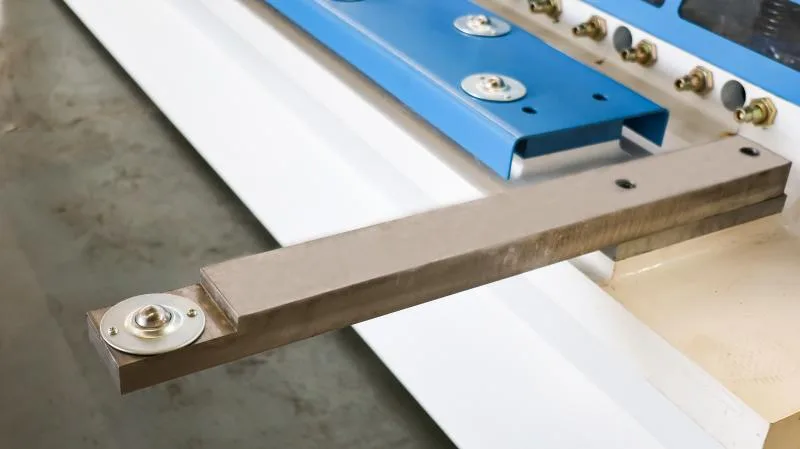
Large sheets require stable support to prevent sagging, tilting, or sudden movement.
Front support arms, roller tables, and suitable lifting equipment help maintain material stability during positioning.
Proper support also reduces unnecessary physical strain on operators.
How to Safely Load Large Metal Sheets onto a Shearing Machine
Step 1: Inspect the Machine and Work Area
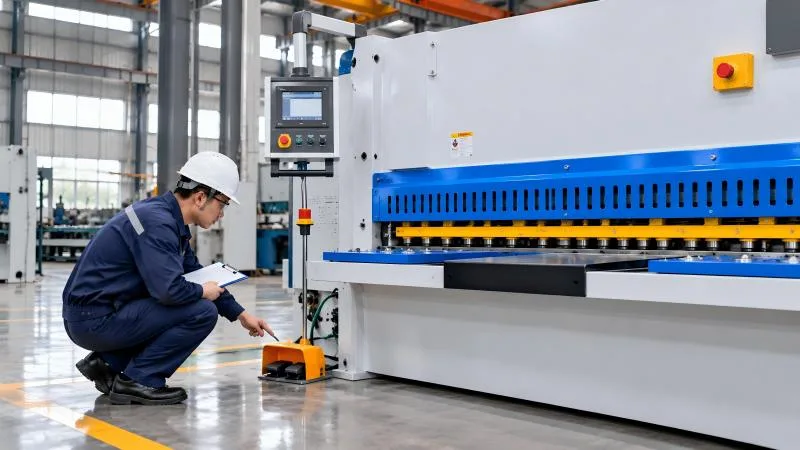
Before loading materials, I recommend inspecting the shearing machine, front support arms, squaring arms, and safety guards.
Ensure the work area is free from oil, metal scraps, and unnecessary equipment.
Check that the rear discharge area is clear and that emergency stop devices are accessible.
Never begin loading if protective guards are damaged or missing.
Step 2: Check Material Weight and Dimensions
Confirm the sheet thickness, width, length, and approximate weight before selecting a handling method.
Compare the material specifications with the machine’s rated cutting capacity and support equipment limits.
Remember that stainless steel and other high-strength materials may require lower allowable cutting thicknesses than mild steel.
Never exceed the machine’s specified capacity.
Step 3: Select Appropriate Sheet Metal Lifting Equipment
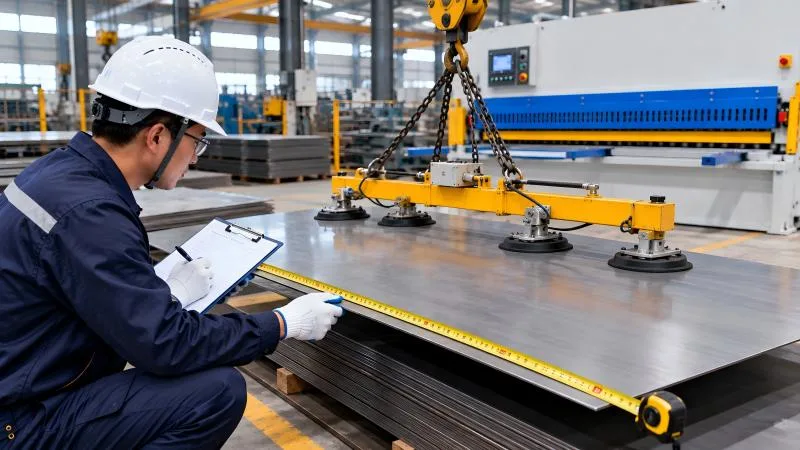
For large or heavy sheets, I recommend using overhead cranes, vacuum lifting systems, magnetic lifters, or mechanical handling equipment suitable for the material.
Ensure lifting equipment has sufficient rated capacity and is compatible with the sheet’s surface, thickness, and material properties.
Only trained personnel should operate lifting devices.
Keep personnel away from suspended loads and never place hands beneath unsupported sheets.
Step 4: Position the Metal Sheet Correctly
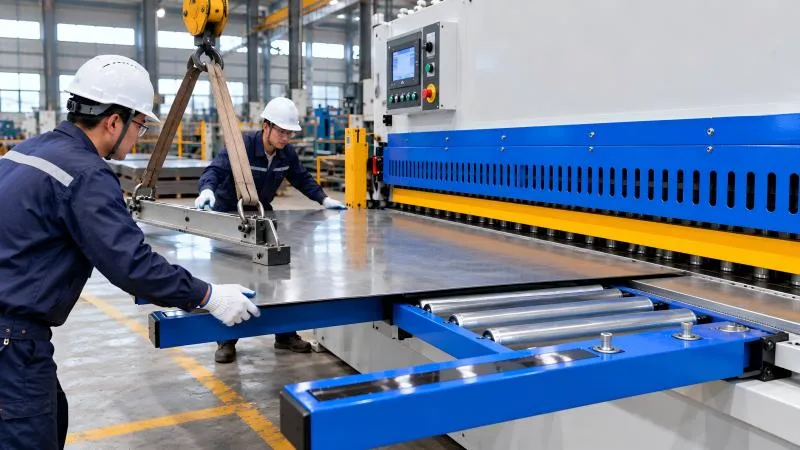
Place the sheet carefully onto the front support table or roller system.
Align the material against the squaring arm and position it according to the required cutting dimensions.
Keep hands outside the guarded cutting zone and use approved feeding tools when necessary.
I recommend avoiding sudden movements that could cause the sheet to slide or become misaligned.
Step 5: Verify Material Stability Before Cutting
Before initiating the cutting cycle, confirm that the sheet is properly supported and positioned.
Ensure the material is not excessively tilted, twisted, or hanging beyond the support system’s safe operating limits.
Check that the hold-down system is functioning correctly and that no personnel are inside restricted areas.
Only initiate cutting when the material is stable and all safety conditions are satisfied.
Common Mistakes to Avoid During Sheet Loading
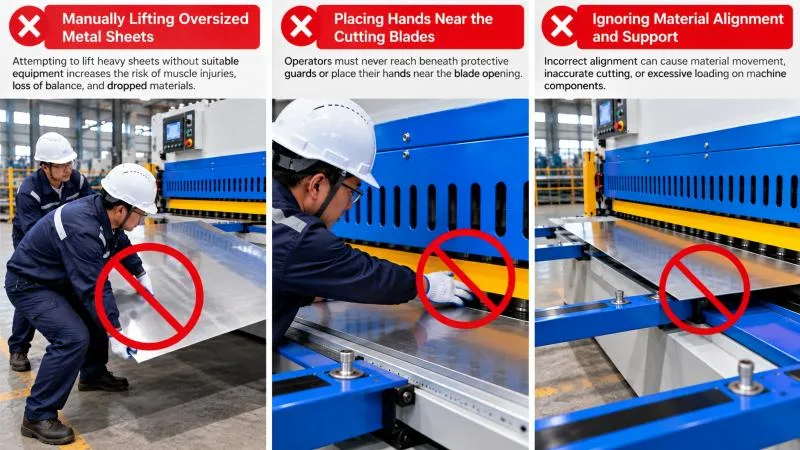
Manually Lifting Oversized Metal Sheets
Attempting to lift heavy sheets without suitable equipment increases the risk of muscle injuries, loss of balance, and dropped materials.
I recommend using mechanical lifting assistance whenever manual handling cannot be performed safely.
Placing Hands Near the Cutting Blades
Operators must never reach beneath protective guards or place their hands near the blade opening.
Use properly designed feeding tools and maintain the required safety distance throughout the operation.
Ignoring Material Alignment and Support
Incorrect alignment can cause material movement, inaccurate cutting, or excessive loading on machine components.
Always verify sheet positioning and support before activating the cutting cycle.
FAQs
What Is the Best Way to Improve Shearing Machine Sheet Loading Safety?
I recommend combining proper operator training, suitable lifting equipment, stable material support, and routine safety inspections. These measures help reduce handling risks and improve operational consistency.
Can Large Metal Sheets Be Loaded Manually?
Manual loading may be appropriate for smaller, manageable sheets following a handling risk assessment. Large or heavy sheets generally require suitable mechanical assistance to prevent injuries.
What Equipment Is Recommended for Loading Heavy Metal Sheets?
Overhead cranes, vacuum lifters, magnetic lifting devices, and roller support tables are commonly used. Equipment selection depends on sheet weight, dimensions, material properties, and operating conditions.
Conclusion
Maintaining proper Shearing Machine Sheet Loading Safety requires careful material handling, appropriate lifting equipment, correct positioning, and consistent safety inspections. I recommend following approved loading procedures and ensuring operators understand the risks associated with large metal sheets.


