


Unexpected Shearing Machine Startup can expose operators and maintenance personnel to serious risks, especially when they are inspecting blades, clearing jammed materials, or repairing hydraulic and electrical components. I recommend combining proper energy isolation, reliable safety devices, controlled restart procedures, and operator training to prevent unintended machine movement. In this guide, I’ll explain the main causes of unexpected startup, practical prevention methods, and the safety checks that help keep a shearing machine under control during production and maintenance.
What Causes Unexpected Shearing Machine Startup?
Electrical Control System Faults
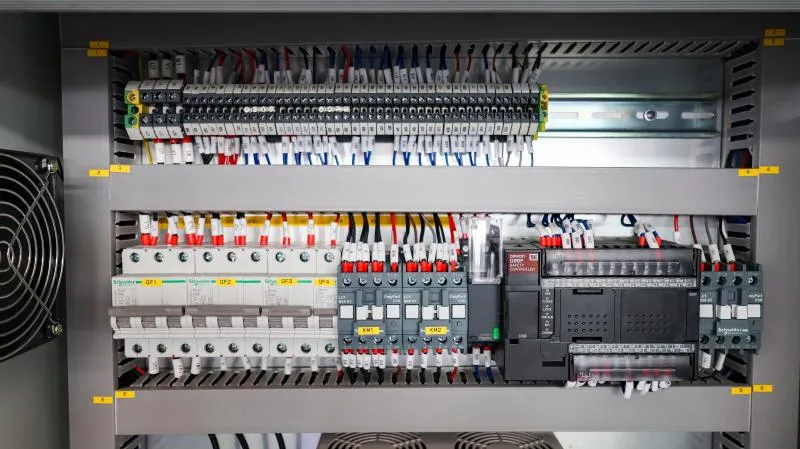
Electrical faults can cause a shearing machine to respond unexpectedly. Damaged wiring, faulty contactors, malfunctioning relays, or PLC control errors may interfere with normal start and stop commands.
Unexpected restart risks can also arise when power returns after an outage if the control system is not designed to prevent automatic restarting. I recommend having qualified electricians inspect electrical components and verify that the machine requires a deliberate restart command after power restoration.
Faulty Foot Pedals and Control Buttons
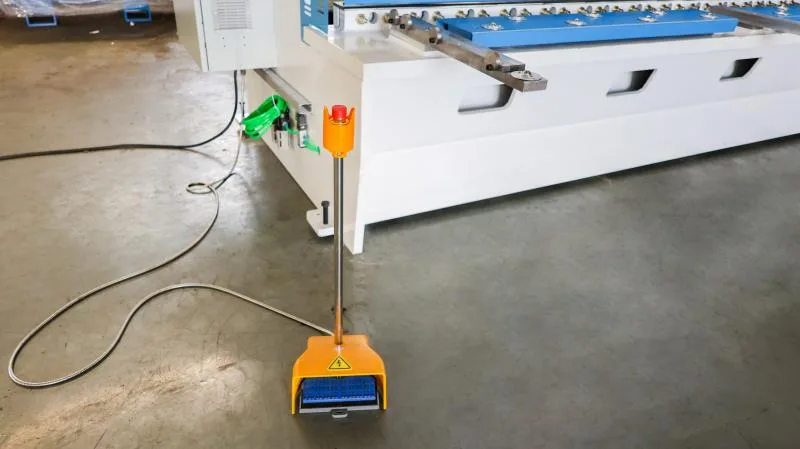
A stuck foot pedal, damaged start button, or short circuit in a control device may generate an unintended operating command.
Operators should inspect control devices before each shift and report unusual resistance, sticking, or visible damage. Never continue production with a faulty control device, and do not attempt unauthorized repairs.
Inadequate Energy Isolation During Maintenance
One of the most serious causes of unexpected startup is failing to isolate hazardous energy before maintenance.
Electrical power, stored hydraulic pressure, gravity, and other mechanical energy sources may remain hazardous even after the main switch is turned off. A machine can move unexpectedly if these energy sources are not properly controlled.
How to Prevent Unexpected Shearing Machine Startup
Step 1: Apply Lockout/Tagout Before Maintenance
Before cleaning, repairing, adjusting, or clearing a jam in a hazardous area, follow the site’s lockout/tagout (LOTO) procedure.
Authorized personnel should identify all energy sources, shut down the machine, isolate the relevant supplies, and apply personal locks and warning tags. Stored energy must be safely released or restrained according to the manufacturer’s instructions.
Verify the isolated state using the approved procedure before beginning work. Pressing the emergency stop alone is not sufficient energy isolation.
Step 2: Inspect Electrical Controls and Foot Pedals
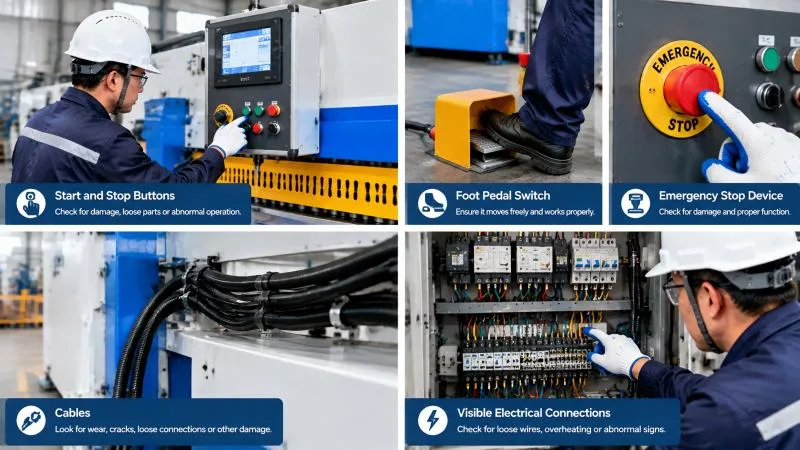
Check the start and stop buttons, foot pedal, emergency stop devices, cables, and visible electrical connections for damage or abnormal operation.
Qualified electricians should investigate intermittent commands, damaged wiring, faulty contactors, or suspected PLC faults. Do not bypass safety circuits or replace components with unsuitable parts.
Step 3: Verify Safety Guards and Interlocks
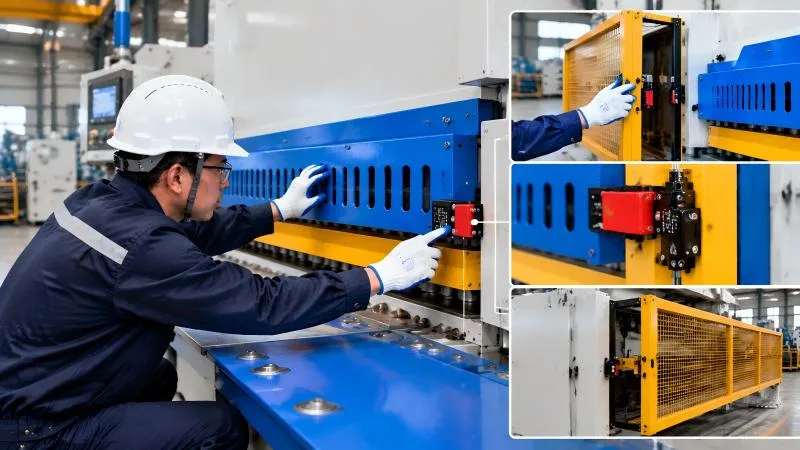
Ensure that fixed guards, movable guards, and safety interlocks are installed and functioning as designed.
If the machine includes light curtains or other presence-sensing devices, verify their operation according to the manufacturer’s approved testing procedure. Never bypass a guard or interlock to keep production running.
Any failed safety device must be reported, and the machine must remain out of service until the fault is corrected and the protective function is verified.
Step 4: Prevent Automatic Restart After Power Restoration
After a power interruption, operators should follow the prescribed recovery procedure rather than assuming the machine is safe to resume.
The control system should require a deliberate restart action and should not initiate a hazardous stroke merely because electrical power has returned. Qualified technicians should verify the restart behavior against the machine’s safety design and applicable requirements.
Before restarting, confirm that the work area is clear, guards are in place, and all personnel are outside hazardous zones.
Step 5: Train Operators and Document Inspections
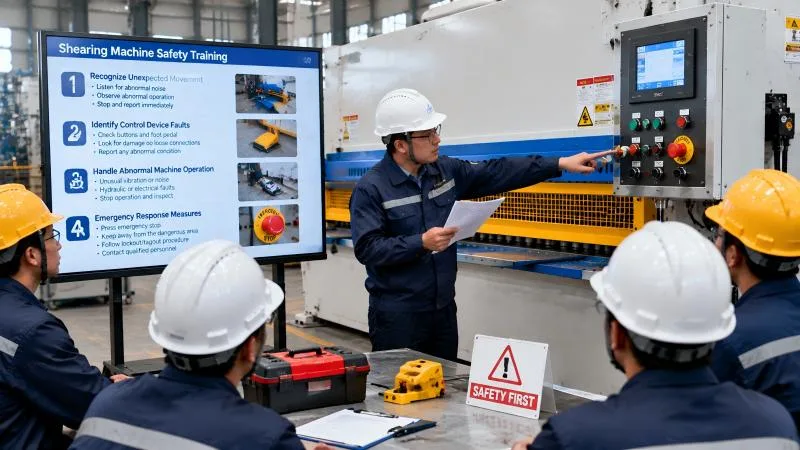
I recommend training every operator to recognize unexpected movement, faulty controls, abnormal machine behavior, and the correct emergency response.
Daily inspections should cover control buttons, foot pedals, guards, and emergency stops. Record defects and corrective actions so recurring faults can be identified before they lead to an accident.
Common Mistakes That Increase Unexpected Startup Risks
- Relying only on the emergency stop: An emergency stop does not provide the same protection as isolating and controlling hazardous energy.
- Restarting immediately after a power failure: Confirm the machine’s condition and follow the approved restart procedure.
- Bypassing faulty interlocks: This removes an important layer of protection and must never be used as a routine workaround.
- Ignoring intermittent control faults: A foot pedal or button that works inconsistently requires investigation before further use.
- Entering hazardous areas without isolation: Never reach into the blade area or perform maintenance while hazardous energy remains uncontrolled.
FAQs
Why Does a Shearing Machine Start Unexpectedly?
Possible causes include faulty control buttons, stuck foot pedals, electrical faults, PLC errors, or an inadequate restart-control design.
Is an Emergency Stop Enough to Prevent Unexpected Startup?
No. An emergency stop is intended to stop hazardous machine operation, but it does not necessarily isolate electrical power or eliminate stored hydraulic and mechanical energy.
What Should I Do if a Shearing Machine Restarts Automatically?
Keep clear of hazardous areas and stop the machine using the designated emergency procedure if it is safe to do so. Prevent further use, report the fault, and have qualified personnel investigate the restart behavior before returning the machine to service.
Conclusion
Preventing Unexpected Shearing Machine Startup requires effective energy isolation, reliable electrical controls, functional safety guards, and disciplined restart procedures. I recommend combining regular inspections with lockout/tagout practices and operator training to reduce risks during both production and maintenance.


