


Hydraulic oil leaks on a shearing machine can create serious safety risks, including slippery floors, pressure-related injuries, equipment damage, and unexpected machine failure. When I identify a suspected leak, I recommend stopping the machine safely, isolating its energy sources, and reporting the problem before attempting any repair. Knowing how to handle hydraulic oil leaks on a shearing machine safely helps protect operators, prevent hydraulic system damage, and reduce unplanned downtime. In this guide, I’ll explain how to identify leaks, respond to them, and prevent them from recurring.
What Causes Hydraulic Oil Leaks on a Shearing Machine?
Damaged Hydraulic Hoses and Connections
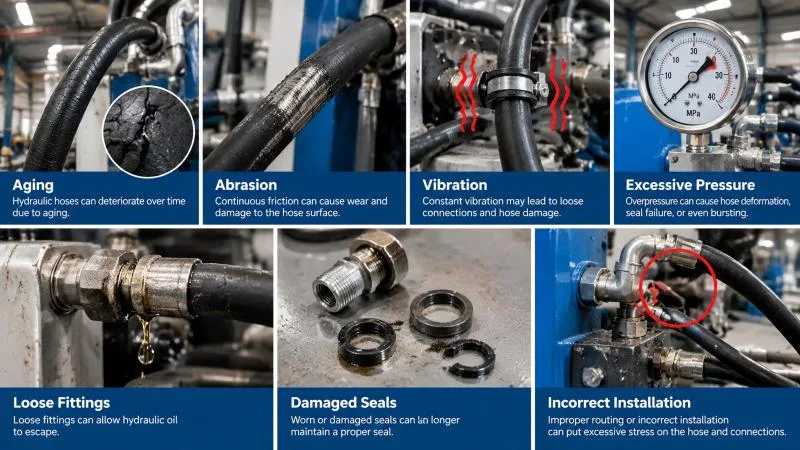
Hydraulic hoses can deteriorate because of aging, abrasion, vibration, or excessive pressure. Loose fittings, damaged seals, and improperly installed connections may also allow oil to escape.
I recommend checking hoses and fittings for visible oil residue, cracks, bulges, and damaged connections during routine inspections. Never use your hands to locate a leak while the system is pressurized, because high-pressure hydraulic oil can penetrate the skin and cause severe injuries.
Worn Hydraulic Seals and Cylinders
Hydraulic cylinders rely on seals to retain oil and maintain pressure. Over time, seals may harden, wear, or become damaged, resulting in leakage around the piston rod or cylinder connections.
If oil repeatedly appears around a cylinder, stop the machine and arrange an inspection by qualified maintenance personnel. Replacing damaged seals promptly can help prevent further oil loss and unstable machine operation.
Excessive Pressure and Component Damage
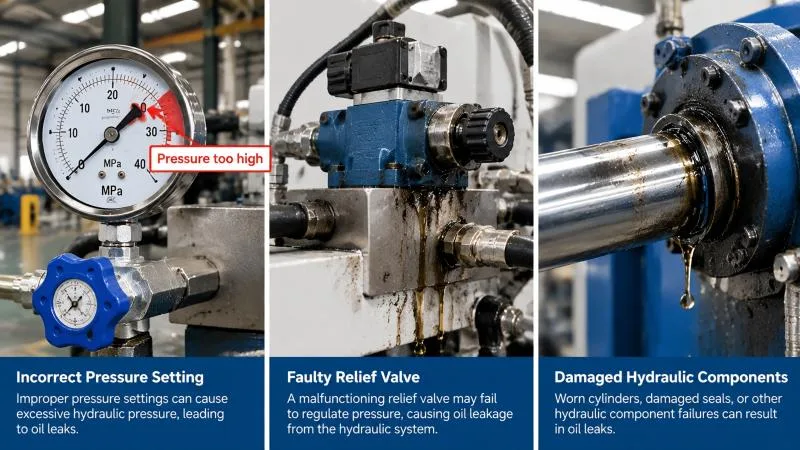
Incorrect pressure settings, malfunctioning relief valves, or damaged hydraulic components may contribute to leakage.
If a shearing machine develops abnormal pressure readings or repeated leaks, I recommend checking the hydraulic system against the manufacturer’s specifications. Never increase pressure settings or adjust safety valves simply to compensate for a leak.
How to Handle Hydraulic Oil Leaks on a Shearing Machine Safely
Step 1: Stop the Machine and Secure the Area
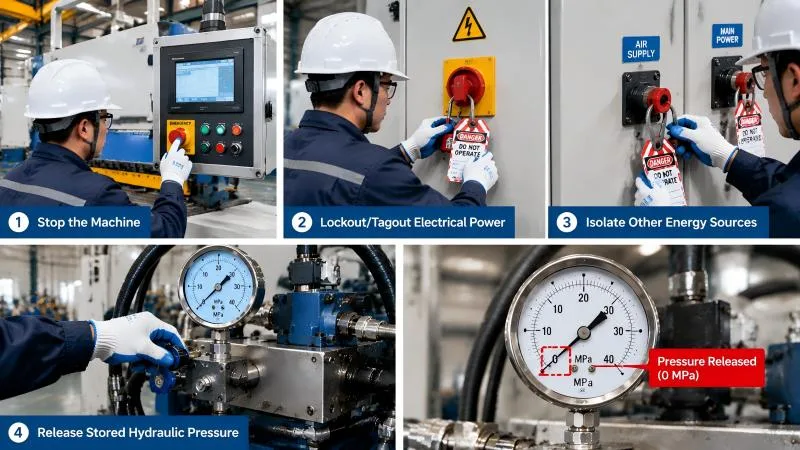
Stop the shearing machine using the appropriate operating procedure. If the leak presents an immediate danger, activate the emergency stop when necessary.
Keep personnel away from the affected area and place suitable warning signs or barriers around slippery surfaces. If oil is spraying, the machine behaves abnormally, or a high-pressure leak is suspected, do not approach the leak until the equipment has been made safe.
Step 2: Isolate Hydraulic and Electrical Energy
Before any inspection or maintenance, shut down the machine and apply the facility’s lockout/tagout procedure. Isolate electrical power and other relevant energy sources, then release stored hydraulic pressure according to the manufacturer’s instructions.
Support or secure moving components, including the ram or blade carrier, using the approved procedure. Never rely on the hydraulic system alone to hold a heavy moving assembly in position.
Step 3: Identify the Leak Source Safely
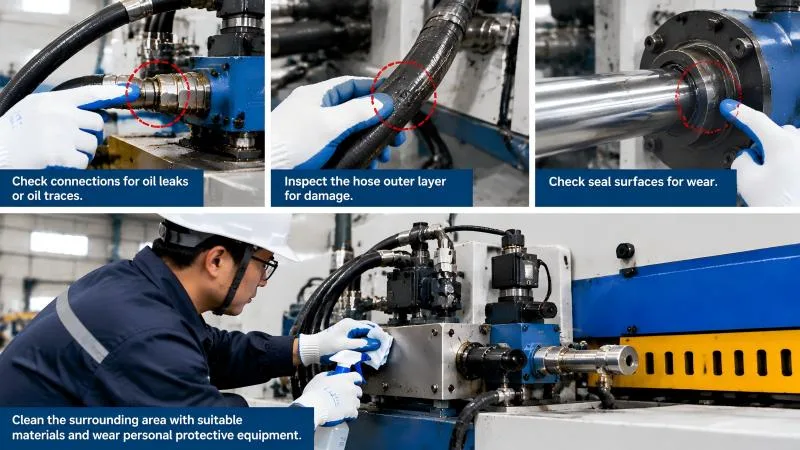
Once the machine is confirmed to be isolated and depressurized, qualified personnel can inspect the hydraulic hoses, fittings, cylinders, valves, and seals.
Look for wet connections, oil trails, damaged hose coverings, and worn sealing surfaces. Clean the surrounding area if necessary to identify the source more clearly, using suitable materials and personal protective equipment.
Do not loosen fittings or remove hydraulic components until the relevant section has been safely depressurized.
Step 4: Repair or Replace Damaged Components
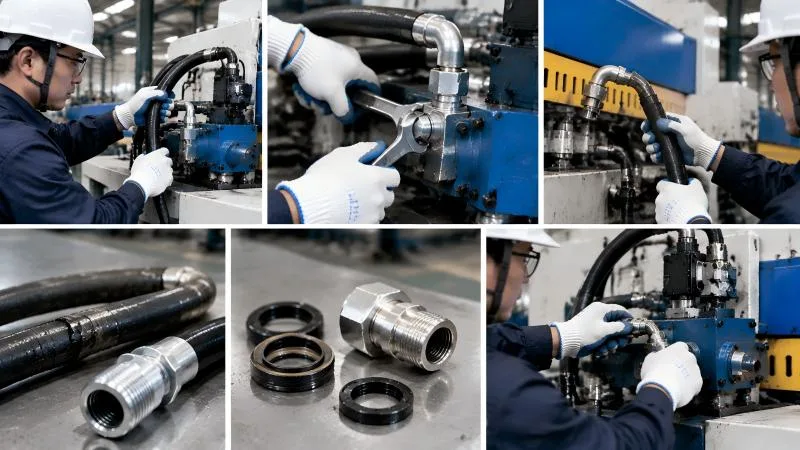
Replace defective hoses, seals, fittings, or other components with parts that meet the machine manufacturer’s specifications.
Avoid temporary repairs that cannot withstand the system’s operating pressure. Hydraulic repairs should be performed by qualified personnel using appropriate tools and approved procedures.
Collect spilled oil in suitable containers and dispose of contaminated materials according to local environmental requirements.
Step 5: Test the System Before Resuming Production
After repairs are complete, verify that all connections are correctly installed and that guards and protective devices are restored.
Qualified personnel should conduct the prescribed commissioning checks and monitor the system for leakage, abnormal pressure, and unusual noise. Any pressure testing must follow the manufacturer’s procedure, with personnel kept clear of potential leak points.
Return the machine to production only after the repair has been verified and the equipment is confirmed safe to operate.
How to Prevent Hydraulic Oil Leaks on a Shearing Machine
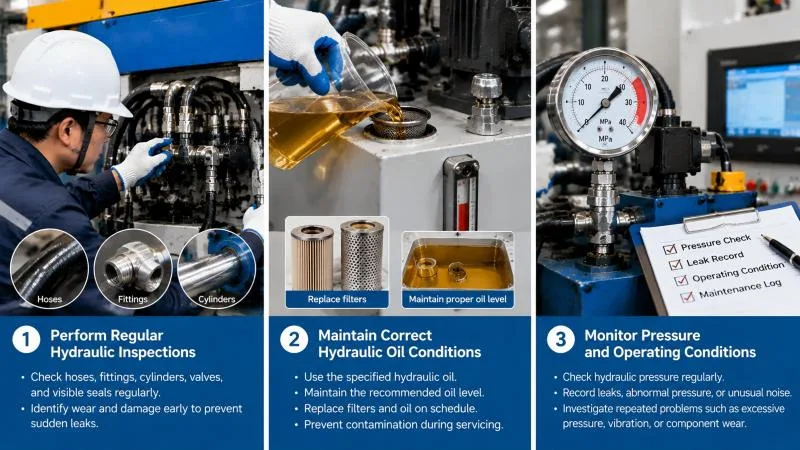
Perform Regular Hydraulic Inspections
I recommend including hoses, fittings, cylinders, valves, and visible seals in the preventive maintenance schedule. Early detection of wear can reduce the likelihood of sudden leakage.
Maintain Correct Hydraulic Oil Conditions
Use the specified hydraulic oil and maintain the recommended oil level. Replace filters and oil according to the manufacturer’s maintenance schedule, and prevent contamination during servicing.
Monitor Pressure and Operating Conditions
Record recurring leaks, abnormal pressure readings, and unusual machine behavior. Investigating repeated problems can help identify underlying issues such as excessive pressure, vibration, or component wear.
FAQs
Can I Operate a Shearing Machine With a Hydraulic Oil Leak?
No. A suspected leak should be assessed before operation continues. A serious or high-pressure leak requires immediate safe shutdown and isolation.
Can I Tighten a Leaking Hydraulic Fitting While the Machine Is Running?
No. Never tighten fittings or inspect suspected leak points by hand while the hydraulic system is pressurized. Isolate the machine and release stored pressure first.
When Should I Replace a Hydraulic Hose?
Replace a hose if it shows cracking, bulging, abrasion that exposes reinforcement, damaged fittings, or other defects identified by the manufacturer. Follow the specified service life and inspection requirements.
Conclusion
Handling hydraulic oil leaks safely requires prompt shutdown, proper energy isolation, careful leak identification, and professional repairs. I recommend combining regular hydraulic inspections with preventive maintenance to reduce equipment damage, protect operators, and maintain reliable shearing performance.


