


Handling sheets after shearing requires careful attention to sharp edges, heavy loads, and the movement of finished parts. The cut edges can cause serious injuries, while large or thin sheets may bend, slide, or become unstable during transport. When handling Sheets After Shearing, I recommend using appropriate personal protective equipment (PPE), suitable lifting tools, and a clearly organized work area. In this guide, I’ll explain how to remove, inspect, stack, and transport sheared sheets safely while reducing the risk of injuries and material damage.
What Are the Main Risks When Handling Sheets After Shearing?
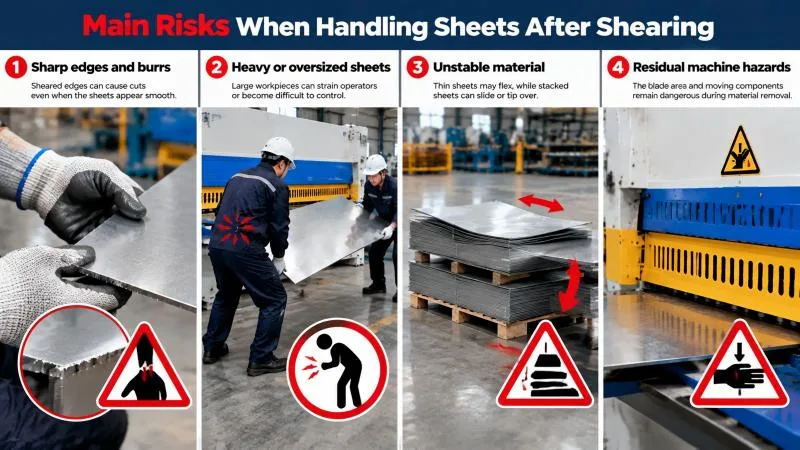
Before moving finished parts, operators should understand the hazards associated with freshly cut metal sheets.
- Sharp edges and burrs: Sheared edges can cause cuts even when the sheets appear smooth.
- Heavy or oversized sheets: Large workpieces can strain operators or become difficult to control.
- Unstable material: Thin sheets may flex, while stacked sheets can slide or tip over.
- Residual machine hazards: The blade area and moving components remain dangerous during material removal.
Understanding these risks helps operators choose the correct handling method for each workpiece.
How to Remove Sheets from a Shearing Machine Safely
Step 1: Confirm the Cutting Cycle Has Finished
Before removing a sheet, confirm that the cutting cycle is complete and the machine is in the appropriate safe state for material handling. Keep hands away from the blades, hold-downs, and other moving components.
Never reach into the cutting zone while hazardous movement is possible. If material becomes jammed or trapped, stop the machine and follow the manufacturer’s approved isolation procedure before attempting to clear it.
Step 2: Wear Appropriate Personal Protective Equipment
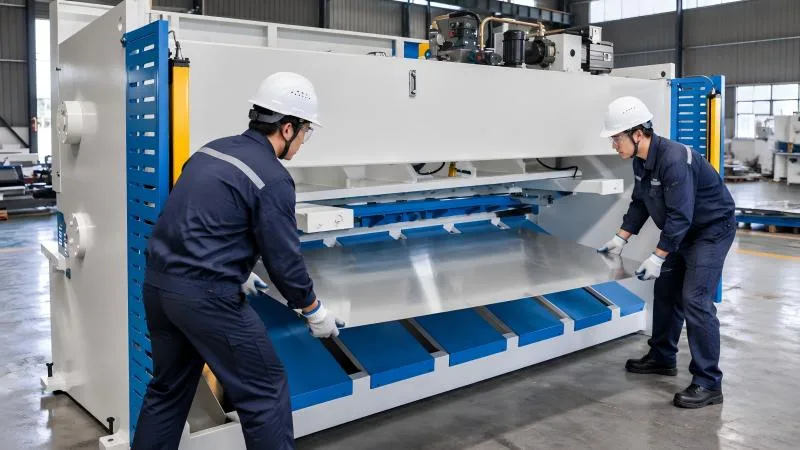
I recommend wearing cut-resistant gloves suitable for handling sheet metal, safety glasses, protective clothing, and safety footwear. Gloves should provide adequate cut protection without compromising grip or creating additional entanglement risks around moving machinery.
Select PPE according to the material, edge condition, and workplace risk assessment. Remember that gloves do not make it safe to reach near moving blades.
Step 3: Use Suitable Material-Handling Equipment
For small, lightweight sheets, trained operators may be able to handle the material manually when workplace procedures permit. Larger, heavier, or awkwardly shaped sheets should be moved with suitable equipment, such as vacuum lifters, sheet clamps, lifting magnets approved for the material, or mechanical handling systems.
I recommend checking the equipment’s rated capacity and inspecting lifting attachments before use. Keep the load balanced, maintain clear communication between workers, and never stand beneath a suspended sheet.
How to Inspect and Stack Sheared Metal Sheets
Step 4: Check the Edges and Surface Quality
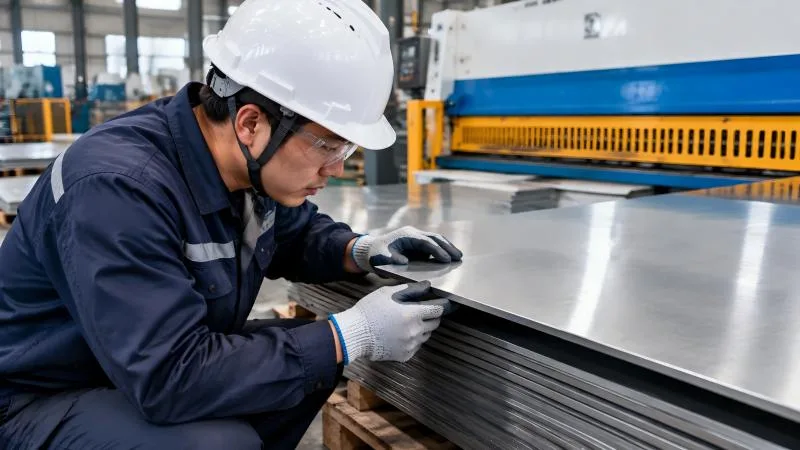
After removing the workpiece, inspect the cut edges for sharp burrs, deformation, or other defects. Check the sheet surface for scratches and damage that may affect subsequent fabrication.
If deburring is required, move the sheet to a designated finishing station and follow the appropriate machine safety procedures. Do not remove burrs by running bare hands along the cut edge.
Step 5: Stack Sheets on a Stable Surface
Place finished sheets on a level, stable pallet, rack, or designated storage surface. Align the sheets carefully and avoid creating uneven stacks that could shift or collapse.
Use separators when necessary to protect finished surfaces and improve stability. Keep stack heights within workplace limits, and do not place sheets where they obstruct walkways, emergency exits, or machine access.
How to Transport Sheets After Shearing
Step 6: Plan a Clear Transport Route
Before moving material, check the route for oil, debris, cables, and other obstructions. Ensure that doorways and turning areas provide sufficient clearance for the sheet and handling equipment.
For large sheets, use a team lift or mechanical assistance when required by the risk assessment. Assign clear responsibilities so workers move together without sudden changes in direction.
Step 7: Prevent Material Slippage During Transport
Keep the load properly supported and secured throughout movement. Avoid carrying oversized sheets in a way that blocks visibility or places workers in unstable positions.
When using forklifts or overhead lifting equipment, follow approved procedures and ensure that only trained personnel operate the equipment. Stop immediately if the sheet shifts, the load becomes unstable, or the travel route becomes unsafe.
Common Mistakes to Avoid When Handling Sheets After Shearing
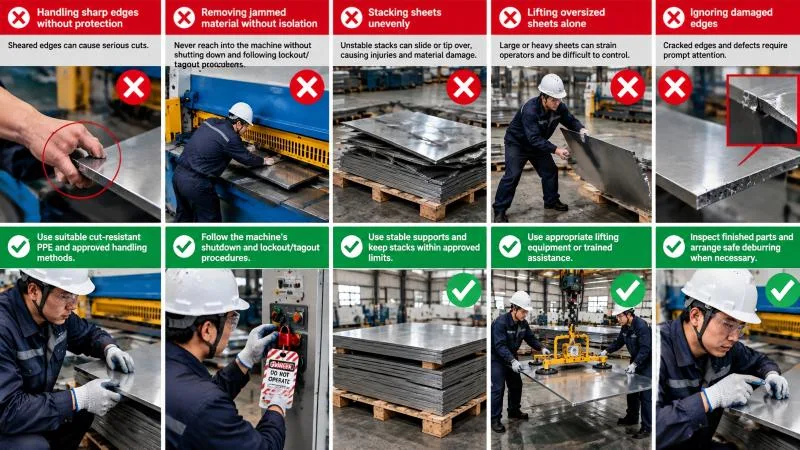
- Handling sharp edges without protection: Use suitable cut-resistant PPE and approved handling methods.
- Removing jammed material without isolation: Follow the machine’s shutdown and lockout/tagout procedures.
- Stacking sheets unevenly: Use stable supports and keep stacks within approved limits.
- Lifting oversized sheets alone: Use appropriate lifting equipment or trained assistance.
- Ignoring damaged edges: Inspect finished parts and arrange safe deburring when necessary.
FAQs
What PPE Is Required When Handling Sheets After Shearing?
Typical PPE includes suitable cut-resistant gloves, safety glasses, protective clothing, and safety footwear. The exact selection depends on the material, handling method, and workplace risk assessment.
How Should Heavy Sheared Sheets Be Moved?
Use appropriately rated mechanical lifting equipment, such as vacuum lifters or suitable sheet clamps. Verify the load capacity, inspect attachments, and follow approved lifting procedures.
Can Operators Remove Material While the Shearing Machine Is Running?
Operators must never reach into the cutting zone while hazardous movement is possible. Material removal should follow the machine manufacturer’s operating instructions and the workplace’s safety procedures.
Conclusion
Safe handling of sheared sheets depends on controlling sharp-edge hazards, using appropriate PPE, selecting suitable lifting equipment, and maintaining stable storage and transport conditions. I recommend making these practices part of daily production procedures to protect workers, preserve material quality, and reduce unnecessary downtime.


