


Shearing machine cleaning safety is essential for keeping a shearing machine accurate, reliable, and safe to operate. However, metal chips, sharp offcuts, hydraulic oil, and cleaning tools can create serious hazards if handled incorrectly. I always recommend stopping the machine, isolating all hazardous energy sources, and following the manufacturer’s cleaning procedures before starting any maintenance task. In this guide, I’ll explain how to clean a shearing machine safely, which areas require special attention, and how to prevent injuries and equipment damage during routine maintenance.
Why Is Shearing Machine Cleaning Safety Important?
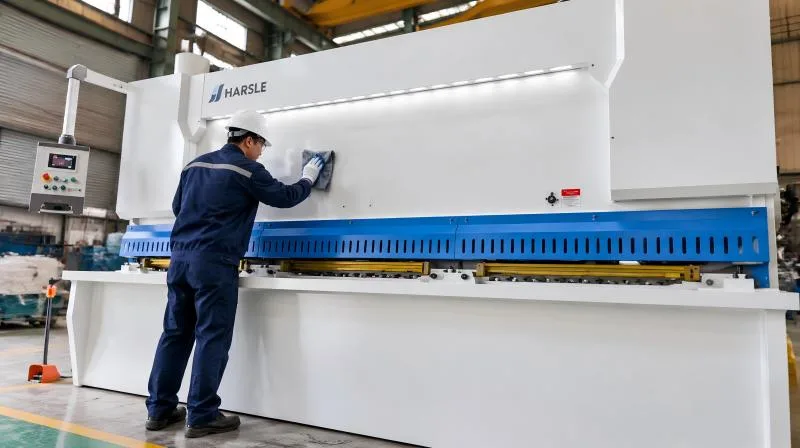
A shearing machine contains sharp blades, moving components, and potentially hazardous hydraulic and electrical systems. Metal scraps around the cutting area can cause cuts, while oil spills may create slipping hazards. Cleaning near energized components or moving blades can also result in serious injuries.
Regular cleaning helps prevent debris buildup, protects machine components, and makes it easier to identify leaks, loose fasteners, and abnormal wear. Following a consistent cleaning procedure also reduces unplanned downtime and supports stable production.
How to Clean a Shearing Machine Safely
Step 1: Stop the Machine and Isolate Energy Sources
Before cleaning, stop the shearing machine according to the manufacturer’s shutdown procedure. Isolate the electrical supply and other relevant energy sources, then apply lockout/tagout (LOTO) procedures where required.
Do not rely on the emergency stop button alone, because it may not isolate all hazardous energy. Verify that the machine cannot start unexpectedly and follow the manufacturer’s instructions for safely releasing or restraining stored hydraulic, pneumatic, or mechanical energy.
Never begin cleaning around the blades or moving components until the machine has been placed in a verified safe state.
Step 2: Wear Appropriate Personal Protective Equipment
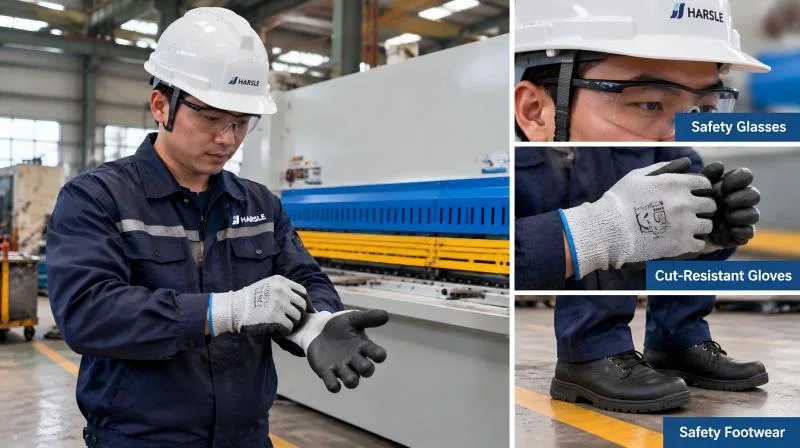
Select personal protective equipment (PPE) according to the cleaning task and workplace risk assessment. Safety glasses and safety footwear are generally important, while cut-resistant gloves may be appropriate for handling sharp metal offcuts when the machine is safely isolated.
However, gloves can create an entanglement hazard around rotating or moving machinery. Never wear gloves or use cleaning materials near moving parts while the machine is operating.
If cleaning involves chemicals, hydraulic fluids, or other substances, consult the relevant safety data sheets and use the specified protective equipment.
Step 3: Remove Metal Chips and Scrap Safely
Metal chips and offcuts frequently accumulate around the worktable, blade area, and rear discharge zone. These materials may have sharp edges, so never remove them with bare hands.
Use suitable brushes, scrapers, or designated scrap-handling tools to collect debris after the machine has been isolated. Keep hands away from blade edges, even when the blades appear stationary.
Avoid placing cleaning tools between the upper and lower blades. If debris is trapped in an inaccessible area, follow the manufacturer’s approved removal procedure rather than forcing it out.
Step 4: Clean Hydraulic Oil and Other Spills
Hydraulic oil can accumulate around cylinders, hoses, fittings, and the floor beneath the machine. Clean accessible spills using suitable absorbent materials and dispose of contaminated materials according to workplace environmental procedures.
If you discover an active leak, do not simply wipe it away and resume production. Record the location and report the problem to qualified maintenance personnel.
Never use your hands to search for a pressurized hydraulic leak. High-pressure fluid can penetrate the skin and cause a medical emergency.
Step 5: Clean the Machine Exterior and Inspect Components
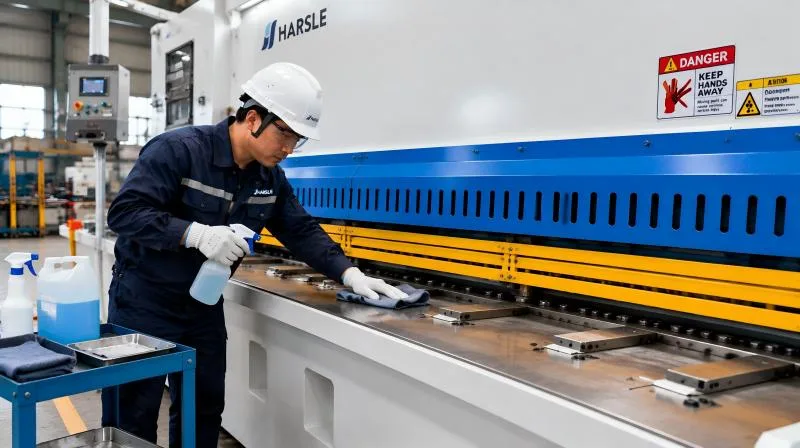
Use manufacturer-approved cleaning materials to wipe external panels, the worktable, and accessible machine surfaces. Avoid directing liquids into electrical cabinets, control panels, sensors, connectors, or ventilation openings.
During cleaning, inspect visible guards, fasteners, hydraulic hoses, and accessible components for damage or abnormal wear. Check that safety guards remain securely installed and that no cleaning tools or loose materials are left inside the machine.
Do not adjust blade clearance, remove guards, or repair electrical and hydraulic components unless you are authorized and qualified to perform the work.
Step 6: Verify the Machine Is Ready for Operation
After cleaning, remove all tools, waste materials, and absorbent cloths from the machine area. Confirm that guards and covers are correctly installed and that the work area is dry and free of slip hazards.
Remove lockout devices only through the authorized procedure, ensuring personnel are clear and all required checks have been completed. Restore power and perform any prescribed safety checks before returning the machine to production.
If you identify a damaged guard, abnormal leakage, or a faulty safety device, keep the machine out of service until the problem has been properly resolved.
Best Practices for Shearing Machine Cleaning Safety
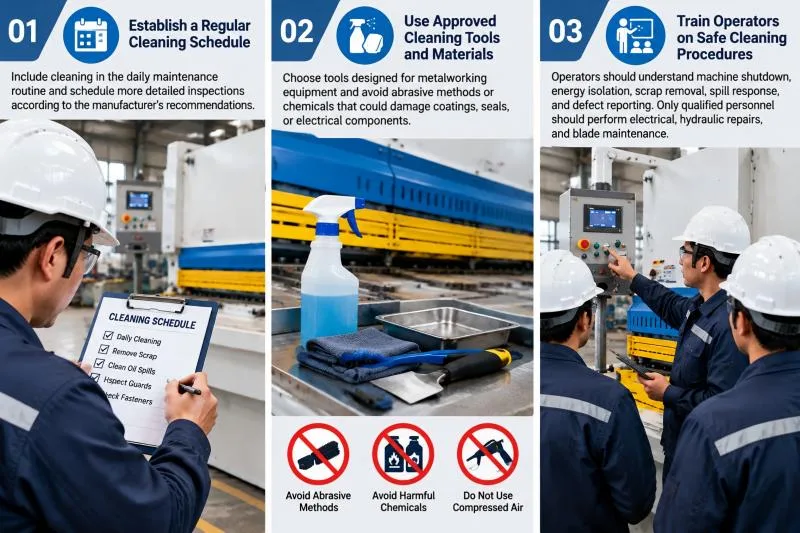
Establish a Regular Cleaning Schedule
I recommend including cleaning in the daily maintenance routine and scheduling more detailed inspections according to the manufacturer’s recommendations. Frequent removal of scrap and oil helps prevent hazards from accumulating.
Use Approved Cleaning Tools and Materials
Choose tools designed for metalworking equipment and avoid abrasive methods or chemicals that could damage protective coatings, seals, or electrical components. Never use compressed air in a way that spreads metal chips, drives debris into machinery, or creates additional hazards.
Train Operators on Safe Cleaning Procedures
Operators should understand machine shutdown, energy isolation, scrap removal, spill response, and defect reporting. Electrical troubleshooting, hydraulic repairs, and blade maintenance should be performed only by appropriately qualified personnel.
FAQs
Can I Clean a Shearing Machine While It Is Running?
No. Cleaning near blades or moving components while the machine is running can cause severe injuries. Stop the machine and isolate hazardous energy before cleaning hazardous areas.
What Is the Safest Way to Remove Metal Scraps?
Use suitable brushes, scrapers, or designated handling tools after verifying that the machine is in a safe, isolated state. Never reach into the cutting zone with bare hands.
How Often Should a Shearing Machine Be Cleaned?
Remove accumulated scrap and spills as needed during each shift, and perform routine cleaning according to the machine manufacturer’s maintenance schedule and workplace procedures.
Conclusion
Following shearing machine cleaning safety rules helps protect operators, maintain equipment condition, and reduce avoidable production interruptions. The most important practices are to isolate hazardous energy, use appropriate PPE and cleaning tools, remove sharp scraps safely, manage oil spills promptly, and inspect protective devices before restarting the machine.


