


Sheared sheet metal edges can be extremely sharp, creating a risk of cuts, puncture wounds, and injuries during handling, transportation, and assembly. To handle Sheared Sheet Metal Edges safely, I recommend wearing appropriate cut-resistant gloves, inspecting the cut edges, removing burrs when necessary, and using proper lifting and storage methods. In this guide, I’ll explain practical ways to reduce edge-related hazards, improve workplace safety, and maintain the quality of sheared metal parts.
Why Are Sheared Sheet Metal Edges Dangerous?
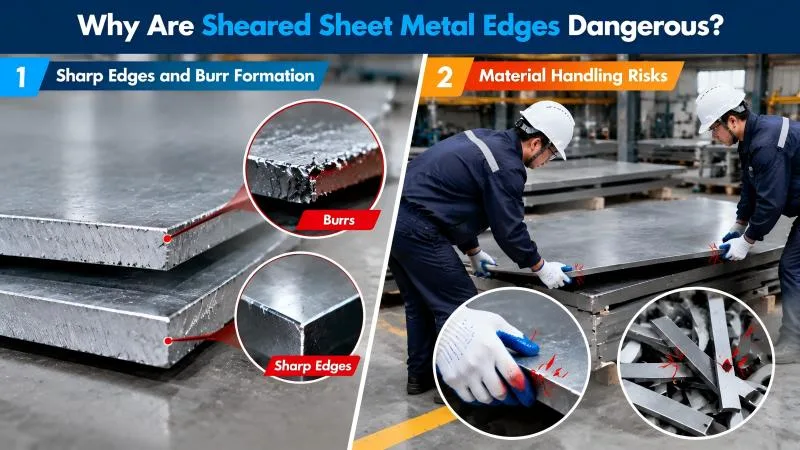
Sharp Edges and Burr Formation
During shearing, the upper and lower blades separate the metal sheet through a cutting action. Depending on the material, blade clearance, blade condition, and cutting parameters, the resulting edges may contain sharp corners, burrs, or uneven surfaces.
These imperfections can cut through ordinary work gloves or damage nearby components. Stainless steel, aluminum, and thin sheet metal can all produce hazardous edges, so I recommend treating every freshly sheared sheet as potentially sharp.
Material Handling Risks
Large sheets may flex, shift, or slide during lifting and transportation. Small offcuts can also have sharp points that are difficult to see. Rushing while moving materials or gripping them directly along the cut edge increases the risk of injury.
How to Handle Sheared Sheet Metal Edges Safely
Step 1: Wear Appropriate Personal Protective Equipment
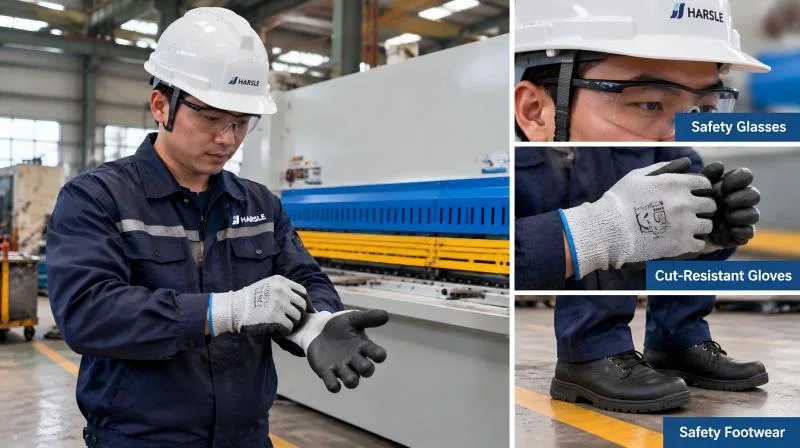
Before handling sheared sheet metal, select cut-resistant gloves appropriate for the material, edge sharpness, and task. Wear safety glasses to protect against metal fragments and safety footwear to reduce the risk of injury from dropped sheets.
Gloves should fit properly and provide sufficient grip. However, gloves are not a substitute for safe handling techniques. When working near moving machinery, follow the machine manufacturer’s requirements and workplace procedures regarding glove use.
Step 2: Inspect the Sheared Edges
Examine the cut edges under adequate lighting before moving or processing the material. Look for burrs, sharp corners, jagged sections, and excessive deformation.
If you notice unusually large burrs or inconsistent cut quality, check the shearing process rather than simply accepting the defects. Incorrect blade clearance, worn blades, or unsuitable cutting conditions may contribute to poor edge quality.
Never run your bare fingers along an edge to check its sharpness. Use an appropriate inspection method or tool.
Step 3: Remove Burrs and Smooth Sharp Edges
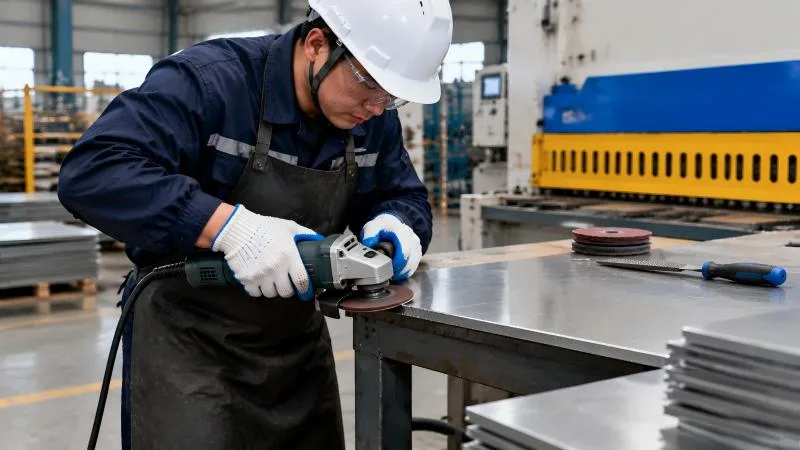
For parts requiring safer handling or improved finishing, use a suitable deburring tool, file, abrasive finishing machine, or dedicated edge-rounding equipment.
Choose the method according to the material thickness, edge condition, and required finish. Secure the workpiece before deburring, and follow the equipment manufacturer’s safety instructions.
After finishing, inspect the edge again to confirm that dangerous burrs have been removed. Avoid excessive material removal that could affect dimensional accuracy or the part’s function.
Step 4: Use Safe Lifting and Carrying Techniques
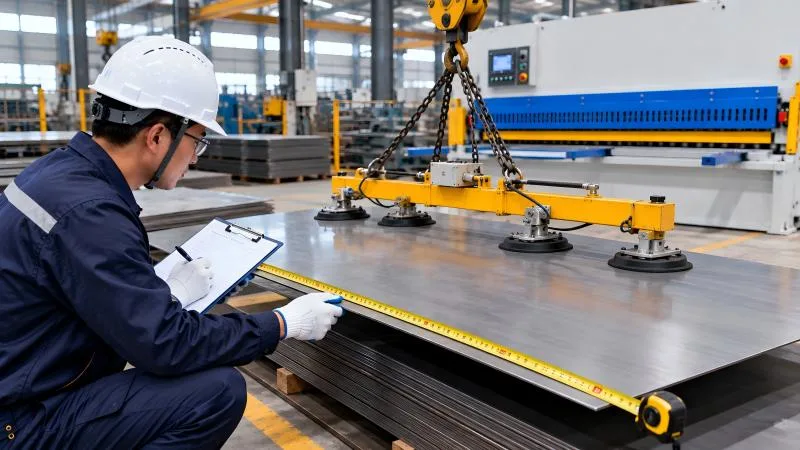
Whenever possible, use sheet lifters, vacuum lifting equipment, clamps, or other suitable material-handling devices for large or heavy sheets. Confirm that the lifting equipment is rated for the load and appropriate for the material surface.
When manual handling is permitted, maintain a stable stance, coordinate movements with coworkers, and avoid placing fingers underneath unsupported sheets. Keep your hands away from cut edges and pinch points.
For long or oversized sheets, use enough trained personnel or mechanical assistance to maintain control throughout the movement.
Step 5: Store and Transport Metal Sheets Properly
Place finished sheets on stable racks or designated storage supports. Arrange them to prevent sliding, tipping, or uncontrolled contact between sharp edges.
Use suitable separators, edge protectors, or protective packaging when transporting finished parts. Keep scrap metal and offcuts in designated containers rather than leaving them on worktables or floors.
A clean work area reduces accidental contact with sharp metal and helps prevent cuts during routine production activities.
How to Prevent Sharp Edges During Shearing
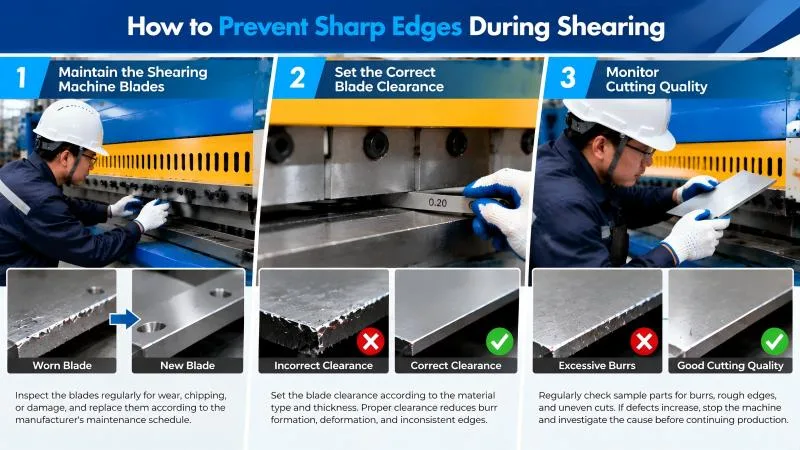
Maintain the Shearing Machine Blades
Blade condition directly affects cutting quality. Inspect the blades according to the manufacturer’s maintenance schedule and check for wear, chipping, or damage.
Set the Correct Blade Clearance
Blade clearance should match the material type and thickness, following the machine manufacturer’s recommendations. Incorrect clearance can increase burr formation, deformation, and inconsistent edge quality.
Monitor Cutting Quality
Regularly examine sample parts for excessive burrs, rough edges, and uneven cuts. If defects increase, stop and investigate the cause before continuing production. Adjustments and blade maintenance should be performed only by authorized personnel using approved procedures.
FAQs
Are Sheared Sheet Metal Edges Always Sharp?
Not always to the same degree, but freshly sheared edges should be treated as sharp until inspected. Their condition depends on the material, blade sharpness, clearance, and cutting process.
What Gloves Are Best for Handling Sharp Sheet Metal Edges?
Cut-resistant gloves selected for the specific task are generally appropriate. The required protection level depends on the edge condition and handling risks. Check workplace requirements and ensure gloves do not introduce entanglement hazards around moving machinery.
Should Every Sheared Metal Part Be Deburred?
Not necessarily. Deburring requirements depend on the part’s intended use, handling risks, assembly requirements, and finish specifications. Parts with hazardous burrs should receive appropriate edge treatment before routine handling or shipment.
Conclusion
Handling Sheared Sheet Metal Edges safely requires a combination of suitable protective equipment, careful edge inspection, appropriate deburring, and controlled material handling. I also recommend maintaining the shearing machine and monitoring cut quality to reduce burr formation at its source.


