


To Adjust Shearing Machine Blade Clearance safely, you need to consider material thickness, material strength, blade condition, and the manufacturer’s recommended settings. Incorrect blade clearance can cause excessive burrs, material deformation, premature blade wear, and even machine damage. In this guide, I’ll explain how to select the correct blade gap, perform safe adjustments, and identify common problems that affect cutting quality. Whether you’re operating a hydraulic shearing machine or maintaining industrial cutting equipment, these steps will help you achieve more consistent cutting results.
Why Is Shearing Machine Blade Clearance Important?
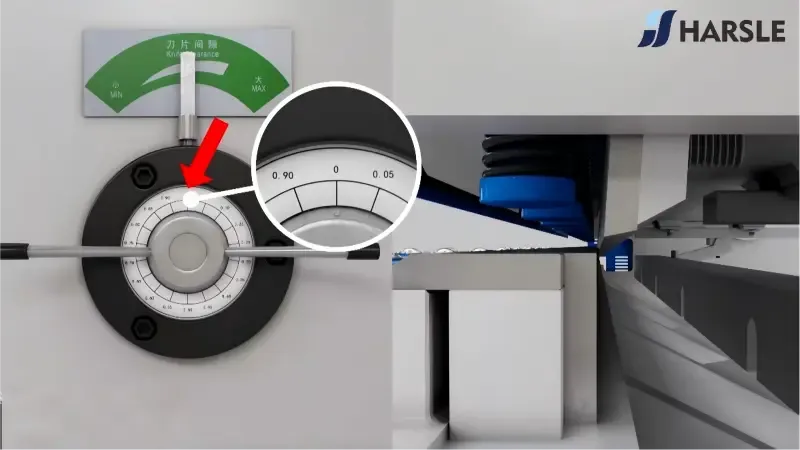
Blade clearance refers to the distance between the upper and lower cutting blades. This gap directly affects cutting quality, required cutting force, and blade service life.
Excessive Blade Clearance
When the blade gap is too large, the material may bend or tear instead of separating cleanly.
Common problems include excessive burrs, rough cutting edges, material distortion, and inconsistent cutting accuracy.
Insufficient Blade Clearance
When the clearance is too small, the blades experience increased friction and cutting resistance.
This can accelerate blade wear, increase machine loading, and potentially damage the cutting edges.
I recommend checking blade clearance whenever cutting quality changes significantly or when processing materials with different thicknesses.
How to Adjust Shearing Machine Blade Clearance Safely?
Step 1: Check Material Thickness and Specifications
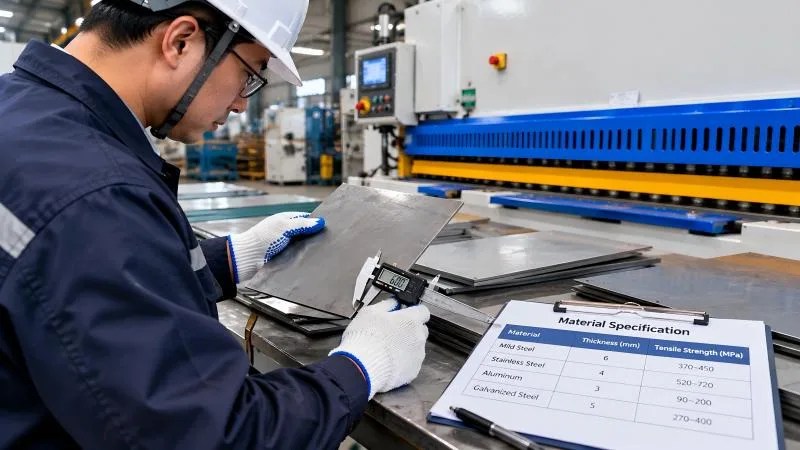
Before adjusting the blade gap, identify the material type, thickness, and tensile strength.
Different materials require different clearance settings. For example, stainless steel and mild steel may require different blade gaps even when their thicknesses are identical.
I recommend consulting the manufacturer’s blade clearance chart rather than relying on a universal adjustment value.
Step 2: Prepare the Shearing Machine for Adjustment
Stop the machine and remove all workpieces from the cutting area.
For manual mechanical adjustments, follow the manufacturer’s shutdown, lockout/tagout, stored-energy isolation, and blade-support procedures. Never place hands between the blades.
If the machine supports automatic blade clearance adjustment through its controller, use only the manufacturer’s designated operating procedure.
Step 3: Inspect the Upper and Lower Blades
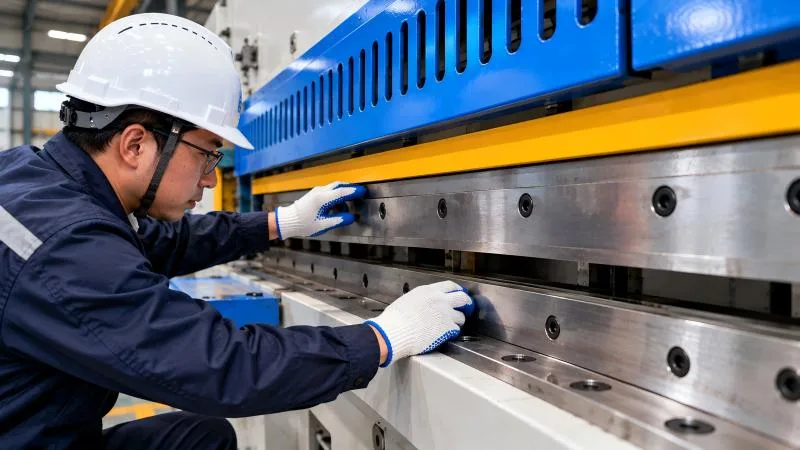
Before making adjustments, examine the cutting edges for visible damage, excessive wear, or accumulated debris.
Worn or chipped blades can produce poor cutting results even when the clearance is correctly configured.
If blade damage is detected, arrange for qualified maintenance personnel to inspect, rotate, sharpen, or replace the blades as appropriate.
Step 4: Adjust the Blade Clearance
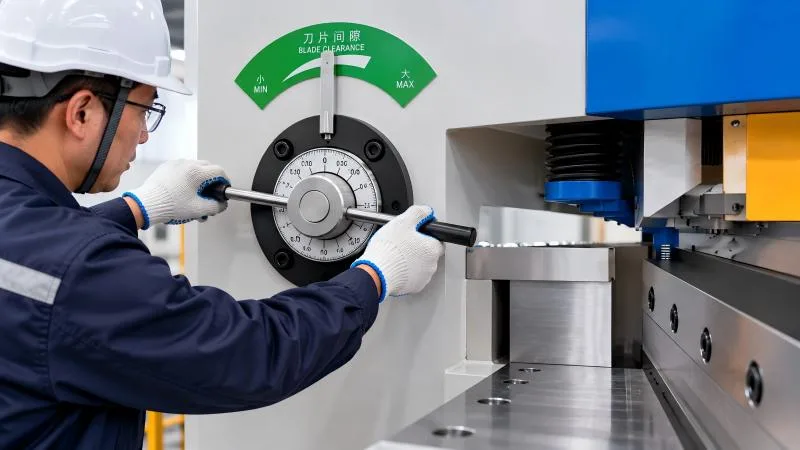
On hydraulic shearing machines equipped with automatic blade gap adjustment, enter the material thickness and required settings through the CNC or NC controller.
The machine may automatically position the blade clearance mechanism according to its programmed parameters.
For manually adjusted machines, qualified personnel should follow the manufacturer’s specified adjustment sequence and measurement procedure.
Never modify blade clearance mechanisms while hazardous machine movement is possible.
Step 5: Verify the Blade Gap
After adjustment, verify the clearance using the manufacturer’s recommended measurement method.
Where manual measurement is required, qualified personnel may use suitable feeler gauges at specified inspection points after safely isolating and securing the machine.
Check for uneven clearance along the cutting length, which may indicate misalignment or mechanical wear.
Step 6: Perform a Test Cut
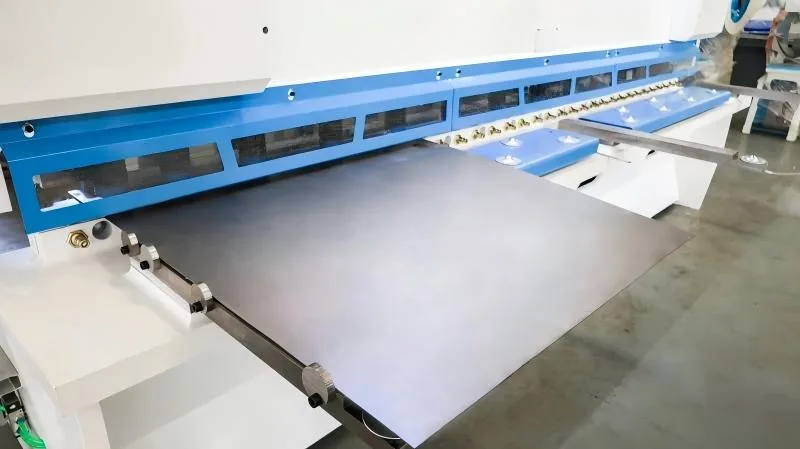
After restoring all guards and confirming that the machine is ready for operation, perform a test cut using suitable scrap material.
Inspect the cutting edge for burrs, tearing, distortion, and uneven separation.
If cutting quality remains unsatisfactory, stop the machine and reassess the blade condition, material specifications, and clearance settings.
Common Blade Clearance Adjustment Problems
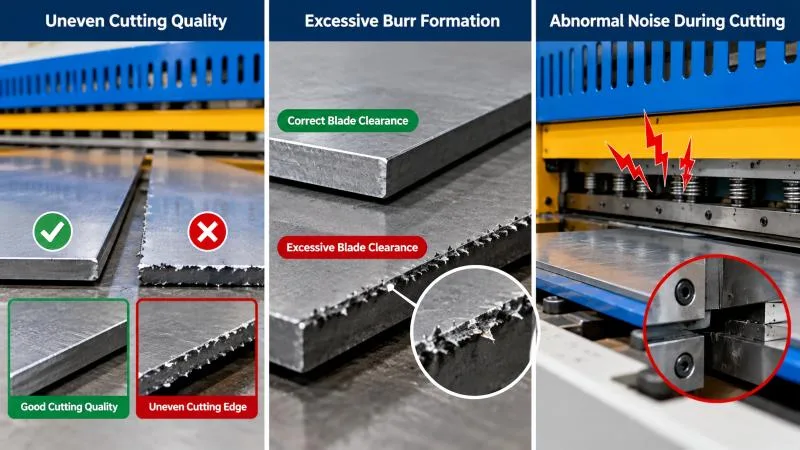
Uneven Cutting Quality
Uneven cutting results may indicate inconsistent blade clearance, blade wear, or incorrect blade alignment.
I recommend inspecting the cutting edges and checking whether the clearance remains consistent across the working length.
Excessive Burr Formation
Large burrs can result from excessive blade clearance, worn blades, or unsuitable cutting parameters.
Check the blade condition and compare the current clearance with the manufacturer’s recommended range.
Abnormal Noise During Cutting
Unusual grinding, impact noises, or excessive vibration may indicate mechanical interference or incorrect blade settings.
Stop the machine immediately and arrange an inspection before continuing production.
FAQs
How Often Should I Adjust Shearing Machine Blade Clearance?
I recommend reviewing blade clearance whenever material thickness or material type changes. Additional checks may be necessary when cutting quality deteriorates or after blade maintenance.
What Happens If Shearing Machine Blade Clearance Is Too Large?
Excessive clearance can cause rough cutting edges, increased burr formation, material bending, and reduced dimensional accuracy.
Can Operators Adjust Blade Clearance Without Technical Assistance?
Operators may adjust blade clearance through approved CNC or NC controls if they are trained and authorized. Manual mechanical adjustments should only be performed by qualified personnel following the manufacturer’s safety procedures.
Conclusion
Knowing how to Adjust Shearing Machine Blade Clearance correctly is essential for maintaining cutting accuracy, protecting machine components, and improving production efficiency.
I recommend checking material specifications, inspecting blade condition, following approved adjustment procedures, and verifying cutting quality through test cuts. Regular maintenance also helps prevent unexpected equipment problems.


