


To inspect shearing machine electrical safety, I recommend checking the power supply, electrical cabinet, wiring connections, emergency stop devices, and safety interlocks before operating the machine. Loose connections, damaged cables, faulty sensors, and malfunctioning control circuits can cause unexpected machine stops or create serious electrical hazards. In this guide, I’ll explain how to carry out routine electrical safety inspections, identify common warning signs, and determine when a qualified technician is needed.
How to Inspect Shearing Machine Electrical Systems
Step 1: Check the Main Power Supply
Before starting an inspection, review the machine’s electrical specifications and confirm that the power supply matches the manufacturer’s requirements. Check the main disconnect switch, power cables, and visible connections for signs of damage, overheating, or corrosion.
Look for unusual discoloration, melted insulation, or burning odors. If you notice any of these signs, do not start the machine. Isolate the equipment according to the approved safety procedure and arrange an inspection by a qualified electrician.
Step 2: Inspect the Electrical Cabinet and Wiring
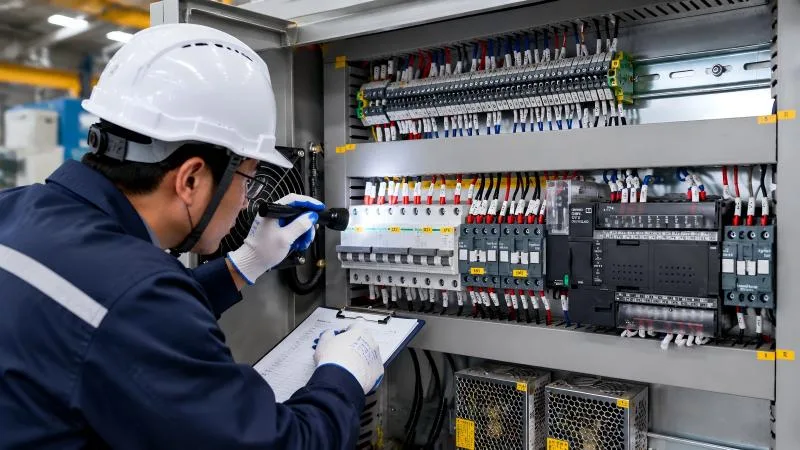
The electrical cabinet houses important components such as circuit breakers, contactors, relays, PLCs, and terminal blocks. External visual checks can help identify warning signs before they lead to production interruptions.
I recommend checking for damaged cable insulation, loose external connectors, moisture, excessive dust, and visible signs of overheating. Keep cabinet doors closed and secured during normal operation. Only qualified electrical personnel should open the cabinet for internal inspection, testing, or repairs, following the required isolation and lockout/tagout procedures.
Step 3: Test Emergency Stop Devices
Emergency stop devices allow operators to initiate a stop when a hazardous situation occurs. Depending on the machine configuration, these devices may be installed on the main control panel or at other accessible operating positions.
Follow the manufacturer’s approved test procedure to verify that each emergency stop produces the intended response. Confirm that the machine cannot resume hazardous movement until the emergency stop has been reset and the required restart procedure has been completed.
Never assume that an illuminated indicator alone proves the emergency stop system is functioning correctly.
Step 4: Check Safety Interlocks and Sensors
Safety interlocks help prevent hazardous machine movement when a protected guard or access point is open. Other safety devices may monitor the presence of personnel or detect unsafe operating conditions.
Inspect accessible sensor housings, mounting brackets, and external wiring for visible damage or displacement. Functional tests must follow the manufacturer’s instructions and applicable safety requirements.
Never bypass an interlock or modify a safety circuit to keep production running. If a safety device fails its test, take the machine out of service until qualified personnel resolve the problem.
Step 5: Verify the Control System and Electrical Indicators
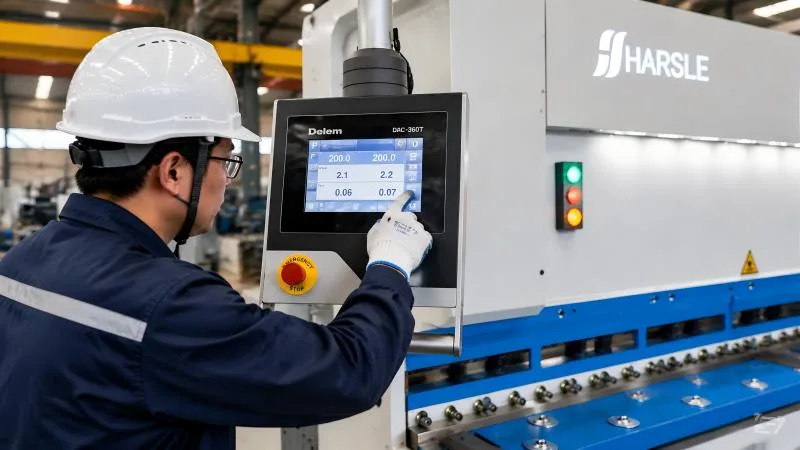
The CNC or NC controller, PLC, and associated electrical components coordinate machine operation. Warning messages, unexpected shutdowns, inconsistent button responses, or repeated electrical faults may indicate a problem that requires further investigation.
Record any displayed alarm codes and the conditions under which they occur. Check the operator manual for the recommended diagnostic procedure, and avoid changing protected parameters without authorization.
If the controller repeatedly reports faults, have a qualified technician inspect the relevant components before restarting production.
Common Electrical Safety Problems on Shearing Machines
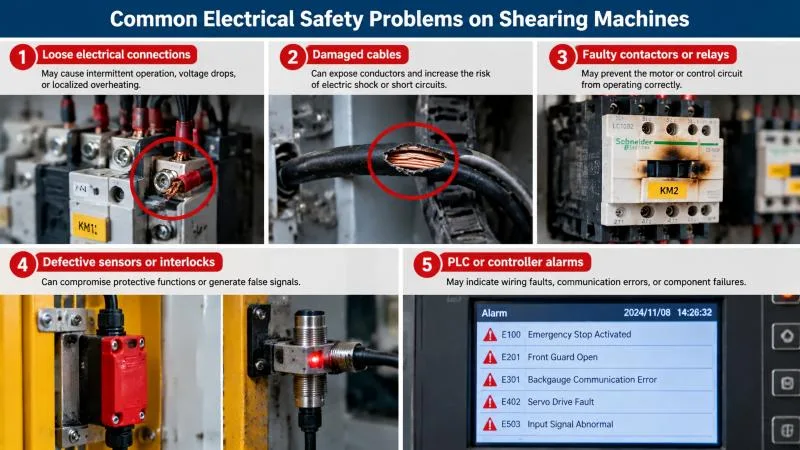
Several electrical problems can affect machine reliability and operator safety:
- Loose electrical connections: May cause intermittent operation, voltage drops, or localized overheating.
- Damaged cables: Can expose conductors and increase the risk of electric shock or short circuits.
- Faulty contactors or relays: May prevent the motor or control circuit from operating correctly.
- Defective sensors or interlocks: Can compromise protective functions or generate false signals.
- PLC or controller alarms: May indicate wiring faults, communication errors, or component failures.
When a fault occurs, document the symptoms and stop using the machine if safety may be affected. Avoid repeated resets without identifying the underlying cause.
How to Maintain Shearing Machine Electrical Safety
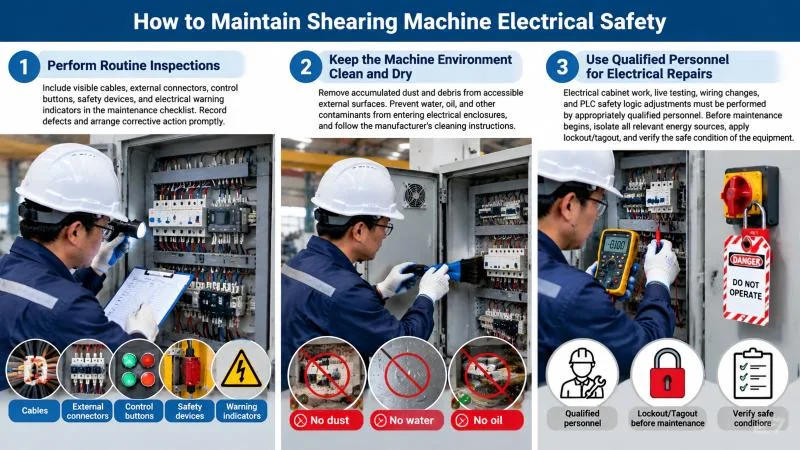
Perform Routine Inspections
Include visible cables, external connectors, control buttons, safety devices, and electrical warning indicators in the maintenance checklist. Record defects and arrange corrective action promptly.
Keep the Machine Environment Clean and Dry
Remove accumulated dust and debris from accessible external surfaces. Prevent water, oil, and other contaminants from entering electrical enclosures, and follow the manufacturer’s cleaning instructions.
Use Qualified Personnel for Electrical Repairs
Electrical cabinet work, live testing, wiring changes, and PLC safety logic adjustments must be performed by appropriately qualified personnel. Before maintenance begins, isolate all relevant energy sources, apply lockout/tagout, and verify the safe condition of the equipment.
FAQs
How Often Should I Inspect Shearing Machine Electrical Safety?
Operators should complete the required pre-operation checks before use. More detailed electrical inspections should follow the manufacturer’s maintenance schedule, workplace procedures, and applicable regulations. Additional checks may be necessary after electrical faults or repairs.
Can I Operate a Shearing Machine With a Faulty Safety Interlock?
No. A faulty interlock can expose operators to hazardous machine movement. Stop using the machine and arrange for qualified personnel to diagnose and repair the safety system before production resumes.
What Should I Do if the Shearing Machine Trips Its Circuit Breaker?
Stop operation and report the fault. A qualified electrician should investigate possible causes, such as short circuits, overloads, damaged wiring, or faulty components. Do not repeatedly reset the breaker without identifying the cause.
Conclusion
Proper electrical inspections help reduce unexpected downtime and protect operators from electrical and machine-related hazards. By checking the power supply, inspecting visible wiring, testing safety devices, monitoring controller alarms, and maintaining accurate inspection records, I can help ensure that potential problems are identified before they become serious.


