


Tube Bender Electrical Connection is often the real reason a tube bending machine shows alarms, runs unstably, or even refuses to start after installation. From my experience, these issues are rarely caused by mechanical faults and are more commonly linked to improper electrical setup. If you are looking for clear and practical guidance on how to correctly connect and manage the electrical system of a tube bender, you are in the right place. In this article, I’ll explain the key points of Tube Bender Electrical Connection, why each step matters, and how to avoid common mistakes that can impact machine safety, bending accuracy, and long-term reliability.
Understanding Tube Bender Electrical Connection Basics
A Tube Bender Electrical Connection is not just about supplying power to the machine. It involves matching voltage, current capacity, grounding, control wiring, and protection devices to the specific requirements of the tube bending machine. A correct electrical connection ensures stable servo motion, accurate bending angles, and reliable CNC control operation.
Matching Power Supply Voltage and Frequency
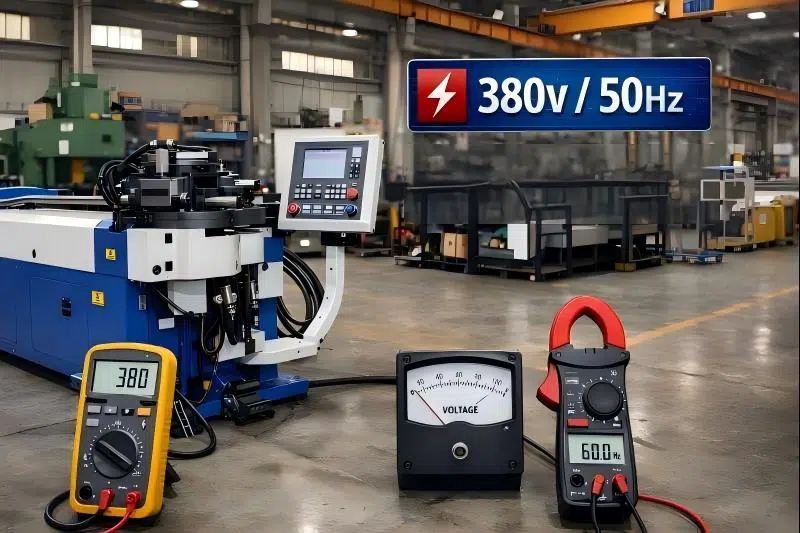
Before connecting any cables, I always confirm that the workshop power supply matches the machine’s rated voltage and frequency. Tube benders are typically designed for specific voltage ranges, such as 380V/50Hz or 460V/60Hz. A mismatch can cause inverter faults, servo alarms, or overheating of electrical components.
Selecting Proper Cable Size and Capacity
Cable sizing is a critical part of Tube Bender Electrical Connection. Undersized cables may lead to voltage drops, unstable motion, or frequent electrical trips during high-load bending operations. I recommend selecting power cables based on the machine’s total rated current, with an additional safety margin to handle peak loads.
Grounding and Earthing Requirements for Tube Benders
Proper grounding is one of the most overlooked aspects of Tube Bender Electrical Connection, yet it is one of the most important for safety and control stability.
Why Grounding Is Critical for CNC Tube Benders
A reliable grounding system protects operators from electric shock and reduces electrical noise that can interfere with CNC controllers and servo drives. Without proper grounding, you may see random alarms, communication errors, or unstable axis positioning.
How to Implement Effective Grounding
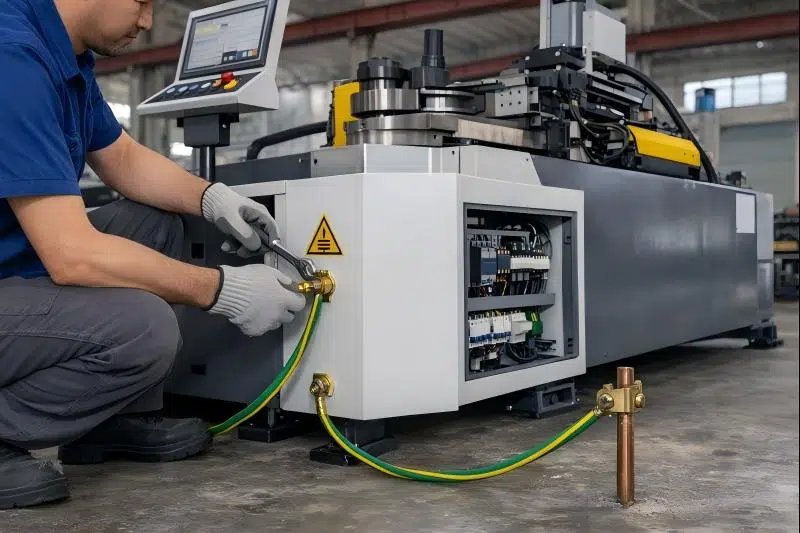
I always advise connecting the machine grounding terminal directly to a dedicated earth point with low resistance. Avoid sharing grounding with high-power equipment such as welding machines, as this can introduce interference into the tube bender electrical system.
Control Cabinet Wiring and Signal Connections
Beyond the main power supply, Tube Bender Electrical Connection also includes control wiring inside the electrical cabinet.
Power Wiring vs Control Wiring Separation
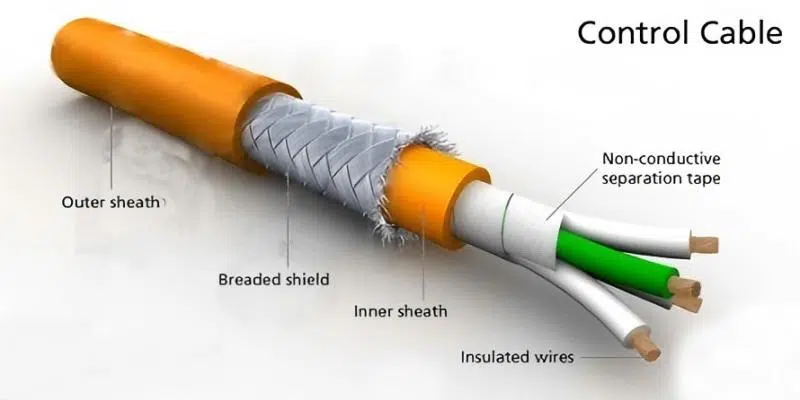
One key rule I follow is strict separation between power cables and signal cables. Power lines generate electromagnetic interference that can disrupt encoder signals and CNC communication if routed together. Keeping them separate improves system stability and bending accuracy.
Checking Terminal Tightness and Labeling
Loose terminals are a common cause of electrical faults. During installation, I always check that all terminals are properly tightened and clearly labeled. This not only improves reliability but also makes future troubleshooting faster and safer.
Protection Devices and Electrical Safety Measures
A complete Tube Bender Electrical Connection must include appropriate protection devices to safeguard both the machine and the operators.
Circuit Breakers and Overload Protection
Circuit breakers and thermal overload relays protect the machine from short circuits and excessive current. I make sure these devices are correctly rated according to the tube bender’s electrical specifications and tested before full operation.
Emergency Stop and Safety Circuits
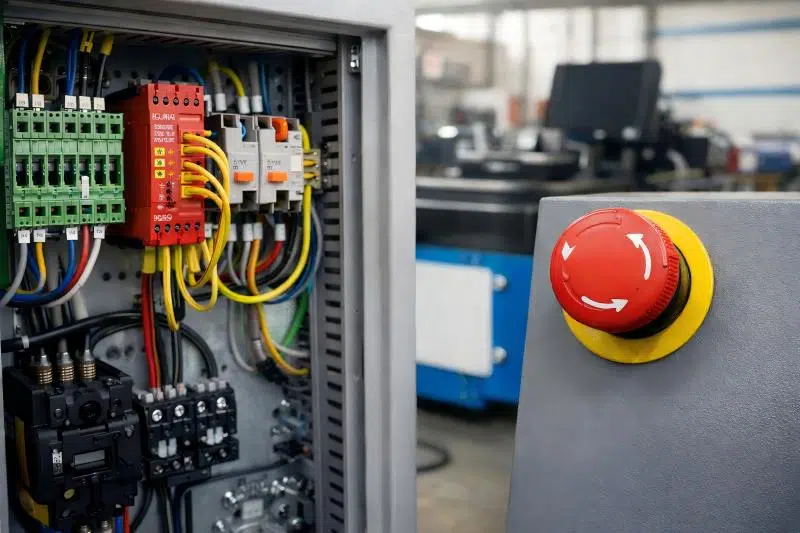
Emergency stop circuits must be correctly wired and tested as part of the electrical connection process. A properly functioning safety circuit ensures that the machine can be stopped immediately in case of abnormal operation or operator risk.
Pre-Startup Electrical Inspection Checklist
Before powering on a newly installed tube bender, I always perform a systematic electrical inspection.
Verifying Phase Sequence and Rotation Direction
Incorrect phase sequence can cause motors and hydraulic pumps to rotate in the wrong direction. This simple check can prevent serious damage during initial startup.
Testing Insulation and Power Stability
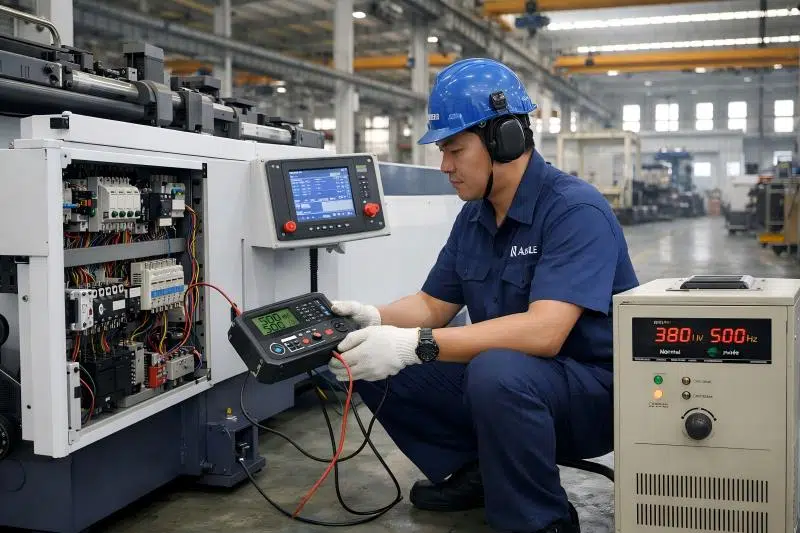
Insulation resistance testing helps confirm that cables and components are in good condition. Stable voltage readings under no-load conditions indicate that the Tube Bender Electrical Connection is ready for commissioning.
Common Electrical Connection Mistakes to Avoid
Over the years, I’ve seen several recurring mistakes in Tube Bender Electrical Connection.
Using Shared Power Sources
Connecting a tube bender to a shared power source with heavy equipment can cause voltage fluctuations and unstable performance. A dedicated power supply is always the safer choice.
Ignoring Manufacturer Electrical Guidelines
Each tube bending machine has specific electrical requirements. Ignoring these guidelines often leads to repeated alarms, shortened component life, and unnecessary downtime.
FAQs
Why does my tube bender show alarms after electrical connection?
Alarms often indicate voltage mismatch, incorrect phase sequence, poor grounding, or loose terminals. Reviewing the Tube Bender Electrical Connection step by step usually helps identify the root cause.
Is grounding really necessary for tube bender electrical connection?
Yes. Proper grounding protects operators, reduces electrical noise, and improves CNC control stability, making it essential for safe and accurate operation.
Can I use existing factory cables for a new tube bender?
Only if the cable size, insulation rating, and condition meet the machine’s electrical requirements. Otherwise, new cables should be installed to ensure reliability.
Conclusion
A correct Tube Bender Electrical Connection is the foundation of safe operation, stable performance, and long-term reliability. By matching the power supply, selecting proper cables, implementing effective grounding, and following a thorough inspection process, you can avoid many common electrical issues before they occur. If you need detailed electrical specifications, installation support, or professional guidance for your tube bending machine, feel free to contact the HARSLE technical team or explore our related documentation for deeper insights.


