


Tube Bender Installation Mistakes are often the real reason a tube bender starts vibrating, losing accuracy, or producing inconsistent bends immediately after installation, rather than any defect in the machine itself. In my experience, these issues usually originate from setup errors made during installation. If you are looking for clear, practical guidance on what commonly goes wrong and how to prevent it, you are in the right place. In this article, I’ll share the most frequent installation mistakes I encounter in real workshops and explain how to avoid them step by step, helping your tube bender achieve stable accuracy, longer service life, and reliable production from day one.
Common Tube Bender Installation Mistakes You Should Avoid
Incorrect Foundation Preparation for Tube Benders
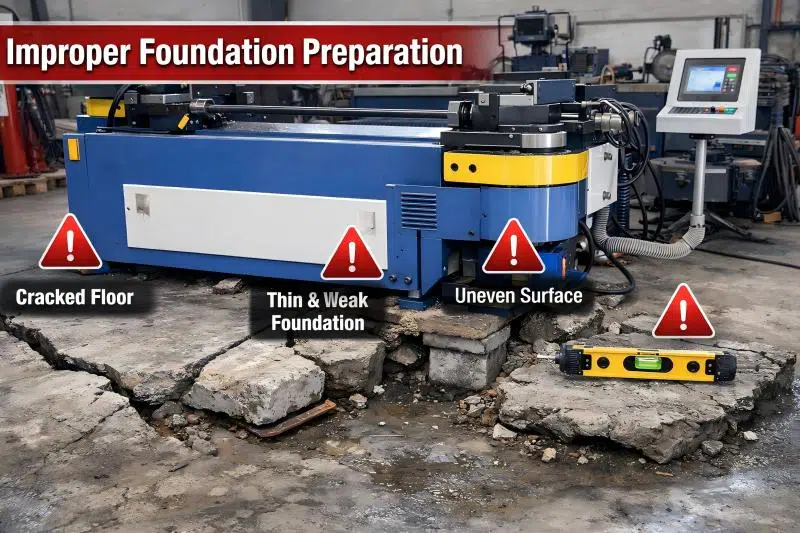
One of the most frequent Tube Bender Installation Mistakes is placing the machine on a weak or uneven foundation. A tube bender generates dynamic loads during bending, especially when processing thick-wall tubes or tight radii. If the concrete floor is too thin, cracked, or not level, vibration and gradual misalignment are almost guaranteed.
Before installation, I always recommend checking floor thickness, concrete strength, and surface flatness. A properly prepared foundation should meet the manufacturer’s load requirements and be leveled within the specified tolerance. Taking time to do this upfront prevents accuracy loss and structural stress later.
Improper Anchoring and Bolt Installation
Another common mistake is incorrect anchoring. Some operators skip anchoring entirely, while others use undersized or low-grade anchor bolts. Both approaches can lead to machine shifting during operation, which directly affects bending precision.
To avoid this, use anchor bolts with the correct diameter, length, and strength grade recommended for your CNC tube bender. During installation, ensure bolts are tightened evenly and rechecked after initial test runs. Proper anchoring is essential for long-term stability and safety.
Skipping Machine Leveling During Installation
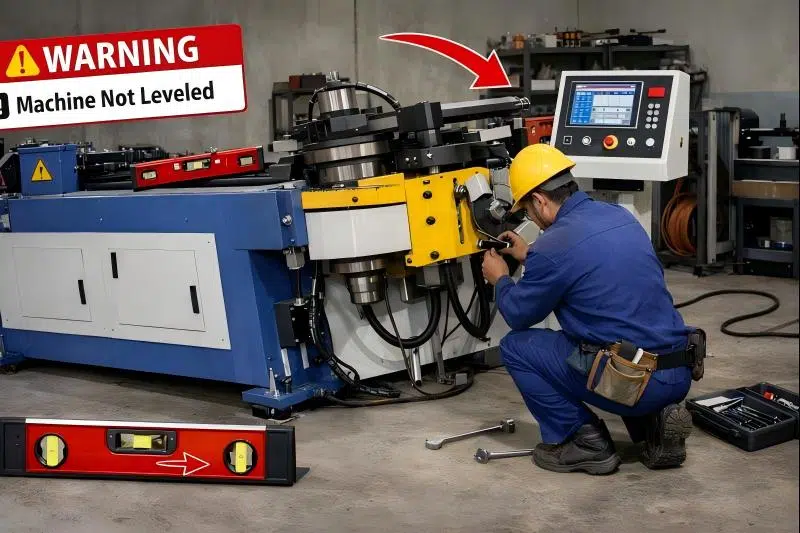
Machine leveling is often underestimated, yet it plays a critical role in bending accuracy. Installing a tube bender without precise leveling can cause uneven stress on guide rails, bearings, and bending arms.
I always suggest using a calibrated precision level and checking multiple reference points on the machine bed. Leveling should be done before anchoring and verified again after bolts are fully tightened. This simple step helps avoid many hidden Tube Bender Installation Mistakes.
Electrical and Hydraulic Setup Errors in Tube Bender Installation
Incorrect Power Supply Connection
Electrical issues are another source of installation problems. Connecting the tube bender to an incorrect voltage, unstable power source, or poorly grounded system can cause alarms, servo faults, or unpredictable behavior.
Before powering on the machine, confirm that voltage, frequency, and phase match the machine’s specifications. Proper grounding is equally important to protect control systems and ensure stable operation.
Hydraulic System Installation Mistakes
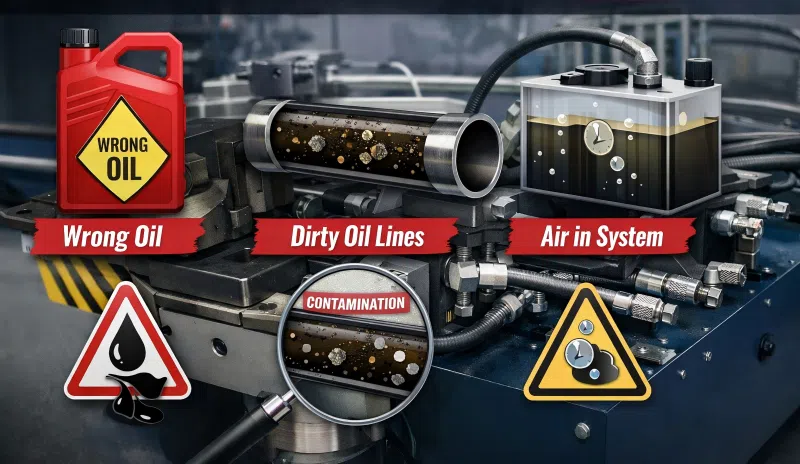
For hydraulic tube benders, improper hydraulic setup can lead to pressure instability, overheating, or oil contamination. Common mistakes include incorrect oil type, unclean hydraulic lines, or air trapped in the system.
To avoid these issues, always use the specified hydraulic oil, thoroughly clean pipelines before connection, and follow proper bleeding procedures during initial startup. Stable hydraulic performance directly affects bending force and repeatability.
Control System and Parameter Setup Mistakes
Ignoring Initial Parameter Configuration
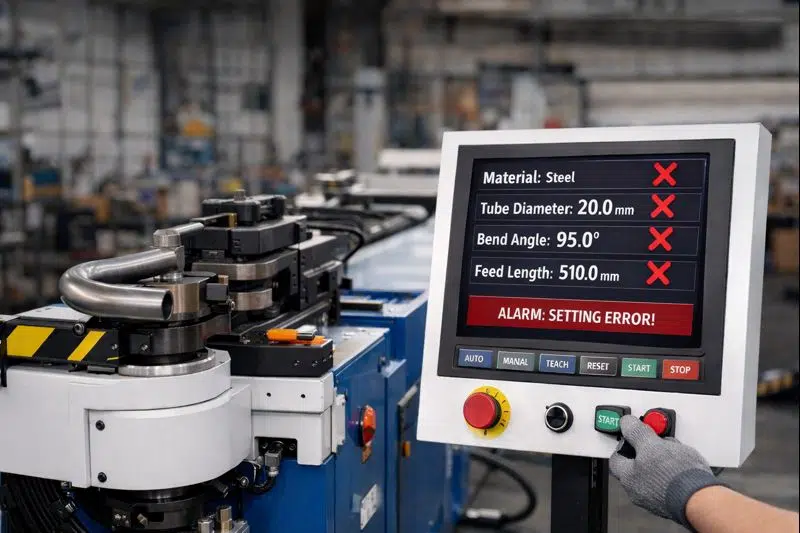
Even with perfect mechanical installation, skipping proper parameter setup can undermine machine performance. Many operators run the machine using default settings without considering material type, tube diameter, or bending radius.
I recommend carefully configuring system parameters according to the tube material and tooling used. This includes bending speed, pressure limits, and compensation settings. Correct parameter setup helps prevent tool wear and inconsistent bends.
Lack of Initial Test Bending and Calibration
One more common Tube Bender Installation Mistake is putting the machine into full production without test bending. Test runs allow you to verify alignment, angle accuracy, and repeatability under real conditions.
Performing calibration bends and making fine adjustments early saves time and reduces scrap during actual production.
How to Avoid Tube Bender Installation Mistakes Step by Step
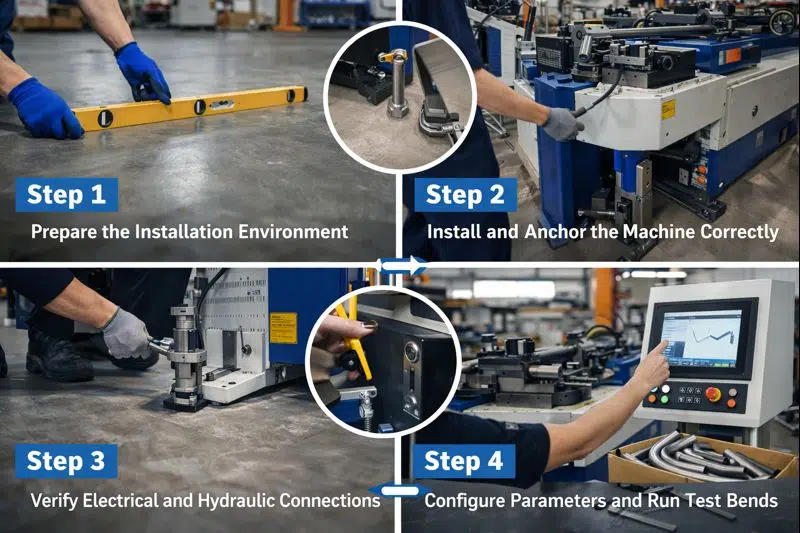
Step 1: Prepare the Installation Environment
Start by ensuring the workshop floor is clean, strong, and level. Adequate space around the machine is also important for operation and maintenance access.
Step 2: Install and Anchor the Machine Correctly
Position the machine accurately, perform precise leveling, and secure it with the correct anchor bolts. Recheck all fasteners after initial operation.
Step 3: Verify Electrical and Hydraulic Connections
Confirm power supply specifications, grounding, and hydraulic oil quality. Inspect for leaks or abnormal noise during initial startup.
Step 4: Configure Parameters and Run Test Bends
Set system parameters based on real production requirements and conduct test bending to confirm accuracy and stability.
FAQ
What are the most common Tube Bender Installation Mistakes?
The most common issues include poor foundation preparation, incorrect anchoring, improper leveling, wrong power supply connection, and skipping initial calibration and test bending.
How important is foundation thickness for tube bender installation?
Foundation thickness and strength are critical. An inadequate foundation can cause vibration, accuracy loss, and long-term mechanical damage.
Should I recalibrate my tube bender after installation?
Yes. Initial calibration and test bending are essential to verify alignment and parameter settings before full production begins.
Can improper installation affect tube bending accuracy long term?
Absolutely. Many long-term accuracy and wear issues trace back to early Tube Bender Installation Mistakes made during setup.
Conclusion
Avoiding Tube Bender Installation Mistakes is not about complex procedures, but about following the right steps with attention to detail. Proper foundation preparation, accurate leveling, secure anchoring, and careful system setup all work together to ensure stable performance and consistent bending quality. By taking installation seriously from the start, you can reduce downtime, protect your investment, and extend the service life of your tube bender.
If you need professional guidance, installation support, or detailed technical documentation, feel free to contact the HARSLE team or explore our related tube bender setup and maintenance resources.


