


Tube Bender Operator Training is often the first topic customers ask about once a tube bending machine has been fully installed and commissioned by engineers. Based on years of hands-on factory experience, I can confidently say that proper training is essential. Effective Tube Bender Operator Training directly influences bending accuracy, production stability, machine service life, and operator safety. In this article, I’ll explain why operator training matters after installation, what operators should focus on learning, and how a structured training process helps prevent costly mistakes and unplanned downtime from the very beginning.
How Tube Bender Operator Training Protects Machine Accuracy
Understanding Machine Zero Points and Reference Positions
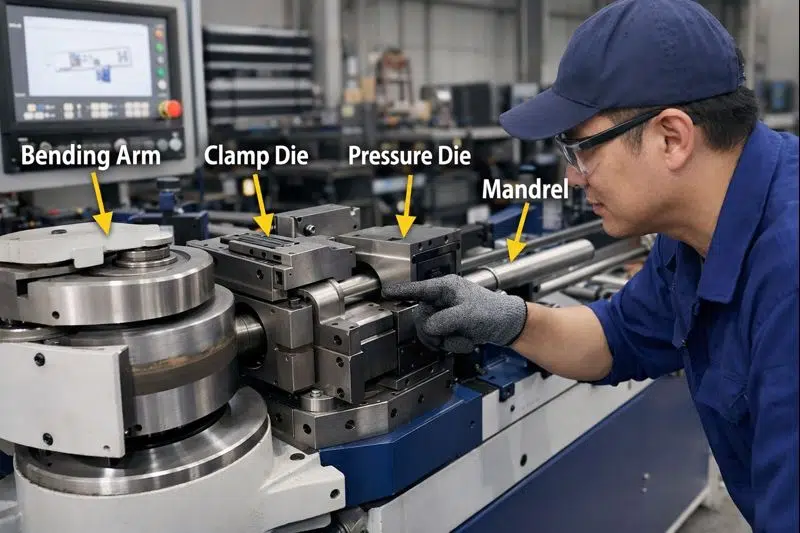
After installation, a tube bender is mechanically aligned and calibrated, but this accuracy can only be maintained if operators fully understand machine zero points. During tube bender operator training, I always emphasize how to correctly reference the bending arm, clamp die, pressure die, and mandrel position. Incorrect referencing during daily startup is one of the most common reasons for inconsistent bending angles and radius deviation.
Learning Parameter Logic in CNC Tube Benders
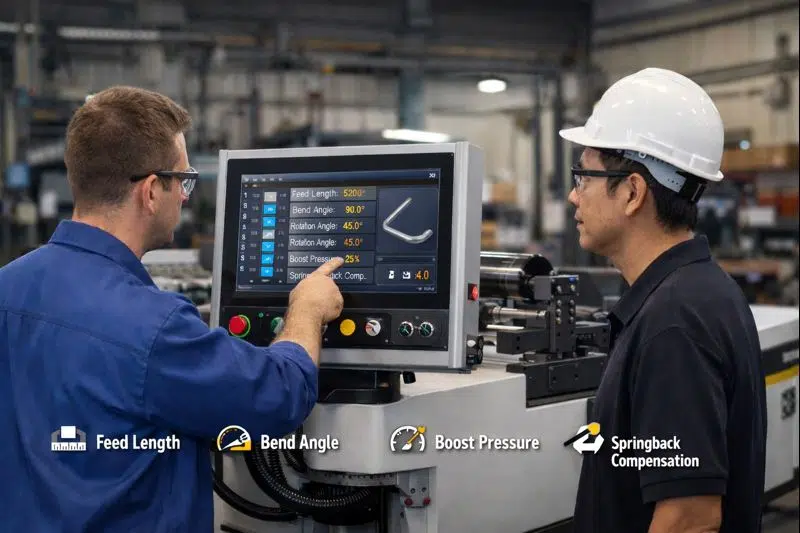
Modern CNC tube benders rely heavily on software parameters. Without proper tube bender operator training, operators may change feed length, boost pressure, or rotation angles without understanding their interaction. Training helps operators recognize how small parameter changes affect springback control, wall thinning, and surface quality, ensuring repeatable results instead of trial-and-error adjustments.
Improving Safety Through Tube Bender Operator Training
Correct Use of Safety Devices and Interlocks
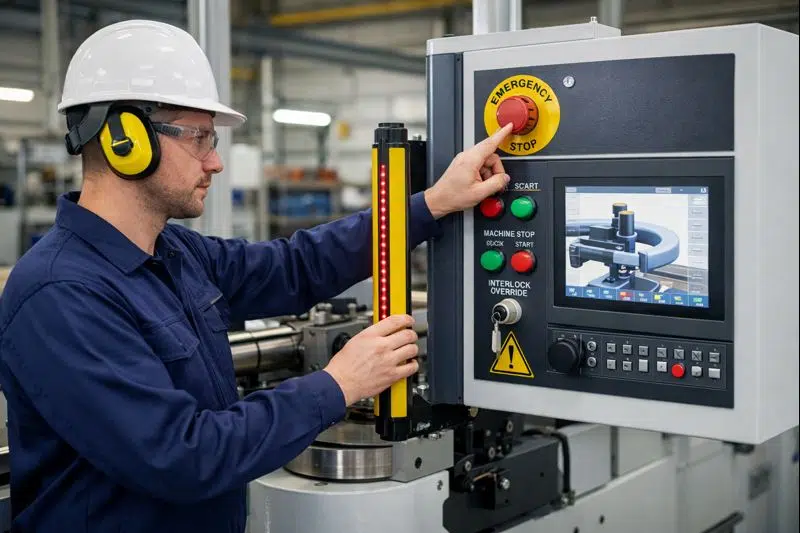
Tube bending machines are equipped with safety light curtains, foot pedals, emergency stops, and protective guards. Operator training ensures that safety devices are used correctly rather than bypassed for speed. I’ve seen cases where untrained operators disable safety features, leading to accidents that could have been completely avoided.
Safe Material Loading and Unloading Practices
Handling long tubes, heavy profiles, or stainless-steel pipes carries real risks. Tube bender operator training teaches correct loading positions, body posture, and coordination between operators. These details significantly reduce the chance of pinching injuries, dropped materials, or sudden tube rebound during bending.
Reducing Scrap and Downtime After Installation
Preventing Common Setup Errors
Right after installation, many production issues come from incorrect tooling setup rather than machine defects. Tube bender operator training covers proper installation of bend dies, clamp dies, pressure dies, and mandrels. Operators learn how to check alignment, lubrication, and clearances, preventing early tooling wear and material scrap.
Early Detection of Abnormal Conditions
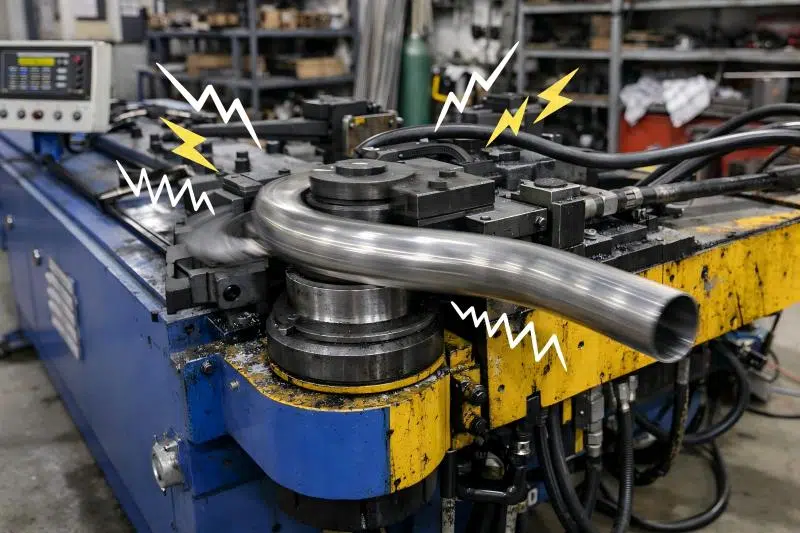
A trained operator can identify abnormal noise, vibration, or hydraulic pressure fluctuations early. Tube bender operator training helps operators distinguish between normal machine behavior and warning signs that require maintenance intervention. This proactive awareness reduces unexpected downtime and prevents minor issues from turning into major failures.
Supporting Long-Term Machine Reliability
Daily Inspection and Preventive Maintenance Awareness
Tube bender operator training is not limited to production tasks. I always include daily inspection routines such as checking bolt tightness, lubrication points, hydraulic hose conditions, and sensor cleanliness. When operators understand why these checks matter, maintenance becomes consistent rather than reactive.
Extending Tooling and Wear Part Life
Incorrect operation is one of the main causes of premature tooling wear. Through tube bender operator training, operators learn correct bending speeds, boost force settings, and lubrication methods. These habits directly extend the life of mandrels, dies, and wiper inserts, reducing operating costs over time.
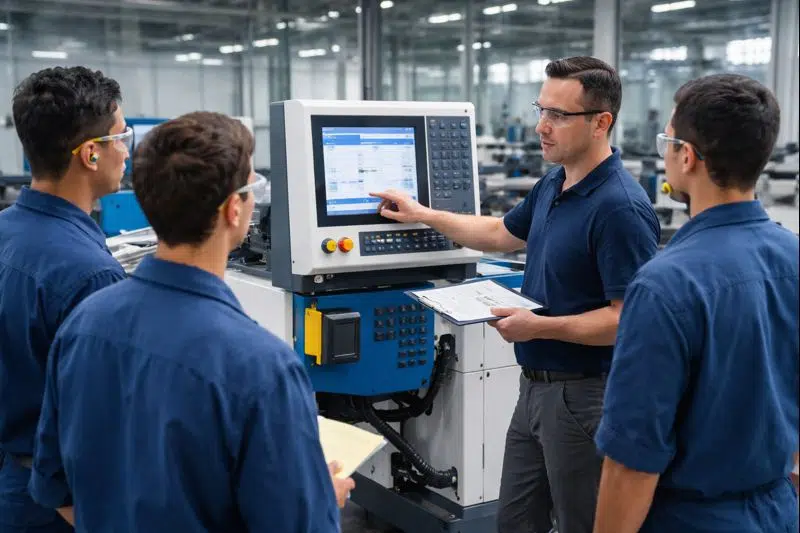
Aligning Production Teams After Tube Bender Installation
Standardizing Operating Procedures
After installation, different operators may use different habits if no formal training is provided. Tube bender operator training establishes standardized operating procedures, ensuring that shifts, teams, and production lines follow the same methods. This consistency improves product quality and simplifies troubleshooting.
Building Operator Confidence and Accountability
Well-trained operators are more confident in machine operation and decision-making. Tube bender operator training empowers them to take responsibility for machine condition, bending quality, and safety compliance, creating a more professional and reliable production environment.
FAQs
How soon should tube bender operator training start after installation?
Tube bender operator training should begin immediately after mechanical installation and commissioning. Early training ensures operators understand correct startup, reference setting, and safety procedures before mass production begins.
Does tube bender operator training differ for CNC and NC machines?
Yes. CNC tube bender operator training focuses more on software parameters, program editing, and automation logic, while NC training emphasizes manual adjustments and mechanical coordination. Both require structured instruction tailored to the machine type.
Can tube bender operator training reduce material waste?
Absolutely. Proper training helps operators avoid incorrect setups, improper parameter changes, and unsafe bending sequences, which are common causes of scrap and rework.
How often should refresher tube bender operator training be done?
Refresher training is recommended whenever new tooling is introduced, production materials change, or after long shutdown periods. Periodic retraining also helps reinforce safety awareness and best practices.
Conclusion
From my experience, installing a tube bending machine is only the beginning. Without proper Tube Bender Operator Training, even the best machine cannot deliver stable accuracy, safety, and efficiency. Structured training protects machine calibration, reduces scrap, improves safety, and supports long-term reliability. If you want your tube bender to perform consistently after installation, investing in operator training is not optional—it’s essential. For professional training guidance or further technical support, feel free to contact our team or explore more tube bender documentation on our website.


